Article Summary: Bear Spray, Bear Safety, National Park Service Bear Safety, Do Bear Bells Work?
One thing is for sure: bear safety is a prime concern for many national park visitors.
One of the most common questions I receive is what to do if you see a bear while you’re out and about hiking/backpacking/camping/existing. This question is extremely loaded, and there are many answers that change depending on the scenarios.
This is a topic I could discuss for hours. There are a lot of things to be aware of in regard to bear safety and being safe in bear country, and the more you research this topic before adventuring, the better.
This post may contain affiliate links. If you make a purchase, I may earn a small commission at no additional cost to you. For more information, view my privacy policy.
Table of Contents
Bear Safety Disclaimer
The following advice is based on my experience of living in Alaska. It’s important to note that bear behavior varies wildly from place to place (which we will touch on more in this post).
I would recommend seeking advice from knowledgeable people in your area who deal with bears frequently (park rangers, state park employees, wildlife biologists, etc.) for specific advice depending on where you live or where you’re traveling to.
There is an inherent risk in outdoor activities where wildlife may be present. This advice does not guarantee anyone’s safety.
What Not To Do If You See a Bear
Here’s a quick list of what not to do if you see a bear.
- Never run away. This will trigger a predatory response, and I promise bears can run faster than you.
- Do not approach wildlife. Bears may look cute and cuddly, but in reality, they are very dangerous predators. That’s why you’re reading this post, right? I promise the photos and selfies are not worth your life. Keep your distance!
- Never feed wildlife. This causes bears to become habituated, or used to humans. Habituated bears are the most dangerous because they expect a food reward. You should also not leave your pack or any food behind if at all possible during a bear encounter. Many people have given bears food in order to escape, which causes catastrophic problems in the future.
- Don’t alert a bear to your presence if it doesn’t see you. Take a detour or turn back in order to avoid an encounter rather than create one. Leave the area as soon as possible.
- Never place yourself between and sow and her cubs.
Location, Location, Location

How Do Bears Behave Where You Are?
It’s important to note that bear behavior can be very different depending on where you are. For example, I lived near Denali National Park where most bears have never seen humans and never tasted human food. Therefore, they’re generally more afraid of me than I am of them and don’t know they could potentially get a huge food reward if they manage to grab my pack.
However, in places like Yosemite National Park, they know that car seats harbor crumbs and associate people with food. This is what park rangers try to avoid by educating visitors on bear behavior and bear safety. Bears are wicked smart and learn fast. The first time they are rewarded with food, they will expect it every time.
When you visit a national park or anywhere else with bears, I would speak with a park ranger or employee about the bear behavior in the area so you are aware.
Check Your Surroundings
Always be aware of your surroundings by looking for bears everywhere and often. If you’re in a dense forest, it’s especially important to look around. Some black bears will stalk people before approaching them. If you’re in a wide-open space, use it to your advantage and always check your surroundings.
Bear Safety Regulations Vary from Place to Place

Make sure to follow bear safety regulations in your location. Bear-resistant food containers or the use of food storage lockers may be required.
In some areas, you should not leave anything with a scent in your vehicle as bears have learned to break into them. Check with local park rangers or employees to ensure your compliance.
Furthermore, most areas will also have regulations on how far you must be from wildlife. This includes bears. Again, this will vary depending on where you are.
For example, in Denali National Park you’re required to stay 300 yards away from all bears and 25 yards away from all other wildlife. In Katmai National Park, that distance is only 50 yards because bears there are more familiar with humans.
A good general rule is if you are changing an animal’s behavior, you are too close, no matter what the regulations are. Check what the regulations are in your area, and remember to always keep your distance no matter what.
Bear-Resistant Food Containers and Bear Spray

As I mentioned, some places will require that you store your food in provided food storage lockers. However, other areas may require that you carry your own bear-resistant food container, especially if you are backpacking. Some places even have restrictions on which types of containers you carry, so do your research before you go.
When purchasing a container, the most important features to look for are lightweight and difficult to carry. You obviously want a lightweight container so that it doesn’t weigh too much in your pack. Furthermore, a container that is difficult to carry will make it harder for a bear to walk away with your food.
Some of the brands I’m most familiar with are the Backpackers Cache, Bear Vault, and Ursack.
Backpackers Cache is the same container used for visitors in Denali, Sequoia, and Kings Canyon national parks. Backcountry rangers there lend these out for free to every party with a backcountry permit. They’re lightweight and fit a large amount of food. Water can leak in through the lid, so I recommend storing them upside down.
The Bear Vault containers are another popular option. Their twisting lid is easier to open.
Ursacks are a bit different, as they are bags you hang from trees. These are good options in some places, but not necessarily Alaska since most of our camping takes place in alpine tundra habitats with very few trees. However, these are very common on the east coast. Think about your location before you purchase an Ursack.
Remember, anything with a scent should go in your container. That includes things like toothpaste, chapstick, and sunscreen.
Similarly, some places do not allow you to carry bear spray. Others limit where you can carry it. For example, in Denali National Park, you must have it inside of your backpack, preferably within a sealable plastic bag, before you enter any buildings or board one of the park buses.
If bear spray accidentally deploys in confined spaces like these, it’s an absolute disaster. Everyone must evacuate and it can take days for park staff to eradicate the risk of harm to visitors in these areas. It’s also not permitted on airplanes. Check the specific regulations where you are going before you bring bear spray with you.
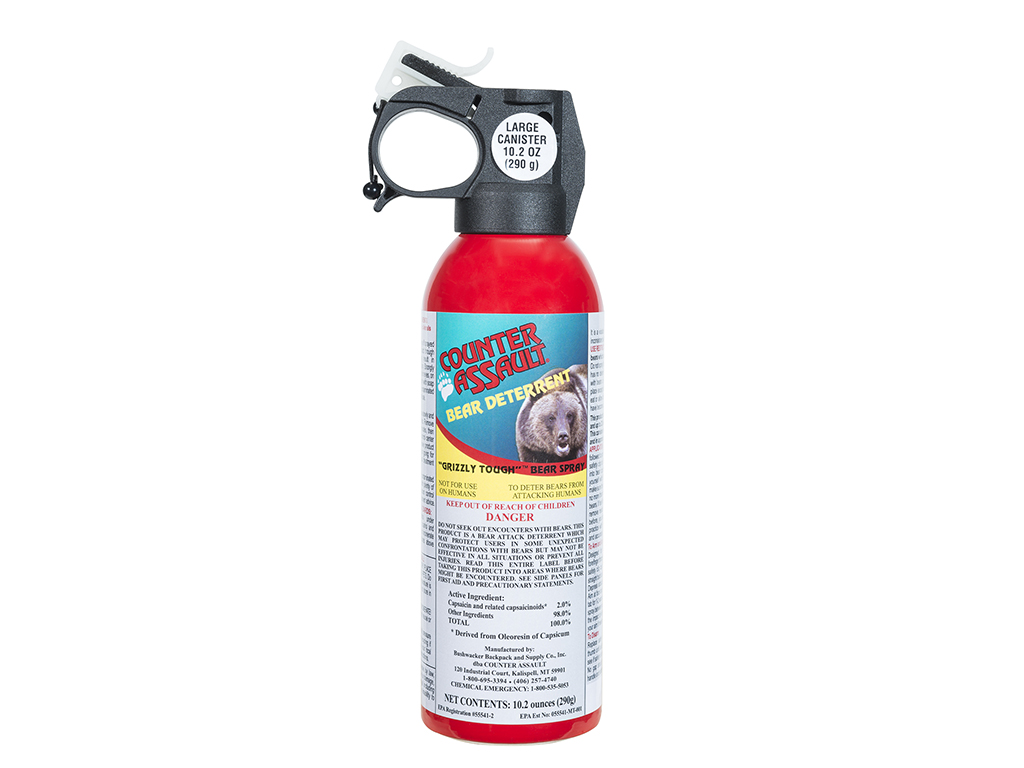
I prefer the Counter Assault brand of bear spray, entirely because it has the best holster. It’s the easiest to clip to your backpack hip belt or your pants belt while simultaneously being easy to remove.
How to Avoid an Encounter with a Bear

Avoiding any sort of encounter with a bear should be your primary goal. As long as you avoid the encounter, you don’t need to worry about what to do if you see a bear. Avoiding bears is the safest way to hike in bear country.
First, identify yourself as human. A good way to start is by using your voice while hiking, especially if you’re alone. Sing or talk to yourself loudly every so often to make your presence known so that all wildlife, including bears, can clear the area. They want to avoid a meeting as much as you do.
If you’re hiking with someone, talk to one another louder than you normally would and take turns yelling to alert animals that you are sharing their home for the time being.
I do not recommend using bear bells. Bells sound too much like other sounds in nature, such as birdsong, and won’t make a bear aware of you. They are also not very loud.
Your voice, on the other hand, is probably brand new to the bear. It will want to avoid anything it deems strange and unrecognizable. Plus, have you ever hiked with someone with bear bells? They are incredibly annoying. Save your money and do not purchase bells.
What Should You Do if You See a Bear?
If you do see a bear, the most important thing to remember is to never run. Bears are predators, and their instinct is to chase things that run from them because those things are food. You are not food, and you’ll let the bear know that by standing your ground.
It’s also important to remember to stay calm. I know this sounds challenging, but a bear can read your body language and use this to determine its actions. Stay calm and alert so you can work through the next steps calmly and successfully.
If you’re hiking with small children, pick them up. You should also be calmly removing your bear spray from your belt, removing the safety, and pointing it at the bear at this stage.
After that, raise your arms and continue to use your voice. These are the two things about you that bears are most unfamiliar with. No other animals in their habitat sound like you or have the same four appendages you do. You are the only one who can wave your arms above your head. If you have trekking poles, raise those too. Start by using a calm voice so the bear doesn’t see you as a threat.
The next thing you should do is assess the bear’s behavior. This will tell you what to do next. Ask yourself questions like, “What is it doing?”, “Does it appear threatened?”, “Is it curious about what I am doing?”, and “Are there cubs around?”.
It can be difficult to think of all these scenarios in the moment, but that’s why it’s good to educate yourself about bear safety before you head outdoors. Your answers to these questions are essential for deciding how to behave next.
Curious Bears
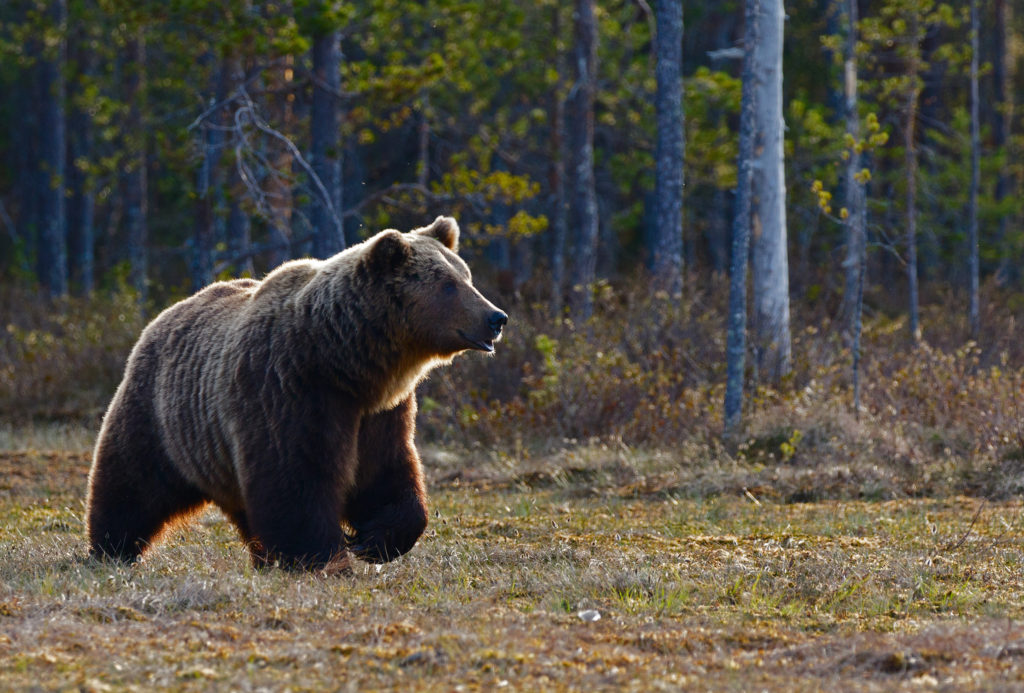
Imagine you’re sitting at the dinner table and your dog is begging for food. The dog knows it shouldn’t be doing this and will get in trouble, but whenever you look away they stare at you and wait for you to drop something. Then, as soon as you look at them, they pretend to be doing something else. This is sort of how curious bears behave.
As we’ve discussed, bears are very smart. With that comes a natural curiosity. Curious bears will sometimes keep their distance and observe you from afar, but some will also approach you in order to try and figure you out. If you turn to look at them, they may look away and pretend to focus on something else (like begging dogs).
In other instances, you may encounter habituated bears that are exhibiting this curious behavior because they’re searching for food. Generally, they’ll continue to approach you unless you give them a reason not to.
In these scenarios, you definitely have a curious bear. It’s likely they haven’t seen many humans before, so you should do your best to teach the bear that it shouldn’t mess with people in the future.
Use a loud, assertive voice and wave your arms so the bear knows it shouldn’t mess with you. In response, the bear should run away in fear.
If shouting and raising your arms to look larger don’t work, yell louder or make new sounds. You can try kicking gravel or dirt and throwing things at the bear.
Never give them a reason to come closer to you (like using your pack or food to get the bear to leave you alone – this is the worst thing you can do!).
A friend of mine who studies bears for the National Park Service says, “Don’t ever give a curious bear any ground as they will take it and continue to approach. What is so dangerous about curious bears that approach is that if not treated properly their behavior can turn predatory if one does not do a good enough job convincing a curious bear that they are not food.”
Threatened Bears
Threatened or startled bears are very different. You never want to startle a bear, another reason to use your voice while you hike.
You also don’t want the bear to feel threatened, or give it any reason to consider attacking you. A great example is a sow with her cubs. She will do anything to protect her babies, and you don’t want to get in her way.
Threatened bears will display much different behavior than curious bears. They may growl or grunt to try and scare you off.
Remember, don’t run! Instead, respond with a calm voice and slowly back away, never taking your eyes off of the bear. This way you don’t appear threatening.
If the bear follows you as you slowly retreat, stop immediately and hold your ground. Some bears will also start to foam at the mouth if they feel threatened, or stand up to show you how large they are.
Bears that feel threatened could also bluff-charge you. This is their way of testing you. They will run toward you at full speed (up to 35 mph for some bears) in order to gauge your reaction. When you continue to stand your ground, the bear will realize it should not continue to mess with you.
Utilizing Bear Spray
When to Use Bear Spray
During a bluff charge (or a true charge) is when I would deploy bear spray. Otherwise, you’re wasting a precious resource and only endangering yourself.
Do not apply the bear spray to your body like you would bug spray; it is not a repellant and will cause significant pain.
Make sure bear spray is approved in your location before carrying it with you. For example, in Yosemite, bear spray is not allowed.
Keep bear spray somewhere that it’s easily accessible so you can grab it quickly in an emergency; do not keep it inside your pack. It’s best kept on your belt or the hip belt of your pack.
Capacity and Distance
It’s important to familiarize yourself with your personal bear spray canister as each brand is different. Read the label to see how far the spray reaches and how long it will deploy spray for.
Generally, the range is anywhere from 20-30 feet for 7-15 seconds. With that in mind, a bear has to be pretty close to you in order to be fully impacted by the spray.
Where to Aim
Your aim is crucial when deploying bear spray.
First of all, when a bear is charging, its head is very low to the ground, so don’t aim the canister too high.
Then, aim for the bear’s mucous membranes so it’s as irritating as possible. This includes the eyes, nose, and mouth.
After You’ve Used Bear Spray
When the bear is distracted by the spray, slowly evacuate the area.
Once you are a considerable distance away, you can begin to move more quickly – make sure you’re out of sight of the bear and keep checking behind you to ensure you weren’t followed.
Bears can become interested in bear spray once the initial irritation wears off, and you do not want to be around when the bear is cognisant again.
Consider anything the bear spray has touched to be ruined, including any gear. The smell and stain will never go away.
I would always avoid running in bear country, but you can start to move faster when you know you’re a considerable distance away.
Bear Spray Safety
This stuff is extremely dangerous, both to bears and humans.
If you have to use bear spray, leave the area as soon as possible. Place the can in a bag or container that you don’t mind losing and dispose of it properly (consult the local park rangers or employees for instructions).
Expect to have teary eyes and coughing fits for a few days after spraying bear spray.
You cannot fly with bear spray, and you should never bring it inside any compact spaces with lots of people if you can avoid it. This includes visitor centers and vehicles. If you need to carry it with you in these locations, make sure the safety is on and place it in a bag (it’s best to double bag it).
Always hike with the safety on to avoid accidental discharges.
Bear Spray vs. Firearms
Bear spray has been proven to be more effective than firearms. More times than not, firearms do not fatally wound the bear and only irritate them further.
Injured bears are also more aggressive, especially during a fight. Bear spray incapacitates bears long enough for you to escape.
What If I’m Attacked By a Bear?
What if everything goes wrong and you meet the most erratic bear that’s ever existed? This depends largely on what type of bear attack you’re referring to. Some will differentiate their behavior based on the species, and that advice looks like this:
Grizzly Bear Attacks
As soon as contact is made, keep your pack on and play dead by lying flat on your stomach. Cover the back of your neck and head with your hands and interlock your fingers. Use the pack to keep your back protected. By spreading your legs, it will be harder for the bear to flip you over.
If the bear investigates you, continue to play dead. Do not appear threatening unless the bear’s aggression increases. In that case, fight back and use anything you can to hit the bear in the face.
Black Bear Attacks
Fight back. Throw rocks, kicks, and punches when needed.
Parks Expert Advice on Bear Attacks
However, there are a few major issues with this.
One is that it can be difficult to tell black and grizzly bears apart, especially in a high-stakes situation like a bear encounter.
Another is that bears can’t be expected to act a certain way just because of their species. Instead of focusing on the species, I would pay more attention to the bear’s individual behavior.
My bear ecologist friend states:
“It’s more about the behavior of the bear attacking you than the species. Black bear attacks are much more likely to be by curious bears and grizzly attacks are typically defensive or startled bears.
A defensive or threatened bear will try to disable a threat and as soon as the bear realizes you are not a threat it will leave the area. Stay down and remain calm until the bear is gone and then slowly leave the area.
If you are approached and attacked by a curious bear that bear is attacking because it has decided that you’re food. No amount of playing dead will get that bear to go away – you have to fight back with everything that you have.
I know many people separate grizzly and black bear attacks but both species exhibit both behaviors and the behavior dictates what you should do rather than the species of bear.”
What If a Bear Approaches My Tent?
While camping, it’s possible a bear could approach your campsite without your knowledge. Make sure to never leave any traces of food that may attract bears.
In Denali National Park, we follow a “golden triangle” rule: there are 100 yards between where we set up tents, where we cook/eat, and where our food is stored while camping in the backcountry. If possible, try to follow similar rules where you are so bears do not associate tents with food.
If a bear does approach your tent while you are inside, try to let the bear know you are there by speaking. Use an assertive voice to startle the bear and cause it to run. If necessary, shake your tent while you do so to encourage the bear to keep its distance. Personally, once the bear was gone I would move my campsite if possible in case curiosity causes the bear to return.

Bear Safety Summary
- The best way to stay safe in bear country is to avoid all bear encounters. A great way to do this is speaking loudly as you hike, especially if you’re alone.
- Bears are fairly predictable. Learn how to gauge their behavior and apply the appropriate response, and you should be safe in bear country.
- All bears are different. This goes for grizzly bears and black bears, threatened bears and curious bears, as well as habituated bears and completely wild bears. Make sure to understand how bears typically behave in your location by speaking with a local expert, such as a park ranger.
- Bear spray is proven to be more effective than firearms. Always carry it with you in bear country (if permitted) – it’s the cheapest life insurance policy available.
- Bear bells sound like too many natural sounds and are not recommended; use your human voice instead to alert wildlife to your presence.
- Follow any bear regulations in your area: use food storage lockers and bear-resistant food containers where applicable.
More Information
I’m probably biased, but I find Denali National Park’s page on bear safety to be the most helpful. This is another helpful resource from the National Park Service.
Pin Bear Safety: Everything You Should Know