Article Summary: Anhinga Trail in Everglades National Park
If you ask any park ranger in the Everglades what the most frequently asked question is, they’d likely say, “Where can I see an alligator?”. The answer? Anhinga Trail. Named for a bird species, this boardwalk loop is teeming with famous Florida wildlife.
The Anhinga Trail is indisputably the best trail for wildlife in Everglades National Park. It should be your top destination if you’re interested in seeing a variety of bird species, alligators, turtles, fish, and more within a short distance.
The trail is easy, accessible, and beautiful. Finding another place in Florida where you’ll see so much wildlife in so little time is difficult.
In this post, I’ll discuss an overview of the trail and share some stories of the exciting things I’ve been lucky enough to see. Maybe you’ll get lucky too?
This post may contain affiliate links. If you make a purchase, I may earn a small commission at no additional cost to you. For more information, view my privacy policy.
Table of Contents
Everglades National Park Overview
Location: Florida
Gateway Towns: Homestead and Everglades City
Best Airport: Miami International is the closest major airport, about one hour from the park’s Homestead entrance. Another option is Fort Lauderdale-Hollywood International.
Best Time to Visit: Fall, winter, and spring are the best seasons in the Everglades. Summer is the wettest time of year and coincides with hurricane season.
How to Get Around: You’ll need a vehicle to explore the park. There is no public transportation, and ride-share apps are not reliable.
Pets: While technically allowed in the park, pets are not allowed on any trails or tours.
Fee: It costs $35 per car, $25 per motorcycle, or $20 per pedestrian/cyclist to enter the park. Your entrance is valid for seven days.
Reservations: Reservations are not required to enter the park. They may be recommended for other activities, such as Shark Valley Tram Tours.
Where to Stay: Homestead has everything you need, such as restaurants and shops. There are also several options for camping in the Everglades.

Anhinga Trail Overview
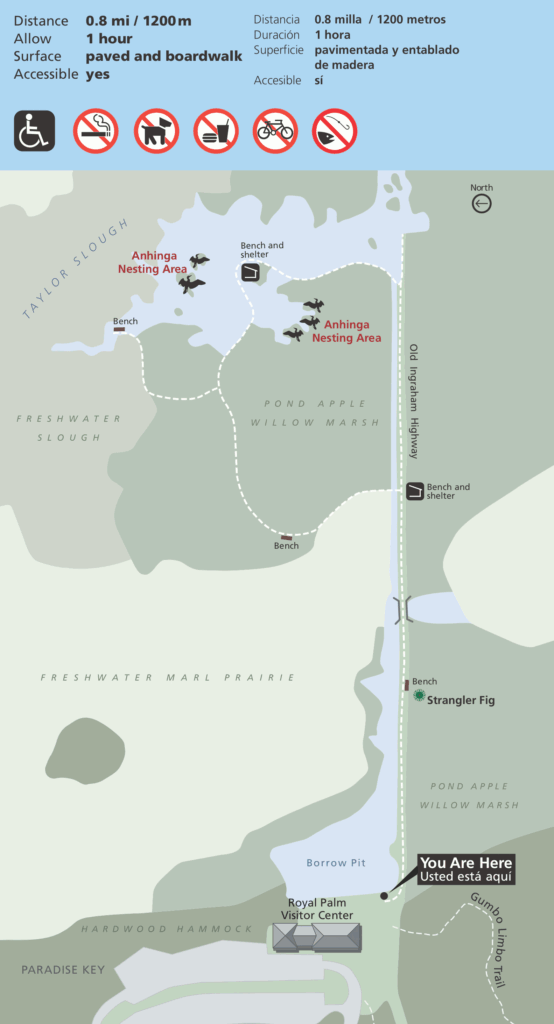
Distance: 0.8 miles (1,200 meters) roundtrip
Elevation Change: None
Difficulty: Easy
Time to Complete: 30 minutes, longer if you see more wildlife
Stroller and Wheelchair Accessible: Yes
Pets: Not permitted (there are so many alligators!)
Bicycles: Not permitted
How to Get to Anhinga Trail
The Anhinga Trail begins at the Royal Palm Visitor Center, located at the Homestead entrance to Everglades National Park.
Once you enter the park, pay your entrance fee or show your park pass. Continue two miles beyond the entrance station and turn left. Follow signs for Royal Palm and Anhinga Trail. The parking area is another two miles from the Main Park Road.
SWAMP OR MARSH? Swamps are defined as stagnant bodies of water. The Everglades is actually a large, moving river, or slough. Therefore, it is marshland.

On the road to Royal Palm, I often see many birds and alligators. Keep an eye out so you don’t miss anything exciting (or harm wildlife).
The Royal Palm parking area is fairly large, but it sometimes fills up. If there’s nowhere to park, consider visiting another time. I don’t recommend parking illegally. Park rangers will issue citations for this, and you could damage park resources or endanger other drivers if you aren’t in a designated space.
The Royal Palm Visitor Center has bathrooms, water fountains, and a gift shop.
Directions to and Map of Anhinga Trail
Anhinga Trail Parking GPS Coordinates: 25.382506, -80.609917
Park Address: 40001 SR 9336, Homestead, FL 33034
From the main park entrance in Homestead, continue on the Main Park Road. You’ll pass the Ernest F. Coe Visitor Center and the entrance station, where you’ll pay your entrance fee or show your park pass. About one mile after the entrance station, turn left toward Royal Palm and follow signs for the Anhinga Trail.
Look Out for Vultures
Recently, Black Vultures and Turkey Vultures have started picking apart and eating the rubber pieces of vehicles in the Royal Palm area. They seem to like windshield wipers and the rubber seals around car doors and windows the most.

This isn’t as bad as it used to be, but if you’re concerned, the park offers tarps and bungee cords in a bin by the visitor center. You can borrow these to protect your car while you walk the Anhinga Trail and/or Gumbo Limbo Trail.
You may notice a vulture playground in the parking lot. This consists of several PCP pipes, rubber tires, and other rubber toys. The National Park Service has added this to entice vultures away from vehicles. In 2025, this had been removed, further demonstrating that this isn’t as much of a problem as it’s been in the past.
Anhinga Trail Description
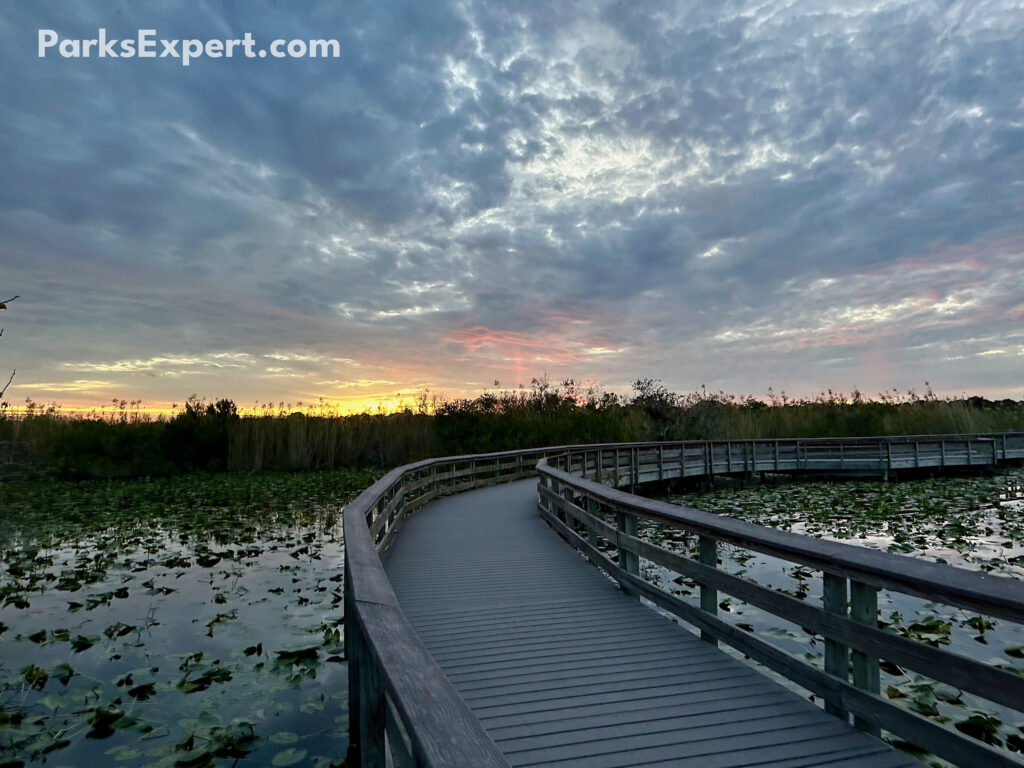
The Anhinga Trail is a lollipop-style loop trail that begins and ends at the Royal Palm Visitor Center. It includes a boardwalk loop at the end of a paved sidewalk.
It’s the best trail in the Everglades for wildlife, making it one of the best things to do in Everglades National Park. Other features include the beautiful sawgrass marsh and freshwater slough.
WHAT THE HECK IS AN ANHINGA? These super cool birds are the namesake of the trail. Males are all black and white, while females have brown heads and necks. When they hunt, they spear their fish with their sharp beaks. It’s entertaining to watch as they must find a way to remove the fish from their beaks to eat it. You’ll see them drying off along the trail, wings spread wide to let the moisture evaporate.

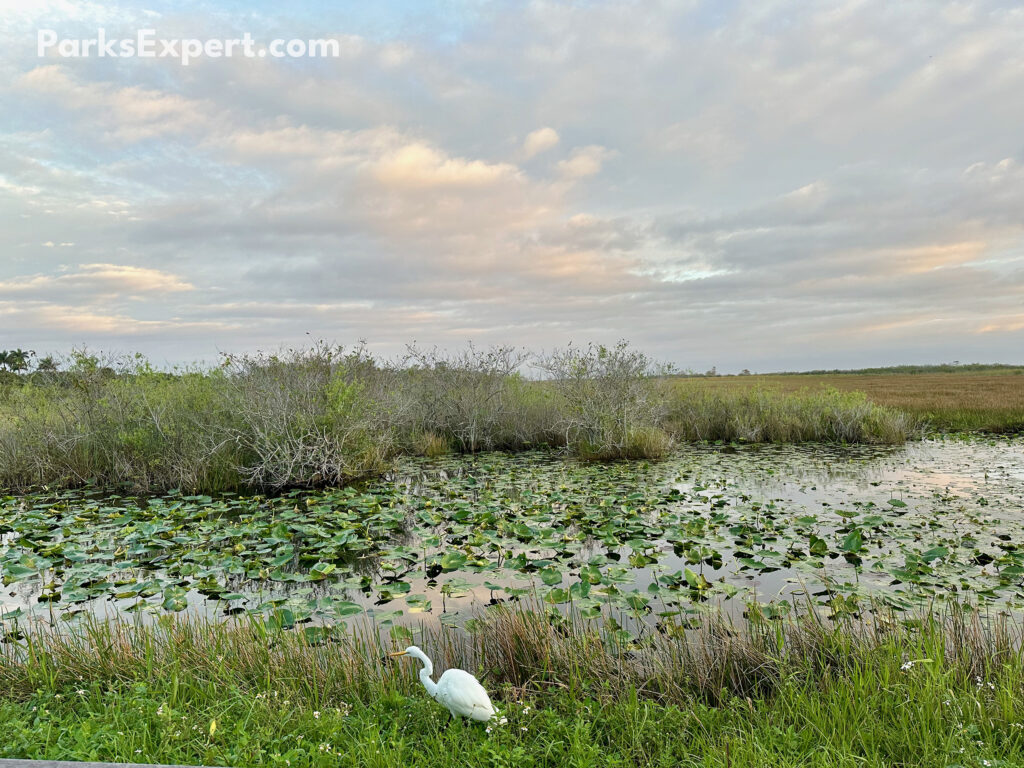
At the Royal Palm Visitor Center, look out over the water. You may start to see wildlife before you even begin your walk. I’ve seen alligators, turtles, Anhingas, Great Egrets, and Green Herons here.
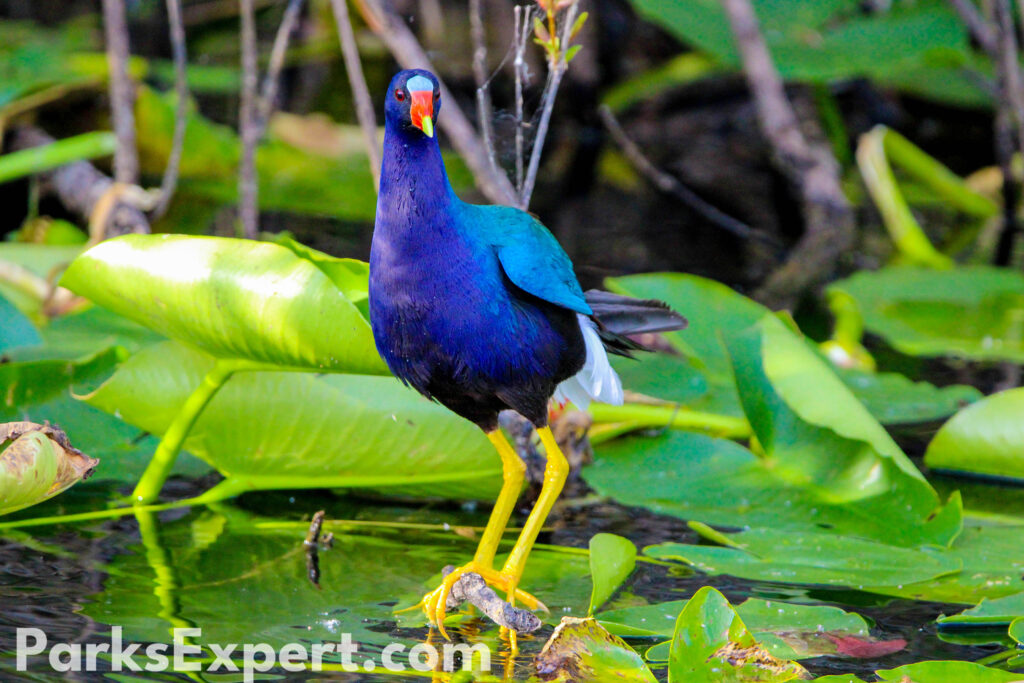
To start, you’ll walk a paved path next to a wooden railing. I often see Double-crested Cormorants and Anhingas resting on these railings or the stone walls, posing for photos as they dry off. Purple Gallinules often hop across the lilypads nearby as well. I’ve even seen cottonmouths along this stretch before.
FUN FACT: Part of the Anhinga Trail follows the Old Ingraham Highway, the original road that brought visitors to Flamingo.

Continuing, you come to the beginning of the loop. The water starts to get deeper and clearer here. I recommend continuing on the paved path until it dead-ends at an overlook. Locally, this is known as Alligator Point. Peer from this observation deck across the water to see if you spot any alligators. You may also find more birds in the trees.
Then, turn back and begin the loop by taking the boardwalk to your right. Look carefully into the clear water around you to look for turtles, fish, and alligators. The plant life on this section of the trail is also fascinating. You’ll see pond apples, epiphytes, and even orchids in the warmer months.

When you arrive at the pavilion, take some time to rest in the shade and enjoy the peaceful environment. Admire the Anhingas and cormorants that tend to rest here as well. You can also read a few signs to learn more about the wildlife you’ve seen.
FUN FACT: This was the first part of Everglades National Park to be protected. At the time, it was part of Royal Palm State Park.
Continuing on the boardwalk, there’s another spur to your right. This leads to another viewing point. I’ve seen more alligators and bird species there, as it’s often quieter, and fewer visitors walk down there.
On your way back, you’ll meander through tall sawgrasses and perhaps see smaller birds and wildlife. You’ll get nice views of the visitor center, and signs will teach you about tree islands, an important geological feature in the park. With such a low elevation, every inch of difference matters for water flow and thriving plant life in the Everglades.
When to Walk the Anhinga Trail
The Anhinga Trail is open as long as the park is open. It is generally accessible 24 hours a day, 365 days a year.
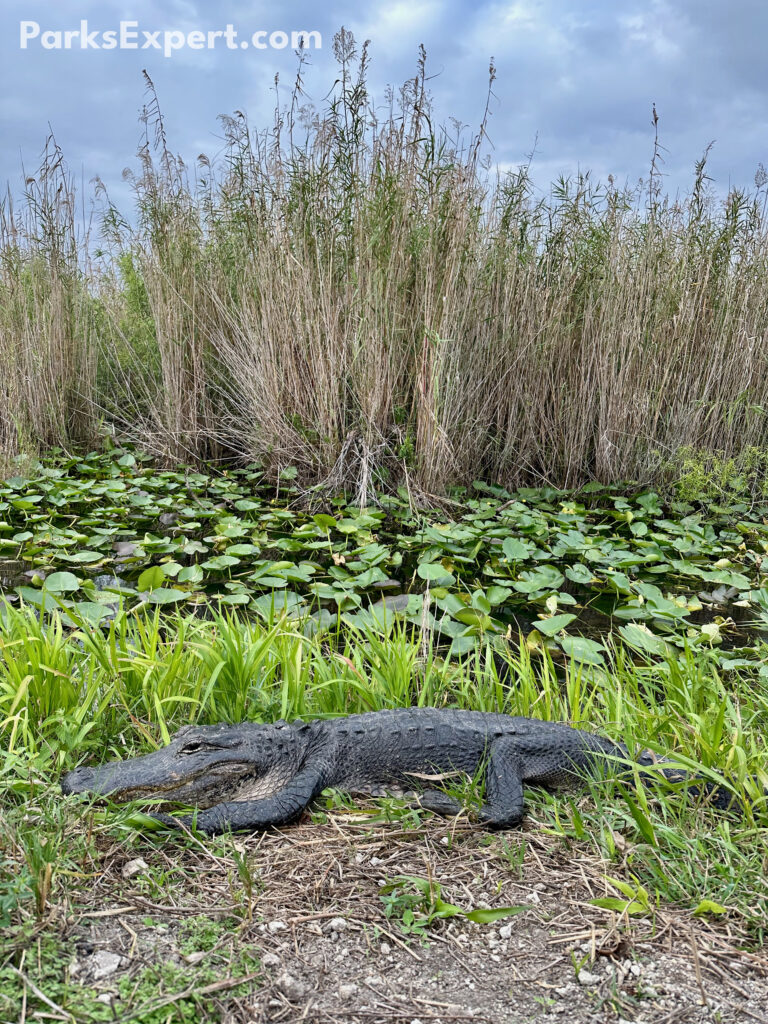
The Anhinga Trail is best for wildlife in the winter months, also known as the dry season in Florida. This is because of the water levels.

WALK THE ANHINGA TRAIL AT NIGHT: Visiting the Everglades at night is an entirely different experience with exciting nocturnal wildlife. Check the park calendar for any ranger-guided nighttime strolls on the trail during your visit. There are also daytime ranger-led walks and talks along Anhinga Trail year-round.
When Florida gets its summer rains, more water is spread across the park, so the animals spread out. In the winter, as summer watering holes dry out, they’ll navigate to any bodies of water they can find.
The area surrounding Anhinga Trail (called Taylor Slough) always has water, making it a reliable winter destination for many animals.
What Wildlife Can I See on Anhinga Trail?
PARKS EXPERT TIP: Want to see what’s on the trail today? Check out the Anhinga Trail webcam!
- Alligators: an Everglades staple and one of the reptiles almost every visitor hopes to see
- American Bitterns: a rare treat, these stealthy birds may be found lurking in the reeds
- Anhingas: the trail namesake, these birds are known as “snake birds” for their snake-like neck movements
- Birds: so many species fly around the Anhinga Trail; some of my sightings include Palm Warblers, Red-shouldered Hawks, and Northern Mockingbirds. In the spring and summer, look toward the sky for the migratory Swallow-tailed Kites.
- Double-crested Cormorants: often confused for Anhingas, these birds have hooked beaks and no white feathers
- Fish: both native and exotic fish species can be seen swimming in the clear waters
- Great Egrets: one of the more common species in the park, these white birds are often seen stalking their prey on the water’s edge
- Herons: I’ve seen Tricolored Herons, Green Herons, and Great Blue Herons fishing along the Anhinga Trail
- Purple Gallinules: one of the more fun birds to watch, Purple Gallinules walk seamlessly atop lilypads to find bright yellow spatterdock flowers to eat
- Snakes: one of my favorite sightings on the trail was a young cottonmouth curled up on one of the bridges
- Turtles: another spatterdock lover, several species of turtle can be found on the Anhinga Trail
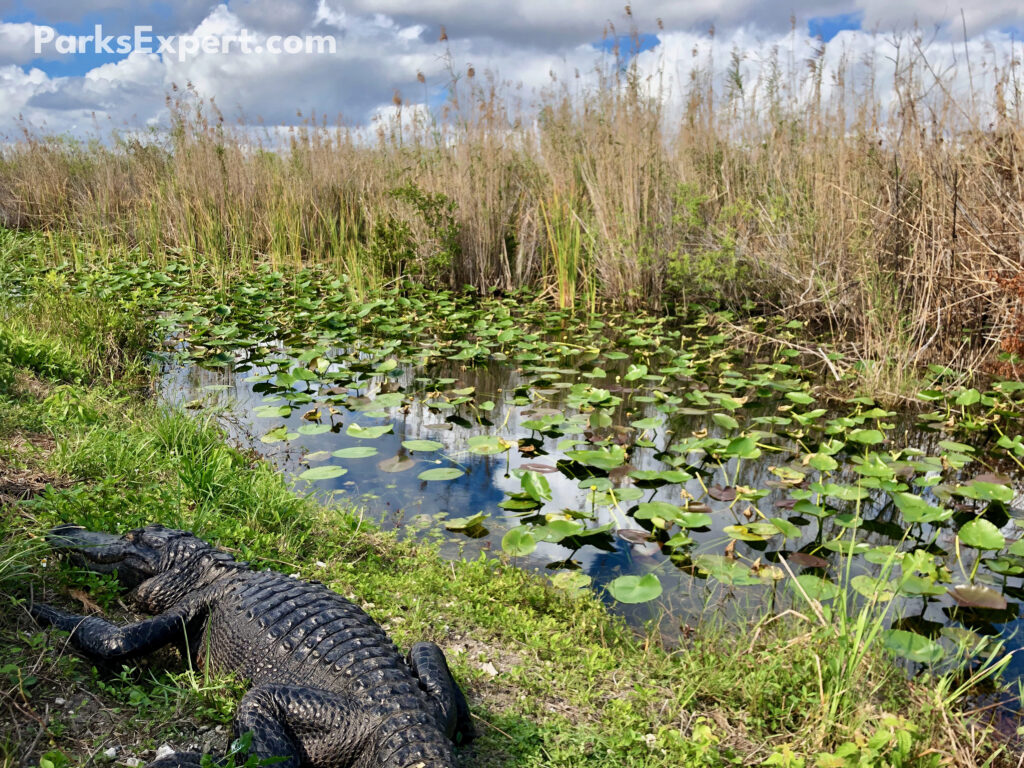
WILDLIFE SAFETY: Animals along the Anhinga Trail are accustomed to people. Sometimes, they’re so dormant that people think they are fake. As quiet as they are, they are still very dangerous. Don’t disturb, harass, try to feed, try to touch, or approach wild animals. If they change their behavior because of something you are doing, then you are too close.
What to Bring on Anhinga Trail
Sunscreen, sunglasses, and a hat are a must on this trail, as there is very little shade. You’ll also want bug spray, especially if you visit in the summer. Bring a water bottle to refill before and after your hike so you stay hydrated in the Florida heat.
Of course, you’ll want to bring a camera. The Anhinga Trail is famous for wildlife, so I recommend a telephoto or even a long lens to capture the best photographs. Bring a standard zoom lens along for landscape shots as well.
As always, I recommend carrying the ten essentials for a safe hiking trip.
- Navigation systems: map, compass, and/or GPS
- Sun protection: sunscreen and/or ballcap
- Insulating layers: synthetic or down jacket, rain jacket, hat, gloves, and leggings
- Illumination (flashlight or headlamp)
- First-aid kit
- Something to light a fire: lighter, waterproof matches, and/or fire starter
- Repair kits and tools: pocket knife, duct tape, screwdriver, and/or scissors
- Emergency shelter: tent, bivy, tarp, and/or space blanket
- Nutrition: food for both meals and snacks
- Hydration: water bottle, water treatment (LifeStraw or SteriPen), and water
Pin the Expert’s Anhinga Trail Hiking Guide

If you only have time for one walk in the Everglades, make it the Anhinga Trail. Every Everglades itinerary should include this walk. With its abundance of wildlife and gorgeous scenery, you can’t go wrong. Every walk on this trail will offer something unique to see.
Read our Expert Guide to Visiting the Everglades for more tips on visiting the park.