California is home to some of the most iconic waterfalls in the world. Yosemite Falls (Yosemite National Park), Rainbow Falls (Devil’s Postpile National Monument), and Burney Falls (McArthur-Burney Falls Memorial State Park) often top the lists of the crowned “best waterfalls in California,” but often, a lesser-known cascade called Alamere Falls is mentioned, and for good reason, too.
The Alamere Falls hike in Point Reyes National Seashore demands effort, but your payoff will be one of the most magical waterfalls in the state of California.
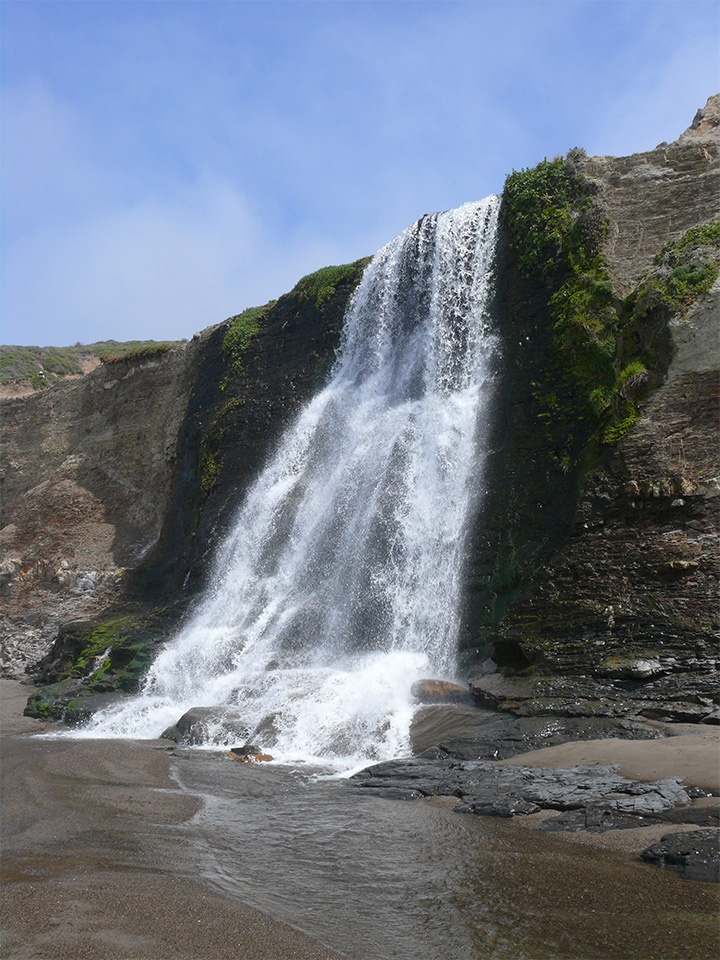
This fantastic tidefall flows directly into the Pacific Ocean, and it’s truly a sight to behold. It’s only one of six tidefalls that exist in the United States!
This guide to hiking Alamere Falls will give you all the information you need to prepare for the hike to Alamere Falls, a tough trek to a rare natural wonder.
This post may contain affiliate links. If you make a purchase, I may earn a small commission at no additional cost to you. For more information, view my privacy policy.
Table of Contents
Things to Know Before Hiking Alamere Falls
Where is Alamere Falls?
Alamere Falls can be found within the Phillip Burton Wilderness, nestled inside a larger National Park Unit, Point Reyes National Seashore.
Established in 1962, Point Reyes protects 71,028 acres (287.44 km2) of various ecosystems.
There’s no way to perfectly summarize just how expansive Point Reyes truly is, but know this: it’s so much more than just a coastline.
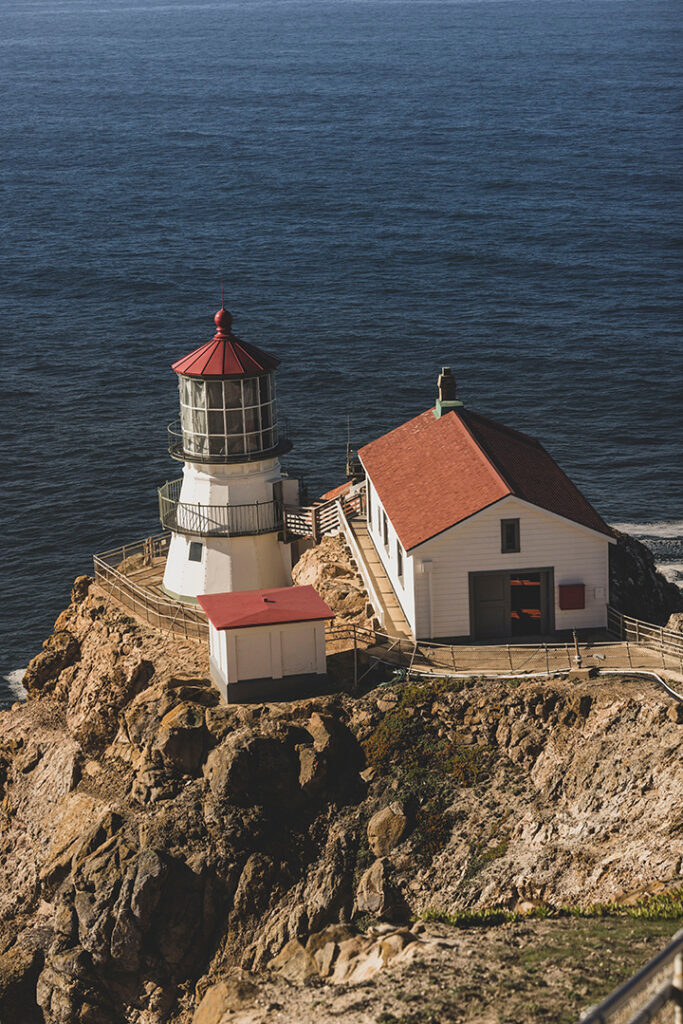
Point Reyes offers a dramatic landscape bustling with, but certainly not limited to, forested hills, historic ranches, rolling fields, mysterious shipwrecks, alluring ocean views, and much more, all teeming with an enormous variety of diverse plants and wildlife.
With so much opportunity for learning and exploration, getting the most out of a visit to Point Reyes can feel like a difficult task.
Hiking to Alamere Falls will allow you to experience the best of what Point Reyes offers its visitors. In fact, hiking to Alamere Falls is one of our favorite things to do in Point Reyes.

How to Get to Point Reyes National Seashore
The park is just over an hour’s drive along Highway 1 from San Francisco. You can find detailed directions for how to get there on the park’s website.
There are three visitor centers within the park: the Bear Valley Visitor Center, the Point Reyes Lighthouse Visitor Center, and the Kenneth C. Patrick Visitor Center. Check the Point Reyes website for the most up-to-date operating hours for each.
There is no fee to enter Point Reyes National Seashore.
When is the Best Time to Hike Alamere Falls?
Thanks to the gorgeous weather in the Bay Area, this hike is accessible year-round.
For the warmest temperatures, consider hiking in September or October. To see the falls at their fullest, consider hiking in winter or spring when heavy rain is more common.

Wildlife
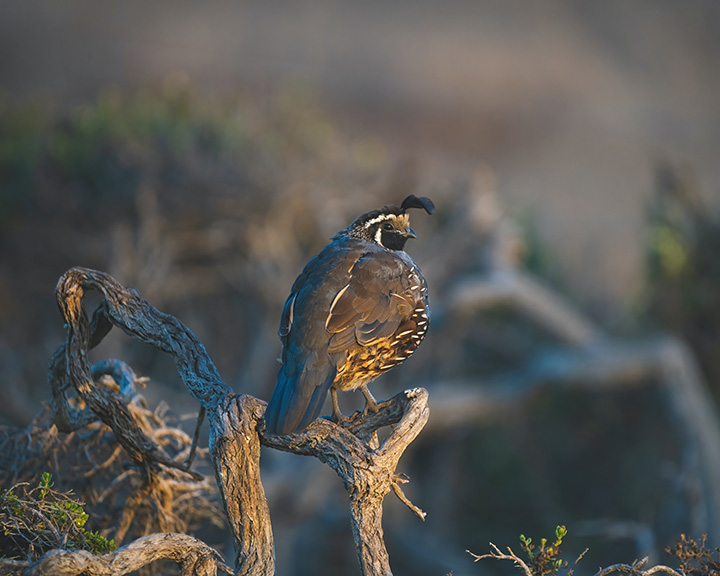
Animal watching can be especially fun at Point Reyes. Keep your eyes out for chances to spot bobcats, coyotes, Tule elk, elephant seals, cattle, whales, and more!
Remember, many of the historic ranches are still operational today. Respect both wildlife and domestic animals by keeping a safe distance away.
When visiting our national parks and public lands, please practice Leave No Trace principles. Plan ahead, choose durable surfaces for camping or hiking, dispose of all waste properly, leave everything you find, minimize campfire impacts, respect wildlife, and be considerate of other park visitors.
Critical Information and Rules for Hiking to Alamere Falls
- The minimum distance for the Alamere Falls trail is 13 miles (20 km) roundtrip
- On average, the hike takes at least seven hours to complete
- Alamere Falls is 40 feet (12 m) tall
- The trail is accessible year-round
- Peak water levels over the falls occur in late winter and spring
- Dogs are not permitted on this trail
- The use of drones is not permitted in any national parks
- There is no potable water along the trail
- The National Park Service asks that you not only pack in and pack out any trash you bring, but also that you don’t bring any glass containers with you on the beaches
- Cell service is limited to nonexistent on the route
- Stay up-to-date on the tidal activity before you depart
What to Bring on an Alamere Falls Hike

As with any trail, before you start out, you want to be prepared with the right gear. Careful planning is essential for a safe trip. Alamere Falls is a long and difficult trail no matter which place you start from, and bringing the “10 Essentials” with you can save your life in emergency situations.
- Navigation: Make sure you know the route you’re taking before you set out, and even if you’re confident you could make it with your eyes closed, still bring some kind of navigation tool, i.e. a GPS, map, or a compass (and remember, it never hurts to have all three).
- Sun Protection: Prolonged exposure to the sun can be dangerous if you’re unequipped. Make sure to have plenty of sunscreen with you, and apply it as frequently as needed. Don’t forget to reapply every few hours. Also, consider bringing a hat and sunglasses as well. If you end up sunburned, aloe vera can be used for quick pain relief.
- Layers: As the old saying goes, “if you don’t like the weather, wait five minutes and it will change.” Point Reyes can see especially rapid atmospheric changes with its proximity to the Pacific Ocean. Packing clothes to help keep you warm and dry (think rain jackets, windbreakers, gloves, hats, thermal layers, etc.) is vital in being prepared for whatever nature throws at you.
- First Aid Supplies: Slips, trips and worse can happen on a trail, and often, you’ll find yourself far from immediate help. Having a well-stocked basic first aid kit with you on a trek can literally mean the difference between life and death.
- Light Sources: The sun rises and sinks every day, and if you find yourself out on a trail after the sun begins to set, there is no replacing a stable light source in an environment where none can be found. Headlights, flashlights, and even portable lanterns are a must-have on any hike, especially if it goes longer than planned. Don’t forget those extra batteries, too! Pro Tip: Purchase a headlamp that illuminates with several different colors; red light is ideal to use during any potential night sky observation you’ve got planned.
- Fire Sources: Another source of light, but also warmth, can be found with basic fire starters. Though you probably won’t use them on your day hike, it’s always good to carry matches, lighters, or other fire starters just in case. Don’t forget to check the area’s fire regulations.
- Food: Though nature is great for re-energizing the soul, your body needs fuel as well. Make sure you pack enough food/snacks to help you power through the strenuous activity you may face on certain hikes, especially longer ones. Salty and easily digestible foods (i.e. nuts, trail mixes, granola, etc.) are recommended.
- Hydration: Perhaps the most important thing any hiker can take along for the journey is adequate hydration. Keep in mind that not only having plenty of water with you is important, but a water purification system as well if your bottles run dry.
- Water Bottle: Remember to drink plenty of water throughout your trip, even if you don’t feel thirsty, especially during hotter, drier days. Bringing a reusable water bottle is better for the environment!
- Survival Tools: Compact multi-tools, duct tape, and knives could come in handy. You never know when you’ll need them, but you’re sure to be glad you have them when the time comes.
- Shelter: Like the clothing layers you surely packed for your trip, you should also be prepared to get out of the weather with a tent. If conditions turn extreme, a tarp or a space blanket will do in a pinch.
- Long pants: I know many people prefer to hike in shorts, but I would wear long hiking pants on this hike. There are many places where ticks and poison oak are prevalent.
- Hiking boots: Absolutely worth having, especially on longer hikes, are good, sturdy hiking boots with lots of traction. Hiking boots can help keep your feet from hurting and can help prevent injuries.
Alamere Falls Trailheads
So now that you’re familiar with Point Reyes National Seashore, and you’ve packed your hiking essentials, let’s talk about the trek to Alamere Falls.
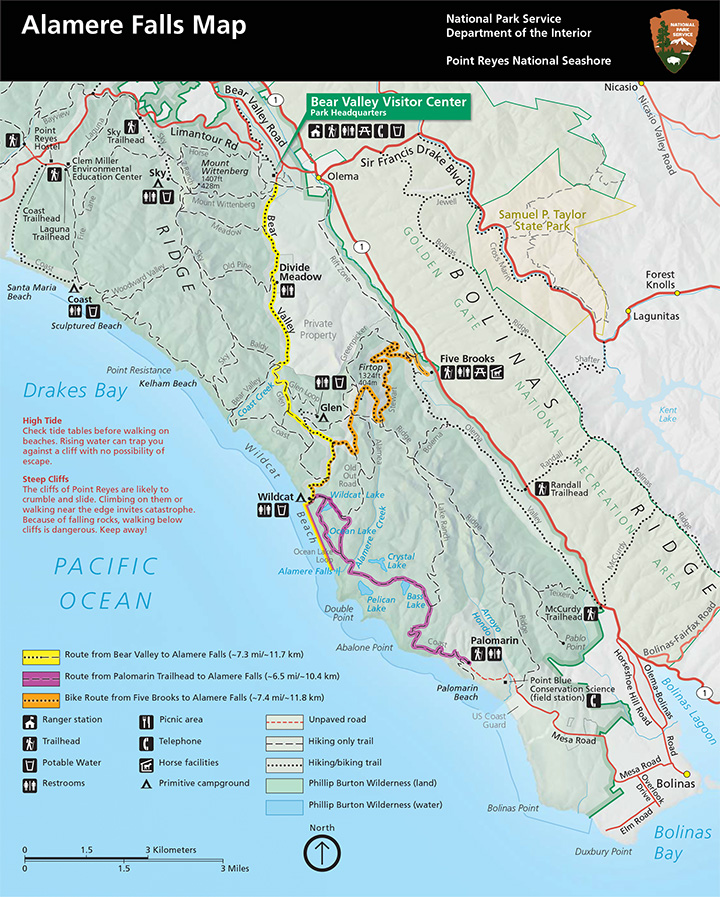
There are several different trails visitors can use to start their journey to Alamere Falls, but the most popular three are the Palomarin Trailhead, Five Brooks Trailhead, and the Bear Valley Trailhead.
For simplicity’s sake, we’ll be focusing mostly on hiking from the Palomarin Trailhead. This is the route we took. It’s also the most popular and the shortest.
Round trip distances to Alamere Falls from each trailhead:
- Palomarin Trailhead: 13 miles (20.9 km); Elevation gain is about 1,900 ft (579.1 m), per Alltrails
- Five Brooks Trailhead: 14.2 miles (23 km); Elevation gain is about 2,690 (819.9 m), per Alltrails
- Bear Valley Trailhead: 14.6 miles (23.5 km); Elevation gain is about 2,949 (898.9 m), per Alltrails
While they’re all long hikes, we promise they’re worth it!

As we’ve mentioned, this trail is incredibly popular, especially at the Palomarin Trailhead. Parking spaces can and will fill up as the day goes on, especially in higher-traffic seasons like summer or spring. Start early (before 8 a.m.) to secure your parking spot.
- Palomarin Trailhead has 75 parking spaces (0 are oversized)
- Bear Valley Trailhead has 210 parking spaces (0 are oversized)
- Five Brooks Trailhead has 50 spaces (10 are oversized)
All trailheads offer restroom facilities. Bear Valley Trailhead is also home to the Bear Valley Visitor Center.
Again, plan to start your day early, as getting to the trailhead can also take time. The Palomarin Trailhead parking area can feel out of the way; it lies almost 8 miles (12.9 km) from Highway 1, and it will be a slow drive.

When traveling to the Palomarin Trailhead parking lot, keep these three words in mind: high clearance vehicle.
The last 1.2-mile (1.9 km) stretch of Mesa Road near the parking area is unmaintained, and you’ll encounter more frequent and significant potholes, as well as general washouts along the way.
It’s not impossible to make it to the trailhead with any regular car but be forewarned you’ll want to drive incredibly slowly and carefully.
Palomarin Trailhead and Coast Trail
Before you lace up those hiking boots and strap on your pack, did you check the weather conditions before you left? Be sure you know what to expect before starting out; you’ll most likely be gone for the majority of the day after you begin.
It’s not uncommon for the landscape to be blanketed by a thick cover of fog, especially in the summer and in the mornings, but the fog almost always burns off by the mid to late afternoon. We recommend checking the current conditions as well for any park alerts.
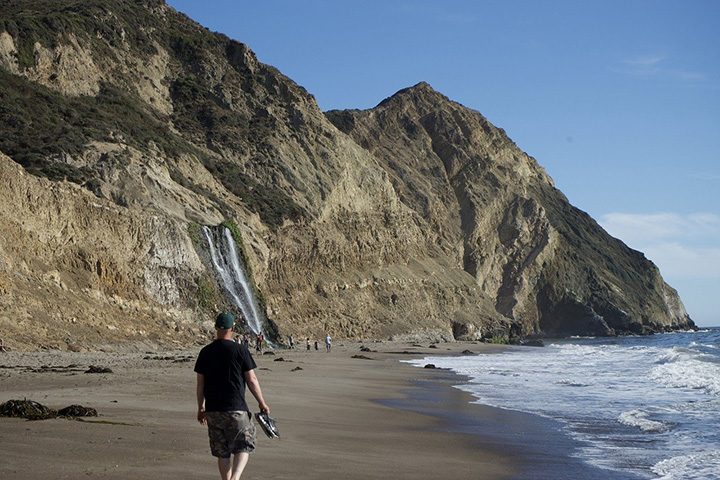
From any of the starting points, your first goal is to reach the Wildcat Camp. From there, you’ll traverse down Wildcat Beach to reach Alamere Falls. Again, the roundtrip distance for any of these trailheads is at least 13 miles (20.9 km).

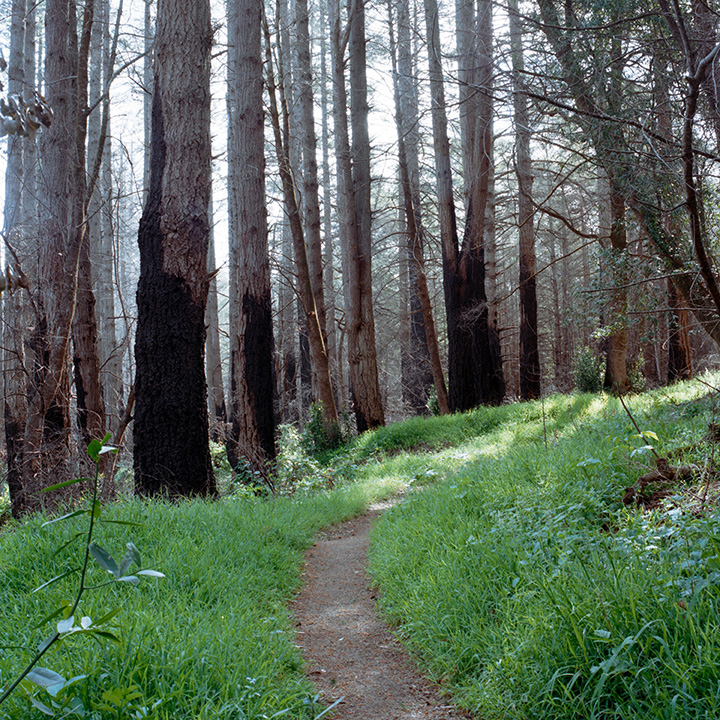
The Palomarin Trailhead starts you on the path of the Coast Trail. You’ll start by passing through an incredible eucalyptus grove, and out past an impressive open view of the ocean. Most of the trail is exposed and open (make sure you pack that sunscreen!), but you will travel through a long forested section early on.
As you go through the forest, you’ll travel more inland and pass several small lakes, like Bass Lake, Pelican Lake, Crystal Lake, and Ocean Lake (depending on which direction you take at the split).
Soon after you pass the “shortcut,” you’ll reach a split in the trail, but both will take you to the Wildcat Camp. To continue on the Coast Trail, head right at the split.
The left takes you down the Ocean Lake Loop. Continuing on the Coast Trail brings you a bit more inland with more shrub and forested sections, while the Ocean Lake Loop will bring you down to the lake, followed by a steep climb back up to a bluff overlooking the ocean.
When you’ve made it to the Wildcat Campground, you’re faced with the last stretch of 1.1 miles (1.7 km) to reach the falls.
You’ll walk this stretch along the beach itself, and you’ll want to have knowledge of high tide and low tide conditions before you proceed. A great source is checking NOAA’s current tide prediction charts. Do not attempt the hike to Alamere Falls during high tide.
This is also a good chance to stop for a restroom break if you need one; there are pit toilets in the Wildcat Campground available for use.
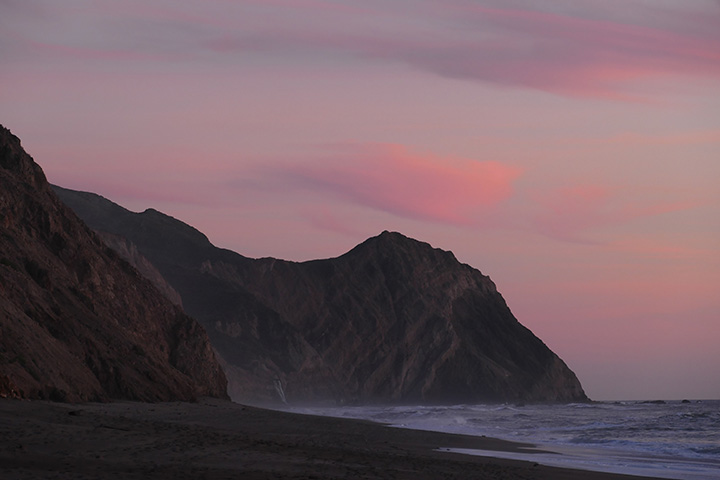
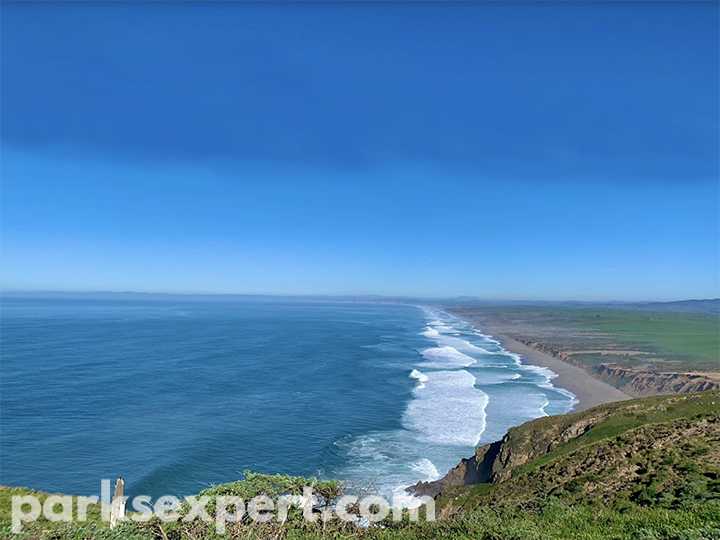
As you walk along the coast, take in the beautiful coastal views.
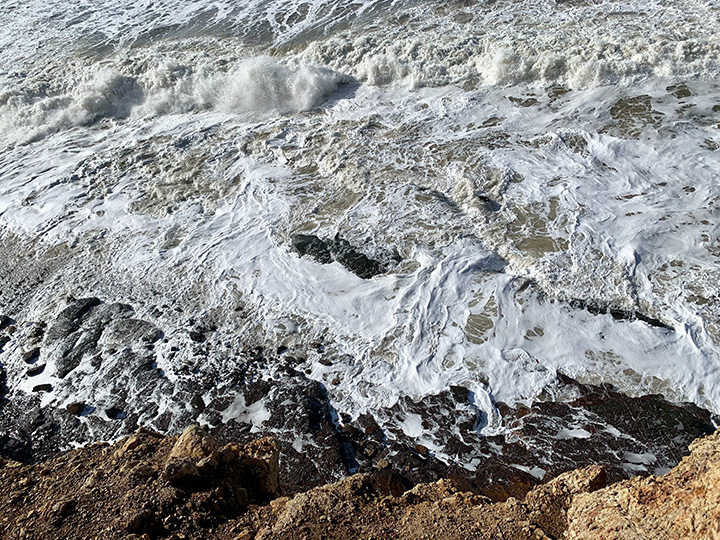
You’ll be treated to a near-constant chorus of thundering breakers as they crash along the shore along with the calling of seabirds.
Giant pieces of detached kelp and other sea plants often dot the beach.
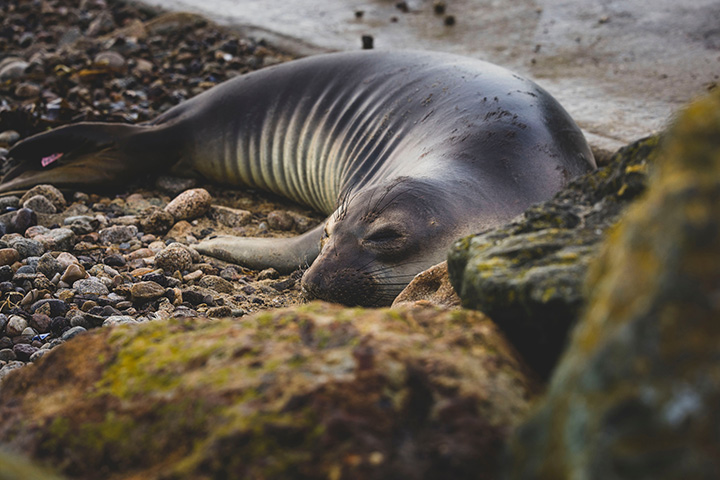
Another thing to watch out for is wildlife. If you see elephant seals resting along the sands, or flocks of birds wandering out, be sure to leave them alone, and give them a wide berth of space. Point Reyes is their home; no one wants to be harassed where they live.
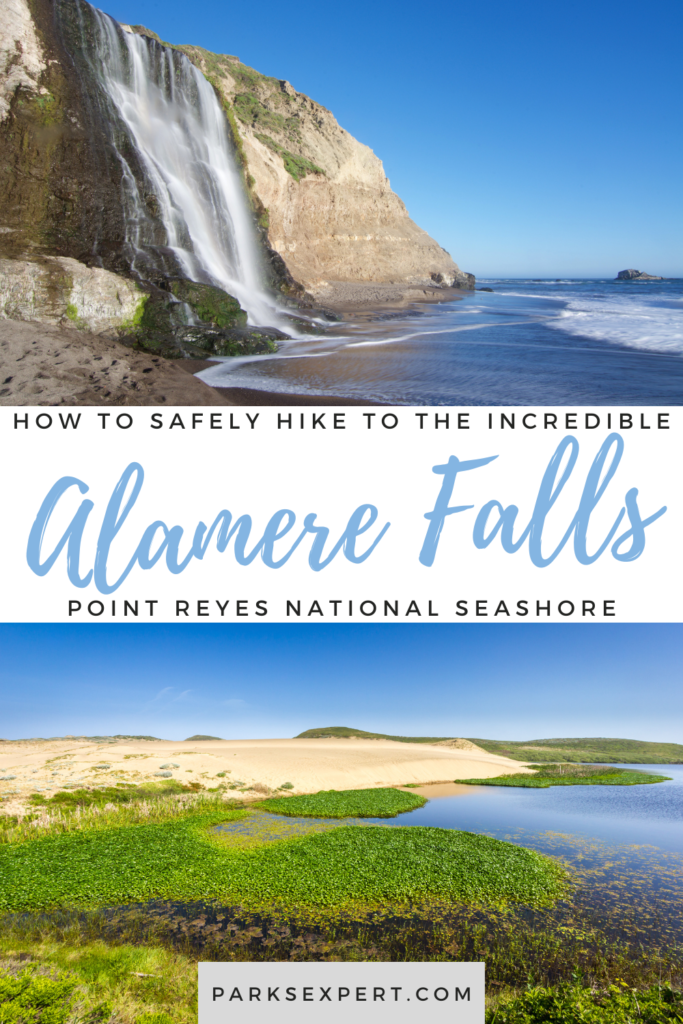
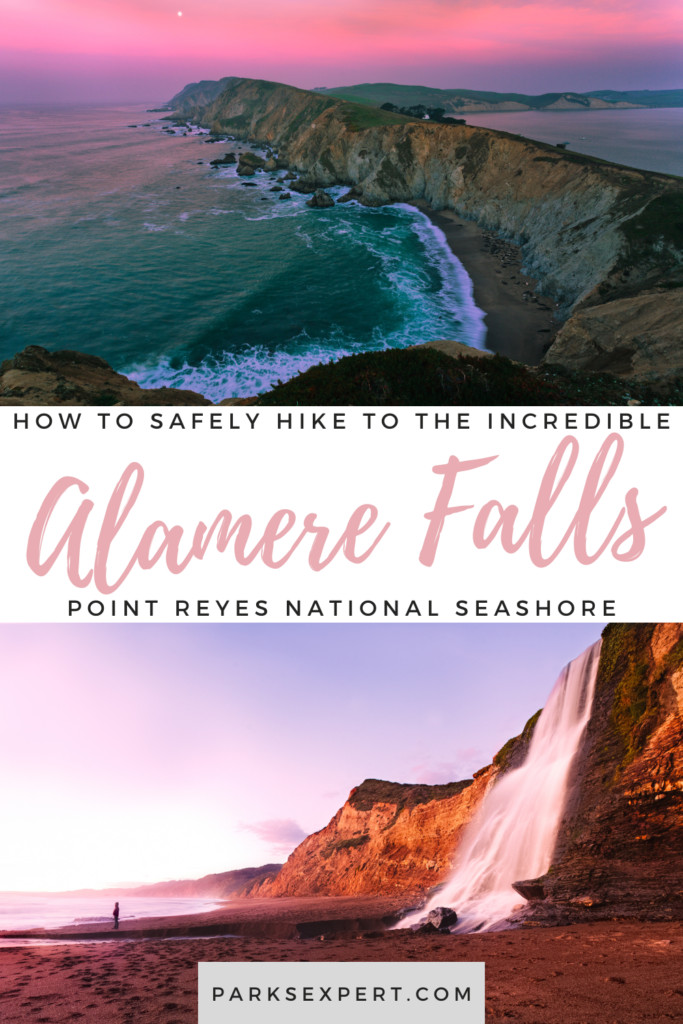
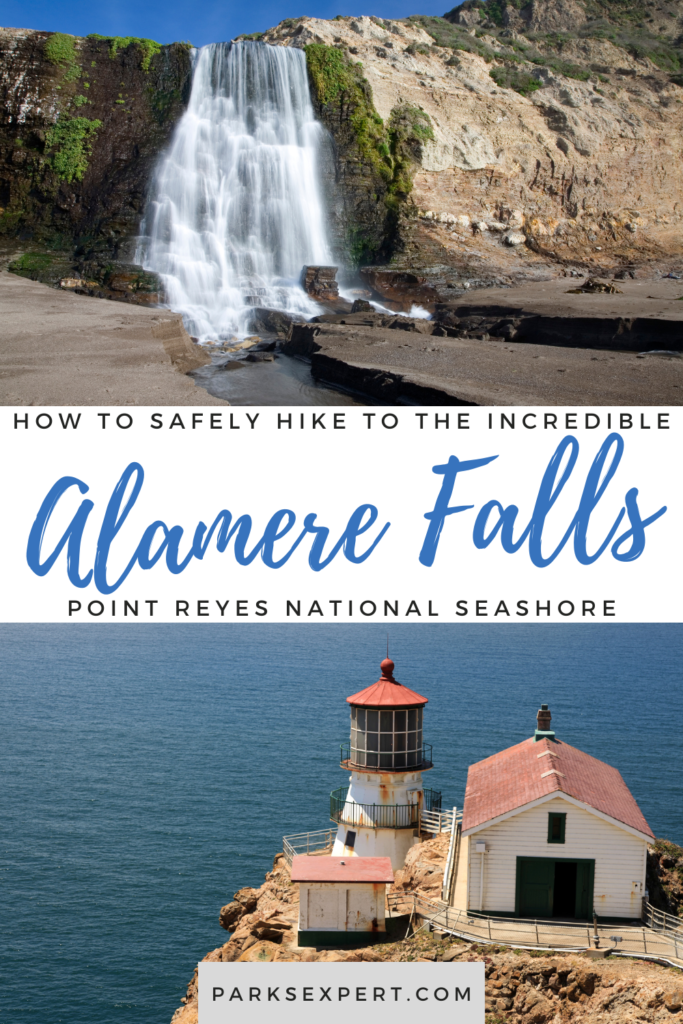
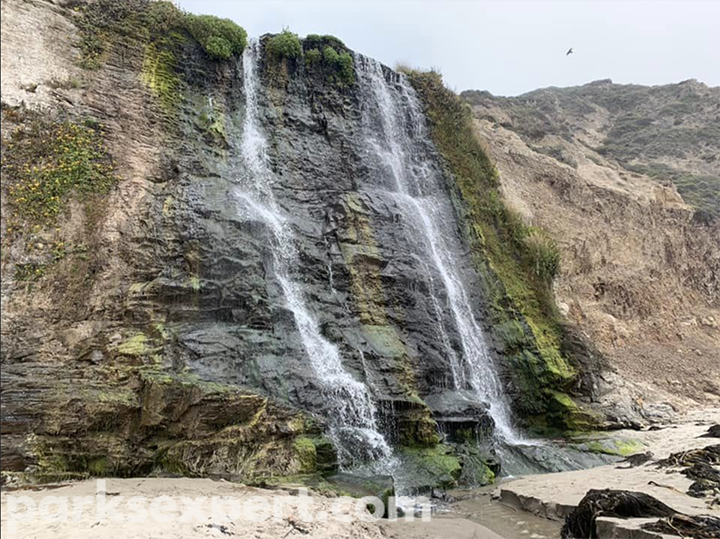
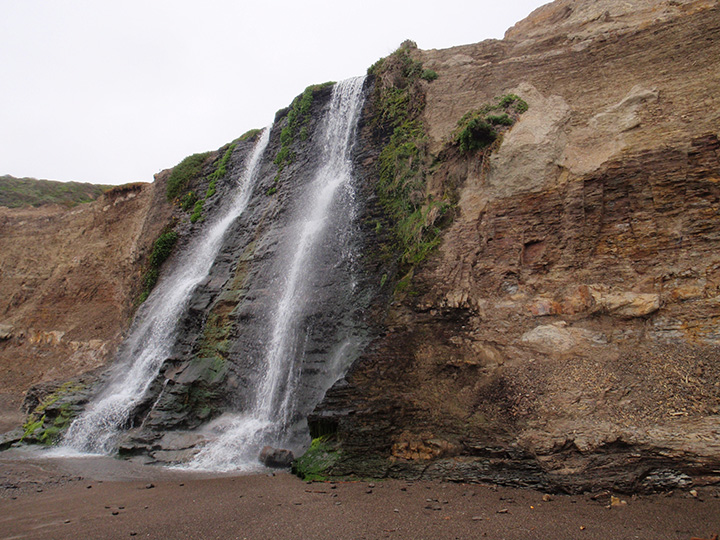
At the end will be Alamere Falls, and you’ll be reassured that it was worth the effort just by the mere sight of it.
If conditions permit, you can approach the waterfall closely. Some nicely placed logs may offer you a welcoming seat.
As you marvel at this 40-foot tide fall (12 m), consider this a near-perfect lunch spot before you begin your trip back to the start.
It’s always good to know what to expect, and you should expect the trip back to be more demanding. A majority of your trip to the fall will be downhill, and almost all of your elevation gain will be gathered on the way back.
Remember that hiking is not all about how fast you go. Pace yourself and be sure to take the same route back to the right trailhead.
What About the Alamere Falls Shortcut?
About four or so miles into the Coast Trail, you’ll encounter a well-defined social trail. This is the infamous shortcut to Alamere Falls, and you should not take it.
Over the years, hikers have popularized an unofficial trail that will cut off several miles from the hike. Some guidebooks and social media posts even refer to this trail as the “Alamere Falls Trail,” which brings those who take it straight to the top of the falls.
We promise: there is no such thing as the Alamere Falls Trail, at least not officially. Though this may seem ideal to some, this path is not recommended by the National Park Service.

This is an unmaintained trail. First, you must make it through an overgrown section of plants, often mixed with poison oak and ticks.
When you make it to the cliff, you face a dangerous scramble down a steep cliffside that is subject to constant coastal erosion, loose rock, and collapse. In addition to risking self-injury, you also risk damage to irreplaceable park resources.

On average, the National Park Service has to deploy a rescue for someone who attempted to use this dangerous, unmaintained route at least once a week.
The National Park Service strongly advises against taking this treacherous trek. Instead, continue the hike down the safe and maintained trail.
If you do choose to take the “shortcut”, this small trail is done at your own risk. Remember that rescue teams are never guaranteed. Also, remember that cell phone reception is unreliable.
In a nutshell: don’t do it!
Wildcat Campground

If you’re wondering about that quaint little campground you’re going to pass right by, and if it’s worth checking out, the answer is an absolute yes.
Staying at the Wildcat Campground can be a great way to break up your hike to the falls, or to give yourself a much-needed break before you make the trip home.
Here’s some quick information about this wonderfully secluded spot. Before you start your trip out there, make sure you secure your camping permit on Recreation.gov.

This small, isolated campground is open year-round but is only accessible by hiking or biking.
The only bicycle route to the campground is a 6.7-mile ride along the Stewart Trail from the Five Brooks Trailhead.
There is no driveable road to get here, and it’s far away from any amenities you may hope to have, but it is worth an overnight visit.
This campground is a short walk away from Wildcat Beach, a spectacular spot for sunsets and beach fires.
Featuring regular sites for up to 1-6 people, or small and large group sites for up to 25, this campground is perfect for a solo trip or a large family excursion.
Be sure to pack in what you’ll need for the night, and follow the rules of the campground.
Wildcat Campground Overview
- Cost: There are three different types of sites available to reserve: regular sites cost around $30, small group sites (7-14 people) cost around $60, and large group sites (15-25 people) cost around $90. Prices vary.
- Accessibility: There are no accessible sites
- Facilities: Trash and recycling collection, food storage lockers, potable water, and vault toilets
- Reservations Accepted?: Yes
- RVs?: No
- Showers?: No
- Fires?: Charcoal fires are not permitted, but gas stoves can be used (small driftwood fires can be lit on beaches if a permit is obtained from the Bear Valley Visitor Center)
- Season: Year-round
- Sites: 8
Where to Stay Near Point Reyes
If you’re not interested in camping, here are some lodging options near Point Reyes National Seashore.
Pin Our Alamere Falls Hiking Guide
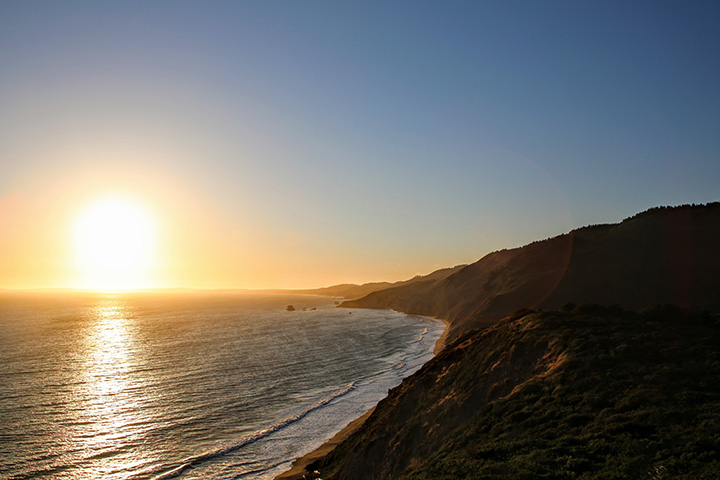
One of the world’s most special places, and only 30 miles (48.3 km) north of the bustling San Francisco, Point Reyes National Seashore is well worth your time, made all the more special by a hike to Alamere Falls. Any trip to the bay area should most definitely include this park and this hike.
This unique coastal waterfall is one of the best parts of the incredible ecosystem of Point Reyes National Seashore, and though it’s a popular trail, few people get to experience the wonder of this rare cascade.
While 13 miles (20 km) may not seem entirely easy to everyone, rest assured the reward will absolutely be worth the effort.

Alamere Falls is one of the most stunning waterfalls in our national parks as a whole. It deserves a place on your bucket list, as does Point Reyes National Seashore.
Experience the true and raw beauty of an expansive coastal ecosystem overflowing with so much diversity with this gorgeous hike. Trust us; this is one trail you can’t skip. Hike it for an extremely memorable visit to this incredible place.
If you’re looking for more information on how to make the most of your visit to Point Reyes National Seashore, or Alamere Falls, contact the Parks Expert and let us plan your next unforgettable adventure.
Have you been to Alamere Falls? We want to hear about it! Tell us your story in the comments.