

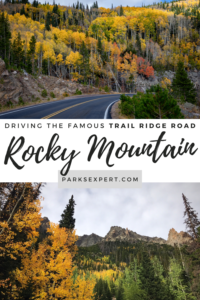
Driving Trail Ridge Road, Highway 34, a.k.a. “Highway to the Sky,” where the mountains touch the clouds.
Really think about that… where the mountains touch the clouds. Rocky Mountain National Park is so much more than I could have ever anticipated. It is not a place where you will enter for 1-2 hours, snap a few photos, and check it off your list.
Driving Trail Ridge Road will transform your world with its breathtaking views. You will be exchanging your 1-day pass for a 7-day while thinking I can’t wait to get back in there.
Written by Amber Hiltunen of Little Blue Backpack.
This post may contain affiliate links. If you make a purchase, I may earn a small commission at no additional cost to you. For more information, view my privacy policy.
Table of Contents
Rocky Mountain National Park: Trail Ridge Road Map
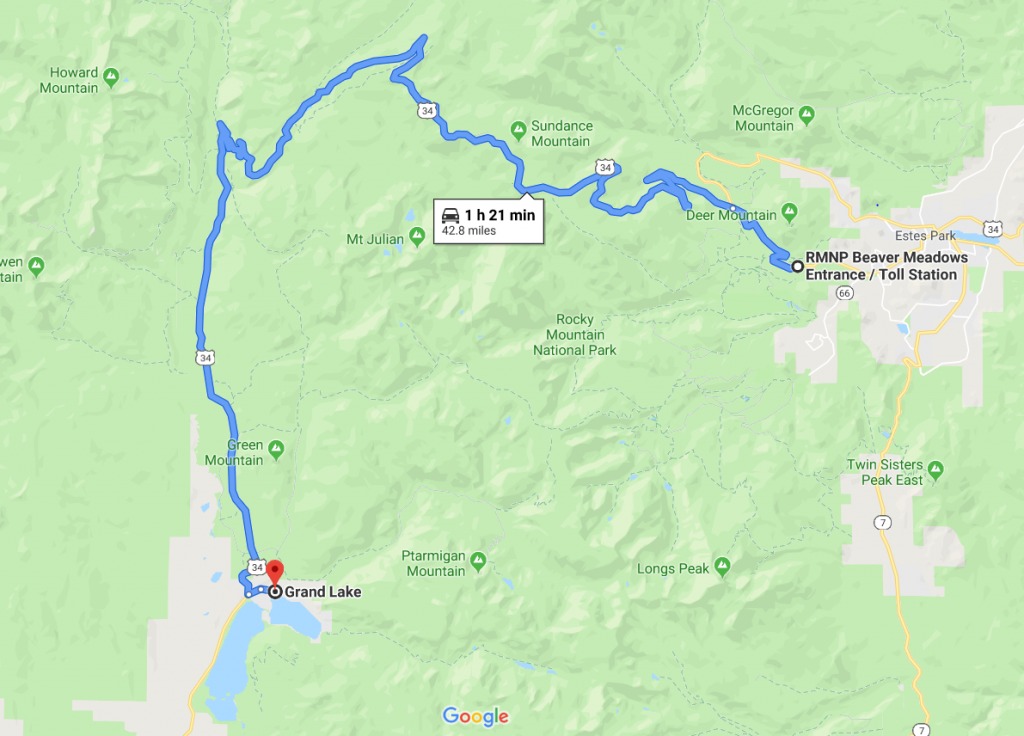
Rocky Mountain National Park spans from east to west linking the towns of Estes Park and Grand Lake, Colorado. It boasts the highest paved road in North America and stretches 265,000+ acres with countless 12,000+ foot peaks, lakes, high-alpine tundra’s, forests, and wildlife. The park is also one of the most popular national parks in the United States.
Though you can enter Rocky Mountain National Park to hike, fish, horseback ride, or bike, driving Trail Ridge Road is an experience to be had. You’ll be surrounded by incredible views and feel as if every car you see belongs in a commercial. Note: this is a summer/early fall trip only. The road is closed during the winter and often well into spring depending on how much snow has accumulated.
What to Bring When Driving Trail Ridge Road
- Money; you’ll need to pay for access into Rocky Mountain National Park. It’s $25 per vehicle for a 1-day pass or $35 per vehicle for a 7-day pass. Worth every penny. (Trust me and get the 7-day pass.)
- Layers; there are rapid changes in weather conditions and you are likely to experience sun, rain/hail, snow, and wind all in a few hours span. I recommend packing one short-sleeve shirt, one long-sleeve shirt, a fleece layer, and a synthetic or down jacket. A rain jacket or a windbreaker aren’t bad ideas either!
- Camera; whether it’s a beautiful mountain landscape, a glistening lake, or wildlife in their natural habitat, there are thousands of opportunities for photos. Put your phone into airplane mode to save battery (there’s no service) and keep the camera app open. While the camera on my iPhone X is more than decent, the photos don’t compare to my Canon Rebel or Canon Powershot.
- Snacks; there are (overpriced) snacks and a restaurant at the Alpine Visitor Center but that’s your only option in the park, which is all the way at the top. Bring things to eat and a few bottles of water.
- Toilet Paper; there are places to use the restroom but in case of an emergency, or you decide the line is too long, have some spare tissue.
- Excited Attitude; you’re heading into a journey that will have your eyes wide and mouth hanging open more often than it’s closed.
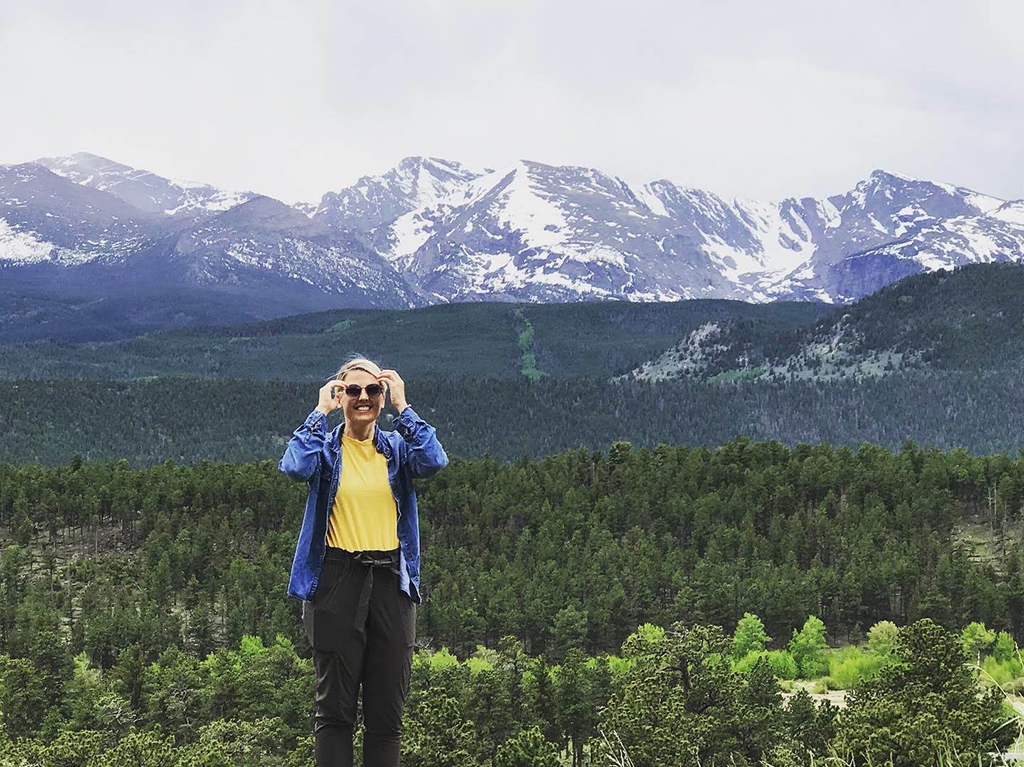
Prepare for Driving Trail Ridge Road
Driving Trail Ridge Road is going to take the majority of your day – I would plan to be gone for around 6 hours, depending on how many times you stop and admire the views.
- Pack Your Backpack; see above for everything you need.
- Grab Breakfast; Notchtop is a great spot for breakfast (I loved the Breakfast Croissant). Plus it’s right near a gas station and the visitors center. There’s also a great coffee shop, Raven’s Roast Coffee Lounge, if you want something quick.
- Get Gas; it may seem obvious, but this isn’t a place to run out of gas. Make a stop after breakfast.
- Hit the Visitor Center; are there friendlier people than those who work in the national park visitor centers?! Grab great maps and a few tips before you head into Rocky Mountain National Park.
- Screenshot Pieces of this Post; then you won’t forget the best places to stop!
Places to Stop on Trail Ridge Road
Driving Trail Ridge Road in its entirety is 43 miles from the Estes Park entrance all the way to Grand Lake. The Alpine Valley Visitor Center is right near the peak/halfway (20 miles) which makes for a great day trip and less of a time commitment.
Keep in mind that it’s not a circle and regardless of how far you go, you have to drive the same way back to Estes Park unless you are taking the long way home.
The park is full of scenic areas to pull over, park, and get out to take it all in. Most places are marked with a sign and you will see several cars pulled off giving you the heads up that this is a spot highlighted on your map. If it’s packed and looks overwhelming, drive on by and hit it on your way down.
Drivers Beware: This is no drive for the faint of heart. It’s a skinny two-lane road with twists and turns. And, as mentioned, rain, hail, and snow are likely. If it doesn’t scare you to death, you’ll find your neck craning to check out the other side of the road, which is basically nothing but a long fall mixed with trees and rock. Take it easy, use the middle when you can, and hum a few hymns. You’ll be fine.
Start: Beaver Meadows Entrance (8,200 feet)

There are multiple entrances into Rocky Mountain National Park. This one is the easiest to access from Estes Park, making it the most popular. Typically, there’s a line of cars waiting to pass through, but don’t worry, it’s quick. Pay your entrance fee and begin your beautiful journey with sites just as you pull through the gate.
Tip: if you are short on time, use the Fall River Entrance. Only a few minutes from Estes Park, this location will give you a shorter distance to Trail Ridge Road and less of a wait.
Deer Ridge Junction (8,978 feet)

This spot is in my Top 3 of the entire trip. It is absolutely gorgeous as it transforms from snow white, into ocean blue, and down to forest green. It’s a real-life painting and actually a stop that doesn’t get as over-crowded as others. Do not skip this one.
Hidden Valley (9,400 feet)

This isn’t a “must stop,” but if you have to use the bathroom, this is a great place to do it without a line. And you can fill up your water bottle. You are 16 miles from Alpine Visitor Center once you reach this stop.
Rainbow Curve (10,829 feet)

Grab an eastside view of the mountains while driving Trail Ridge Road, full of high peaks, low green valleys and, if you’re lucky, a rainbow (hence the name). This is a must-stop and includes a pull-off with several parking spots. There is a bathroom but every time I was there, there was a long line.
NOTE: The temperature starts dropping here. Make sure you packed those layers!
Forest Canyon Overlook (11,716 feet)

Drive three miles (things start getting scarier but don’t turn back!) from Rainbow Curve and you will be at your next destination. My favorite; the must-stop of all must-stops when driving Trail Ridge Road. It’s cold (grab another layer!) and I felt like I was in a completely different world.

Forest Canyon Overlook has a small parking lot and is a short walk to some incredible views. Plus there are the cutest little marmots – little guys a part of the squirrel family who are all over the grasses getting their grub on.
Lava Cliffs (12,000 feet)
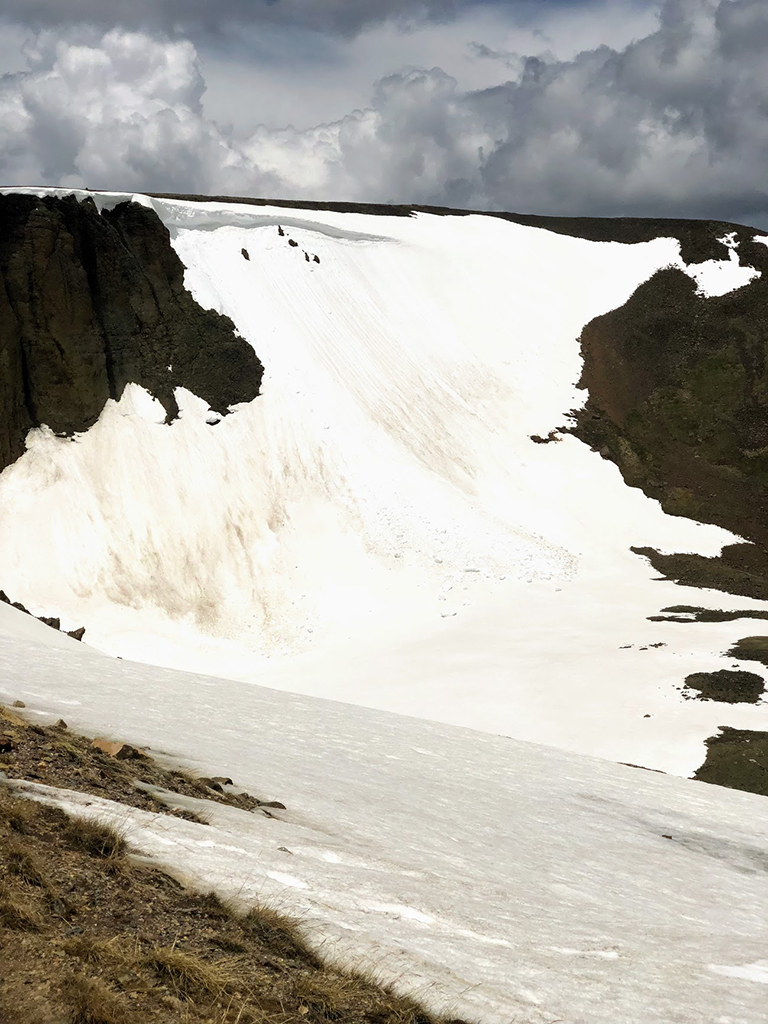
Lava? Volcanoes? In the Rocky Mountains? Pull off where you can check out a view of lava formed millions of years ago. It’s an impressive area with a pull-off space vs. a parking lot.
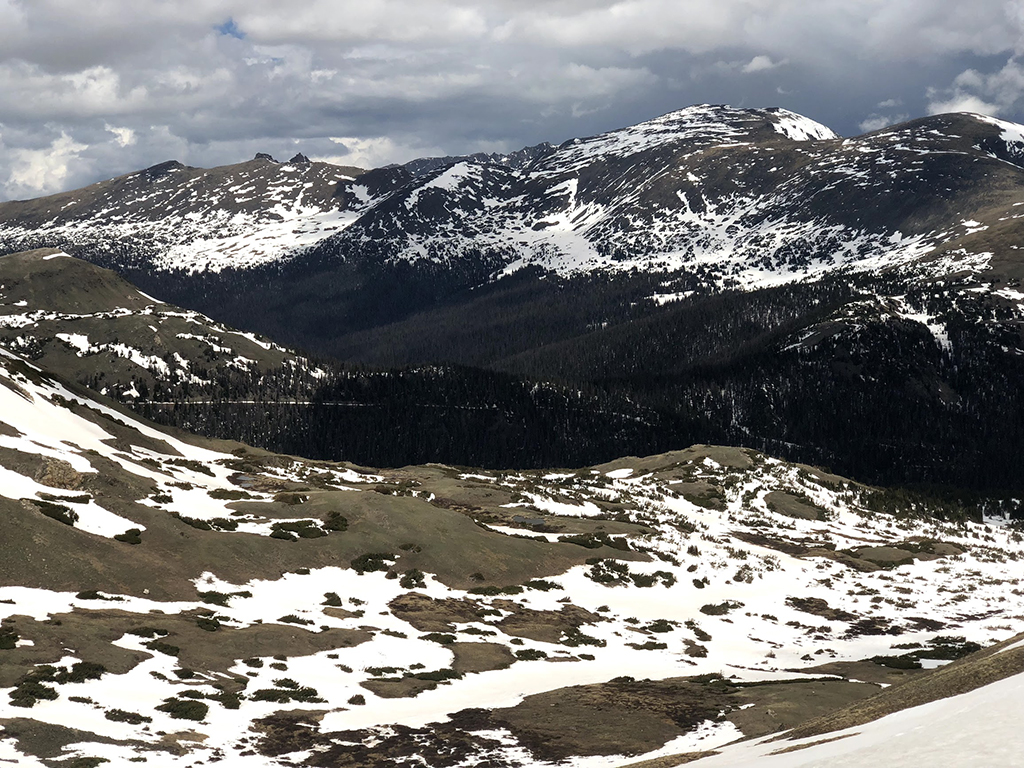
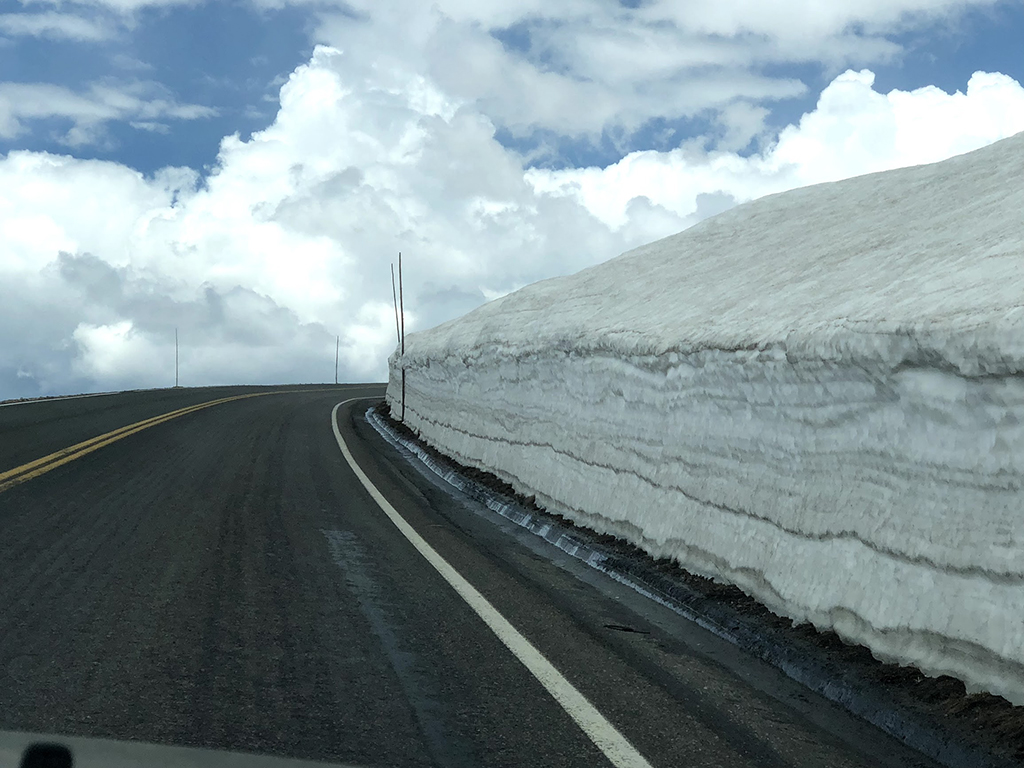
Reminder: The picture below was taken in June!
Rock Cut (12,050 feet)
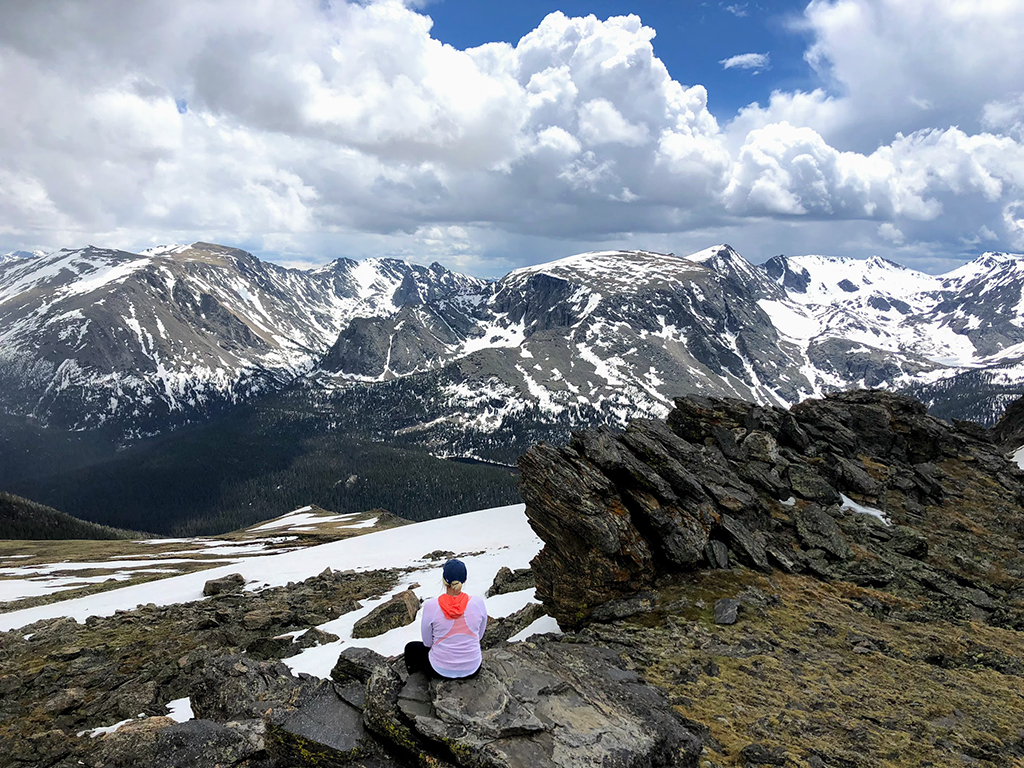
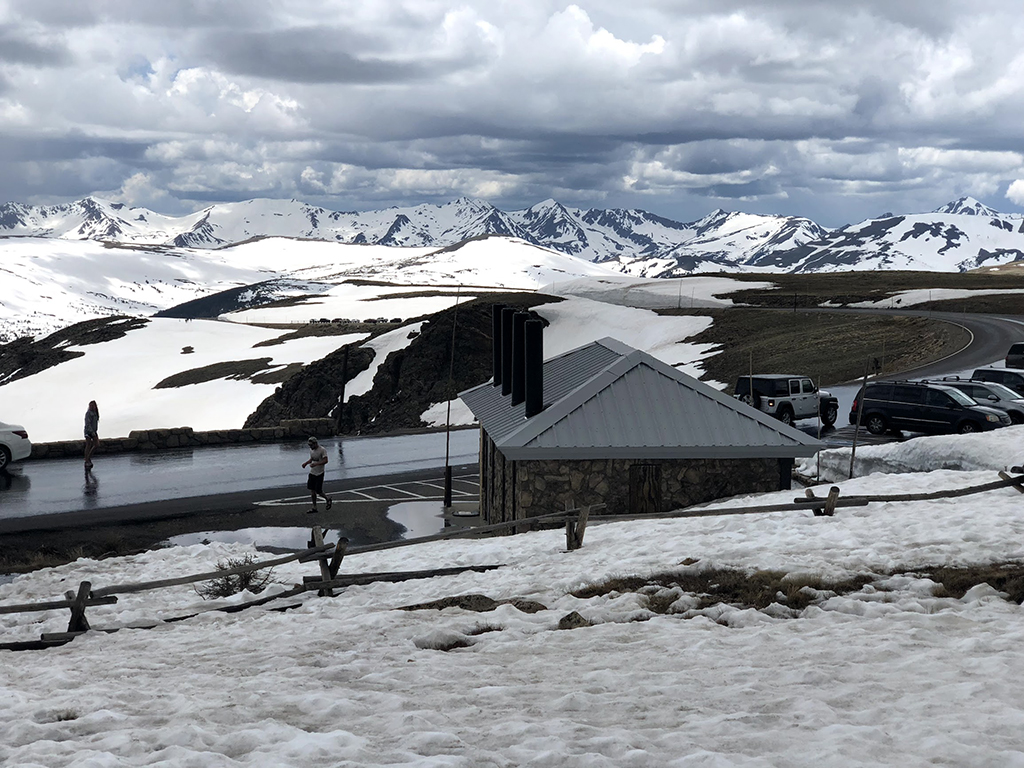

You know when it’s a cold day and people mention it being some sort of “tundra” outside? Well, this is the real-life TUNDRA. Even in the summer. When Trail Ridge Road was completed, it involved cutting the rock so people could drive through, giving it its name. A short hike (maybe 1/2-mile) will get you to the best scenery.
Tip: grab your next layer!
Gore Range (12,010 feet)

Here, you will have views of the Gorge Range (60 miles away), the Never Summer Mountain range, and Longs Peak, Rocky Mountain National Park’s highest peak. It’s cold here, but worth the shivers!
Alpine Visitor Center (11,796 feet)

You have passed the official “peak” on your journey and made it to the Alpine Visitor Center. You either made it to your destination or are about halfway to Grand Lake if you are going the entire stretch.

Here, you can find information and exhibits, souvenirs, food at the restaurant/cafe (the only one in the park), and breathtaking views. The parking lot is big but does fill up during peak hours. Make a pit stop to take a breath, adjust, and get ready for your journey back down. Don’t worry, there are more spots you can’t miss!
Alluvial Fan (8,610 feet)
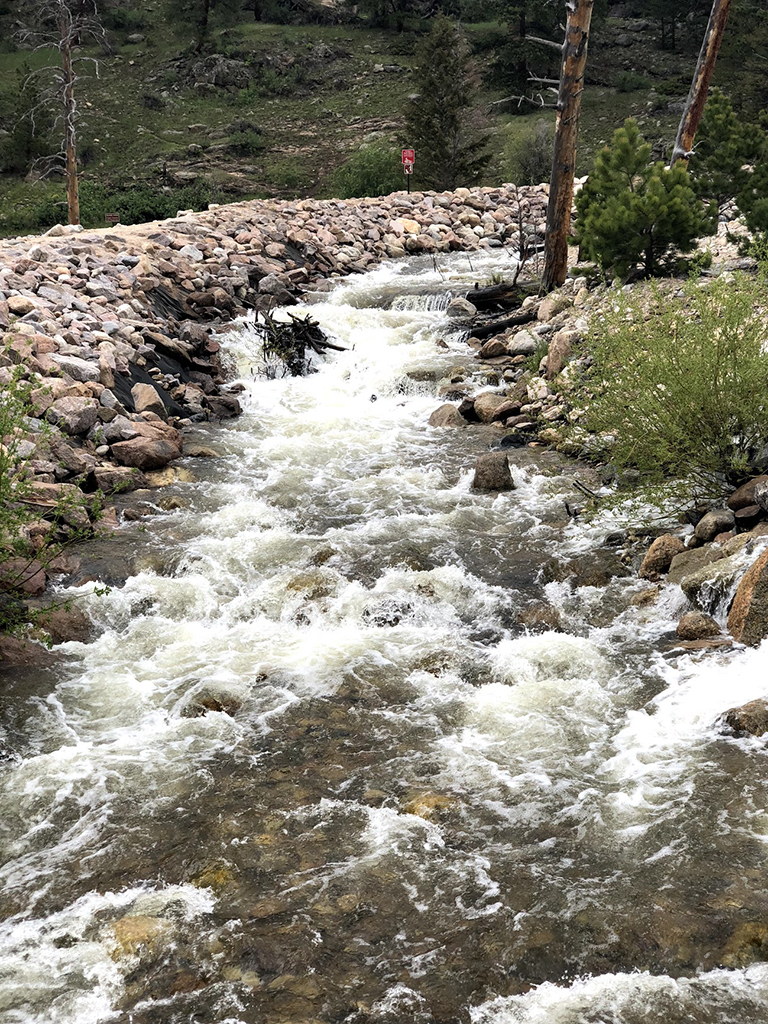
Get out, stretch, and climb the rocks in this beautiful area at the bottom. It’s about 3 miles from the Fall River Entrance Station and offers picnic tables and outhouses. You’ll see a mountain of boulders that were pushed down the river and a waterfall cascading down.

Note: You see this spot from a bird’s eye view when you are up at Rainbow Curve!
Sheep Lakes (8,520 feet)
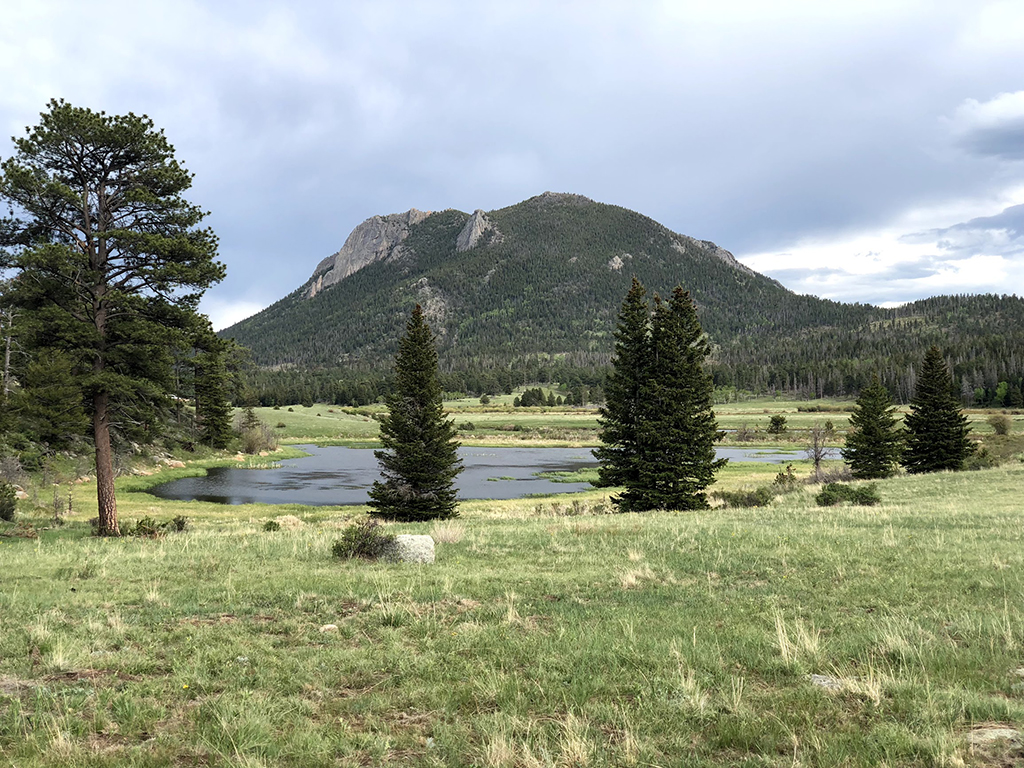
This was one of my favorite areas. It was calm and peaceful with a range of light greens, water, and mountains as the perfect backdrop. There were animals, including sheep and ram, herding in their natural habitat, and the light breeze made for serene moments. This spot, at the end of the journey, will have you longing to stay in the park just a little bit longer.
Wildlife in Rocky Mountain National Park
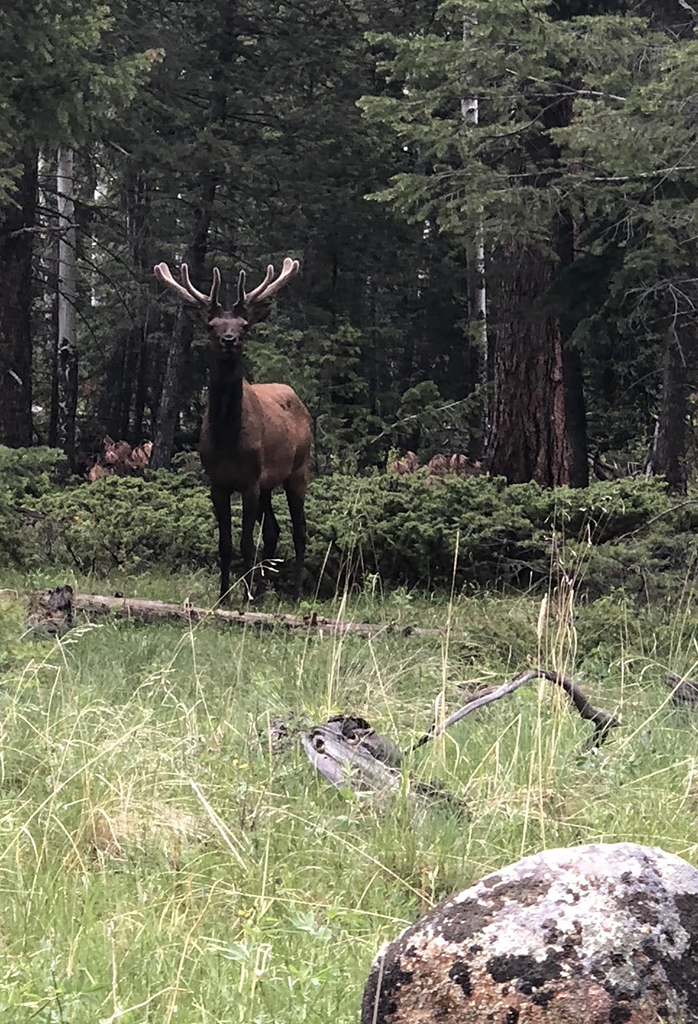

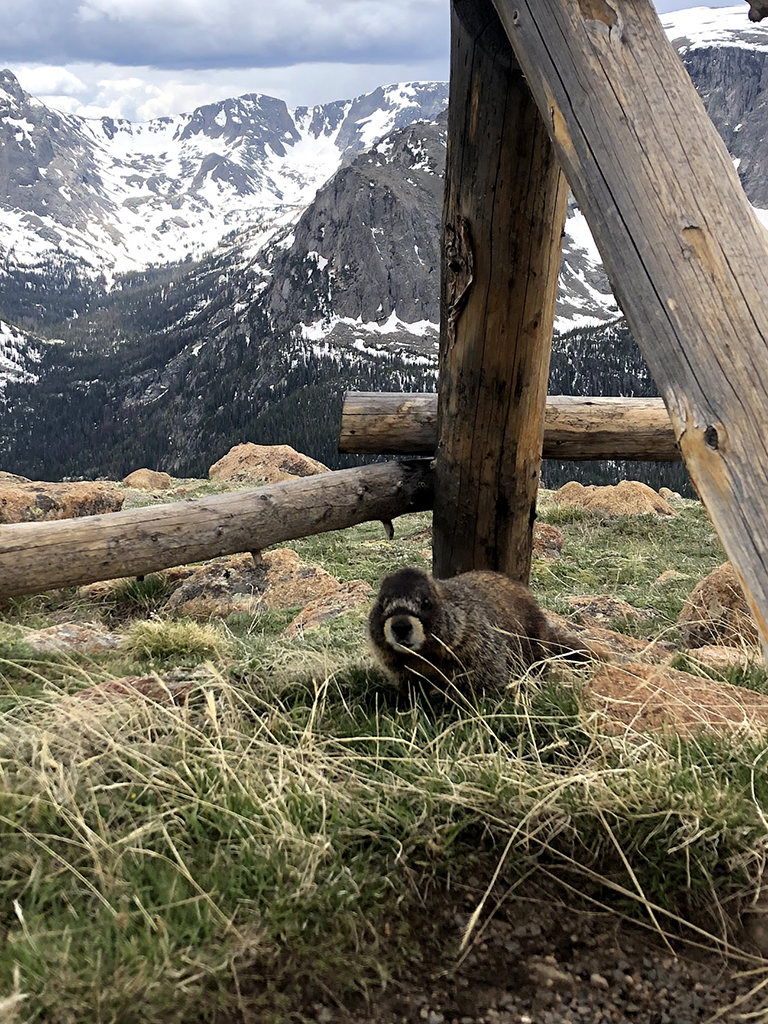
Before driving Trail Ridge Road, I was hoping to see “a couple of animals”, as in two or three. I was mistaken. You will see wildlife…hundreds if you spend enough time in here.
Your first elk sighting will leave you with an awe-inspiring smile only to realize how many you are actually going to see. Eventually, you start driving by elk as if they were a dog on the street.
The animals aren’t bothered by people, in my experience, but refrain from feeding or calling at them. At the end of the day, they are wild beasts!
The little marmot above, and all his friends, take a 7-8-month nap and when they aren’t sleeping, they are gorging on food to build up their body fat – rough life!
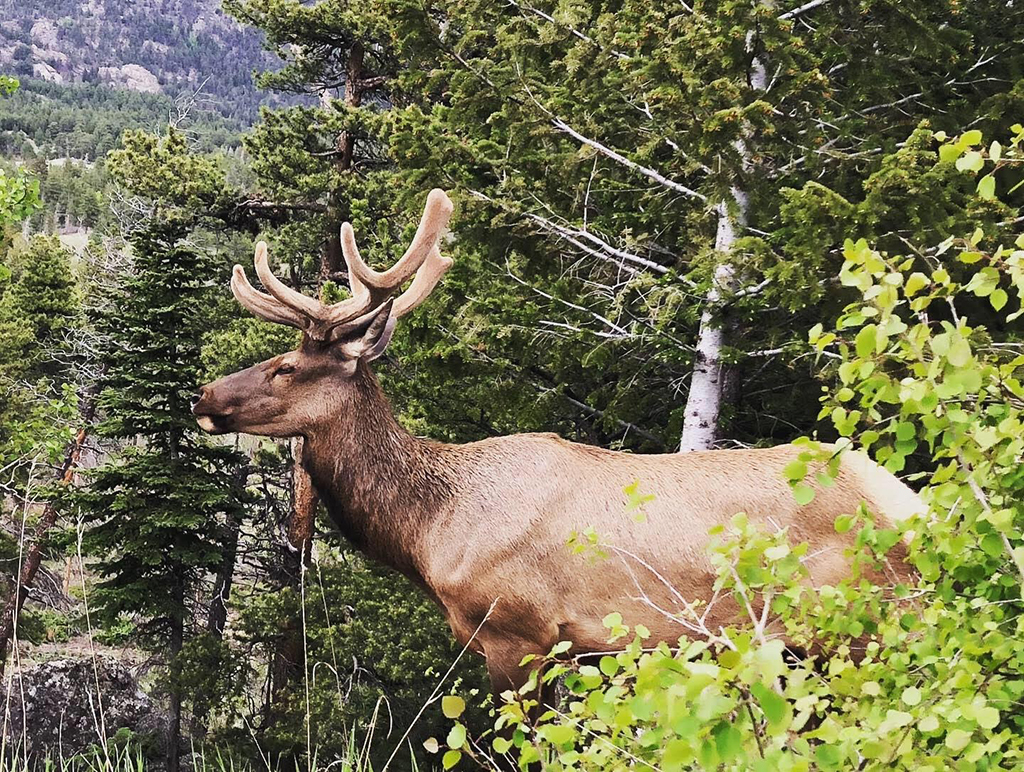

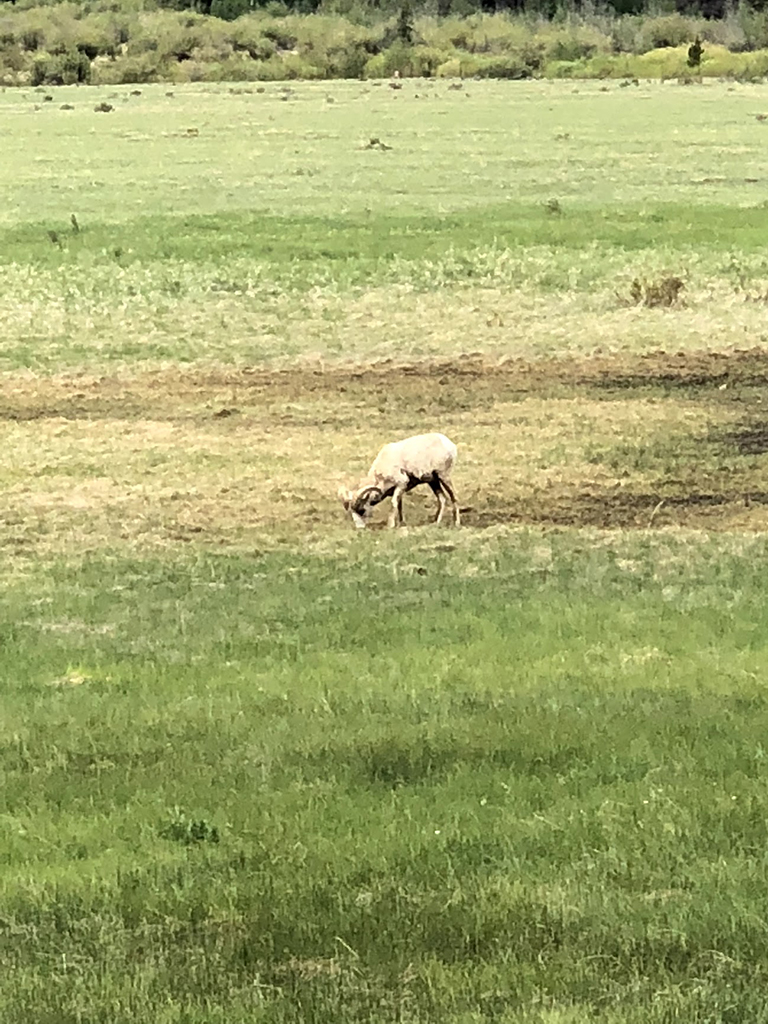
The elk, deer, and sheep come in all shapes and sizes. And if you are really lucky, you will get up close to ram or moose! I can easily say watching a pack of three moose chomp away as the rain came down while the sun was still out is one of those most majestic moments I have experienced. It was a feeling of serenity mixed with anxiousness (those things are fast!) that I’m certain will never unfold for me again.
Tips for Driving Trail Ridge Road
- Start early; since it’s shut down in the winter, summer is very busy. The earlier you can get going, the more you can beat the crowds. I recommend getting there before 9:00 a.m.
- Be aware of the altitude; it’s no joke! Drink more water than usual.
- Be patient; this is not an experience you want to rush through. Take your time and make as many stops as you can. Don’t get frustrated if you don’t see animals – they are around.
- Let cars pass; tourists, employees, and locals are in the park for all different reasons and will drive at a different speed. Pull off to the side when the road allows and let people pass if you’re taking in the views at a slower pace.
- Tons of cars parked usually means wildlife; if you aren’t at an actual scenic stop and are wondering why so many people are pulled over, it’s likely for wildlife.
- Always have your camera ready; things happen quickly!
- Drive a good car; it’s going to be battling an incline for the majority of your day.
- Take care of the land; stay on the trails, pick up your garbage, and don’t feed the animals. We are lucky to have the opportunity to experience these gorgeous places! Keep it that way.

Driving Trail Ridge Road in Rocky Mountain National Park is a one-of-a-kind experience that you will not regret. Make it a long weekend and stay in Estes Park, which quickly became one of my favorite areas. Check out Backpack Goes to the Mountains: Estes Park, CO for more on where to eat and what to do when you are not in Rocky Mountain National Park. And for more from Amber Hiltunen, follow her on Facebook and Instagram.

Meet the Author: Amber of Little Blue Backpack
Amber Hiltunen is a Travel Blogger, Budget-Builder, and Bar-Hopper from Minneapolis, Minnesota who wants to inspire the traveler in all of us. She shares travel tips & tricks along with details on carving out money to travel—no matter how small your budget! When she’s not out exploring, Amber can be found with a good book and a strong cup of coffee. Follow her and Little Blue Backpack on Facebook and Instagram.
All photos and content in this post are credited to Amber/Little Blue Backpack unless otherwise stated.
Pin Driving Trail Ridge Road in Rocky Mountain National Park


I went to Rocky Mountain National Park for the first time last year and it’s definitely one of my favorite national parks! <3 I wasn't entirely sure my car could handle it, so I didn't do the scenic drive last time, but I'd love to do it the next time I go. Thanks so much for putting this guide together–will definitely be useful in the future. :] The photos are incredible!
It’s easily one of the most scenic drives in the country!
My family had a great time on the Trail Ridge road. We have one family photo where everyone’s hair was flying sideways. Really cold and windy.
So cold and windy! But worth it 🙂
I LOVE this kind of drive. It’s so funny when it’s such a short distance but you need all day (or a few days) to really explore it all.
I thought the view looked good at Deer Ridge Junction, then it just kept getting better and better! Wowza!
p.s. We have a similar drive here in Canada, but when people stop for wildlife, they all seem to forget the rules of the road/park in crazy places/block the road/ get out like idiots. Are people similarly loopy in the States?