Planning a trip to Glacier National Park can be a hassle due to its remote location. The Parks Expert is here to help you figure out how to get to Glacier National Park.
The closest airports to Glacier National Park are Glacier Park International, Great Falls, and Missoula. If you’re visiting Yellowstone or Grand Teton national parks as well, you can also fly into Bozeman.
If you prefer to drive, you’ll love the scenery along Highway 2, Going-to-the-Sun Road, Highway 89, Camas Road, or the Chief Mountain International Highway.
Cities near Glacier National Park include Kalispell, Columbia Falls, East Glacier, Whitefish, and more.
For more information on how to get to Glacier National Park, including more details on airports near Glacier National Park and highways leading you there, use our resources below to plan your trip.
This post may contain affiliate links. If you make a purchase, I may earn a small commission at no additional cost to you. For more information, view my privacy policy.

Table of Contents
Where is Glacier National Park?

In order to figure out how to get to Glacier National Park, it’s important to know where it’s located.
You’ll find Glacier National Park in the northwest corner of Montana, along the border of Canada.
It is a large park, so you can enter from multiple areas.
Overview of Glacier National Park Districts

Before we dive into how to get to Glacier National Park, it’s important to know your entrances.
Knowing which parts of the park you want to explore will help you determine which routes to take and which airports to fly into.
St. Mary and Logan Pass
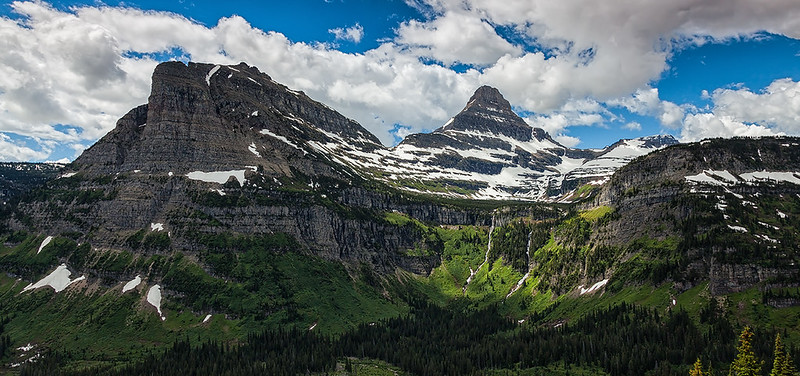
Logan Pass is centrally located along Going-to-the-Sun Road and has a visitor center, gift shops, lodging, a campground, a gas station, a restaurant, a grocery store, and a gift shop. It’s accessible from the St. Mary and West Glacier entrances of the park.
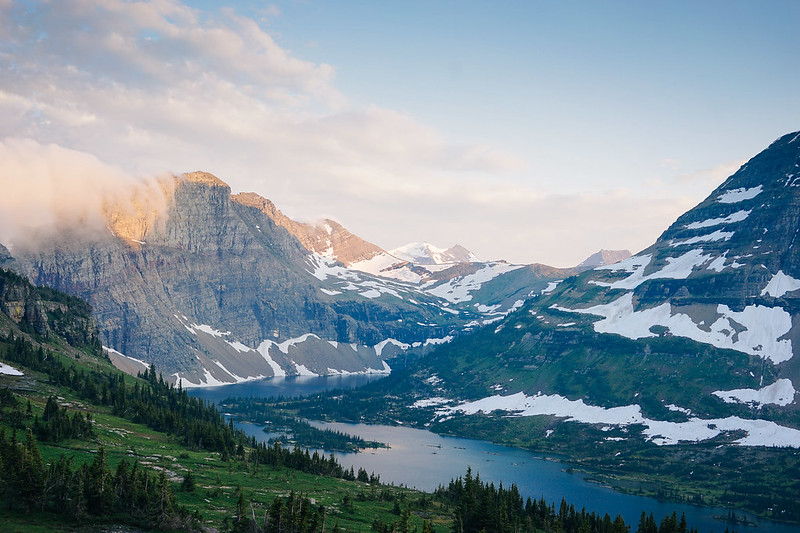
At Logan Pass, you can find spectacular views at the highest point along Going-to-the-Sun Road and as you explore the backcountry. This area is home to some of the best hikes in Glacier National Park, including the Highline Trail and Hidden Lake Overlook.
Lake McDonald is a large and deep lake. The shoreline along Going-to-the-Sun Road features hotels, campgrounds, boat docks, picnic areas, hiking trails, and a campground, as well as spots for fishing.
Must-do hikes in the area include Avalanche Lake and Trail of the Cedars. It’s also popular for boating and kayaking.
Above Lake McDonald is the historic Sperry Chalet.
Many Glacier
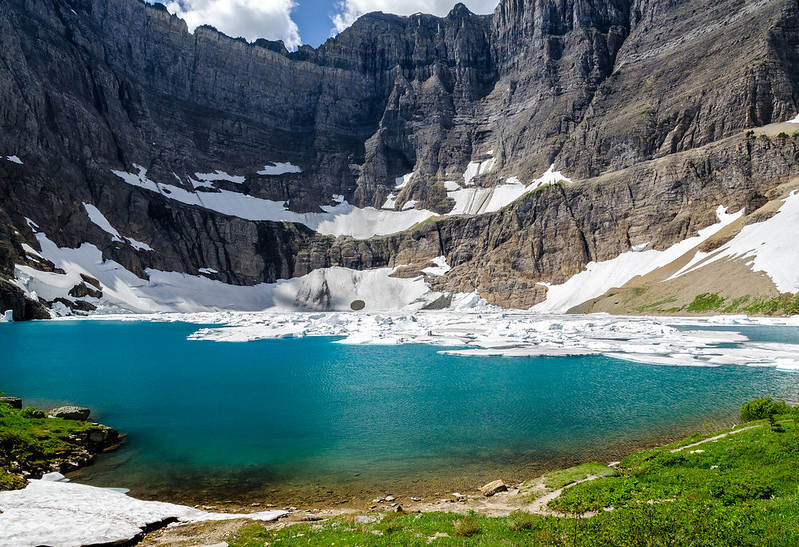
Many Glacier is home to Swiftcurrent Lake, Grinnell Glacier, and the historic Many Glacier Hotel. It’s located on the east side of Glacier National Park.
You can hike around Swiftcurrent Lake or take a boat across it for a closer look. You can also hike to Grinnell Glacier or Iceberg Lake, which are two of the most popular trails in the park. Personally, my favorite trail in Many Glacier is Cracker Lake.
Two Medicine
The Two Medicine area includes many lakes surrounded by dense forest with mountain views throughout. It’s located on the southeast side of the park.
There are several trails to explore, including some that lead into Glacier National Park’s more remote areas. Some of the park’s most difficult trails, Pitamakan Pass and Dawson Pass, are located here.
Polebridge
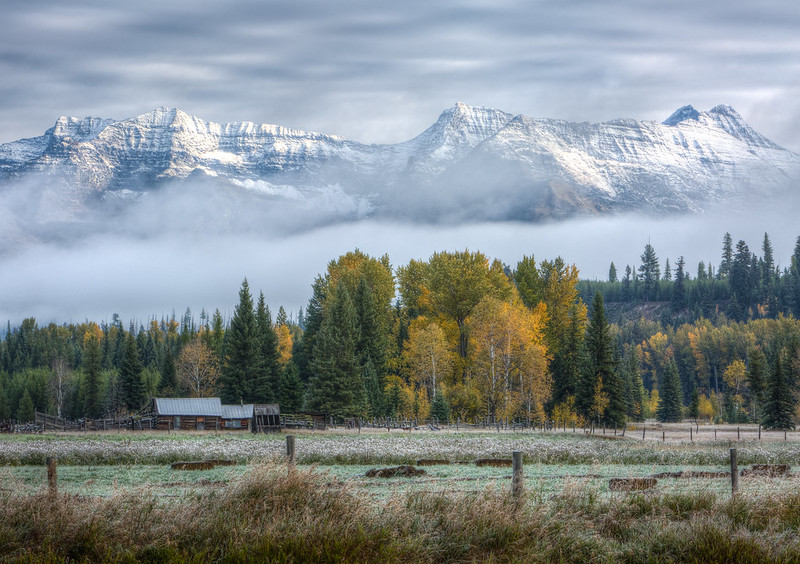
Polebridge is a great area of the park to visit if you hope to avoid crowds. It’s a quiet spot with fewer attractions. If you’re interested in swimming, Bowman Lake is a great option.
Goat Haunt
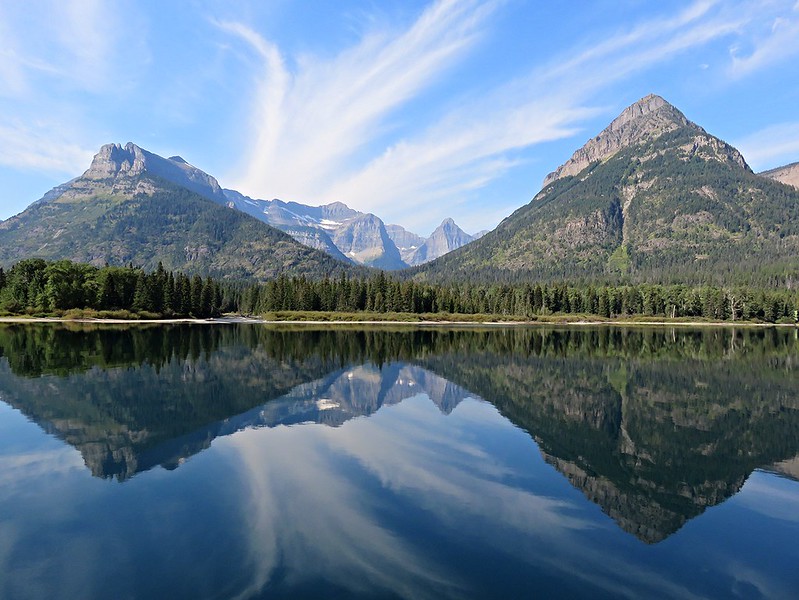
Goat Haunt can only be accessed on foot and is a backpacker’s paradise in Glacier National Park. It’s located on the west side of Waterton Lake, which is part of Glacier National Park and Canada’s Waterton Lakes National Park.
While extremely difficult to get to, Goat Haunt offers some of the best solitude you can find in Glacier National Park.
What is the Closest Airport to Glacier National Park?

There are many airports near Glacier National Park. Below is a brief list with the closest airports at the top. As you go down the list, airport distances and driving times will increase.
Glacier Park International Airport (FCA)
The closest airport to Glacier National Park is Glacier Park International Airport in Kalispell. This is about 40 minutes from the west entrance to the park.
This entrance is popular due to its proximity to other towns and attractions. That makes it one of the most convenient ways to get to Glacier National Park.
However, it is about 2 hours from St. Mary, so you may want to consider a different airport if your trip is focused on the east side of the park.
In addition to rental car services, there are also shuttles from this airport to the park entrance.
Lethbridge Airport (YQL)
The next closest airport is over the border in Canada. Only 1.75 hours and 100 miles away from Glacier National Park, this is a great option for Americans and Canadians alike.
Don’t forget your passport!
Missoula Airport (MSO)
The college town of Missoula, Montana is located about 2.5 hours and 130 miles from West Glacier. This drive will take you passed Flathead Lake, which is the largest freshwater lake west of the Mississippi River.
Great Falls International Airport (GTF)
Great Falls International Airport is about 150 miles and 2.5 hours from St. Mary on the eastern side of Glacier National Park.
Great Falls is also about halfway between Glacier and Yellowstone.
Calgary International Airport (YYC)
If this is an international trip to some of Canada’s stunning national parks, such as Banff and Jasper, you can also fly into Calgary. It’s only about 3 hours and 190 miles from Glacier National Park.
Since it’s a larger airport, there may be more options for times, airlines, and prices.
Don’t forget your passport if you choose this option!
Spokane Airport (GEG)
For a trip through eastern Washington and Idaho, begin your journey in Spokane! The drive to Glacier National Park through the mountains in Idaho will be spectacular.
Spokane Airport is about 4.5 hours and 270 miles from Glacier National Park.
Bozeman Yellowstone International Airport
Bozeman is a great option if you’re planning to visit Yellowstone and/or Grand Teton national parks on your trip. It’s about 5 hours and 320 miles from St. Mary and 1.5 hours from Yellowstone.
Because this is Montana’s busiest airport, prices are often cheaper. You may also be able to find more flight options as far as timing and airlines.
Jackson Hole Airport
To make your journey from south to north, why not fly to Jackson Hole? You can start your trip at Grand Teton and make your way through the mountains up to Glacier. It’ll take you about 8.5 hours over 500 miles.
Salt Lake City International Airport
As for airports with the most flight options, you’ll want to look at larger cities. Unfortunately, these are quite a bit further from Glacier.
Your best option is Salt Lake City, which is 650 miles and 9.5 hours from Glacier National Park.
Best Roads to Take to Glacier National Park

There are many different ways to access Glacier National Park. The road you choose to take will depend on which area of the park you plan to visit.
You can click on the map below to enlarge it and download it. It includes details for Waterton Lakes National Park which is just over the border in Canada.

Camas Road
This is the best way to get to Glacier National Park’s Polebridge area, a quiet location in the northwest of the park.
Parts of this road are unpaved. It closes every winter.
While you can drive an RV on this road, there are no Glacier National Park campgrounds that can accommodate RVs in this area.
Chief Mountain International Highway
If you’re traveling to Glacier from the neighboring Wateron Lakes National Park, this is the best route to take. Between the two, you should plan about a one-hour drive.
There is a border crossing along the route, so make sure you have your passport.
The customs station and the highway (beyond the Glacier National Park boundary) close in winter.
RVs are permitted on this highway.
Going-to-the-Sun Road
The famous Going-to-the-Sun Road is the only road that passes through the park from one side to the other. There are other routes that take you around the park borders. It travels from West Glacier to St. Mary.
This road closes every winter. Opening dates will depend on the snowpack, but most of the time it is opens sometime in July and closes again in October.
Vehicles traveling Going-to-the-Sun Road cannot be longer than 21 feet, wider than 8 feet, or taller than 10 feet. RVs are not allowed.
Highway 2
This scenic route follows the southern boundary of the park from Kalispell to East Glacier Park, via West Glacier.
Due to restrictions on Going-to-the-Sun Road, this is the best route for RVs, buses, and larger vehicles.
So long as weather permits, Highway 2 is open year-round.
Highway 89
Highway 89 is adjacent to the eastern border of Glacier National Park. It’s the only way to access the Many Glacier and St. Mary entrances. The Many Glacier entrance is popular for access to some of the best hikes in Glacier National Park.
Eventually, after passing the town of Babb, this highway leads to the Canadian border.
RVs can drive this road without difficulty. Weather permitting, it’s open year-round.
Taking the Train to Glacier National Park

Did you know you can take Amtrak to Glacier National Park? There are stations in both East Glacier and West Glacier (Essex).
While those are the closest stations, there are no transportation services between them and the park. I recommend riding the train to Whitefish and renting a car in order to reach the park.
Towns and Cities Near Glacier National Park

Kalispell is the closest large town to the park. It offers full services, such as hotels, restaurants, and gas stations.
West Glacier is another town located near the park. It’s about five miles west of Lake McDonald Lodge and offers a few services, such as restaurants, lodging options, and gas stations.
St. Mary and Browning are the closest towns to the St. Mary and Many Glacier entrances, respectively. They offer a few more services than West Glacier. East Glacier and Browning are about 35 miles from the Two Medicine entrance.

Here are some distances from nearby cities and destinations to Glacier National Park:
- East Glacier: 15 minutes, 7 miles (to Two Medicine)
- Columbia Falls: 22 minutes, 18 miles (to Apgar)
- Whitefish: 30 minutes, 26 miles (to Apgar)
- Browning: 35 minutes, 28 miles (to St. Mary)
- Kalispell: 45 minutes, 35 miles (to Apgar)
- Bigfork: 45 minutes, 39 miles (to Apgar)
- Somers: 45 minutes, 43 miles (to Apgar)
- Missoula: 2.5 hours, 140 miles (to Apgar)
- Great Falls: 2.5 hours, 155 miles (to St. Mary)
- Bozeman: 5.5 hours, 315 miles (to Apgar)
- Billings: 6 hours, 375 miles (to St. Mary)
- Yellowstone National Park: 7 hours, 415 miles (Mammoth to Apgar)

Nearby Groceries
West Glacier: West Glacier Mercantile
Hungry Horse: Canyon Foods
Columbia Falls: Smith’s, Super 1 Foods
Kalispell: Walmart, Albertson’s, Super 1 Foods, Smith’s, or Natural Grocers
St. Mary: Mary Grocery, Park Cafe and Grocery
Things to Know Before You Visit Glacier National Park

Entrance Fees
There is a fee to enter Glacier National Park. The exact price depends on the time of year.
In order to save money, I would recommend purchasing a national parks pass. These cost $80 and are valid for a full calendar year (from the date of purchase) at all public lands in the United States. After you visit 3 national parks, it’ll have paid for itself. It also makes a great gift for national park enthusiasts! Learn more about park entry fees.

Summer Rates (May 1 to October 31)
Private vehicle, 7 days: $35
Motorcycle, 7 days: $30
Individual (hiker or bicyclist), 7 days: $20
Winter Rates (November 1 to April 30)
Private vehicle, 7 days: $25
Motorcycle, 7 days: $20
Individual (hiker or bicyclist), 7 days: $15
Glacier National Park Annual Pass
If you are a local or plan to spend more than a week in Glacier National Park, consider purchasing an annual pass. This is valid for 12 months after your purchase and costs $70.
Fee-Free Days
Every year, the National Park Service announces fee-free days nationwide. Typically, these include major holidays such as Martin Luther King, Jr. Day and Veterans Day. It also includes NPS-specific holidays like August 25, the anniversary of the creation of the National Park Service (a.k.a Founder’s Day).
Click here to learn about this year’s fee-free days.
Pets
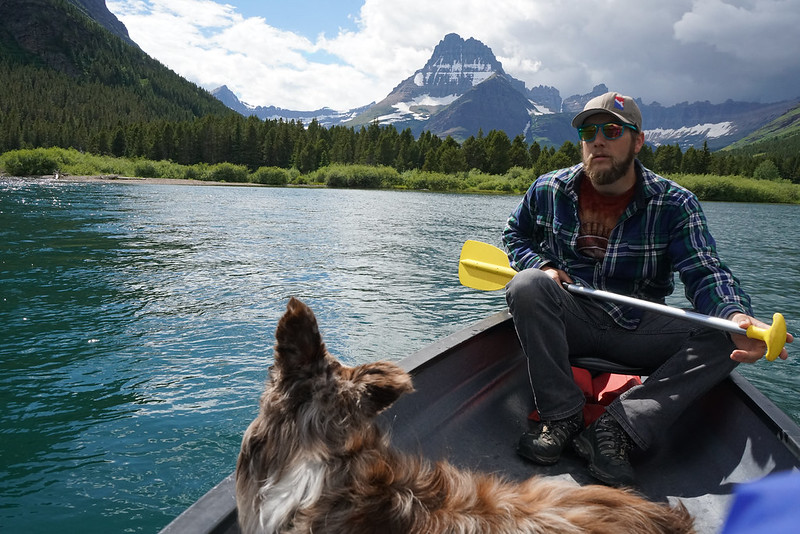
While pets are allowed in Glacier National Park, they are only permitted in developed areas. Developed areas include parking lots, campgrounds, and picnic areas. They are also permitted on motorized boats.
Pets, including emotional support animals, are not permitted on park trails, lakeshores, in the backcountry, or inside any buildings.
Pets must be on a leash at all times. Remember to clean up after your pet, too!
Reservations

Timed-entry reservations are required for driving Going-to-the-Sun Road.
If you aren’t able to get reservations, there is a shuttle that runs between Apgar and St. Mary along Going-to-the-Sun Road. Many visitors have also elected to drive Going-to-the-Sun Road before 6 a.m. or after 4 p.m. when reservations are not required.
Wildlife Safety

It’s incredibly dangerous to get too close to wild animals, including bears and moose.
While hiking, be mindful of your surroundings at all times. If you don’t see any wildlife, that doesn’t mean wild animals aren’t nearby.
The best way to stay safe is by keeping a distance from wild animals when possible. Never approach wildlife.
If you’re camping, keep food stored in bear-resistant containers. Never feed wildlife.
When hiking, bring bear spray with you (and know how to use it properly). Purchase this once you arrive in Montana if you’re flying in. Bear spray is prohibited on planes.
While hiking, especially if you’re alone, remember to make plenty of noise so that animals know you are nearby.
For more tips, read my article on practicing bear safety in national parks.
Leave No Trace

Glacier National Park is a beautiful place to visit and visitors must do their part to protect this special landscape.
The park asks visitors to practice Leave No Trace principles. This means leaving the parks as you found them, or better than you found them!
This includes protecting wildlife and natural resources by staying on designated trails and boardwalks so that other hikers can enjoy their visit too.
It also means disposing of trash properly in bear-proof cans and not feeding wild animals.
Furthermore, leave behind everything you find. Do not pick flowers or pinecones to take home with you. Report any historic artifacts to a park ranger, including the location specifics, without removing them.
Reception and Connectivity

You should not plan to rely on cell phone reception or Wi-Fi in Glacier National Park.
For hiking, download a map to your phone or buy a paper copy to bring along.
What to Bring to Glacier National Park

Planning: There are a lot of books out there to help you plan your Glacier National Park itinerary. I recommend the Moon Travel Guide. It’s written by Becky Lomax, a local who has been exploring Glacier National Park for years.
Layers: Even in the summer, it can get cold. Down jackets are a must for chilly evenings. My favorite brands are Patagonia and North Face. I’d also recommend bringing a waterproof jacket if you’re visiting during monsoon season. My favorite waterproof brand is Helly Hansen.
Hiking tees: Good-quality hiking shirts should be moisture-wicking and quick drying. I would also bring short and long-sleeve options for layering.

Hiking pants: Like your tops, I would make sure your hiking bottoms are moisture-wicking and quick-drying as well. These can be pants or shorts (I recommend packing at least two pairs of both).
Trusty footwear: One of the best ways to see Glacier National Park is hiking, so you’ll definitely want to bring some good hiking footwear. I love my Hoka trail runners and my Keen hiking boots. Both have great traction. If you’re hiking snowy trails, opt for hiking boots over sneakers.
Backpack: My favorite backpacks are from Deuter, Osprey, and Gregory.
Hiking accessories: You may need sunglasses, sunscreen, bug spray, and a hat.

For Campers: Of course, you’ll need a tent, either for camping in campgrounds or backpacking in the wilderness. For comfort inside your tent, pack a sleeping bag, sleeping pad, and camp pillow. You’ll also need a stove. I prefer the Pocket Rocket or Jet Boil. Then, naturally, you’ll also need fuel. Don’t forget some reusable cookware and dinnerware, too! I prefer collapsible bowls for my meals and all-in-one utensils. I’d also highly recommend a headlamp or flashlight.
Water bottle: I love the Nalgene narrow mouth bottles. For bottles that fit in my car’s cup holder and can always keep drinks hot or cold, I recommend the Hydroflask lightweight trail bottles. If you need a water bottle that also filters, try a Katahdin.
Food: Clif bars and trail mix are road trip staples and necessities. For larger meals, dry some freeze-dried meals from Mountain House or Backpackers Pantry. You may want a cooler to store everything in.


Glacier National Park Pennant

Fodor’s Guide to the 63 National Parks

Glacier National Park Puffy Blanket

Women’s National Parks Checklist T-Shirt

Women’s National Parks Checklist T-Shirt

Map of National Parks T-Shirt

Glacier National Park Sticker

Glacier National Park Pin

Glacier National Park Patch

63 National Parks Water Bottle

Moon Guide to Glacier National Park

Glacier Ornament

Glacier National Park Sticker

Glacier National Park Candle

Glacier National Park Logan Pass Puzzle

Glacier National Park Map
Lodging Near Glacier National Park

Here are the hotels I recommend outside of the park.
- St. Mary Village
- Reclusive Moose Cabins
- Silverwolf Lodge Chalet Resort
- Glacier Outdoor Center
- Glacier Homestead
- Great Northern Lodge
- Under Canvas Glacier
- Sky Eco
Pin How to Get to Glacier National Park

We hope this guide helped get you started on your Glacier National Park journey. If you need more assistance, consider booking the Parks Expert for a travel consultation! You can also read our Glacier itinerary for some travel ideas.