Article Summary: How to Get to Katmai National Park, Visiting Katmai National Park
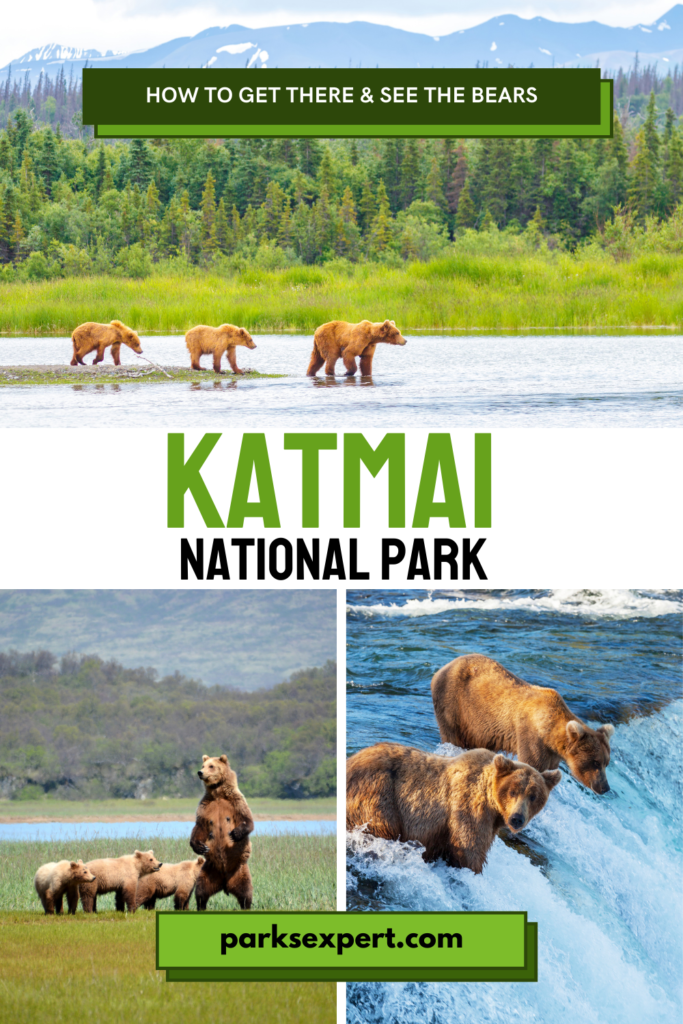
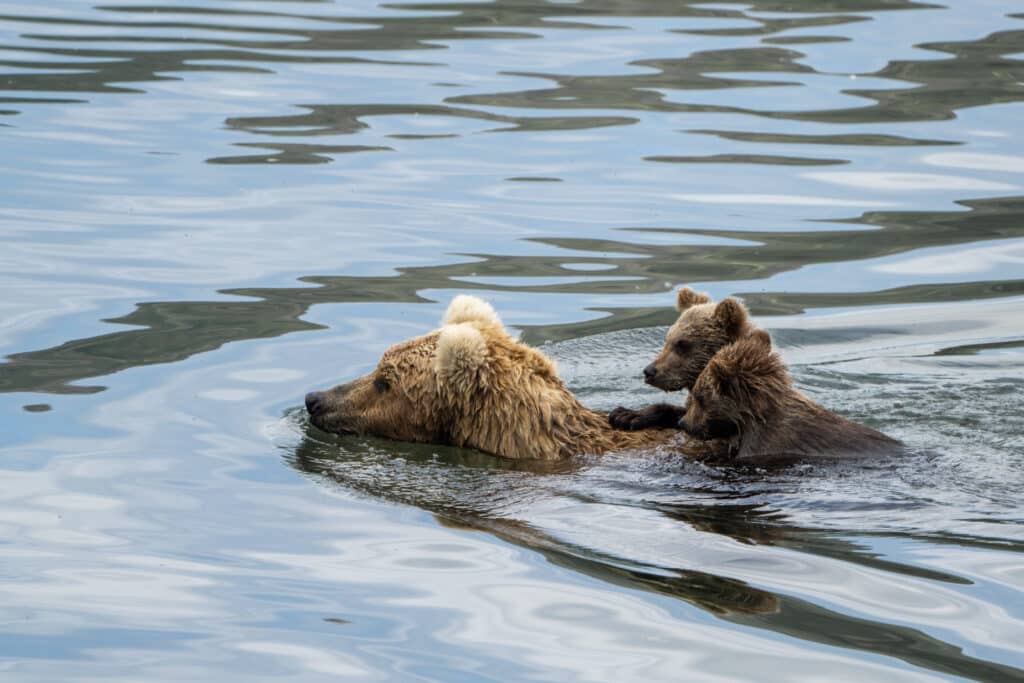
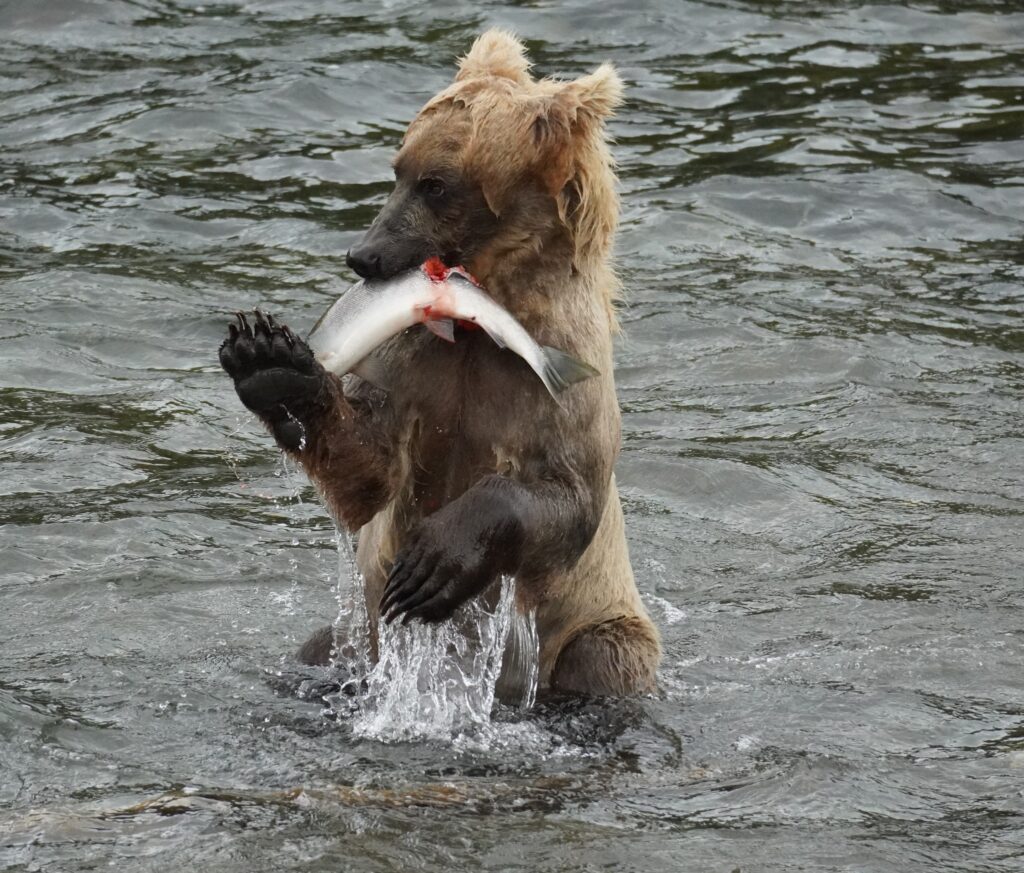
You’ve seen the photos. Giant brown bears stand at the crest of a small waterfall. Mouths agape, they wait for a determined salmon to swim upriver, unknowingly taking their final leap. These photos were likely taken at Brooks Falls, located in Katmai National Park.
Have you ever wondered how to get to Katmai National Park? What to bring? Where to stay? How much it costs? This extensive guide will cover each of these and more. Read on for everything you need to know about visiting Katmai National Park.
This post may contain affiliate links. If you make a purchase, I may earn a small commission at no additional cost to you. For more information, view my privacy policy.
Table of Contents
Katmai National Park & Preserve Overview
Location: Alaska
Gateway Town: King Salmon
Best Airport: The closest major airport is Anchorage, but you’ll need to fly to King Salmon from there. Alaska Airlines is highly recommended for this region. Learn more about how to get to Katmai
Best Time to Visit: June to mid-September – Learn more about when to visit Katmai
How to Get Around: You’ll explore the park primarily on foot. Visiting Brooks Camp will require either a flight or a boat ride. There’s also a bus tour to the Valley of Ten Thousand Smokes. You can explore the lakes around Brooks Camp in rented kayaks.
Pets: While technically allowed in the park, pets and service animals aren’t permitted in Brooks Camp for their safety.
Fee: There is no entrance fee to Katmai. The only national park in Alaska with an entrance fee is Denali. Learn more about national park entry fees.
Reservations: It’s important to book well in advance. Make lodging or camping reservations as soon as possible. Secure transportation once lodging reservations are confirmed.
Where to Stay: Within park boundaries, your options are Brooks Lodge and Brooks Camp Campground. For options in King Salmon, browse Expedia. Learn more about where to stay in Katmai
Where is Katmai National Park?

Katmai National Park is in southwestern Alaska, about 290 miles southwest of Anchorage on the northern Alaska Peninsula. The park is not on the Alaska road system. Visiting Katmai requires flying or taking a boat.
While Katmai is the fourth largest national park in the country, most visitors only see a tiny fraction of the park at Brooks Camp. Since it’s so difficult to get to, it’s also one of the least visited national parks.
Katmai National Park Map

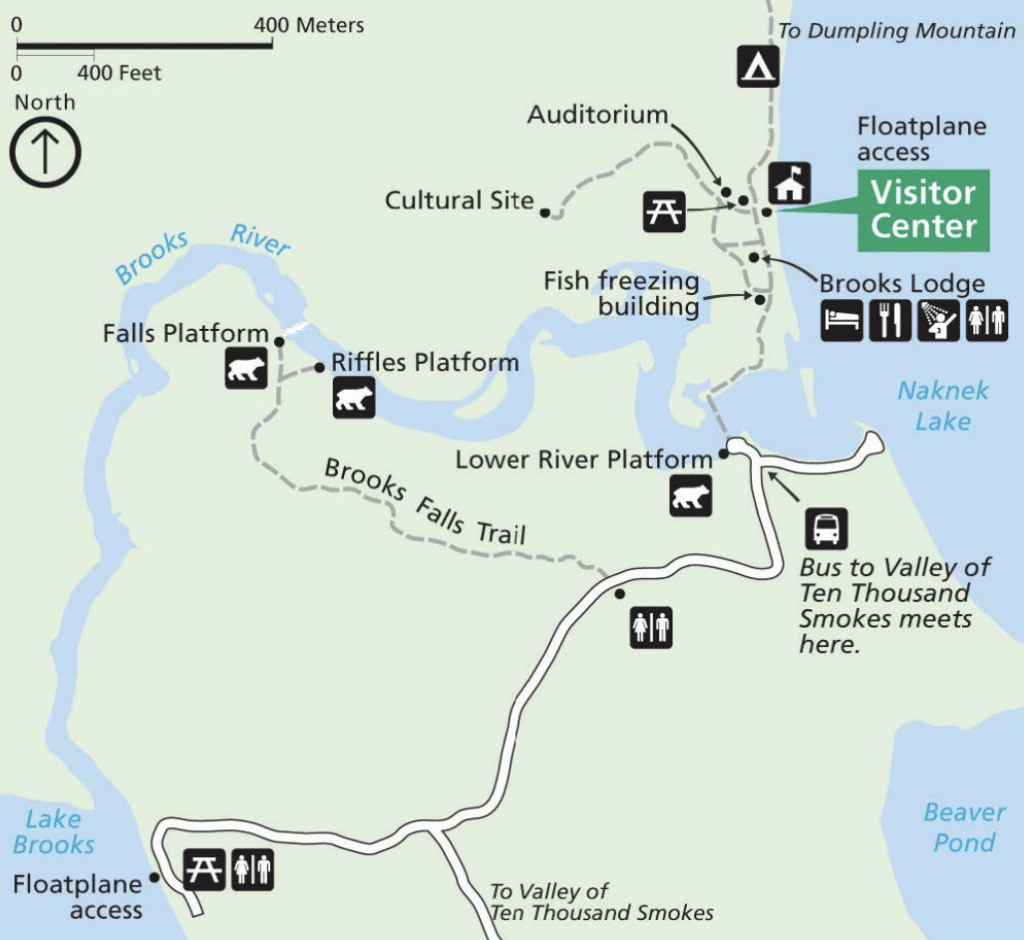
Click on the maps above to enlarge them and download them. It’s highly recommended to save these maps to your device before traveling to Katmai. You won’t have any cell service or WiFi in the park. The Visitor Centers in King Salmon and Brooks Camp will also have physical copies to hand out.
How to Get to Katmai National Park
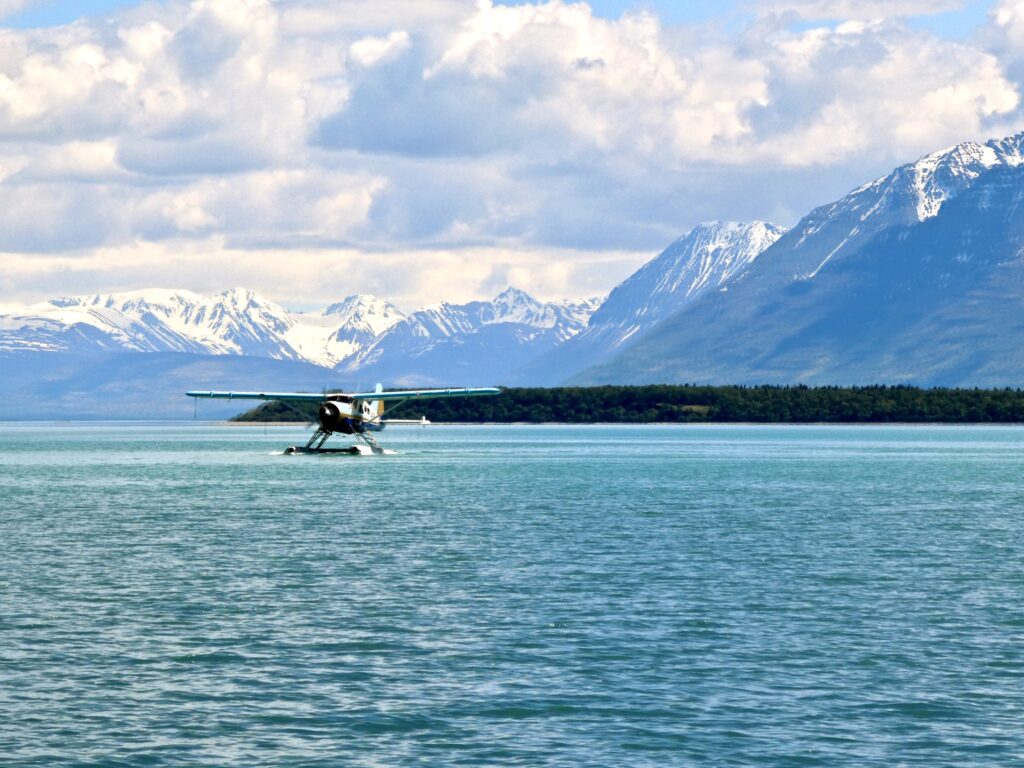
While it’s not easy to get to Katmai, it is an incredible trip unlike any other. The logistics are complicated. We’ll try to make it as simple as possible with this guide on how to get to Katmai.
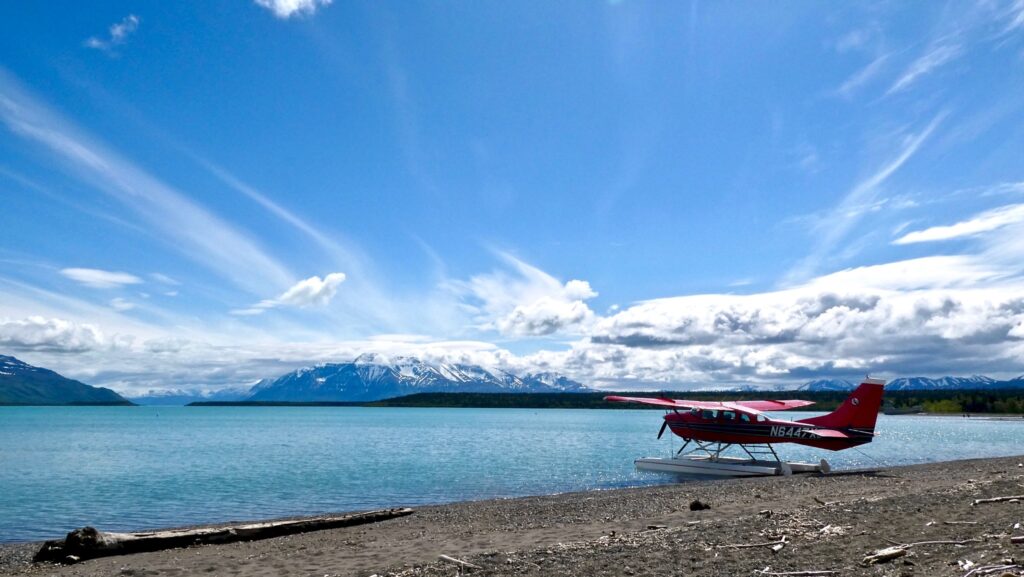
There are no roads to Katmai National Park. Since it’s not accessible by car, you’ll have to fly and maybe even take a boat.
It’s worth noting that these planes are small. They can fill up, so as soon as you have your lodging sorted, book your travel. Don’t do it until you have lodging though – those reservations are the most competitive.
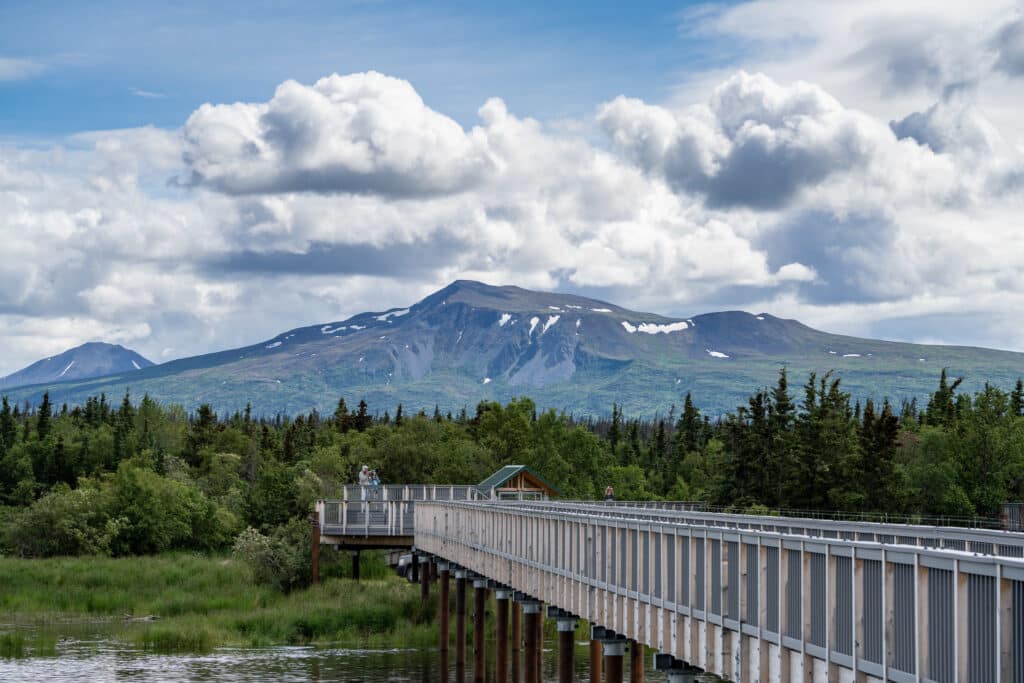
Step 1: Fly from Anchorage to King Salmon
King Salmon is the closest community to the park. You can’t drive to King Salmon, so you’ll need to fly from Anchorage (ANC). The flight is only about 1 hour.
Several commercial airlines make this trip, including Alaska Airlines and Ravn Air. You can also fly to King Salmon (AKN) from Dillingham, Homer, and Kodiak.
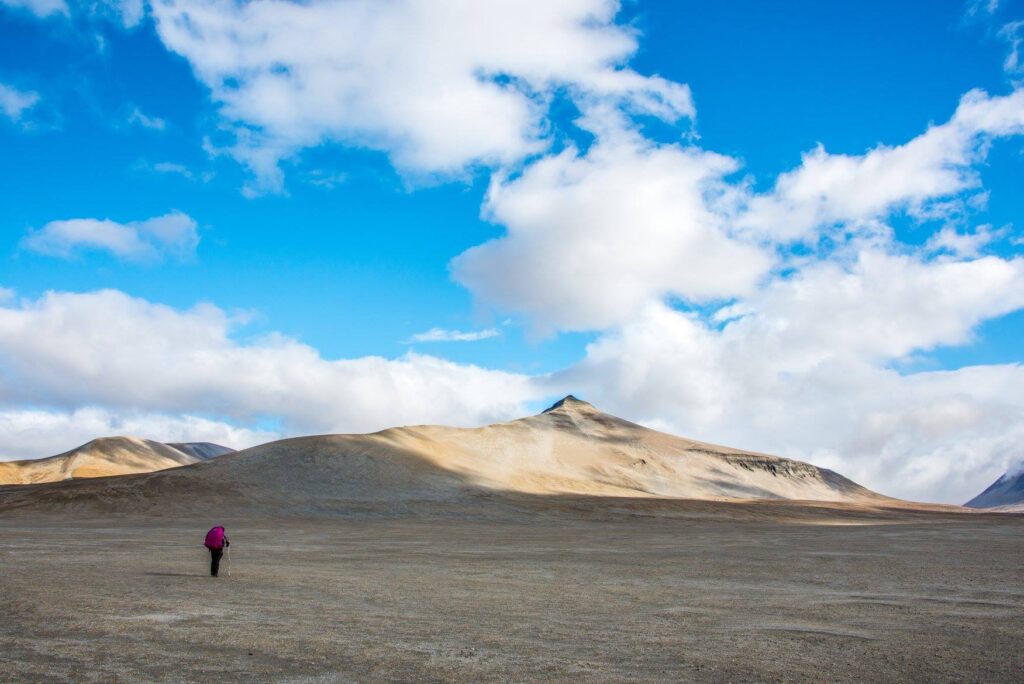
Step 2: Travel from King Salmon to Brooks Falls
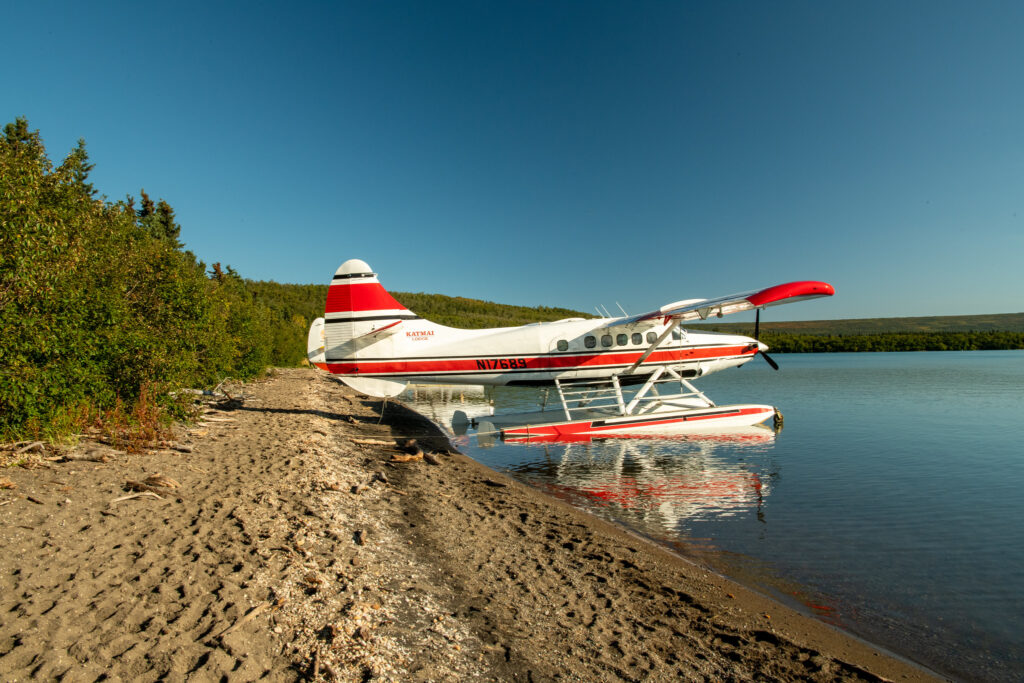
From King Salmon, you’ll want to travel to Brooks Camp. This is where the primary bear viewing opportunities are in the park. There are also lodging and food options here. There are 20-minute flights as well as 45-minute boat trips.
Flying is the quicker option, but the Water Taxi could be more reliable in case of bad weather. You can book flights through Katmai Air (one of the most popular choices) and book the ferry with Katmai Water Taxi. Each costs $450 round-trip. Water Taxi tickets include a shuttle from the King Salmon Airport to the ferry dock. There are other air taxi options, which we list below.
A note about the weather: Flights or the water taxi can be canceled if there’s bad weather. Strong winds make the boat trip unsafe across Naknek Lake. Flights can also be grounded if there are storms or foggy conditions. We recommend travel insurance for these purchases as you may not be refunded for cancellations.
One benefit of taking the Katmai Water Taxi instead of flying is the weight limit. On small floatplanes, the weight limit could be a significant barrier if you’re flying with a lot of backpacking, photography, or fishing equipment.
It’s well-known that the Katmai Water Taxi is notoriously unreliable and doesn’t offer refunds for cancelations or rescheduling. Be certain of your travel dates before you book the ferry. Read the cancellation policy thoroughly. This is another reminder to get travel insurance!
The Water Taxi departs King Salmon beginning at 7 a.m., followed by departures on the odd hours until 5 p.m. (3 p.m. in September). It departs from Brooks Camp on the even hours from 8 a.m. to 6 p.m. (4 p.m. in September).
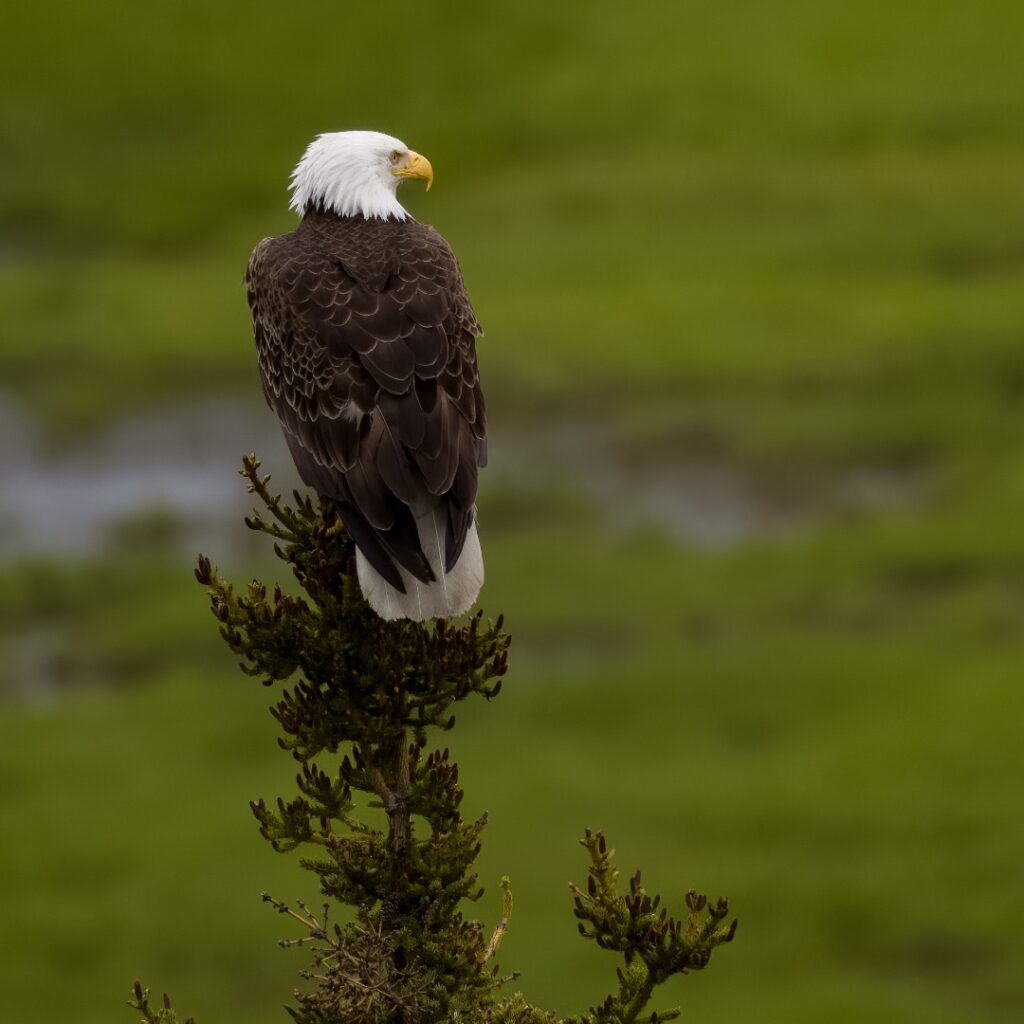
Can You Fly Directly to Brooks Camp from Anchorage or Homer?
If you’re willing to spend extra money, there are direct flights to Brooks Camp from Anchorage that you can charter. We have a complete list of options available below.
Day trips to Katmai are a good option if you don’t have lodging in the park. Flying from Anchorage to Brooks Camp on a chartered plane allows you to maximize your time in Alaska, especially if you’re on a short trip.
Charter planes are also available from Homer but may be more expensive. This is another popular option for daytrippers.
Some flights still make a stop in King Salmon. To make the most of your time, check to see if your flight is direct to Brooks Camp.
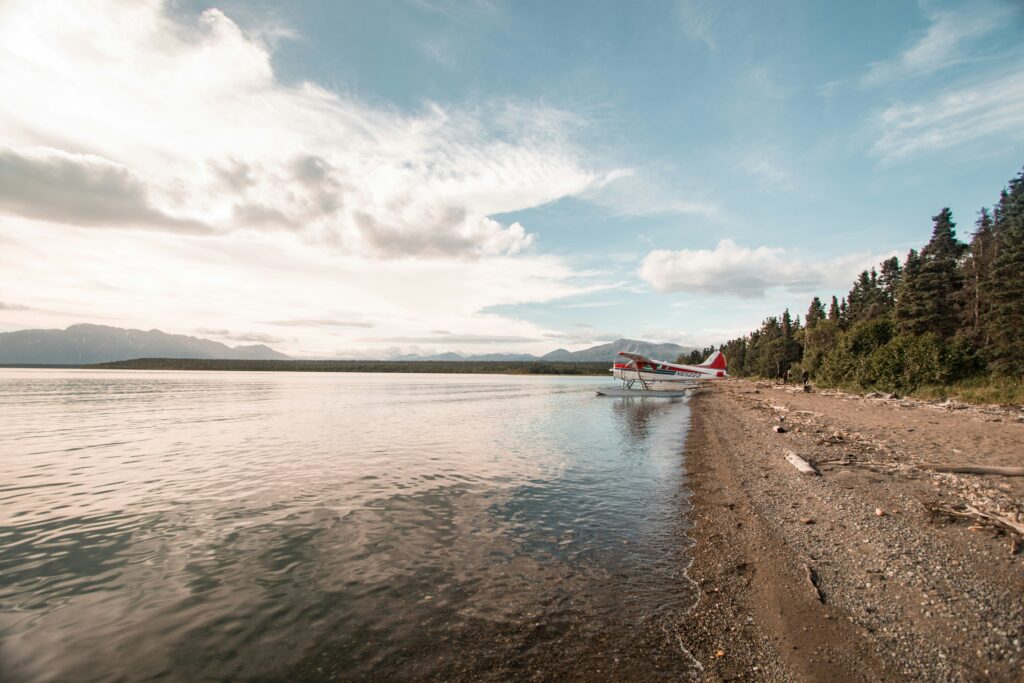
List of Air Taxis and Pricing for Flights to Katmai National Park
You won’t find a more complete list of how to get to Katmai National Park anywhere on the web. Here is a list of air taxis permitted to land within Katmai National Park. Prices are subject to change and may not include additional surcharges and fees.
- Adventure Airways: $3,950 from Homer to King Salmon (maximum 6 people)
- Airventures Alaska: $4,800 from Anchorage to Brooks Camp (maximum 4 people)
- Alaska Air Transporters: $1,000 per person Anchorage to Brooks Camp or $2,350 per person Park Hopper Package that includes Lake Clark National Park
- Alaska Air West: Call (907) 283-4292 for pricing
- Andrew Airways: Call (907) 495-2471 for information
- Bald Mountain Air: $1,295 (per person) from Homer to Brooks Camp
- Bay Air: $6,000 from Dillingham to Brooks Camp (maximum 6 people)
- Beluga Air: $1,295 (per person) from Homer to Brooks Camp
- Beryl Air: $995 (per person) from Homer to Brooks Camp
- Branch River Air Service: King Salmon to Brooks Camp; $1,440 for 5 people or $2,160 for 7 people
- Cook Inlet Aviation: Call (907) 299-7272 for more information
- Deckload Aviation: Call (907) 512-0744
- Emerald Air Service: From Homer, $1,595 per person to Hallo Bay/Moraine Creek or $1,495 per person to Brooks Camp
- Fly 907: $1,500 per person (2-person minimum) from Anchorage to Brooks Camp
- Hawk Mountain Air: Call (907) 406-3280 for more information
- Island Air Service: Call (907) 847-5000 for pricing
- K-Bay Air: $1,195 per person from Homer to Brooks Camp
- Kachemak Air Service: Call (907) 299-2699 for information
- Katmai Air: $1,350 per person from Anchorage to Brooks Camp
- King Air: Call (907) 246-4414 for information
- Kingfisher Air: From Kodiak; $850 per person per group or $1,290 per person for an exclusive tour
- Kodiak Air Service: Call (907) 654-9956 for information
- Lake Clark Air: $8,750 per person (party of two) for a 7-day tour of Lake Clark and Katmai from Anchorage
- North River Air: Call (907) 385-7213 for more
- Northwind Aviation: $1,395 per person from Homer to Brooks Camp
- Regal Air: $1,350 per person from Anchorage to Brooks Camp
- Rust Air: $1,295 per person from Anchorage to Brooks Camp
- Seahawk Air: $875 per person from Kodiak to Katmai (locations vary)
- Smokey Bay Air: $895 per person from Homer to Katmai beaches
- Steller Air Service: $800 per person from Homer to Brooks Camp
- Sunday Air Taxi: From Dillingham; call (907) 843-2002 for more information
- Tazimina Air: Call (907) 294-2228 for details
- Trail Ridge Air: $1,250 per person from Anchorage to Brooks Camp
- Trygg Air: $1,000 per person from Anchorage to Brooks Camp or $300 per person from King Salmon to Brooks Camp
- Wood River Air: Call (907) 842-5013 for information
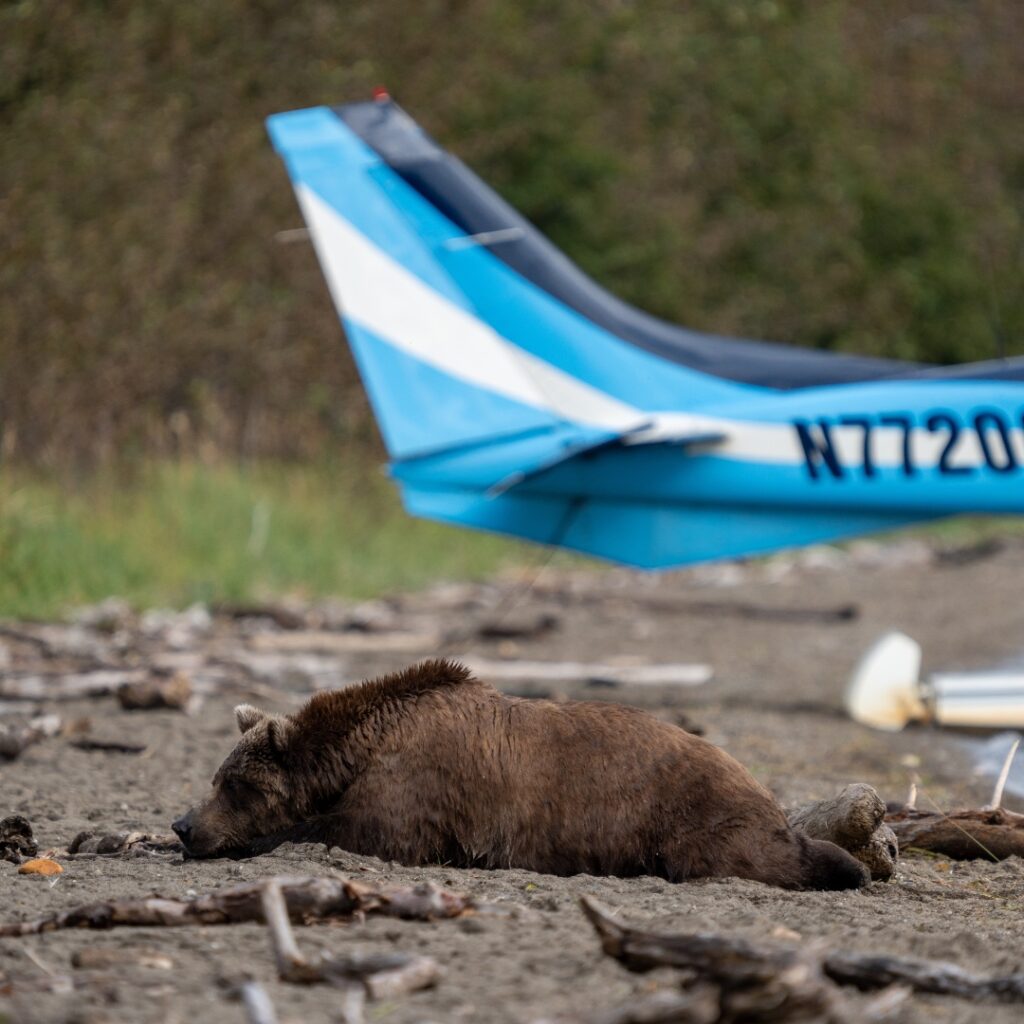
How to Use Your Alaska Airlines Credit Card for Cheaper Flights to Katmai National Park
If you have a frequent flyer account with Alaska Airlines, it’s easy to use your miles to fly to King Salmon.
We highly recommend the Alaska Airlines Visa Signature credit card to take advantage of Alaska’s companion fare deal. This allows you to book a flight for two people, but pay for only one person and the other (the companion) will fly for free. You can use this on your flight from Anchorage to King Salmon. Restrictions and minimum spending amounts apply.
When to Visit Katmai National Park
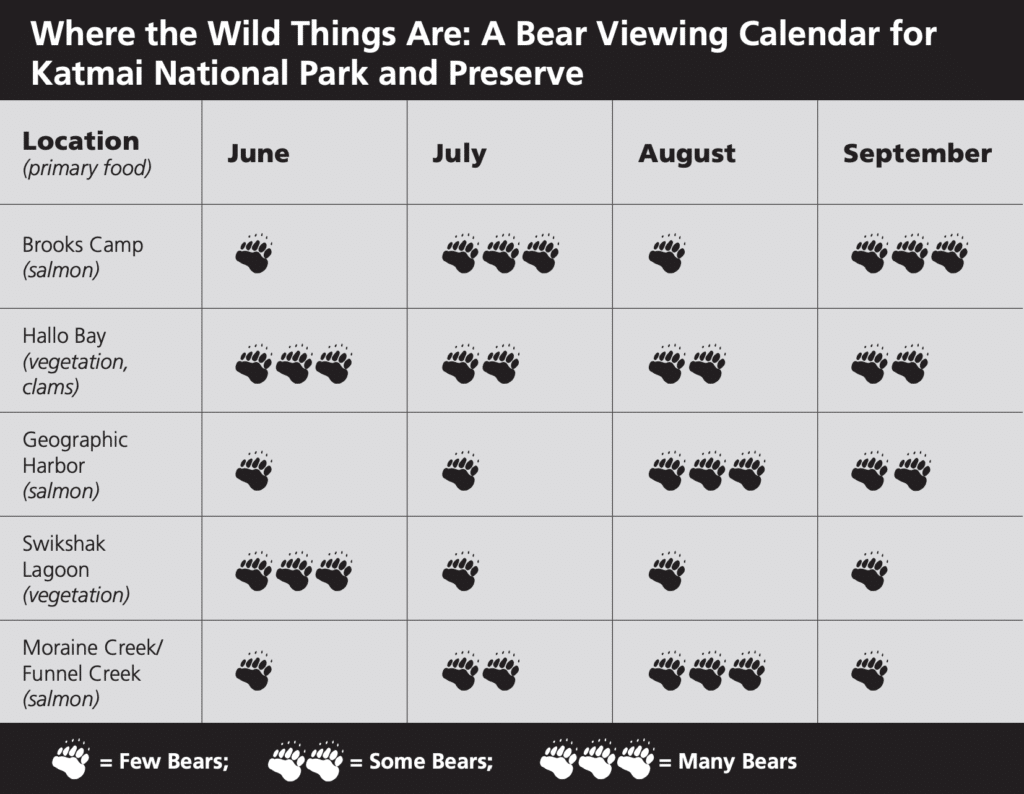
While the park is open year-round, most services and attractions are available from June to mid-September. Generally, the bears are most active at Brooks Falls during the salmon runs from late June to mid-July. Learn more in our article on the best time to visit Katmai National Park.
Where to Stay in Katmai National Park
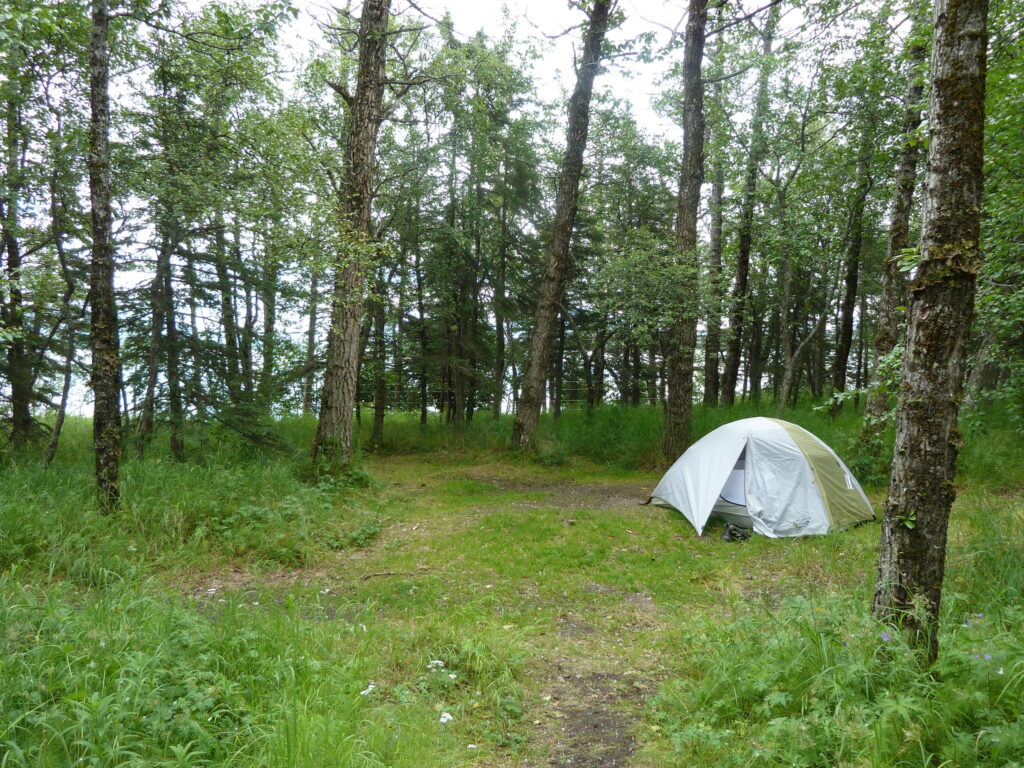
There are three options for lodging in Katmai National Park: Brooks Lodge, Brooks Camp Campground, and backcountry camping. We cover each of these in detail in our guide on where to stay in Katmai National Park.
How Long to Spend in Katmai National Park
If you can, it’s best to spend two nights and three days in Katmai. This allows you plenty of time to make a few trips to Brooks Falls to view the bears and another full day for a bus tour to the Valley of Ten Thousand Smokes.
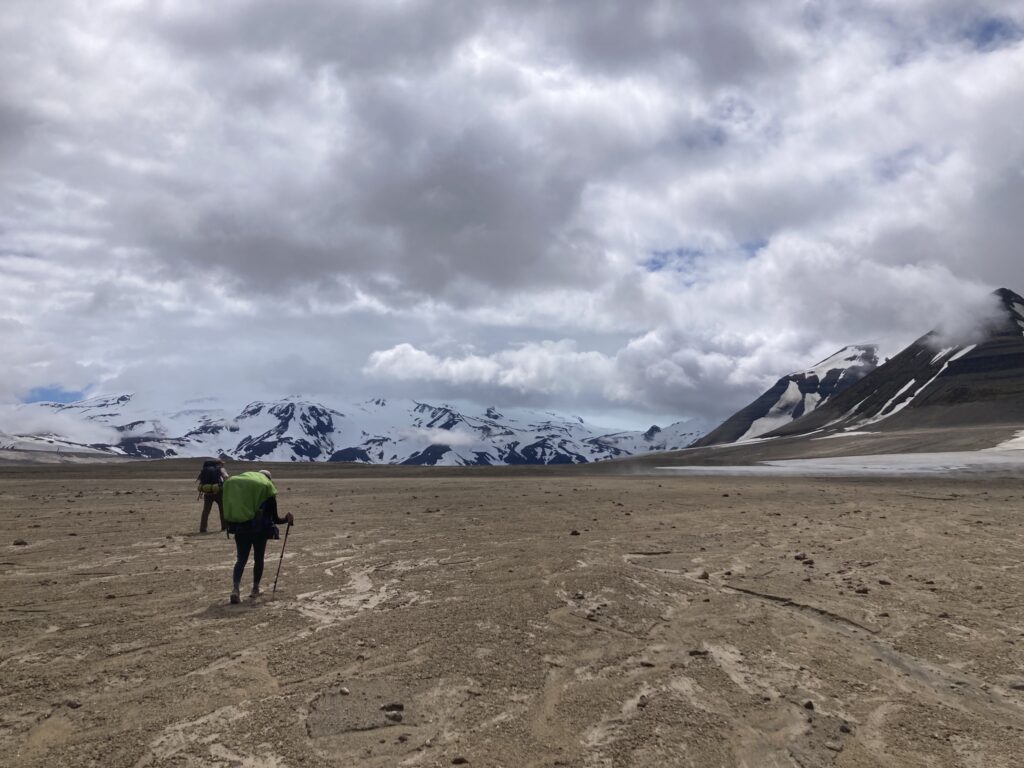
Did you know? Despite Katmai’s reputation for bears, the park was actually established to protect the largest volcanic eruption of the 20th century. What’s left is known as the Valley of Ten Thousand Smokes.
Best Things to Do in Katmai National Park
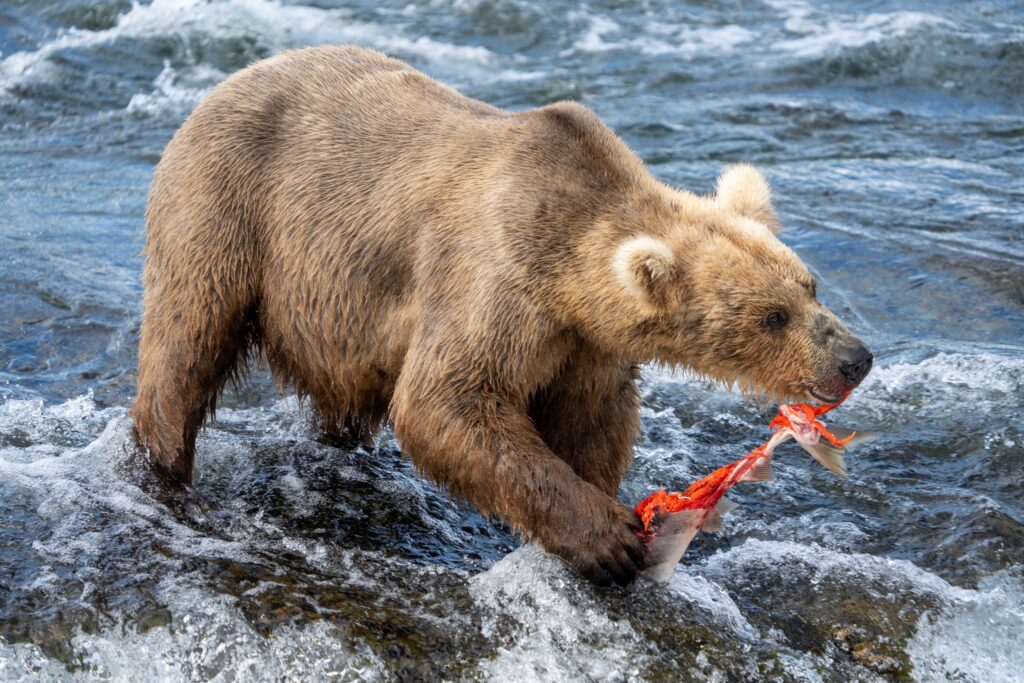
By far, the most popular reason visitors come to Katmai is to see wild brown bears. It’s estimated there are as many as 2,200 bears active in the Katmai area. But there are so many other things to do as well.
For example, you can take a bus trip to the Valley of Ten Thousand Smokes, go flyfishing, take a flightseeing tour, go kayaking on Naknek Lake, and more. There are more details in our post on the best things to do in Katmai National Park.
How Much Does it Cost to Visit Katmai National Park?
Honestly, a lot. This will be one of the more expensive excursions on an already expensive trip to Alaska. However, it’s completely worth it. There are very few experiences in the world that are comparable to this one.
Here’s a chart breaking down costs during a trip to Katmai. These prices are just estimates or averages and may not reflect actual pricing for your trip.
| Activity/Service | Estimated Cost |
|---|---|
| Flight from Anchorage to King Salmon | $200-500 per person roundtrip |
| Flight from King Salmon to Brooks Camp | $300-450 per person roundtrip |
| Water Taxi from King Salmon to Brooks Camp | $450 per person roundtrip |
| Day Trip from Anchorage to Brooks Camp | $1,450 per person roundtrip (average) |
| Day Trip from Homer to Brooks Camp | $1,250 per person roundtrip (average) |
| One Night at Brooks Lodge | $1,125 per room/night |
| One Night at Brooks Camp Campground | $18 per person +$6 fee |
| Valley of Ten Thousand Smokes Tour | $110 per person (includes lunch) |
| Kayak/Canoe Rental | $15-65 |
| Guided Fishing Charters | $100-500 |
| Flightseeing Tours | $200-500 |
| Breakfast Buffet at the Brooks Lodge | $23 per adult/$12 per child |
| Lunch Buffet at the Brooks Lodge | $29 per adult/$16 per child |
| Dinner Buffet at the Brooks Lodge | $42 per adult/$24 per child |
| Beer or Wine at Brooks Lodge | $10-40 |
| Showers at Brooks Lodge for Campers | $7 |
| Lodging in King Salmon | $400/night |
| Tips for various services | $100 |
What to Bring to Katmai National Park
Clothing: Dress in Layers
The weather is unpredictable in Katmai, so you should be prepared with plenty of layers. Start with short and long-sleeved hiking tops and loose-fitting hiking pants to help protect from mosquitoes. Then, layer as needed with long underwear, leggings, a sweatshirt, a puffy jacket, or a rain jacket as needed. You might also want to bring rain pants, depending on the weather and how often you’ll be outdoors. Don’t forget wool socks!
Shoes: Hiking Boots or Sneakers and Camp Shoes
We recommend bringing two pairs of shoes, depending on what you want to do in Katmai. If you are planning to hike at all, particularly with a ranger in the Valley of Ten Thousand Smokes, we recommend good hiking boots. If you are only going on a day trip and hiking the Brooks Falls Trail, sneakers or tennis shoes are fine.
Then, if you’re camping or staying in the Brooks Lodge, you may want comfy shoes to slip into at the end of the day. Lightweight, packable camp shoes are ideal.
Beanie and Gloves
Be prepared for fluctuating temperatures with a nice beanie and a pair of gloves. You may also want a neck buff (bonus protection against mosquitoes).
Day Pack
While walking around Brooks Camp or taking a trip to the Valley of Ten Thousand Smokes, you’ll want a small day pack. Use this to carry your camera, water, wallet, bug spray, hat, and anything else you might need. Remember not to carry food around Brooks Camp.
Camping Equipment
If you’re camping at Brooks Camp Campground, you’ll also want to bring standard camping equipment: a small, lightweight tent; sleeping bag; sleeping pad; pillow; pack; sleeping bag liner; and camp stove with cookware. Check out this great backpacking bundle at REI (tent+sleeping bag+sleeping pad for under $400!).
Bug Spray and Mosquito Netting
The bugs are surprisingly unpleasant at Katmai National Park. The wet, boggy conditions are perfect for them, it turns out. You’ll want bug spray with close to 100% deet, but this probably won’t help. Mosquito netting and bug jackets are your best option.
Binoculars
For the best bear viewing, those without long lenses will benefit from having binoculars. If you don’t want to bring your own, you can also rent a pair from the Katmai Trading Post.
Battery Pack
Since there’s no electricity in the campground, campers will find a battery pack to be very handy. You won’t have service, but you will want to use your phone to take photos and it’s nice to be able to charge it.
Reusable Water Bottle
Plastic bottles aren’t sold in Brooks Camp, so bring a reusable bottle and use the water-filling stations to stay hydrated.
Katmai National Park Map
This Trails Illustrated map of Katmai National Park is tear and water-resistant. This quality is essential in Alaska where the weather is highly unpredictable. This is essential for backpackers. The maps handed out for free at the Visitor Centers are suitable for daytrippers.
Camera Equipment
In addition to your camera, you’ll want a long lens for distance shots as well as a wide-angle lens for bears that are closer. These are also helpful for photographing the beautiful scenery in the park, including the Valley of Ten Thousand Smokes. Lens rain covers are recommended due to the unpredictable weather.
With limited electricity, you’ll also want to bring multiple batteries and your charging cord. Don’t forget extra memory cards and a camera bag to carry it all in.
Some spots in Anchorage will rent camera equipment. If you’re worried about weight, you might consider renting mirrorless cameras and lenses. These will be much lighter. While you can’t use a tripod at the Brooks Falls viewing platform, monopods are allowed.
Cash
Cash is required for coffee at the Lodge and is always handy to have in case you need it.
What NOT to Bring
In Katmai, this is just as important.
Camp Fuel
You can’t fly with fuel, so you won’t be able to bring any with you. Campers usually leave their partially used canisters behind in the fuel cache inside the campground. Check here for spares (usually dated with the date the campers checked out). If there aren’t any, the Katmai Trading Post sells fuel.
Bear Spray
You also cannot fly with bear spray, so you won’t be bringing this with you on your trip. If you are going backpacking, speak to your taxi service about other options, such as storing it on the plane but outside of the passenger cabin.
While hiking, the best bear deterrent is your human voice. Be loud, especially if you’re turning blind corners or in a particularly brushy area with limited visibility.
Pets and Service Animals
Pets and service animals are not allowed in Brooks Camp. With so many brown bears in the area, this is for their safety as well as your own. They are allowed in other areas of the park. Here’s a quote from the National Park Service:
Pets are allowed in the backcountry but must be under physical control at all times. Pets and service animals are not allowed within the Brooks Camp Developed Area (BCDA), defined as a 1.5 mile radius from the Brooks Falls Platform, between May 1 and October 31.
KATMAI NATIONAL PARK
Firearms
Most air taxis will not allow you to fly with firearms. Furthermore, Katmai National Park doesn’t allow anyone to hunt with, discharge, or carry firearms. These activities are only permitted in Katmai National Preserve.
You may be wondering what the difference is, which is a fair question. Sometimes national park boundaries are confusing. Essentially, National Preserves allow for certain subsistence uses that many National Parks do not. This may include hunting or traveling on ATVs. Refer to the Katmai National Park map at the top of the page to see where the boundaries between the Park and Preserve land are.
Tripods and Drones
Tripods are not allowed on the Brooks Falls viewing platform during peak season. They are permitted after August 15. Monopods are fine.
Drones are not permitted in any national parks.
Final Tips for Visiting Katmai National Park
Don’t Expect Cell Service
There is little to no cell reception in the park or King Salmon. WiFi is very limited as well. Prepare to be off the grid while on your trip.
Check Current Conditions
Before any national park trip, make sure to check the official website for alerts and current conditions. This is how you’ll learn about closures or other important news.
Make Reservations As Early As You Can
Reserve everything as early as you can. This will help guarantee you have everything you need: lodging, transport, and activities. Booking early also helps you save money, particularly on transportation.
Allow Time for Bear Jams
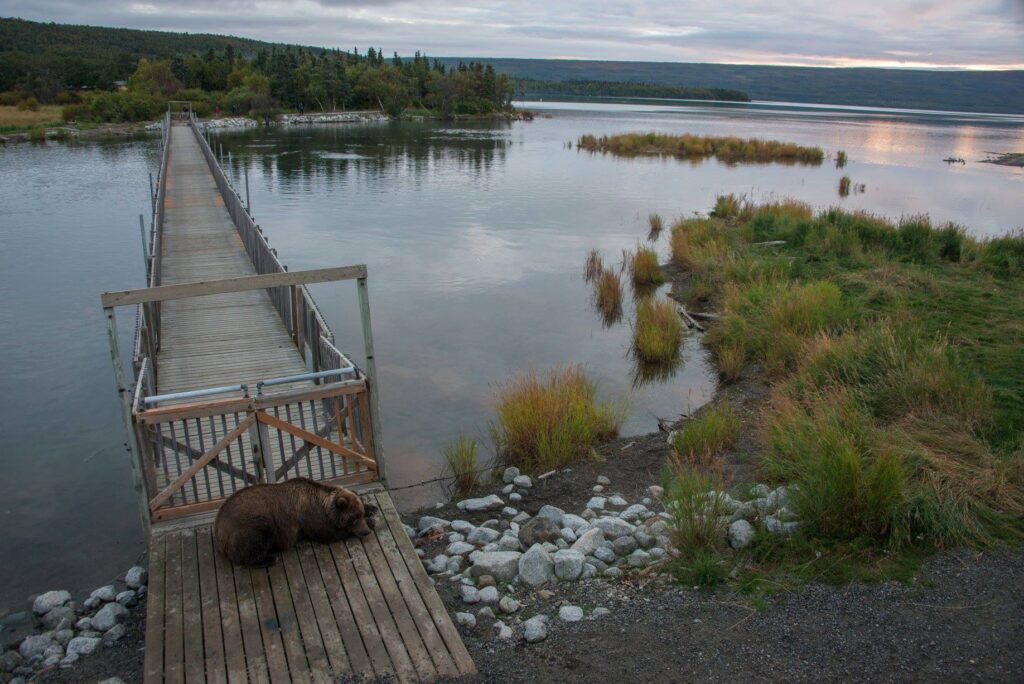
Bear jams happen often, particularly on the Brooks River bridge between the Visitor Center/Lodge/Campground area and the Brooks Falls Trail. Allow yourself plenty of time to travel between this area and your flight or ferry departure point. You could be stopped for as long as 30 minutes waiting for bears to clear the bridge. We recommend arriving at least 45 minutes before your departure so you don’t miss it.
Using the Viewing Platforms
There are several viewing platforms, including the deck at Brooks Falls. If one is too crowded, be sure to try others along the path. The floating bridge near Brooks Camp is another prime viewing location.
While there are limits on the Brooks Falls platform, the others don’t have restrictions.
Arrive early in the day or after 4 p.m. for the best viewing opportunities without crowds. This helps avoid those who are only visiting Brooks Camp for the day.
The Falls and Riffles platforms close overnight (10 p.m. to 7 a.m.).
Plan for the Unexpected
Weather delays happen often in Alaska. Allow flexibility in your travel plans. Prepare to spend extra money if things don’t go as planned (if you have to stay an extra night in King Salmon, for example). Be patient and enjoy the extra time in such a beautiful place.
Check Out the Brooks Falls Webcam
If you can’t wait to visit, you can watch the bears all summer long thanks to a webcam at Brooks Falls. Remember, this stream also runs in the Brooks Camp Visitor Center, so you can check it for bear activity before you walk to the Falls Platform.
Pin How to Get to Katmai National Park
Thanks for taking the time to read the article. Now it’s time to plan your trip to Katmai and Alaska! Before you go, consider pinning this post so you can refer to it later and read our other articles on Alaska National Parks.