Article Summary: When to Visit Katmai National Park, Best Time to Visit Katmai National Park
Have you ever thought about those infamous photos of brown bears catching salmon in a waterfall and wondered how the photographer managed to be in the right place at the right time? That photographer could be you!
In this guide, we’ll go over the best time to visit Katmai National Park and Preserve. This will include thoughts on the best bear-viewing opportunities as well as the weather in Katmai.
This post may contain affiliate links. If you make a purchase, I may earn a small commission at no additional cost to you. For more information, view my privacy policy.
Table of Contents

Katmai National Park & Preserve Overview
Location: Alaska
Gateway Town: King Salmon
Best Airport: The closest major airport is Anchorage, but you’ll need to fly to King Salmon from there. Alaska Airlines is highly recommended for this region. Learn more about how to get to Katmai
Best Time to Visit: June to mid-September – Learn more about when to visit Katmai
How to Get Around: You’ll explore the park primarily on foot. Visiting Brooks Camp will require either a flight or a boat ride. There’s also a bus tour to the Valley of Ten Thousand Smokes. You can explore the lakes around Brooks Camp in rented kayaks.
Pets: While technically allowed in the park, pets and service animals aren’t permitted in Brooks Camp for their safety.
Fee: There is no entrance fee to Katmai. The only national park in Alaska with an entrance fee is Denali. Learn more about national park entry fees.
Reservations: It’s important to book well in advance. Make lodging or camping reservations as soon as possible. Secure transportation once lodging reservations are confirmed.
Where to Stay: Within park boundaries, your options are Brooks Lodge and Brooks Camp Campground. For options in King Salmon, browse Expedia. Learn more about where to stay in Katmai
Where is Katmai National Park?

Katmai National Park is in southwestern Alaska, about 290 miles southwest of Anchorage on the northern Alaska Peninsula. The park is not on the Alaska road system. Visiting Katmai requires flying or taking a boat.
While Katmai is the fourth largest national park in the country, most visitors only see a tiny fraction of the park at Brooks Camp. Since it’s so difficult to get to, it’s also one of the least visited national parks.
Katmai National Park Map

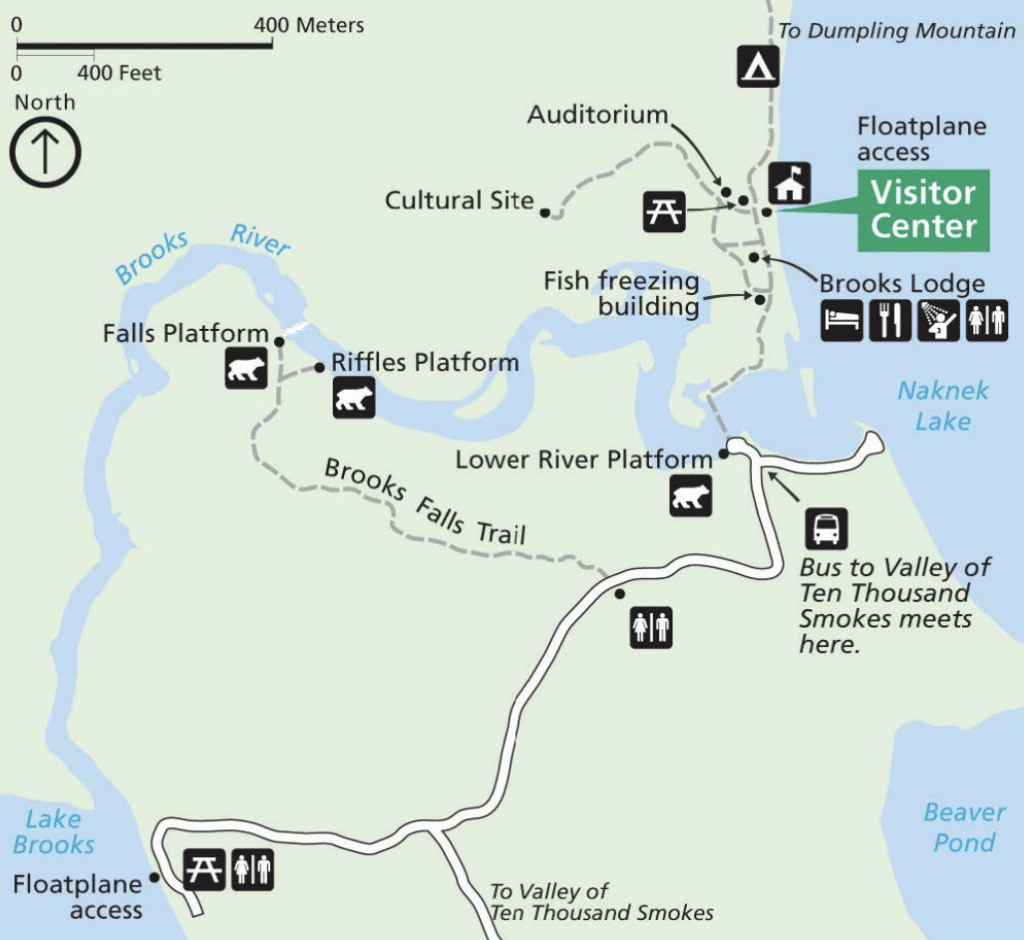
Click on the maps above to enlarge them and download them. It’s highly recommended to save these maps to your device before traveling to Katmai. You won’t have any cell service or WiFi in the park. The Visitor Centers in King Salmon and Brooks Camp will also have physical copies to hand out.
When to Visit Katmai National Park
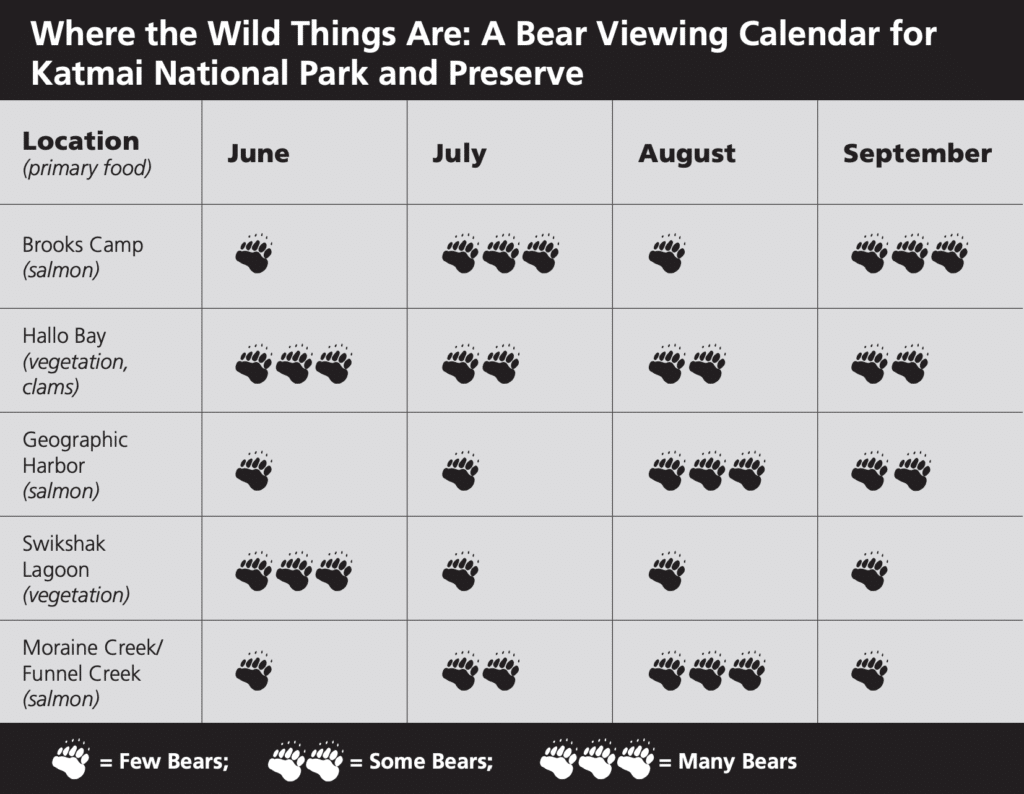
While the park is open year-round, most services and attractions are available from June to mid-September. Here’s an overview of the best time to visit Katmai National Park based on its busy season.
Note: Bears are present in the area all summer, so if you visit another time, your chances of seeing bears are still almost guaranteed. Some years, the salmon runs are early or late. You never know when the most opportune time to spot bears will actually be.
Visiting Katmai National Park in June
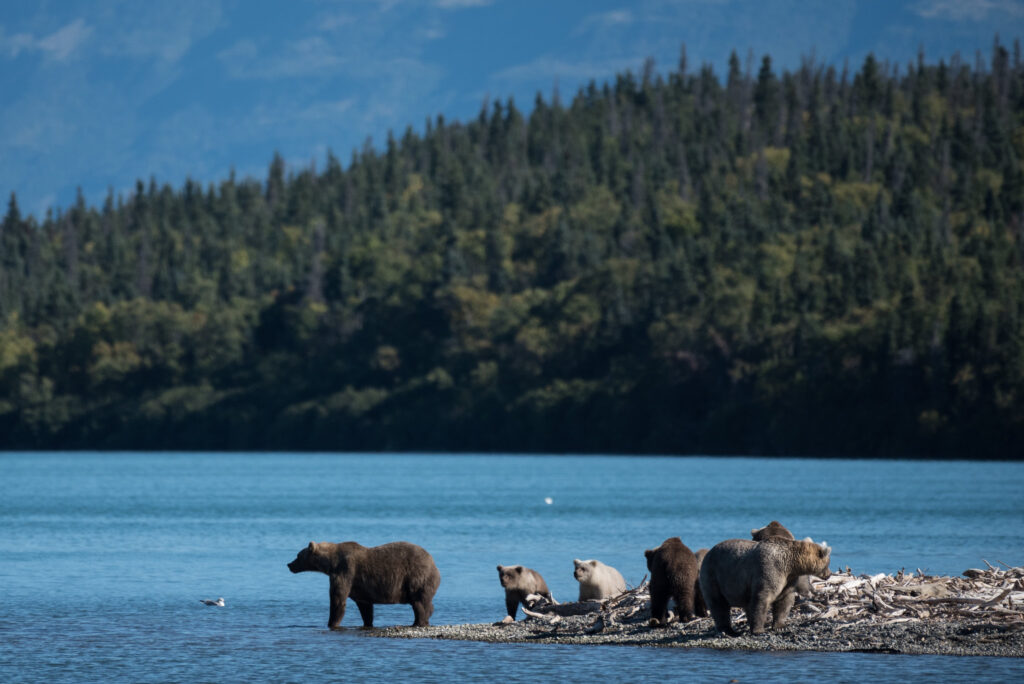
The salmon will begin to arrive on their spawning journey in late June (in a normal year). This is when bears will begin to appear in the Brooks Camp area.
You can charter flights to other, more remote areas of the park where viewing opportunities in June are better. Learn more in our article on how to get to Katmai National Park.
Visiting Katmai National Park in July
In our opinion, July is the best time to visit Katmai National Park.
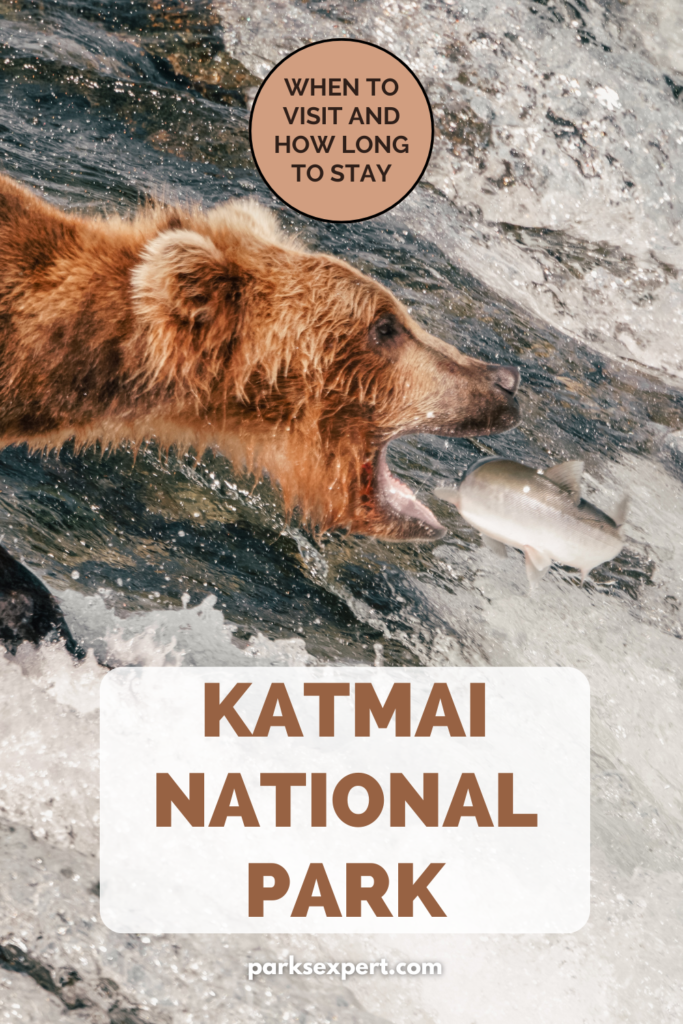
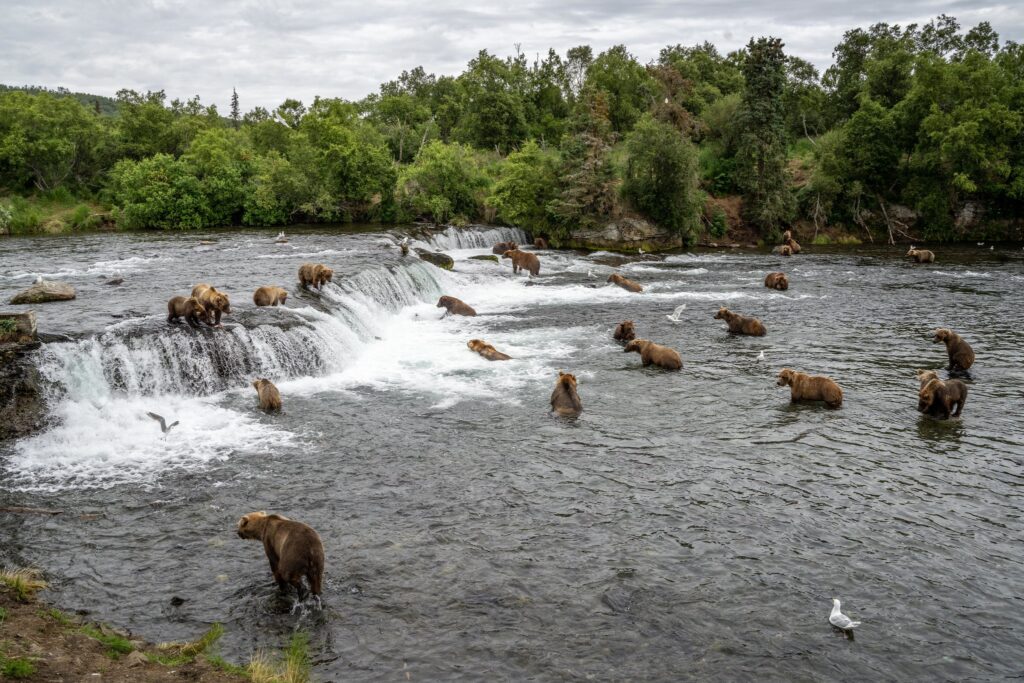
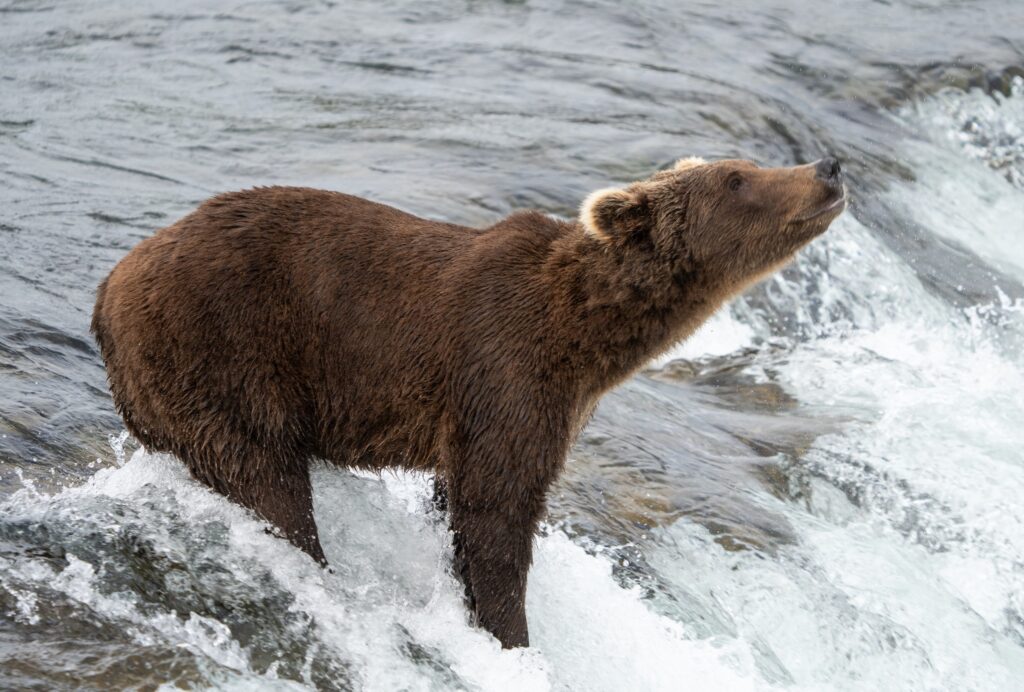
Generally, the bear-viewing opportunities are best from late June to mid-July when the Brooks River salmon runs occur. This is when they might be seen in Brooks Falls for those famous views of bears catching salmon as they jump over a waterfall. This is also when the most bears will be seen.
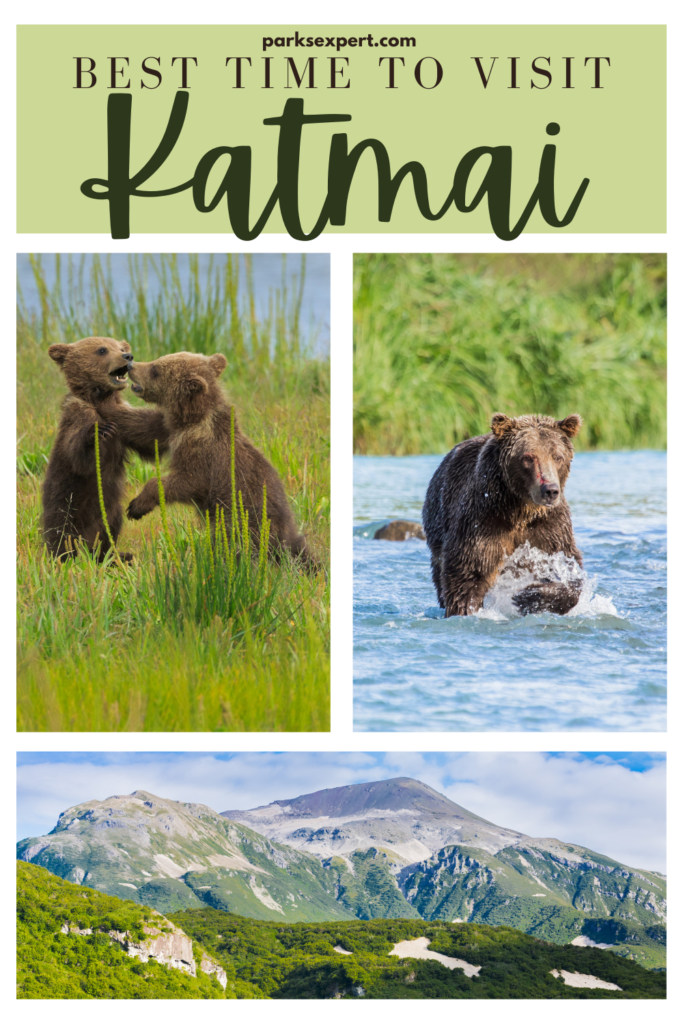
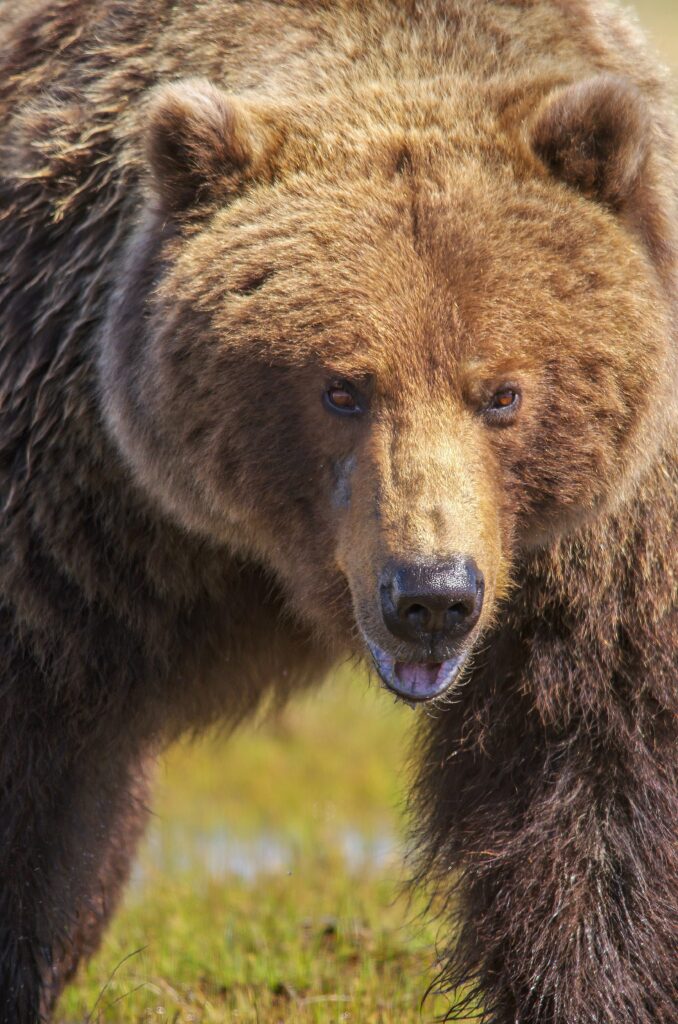
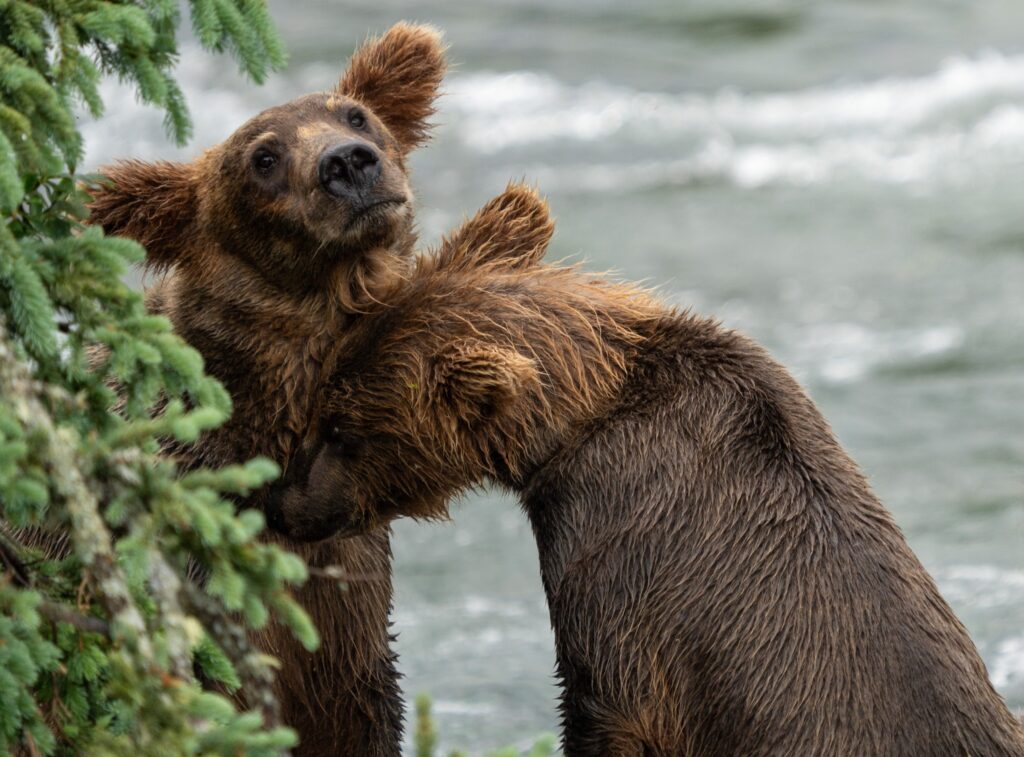
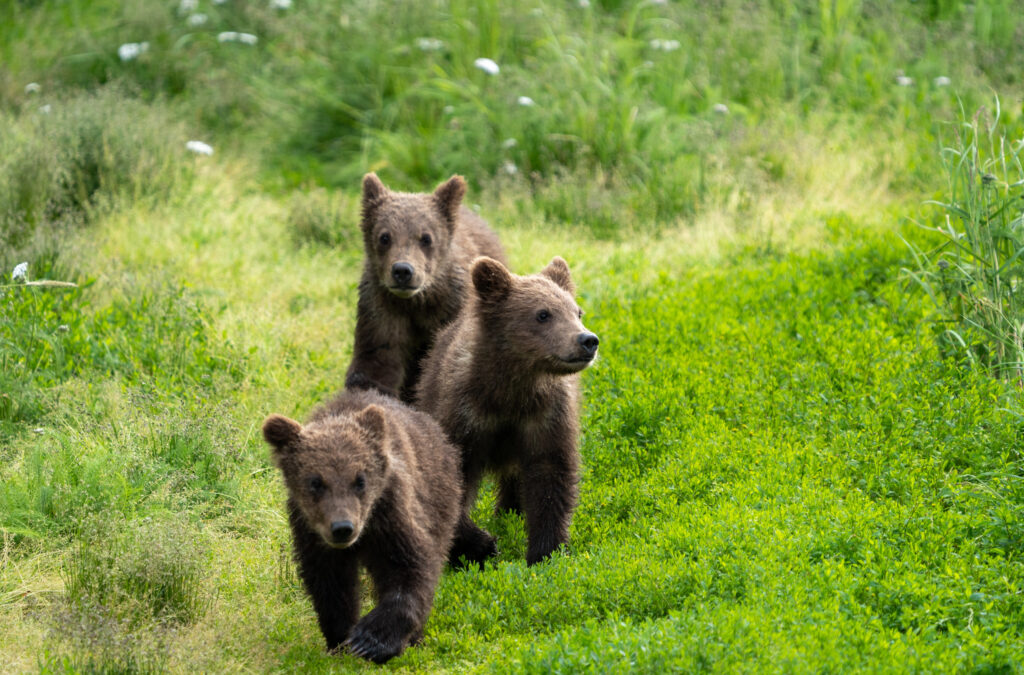
Bears are waking up from hibernation in June and July, so they’ll be much thinner. The cubs are also tiny and, some might say, cuter. June and July will have the largest concentration of bears at Brooks Falls (10-20). As they fight over territory, bears may also be more aggressive toward each other.
By the end of July, bears will start to disperse. If the salmon aren’t running, they are off to find more food elsewhere.
Visiting Katmai National Park in August
Bears will likely not be as active in Brooks Camp in August, but that doesn’t mean you won’t see them. Sometimes bears can still be seen fishing in the Brooks River.
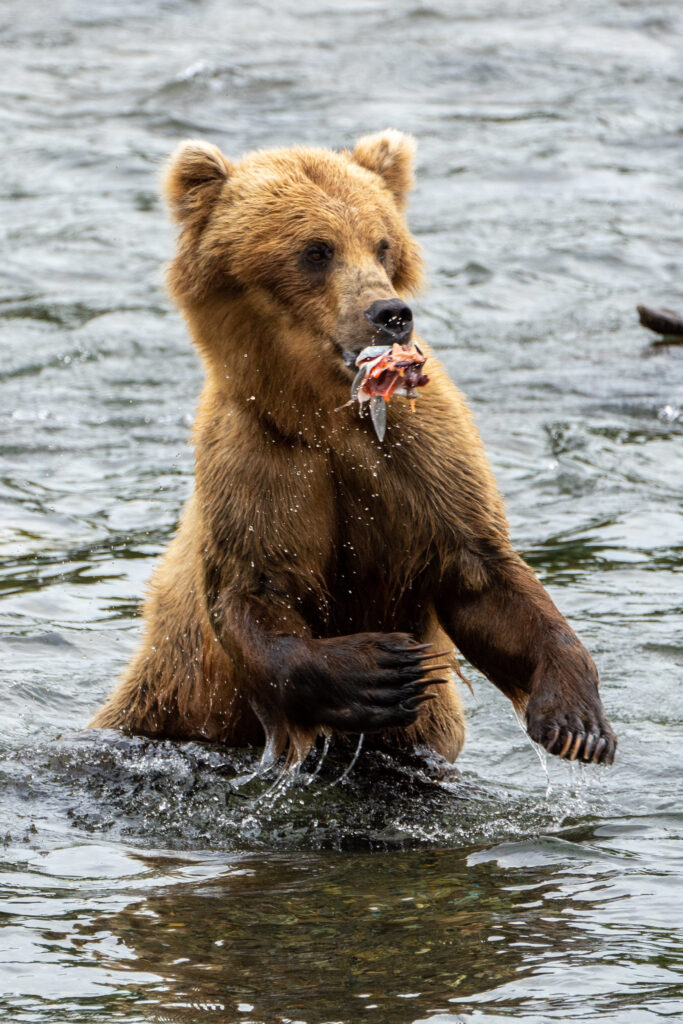
In late August, the salmon will have started spawning and dying. Bears will return to the Brooks River to feast on the leftovers. This leads to prime viewing opportunities.
Visiting Katmai National Park in September
Another great time to visit is in September. There are no more salmon runs at this point, but salmons are spawning which means they’re ending their life cycle. Bears will take advantage of this easy chance to feast before hibernation.
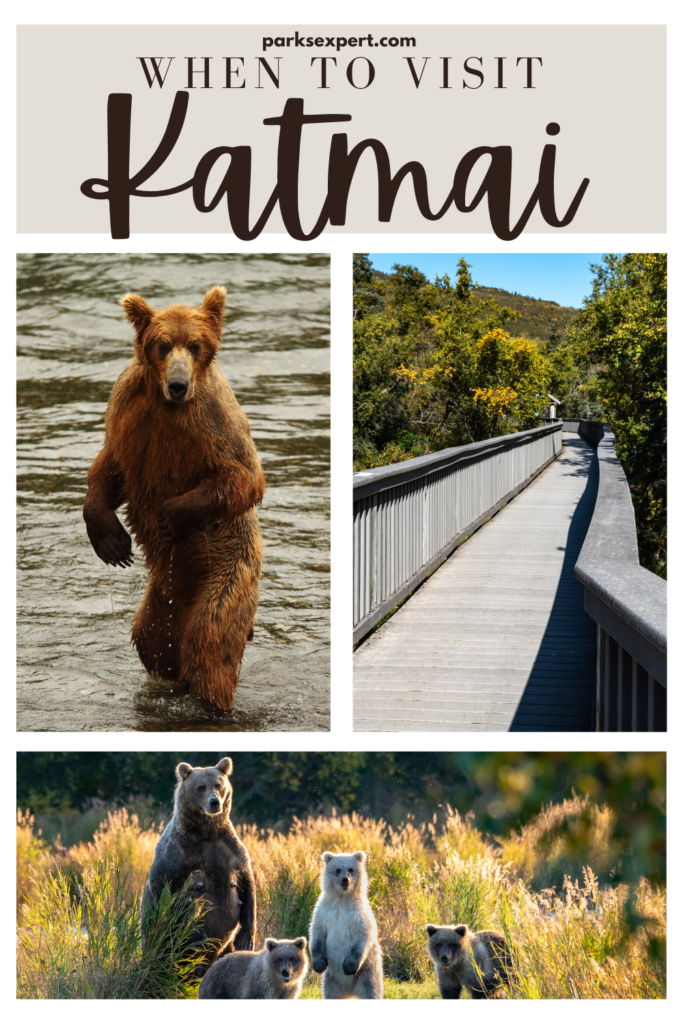
September is when bears are bulking up for hibernation. They’re so chubby there’s a Fat Bear Week dedicated to voting for your favorite portly grizzly. This usually occurs in early October.
Weather can be rainy or even snowy in September, which could interrupt your travel plans. Keep this in mind as you’re booking your trip.
If you can’t visit in July, September is a great second choice.
Weather in Katmai National Park
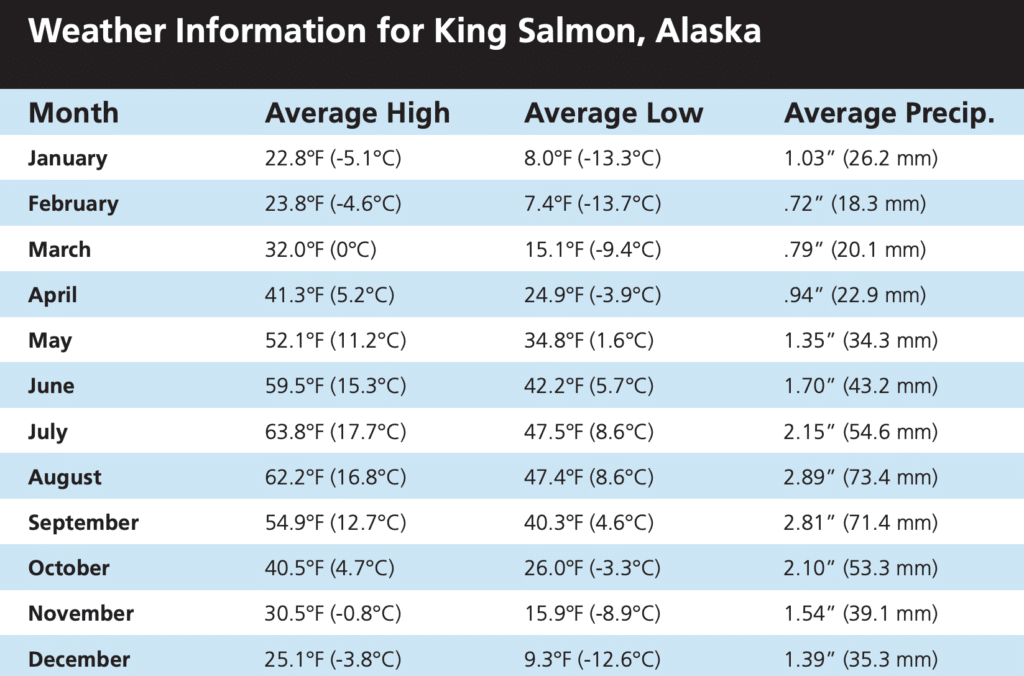
Summer temperatures can range from 45 to 75 F. You should be prepared for a full range of weather, including rain and fog.
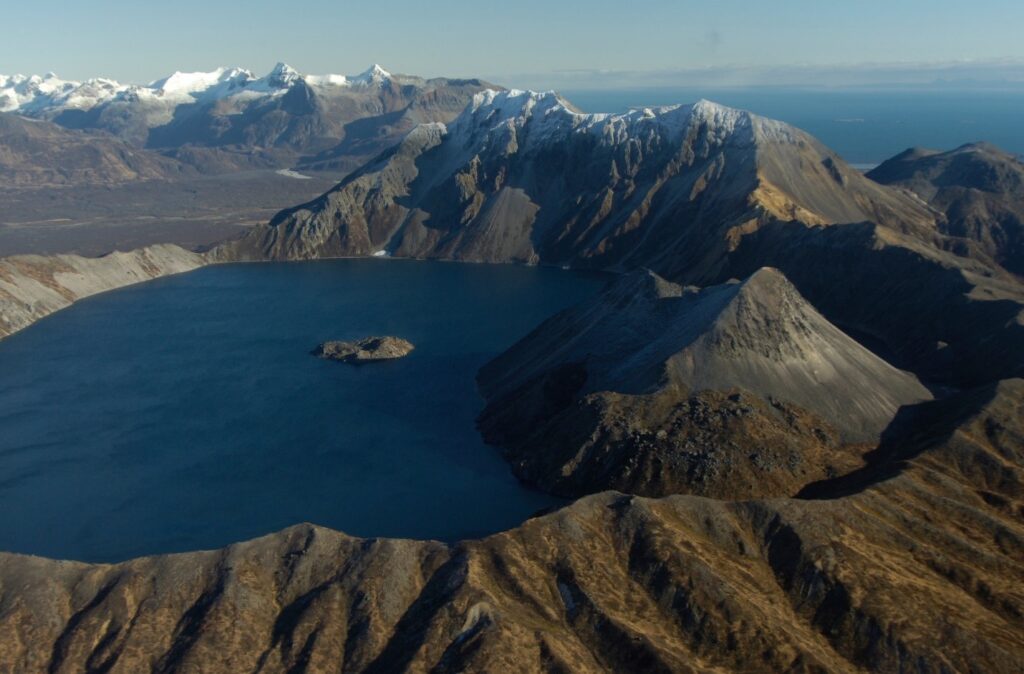
Autumn is a beautiful time to visit for vibrant fall foliage. A light dusting of snow may be visible on the higher peaks as well, creating a nice photo opportunity.
How to Get to Katmai National Park
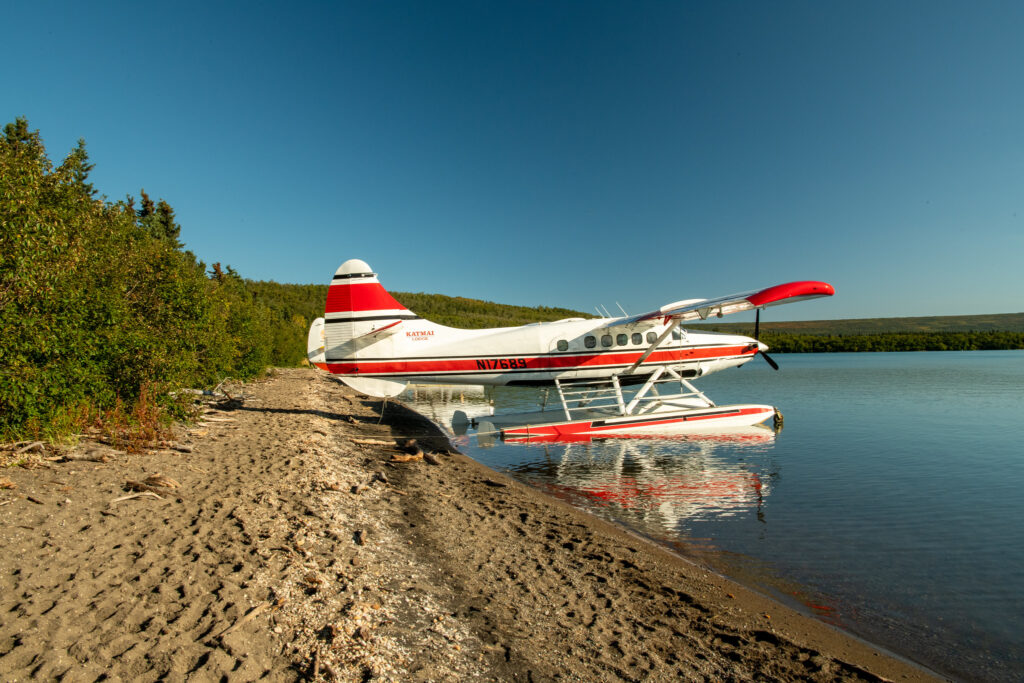
While it’s not easy to get to Katmai, it is an incredible trip unlike any other. The logistics are complicated. We’ll try to make it as simple as possible with this guide on how to get to Katmai.

What to Bring to Katmai National Park
Clothing: Dress in Layers
The weather is unpredictable in Katmai, so you should be prepared with plenty of layers. Start with short and long-sleeved hiking tops and loose-fitting hiking pants to help protect from mosquitoes. Then, layer as needed with long underwear, leggings, a sweatshirt, a puffy jacket, or a rain jacket as needed. You might also want to bring rain pants, depending on the weather and how often you’ll be outdoors. Don’t forget wool socks!
Shoes: Hiking Boots or Sneakers and Camp Shoes
We recommend bringing two pairs of shoes, depending on what you want to do in Katmai. If you are planning to hike at all, particularly with a ranger in the Valley of Ten Thousand Smokes, we recommend good hiking boots. If you are only going on a day trip and hiking the Brooks Falls Trail, sneakers or tennis shoes are fine.
Then, if you’re camping or staying in the Brooks Lodge, you may want comfy shoes to slip into at the end of the day. Lightweight, packable camp shoes are ideal.
Beanie and Gloves
Be prepared for fluctuating temperatures with a nice beanie and a pair of gloves. You may also want a neck buff (bonus protection against mosquitoes).
Day Pack
While walking around Brooks Camp or taking a trip to the Valley of Ten Thousand Smokes, you’ll want a small day pack. Use this to carry your camera, water, wallet, bug spray, hat, and anything else you might need. Remember not to carry food around Brooks Camp.
Camping Equipment
If you’re camping at Brooks Camp Campground, you’ll also want to bring standard camping equipment: a small, lightweight tent; sleeping bag; sleeping pad; pillow; pack; sleeping bag liner; and camp stove with cookware. Check out this great backpacking bundle at REI (tent+sleeping bag+sleeping pad for under $400!).
Bug Spray and Mosquito Netting
The bugs are surprisingly unpleasant at Katmai National Park. The wet, boggy conditions are perfect for them, it turns out. You’ll want bug spray with close to 100% deet, but this probably won’t help. Mosquito netting and bug jackets are your best option.
Binoculars
For the best bear viewing, those without long lenses will benefit from having binoculars. If you don’t want to bring your own, you can also rent a pair from the Katmai Trading Post.
Battery Pack
Since there’s no electricity in the campground, campers will find a battery pack to be very handy. You won’t have service, but you will want to use your phone to take photos and it’s nice to be able to charge it.
Reusable Water Bottle
Plastic bottles aren’t sold in Brooks Camp, so bring a reusable bottle and use the water-filling stations to stay hydrated.
Katmai National Park Map
This Trails Illustrated map of Katmai National Park is tear and water-resistant. This quality is essential in Alaska where the weather is highly unpredictable. This is essential for backpackers. The maps handed out for free at the Visitor Centers are suitable for daytrippers.
Camera Equipment
In addition to your camera, you’ll want a long lens for distance shots as well as a wide-angle lens for bears that are closer. These are also helpful for photographing the beautiful scenery in the park, including the Valley of Ten Thousand Smokes. Lens rain covers are recommended due to the unpredictable weather.
With limited electricity, you’ll also want to bring multiple batteries and your charging cord. Don’t forget extra memory cards and a camera bag to carry it all in.
Some spots in Anchorage will rent camera equipment. If you’re worried about weight, you might consider renting mirrorless cameras and lenses. These will be much lighter. While you can’t use a tripod at the Brooks Falls viewing platform, monopods are allowed.
Cash
Cash is required for coffee at the Lodge and is always handy to have in case you need it.
What NOT to Bring
In Katmai, this is just as important.
Camp Fuel
You can’t fly with fuel, so you won’t be able to bring any with you. Campers usually leave their partially used canisters behind in the fuel cache inside the campground. Check here for spares (usually dated with the date the campers checked out). If there aren’t any, the Katmai Trading Post sells fuel.
Bear Spray
You also cannot fly with bear spray, so you won’t be bringing this with you on your trip. If you are going backpacking, speak to your taxi service about other options, such as storing it on the plane but outside of the passenger cabin.
While hiking, the best bear deterrent is your human voice. Be loud, especially if you’re turning blind corners or in a particularly brushy area with limited visibility.
Pets and Service Animals
Pets and service animals are not allowed in Brooks Camp. With so many brown bears in the area, this is for their safety as well as your own. They are allowed in other areas of the park. Here’s a quote from the National Park Service:
Pets are allowed in the backcountry but must be under physical control at all times. Pets and service animals are not allowed within the Brooks Camp Developed Area (BCDA), defined as a 1.5 mile radius from the Brooks Falls Platform, between May 1 and October 31.
KATMAI NATIONAL PARK
Firearms
Most air taxis will not allow you to fly with firearms. Furthermore, Katmai National Park doesn’t allow anyone to hunt with, discharge, or carry firearms. These activities are only permitted in Katmai National Preserve.
You may be wondering what the difference is, which is a fair question. Sometimes national park boundaries are confusing. Essentially, National Preserves allow for certain subsistence uses that many National Parks do not. This may include hunting or traveling on ATVs. Refer to the Katmai National Park map at the top of the page to see where the boundaries between the Park and Preserve land are.
Tripods and Drones
Tripods are not allowed on the Brooks Falls viewing platform during peak season. They are permitted after August 15. Monopods are fine.
Drones are not permitted in any national parks.
Final Tips for Visiting Katmai National Park
Connectivity
Expect minimal to no cell reception within the park or in King Salmon. Additionally, WiFi access is extremely limited. Prepare to be off the grid during your trip.
Stay Informed About Current Conditions
Before embarking on your journey to the national park, ensure to regularly check the official website for any alerts or updates regarding current conditions. This is crucial for staying informed about closures or any other significant developments.
Book Reservations Well in Advance
Make your reservations as early as possible to secure lodging, transportation, and activities. Early booking not only ensures availability but also helps cut costs, especially for transportation.
Allocate Time for Bear Jams
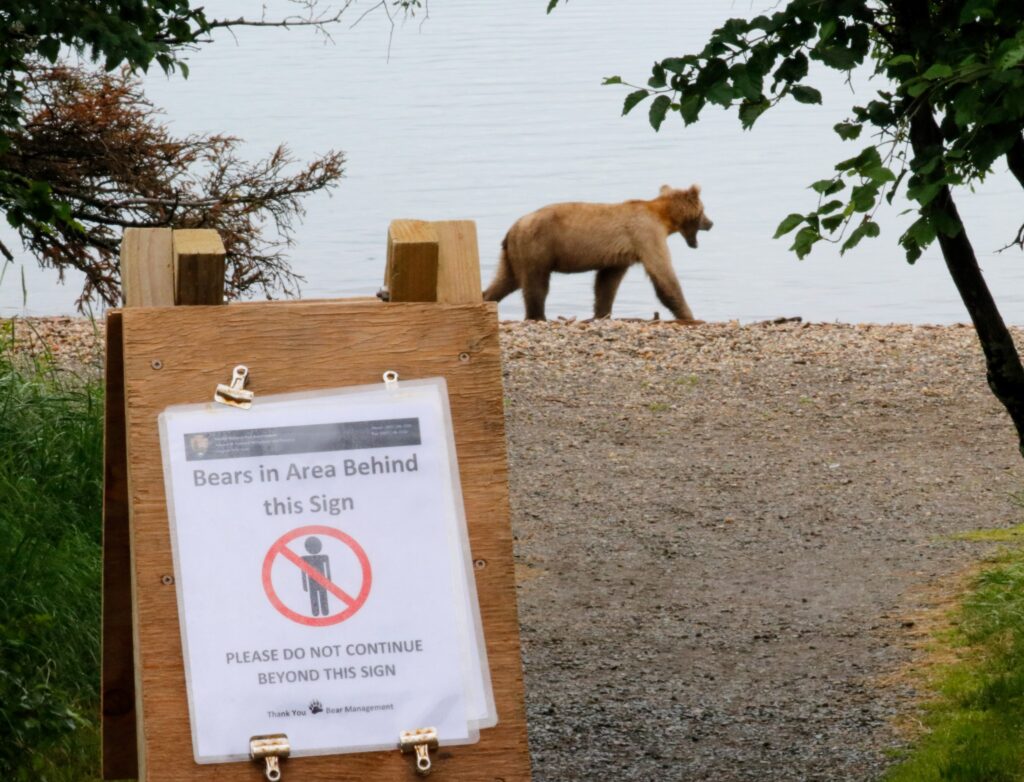
Bear jams are common, especially on the Brooks River bridge between the Visitor Center/Lodge/Campground area and the Brooks Falls Trail. Allow ample time to travel between this area and your departure point for flights or ferries, as you may experience delays of up to 30 minutes while bears clear the bridge. We recommend arriving at least 45 minutes before departure to avoid missing your transportation.
Try Multiple Viewing Platforms
Several viewing platforms, including the deck at Brooks Falls, offer excellent vantage points. If one platform is crowded, explore others along the path. The floating bridge near Brooks Camp is another recommended viewing location. While there are capacity limits on the Brooks Falls platform, other platforms have no restrictions. For optimal viewing opportunities with fewer crowds, consider arriving early in the day or after 4 p.m., particularly to avoid day-trippers to Brooks Camp.
Be Prepared for Unforeseen Circumstances
Weather delays are common in Alaska, so maintain flexibility in your travel plans. Budget for unexpected expenses, such as an additional night’s stay in King Salmon if necessary. Exercise patience and embrace the opportunity to spend extra time in such a stunning environment.
Watch the Brooks Falls Webcam
If you’re eager to observe the bears but can’t wait for your visit, take advantage of the Brooks Falls webcam, which streams bear activity throughout the summer. Additionally, you can check the webcam feed at the Brooks Camp Visitor Center for bear activity before heading to the Falls Platform.
Pin the Best Time to Visit Katmai National Park
Thanks for taking the time to read the article. Now it’s time to plan your trip to Katmai and Alaska! Before you go, consider pinning this post so you can refer to it later and read our other articles on Alaska National Parks.