Often called a wonderland, and comprising over 2.2 million acres of a landscape seemingly beyond imagination, it’s no surprise that Yellowstone National Park offers a large number of options for those brave enough to camp within its beautiful borders. There are 12 campgrounds in Yellowstone and over 2,000 campsites within the park alone, not including all of the Yellowstone camping areas scattered throughout the entirety of the Greater Yellowstone Ecosystem.
From small, riverside sites in wildlife-filled valleys to a popular marina settled on the shores of Yellowstone Lake, camping in Yellowstone offers something for everyone. There’s so much variety to be found in Yellowstone’s campgrounds. Each place offers a different way to experience the wild heart of the world’s first national park.
Welcome to your Yellowstone Camping Guide. Here, we’ve broken down the logistics of every option for campgrounds and camping in Yellowstone National Park.
This post may contain affiliate links. If you make a purchase, I may earn a small commission at no additional cost to you. For more information, view my privacy policy.
Table of Contents
Quick Tips for Camping in Yellowstone
- You cannot camp anywhere in Yellowstone; you must be at a designated campsite. Sleeping in pullouts, pitching a tent anywhere you see open space, settling down in a parking lot at night, etc. is illegal. Law enforcement rangers do patrol the park at night.
- Make reservations! With the popularity of national parks soaring and visitation records shattering every year, spontaneous travel during peak season becomes harder to do. When camping in Yellowstone, some reservations can be made up to a year in advance! Planning ahead and booking a spot in advance may save you the headache of having to drive several hours to find accommodations.
- Checkout time for campgrounds varies at different Yellowstone campgrounds
- All the campgrounds in Yellowstone (except Fishing Bridge RV Park) offer discounts for Interagency and Senior National Park Passes
- Cell service is extremely limited in the park; the trip planner newspaper you will receive at the entrance station is a great resource with information about the campgrounds and other park information.

- Pets are allowed in campgrounds but must be kept on a leash, cannot be left unattended, and must be cleaned up after. Never leave food and water bowls out and unattended at your campsite.
- Campsites are limited to six occupants per site, and 14-day stays from July 1 to Labor Day. The rest of the year, stays can be up to 30 days.
- Large group sites are available at the following campgrounds: Grant Village, Madison, and Bridge Bay. Groups must have a designated leader. Fees for group reservations can range from $146–$430 per night. Group sites do require advance reservations and can be made through Yellowstone National Park Lodges.
- Accessibility sites are available but limited.
- Wood fires are typically permitted in campgrounds (except Fishing Bridge RV Park) unless special fire restrictions are in place. Current conditions are posted and updated on the NPS website.
- Bug spray is a must-have! Bugs can be unbearable, especially in the early summer months in campgrounds near water sources.
- Bring cold-weather gear. The weather is known to be unpredictable in Yellowstone, and it’s not unheard of to see a snowstorm in the summer, or for temperatures to dip below freezing. Be sure to check the weather forecast for your area, but also be prepared for the unexpected.
- In some Yellowstone campgrounds, generators may be used from 8 am – 8 pm (60 dB limit). Generators are not permitted for use in the Indian Creek, Lewis Lake, Pebble Creek, Slough Creek, or Tower Fall campgrounds.
- Be bear aware! Lock your food, deodorant, soaps – anything with a scent – in the bear boxes provided at each campsite. Keeping these items inside your tent, or even your car, is not safe, and yes – a bear can get into your car if it is desperate enough for food.
- If there is no availability for Yellowstone camping on the day you arrive, don’t forget the park also houses nine different hotels that may be able to accommodate you at the last minute, but don’t rely on this as a guarantee. Check Yellowstone Park Lodges for availability or reservations.
This information and more can be found on the official park website.
In order to save money, I would recommend purchasing a national parks pass. These cost $80 and are valid for a full calendar year (from the date of purchase) at all public lands in the United States. After you visit 3 national parks, it’ll have paid for itself. It also makes a great gift for national park enthusiasts! Learn more about park entry fees.
Yellowstone Camping: An Introduction to 12 Frontcountry Campgrounds
Yellowstone’s 12 frontcountry campgrounds are jointly managed; Yellowstone National Park Lodges (Xanterra) manages and takes reservations for Bridge Bay Campground, Canyon Campground, Fishing Bridge RV Park, Grant Village Campground, Madison Campground, and Bridge Bay Campground.
The National Park Service oversees Mammoth Campground, Norris Campground, Slough Creek Campground, Pebble Creek Campground, Tower Fall Campground, Indian Creek Campground, and Lewis Lake Campground; Mammoth, Slough Creek and Pebble Creek (sites 1–16) are reservable through recreation.gov.
Bridge Bay Campground

One of the largest campgrounds in Yellowstone and located near the shores of Yellowstone Lake, Bridge Bay Campground sits at 7,800 ft (2377 m) in elevation. There are gorgeous views of the lake, as well as the Absaroka Mountain Range that hugs its eastern shore.
There are no first-come, first-served sites in this campground.
With its close proximity to shore, this campground is popular with anglers. Be warned: swimming is allowed in the lake, but cold temperatures (even in the summer) can be dangerous with prolonged exposure, and also check for leeches. Elk frequent this campground in the summer, so be aware and give them distance, especially during their mating season in September.
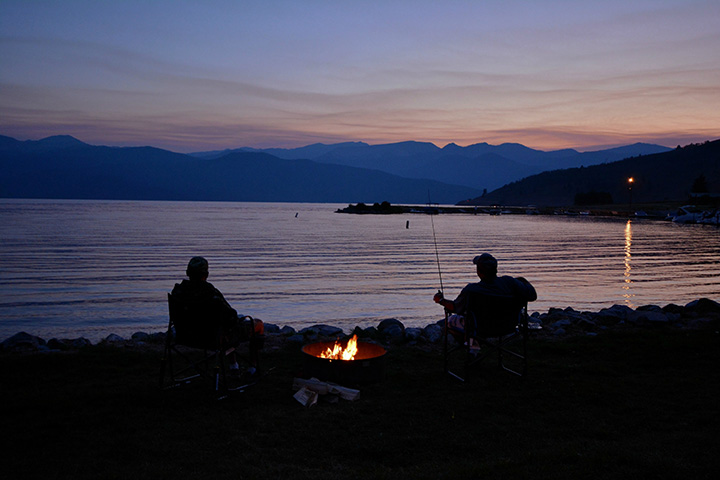
The campground is next to the Bridge Bay Marina, and a short drive away from Lake Village. Boats can be rented from the marina, or fishing charters/tours can be reserved for those wanting to explore the lake a bit more. If you would like to launch your own boat (motorized or not), or float devices (like a paddleboard), it must be inspected first. If your boat was inspected in Grand Teton National Park, it must be inspected again before going into Yellowstone waters.
Dock spaces can be rented if you want to stay on your own boat in the marina.
Laundry facilities are not available in the campground but can be found in the Lake Lodge, a short drive away.

- Cost: Average site cost is $29 per night before taxes
- Accessibility: Three accessible sites, with accessible restrooms in Loop A
- Facilities: Cell phone reception (can be extremely limited), trash and recycling collection, food storage lockers, camp store, ice for purchase, firewood for purchase, amphitheater (for ranger programs), dump station, and potable water.
- Reservations Accepted?: Yes, made through Yellowstone National Park Lodges
- RVs?: Yes
- Showers?: No
- Season: Summer, typically early June – early September
- Sites: 432
Canyon Campground

Close to the Grand Canyon of the Yellowstone, the home of the two most iconic waterfalls in the park, lies Canyon Village and the Canyon Campground (7,900 ft, or 2408 m in elevation). A centrally-located campground, this option offers easy access to the north and south portions of the park. Canyon Village is also close to the famous Hayden Valley, which boasts some of the best wildlife watching in Yellowstone National Park.

There is no camp store in the campground, but Canyon Village is a short walk or drive away and offers gift shops, a general store, several restaurants, a post office, and a Visitor Center. Laundry services are available at this campground.
- Cost: Average site cost is $34 per night before taxes
- Accessibility: Three accessible sites in Loop L; the accessible restrooms are located near these sites. Please note the camper services building is not accessible.
- Facilities: Cell phone reception (can be extremely limited), trash and recycling collection, food storage lockers, ice for purchase, firewood for purchase, amphitheater (for ranger programs), laundry and shower facilities (pay-to-use), dump station, and potable water.
- Reservations Accepted?: Yes, made through Yellowstone National Park Lodges
- RVs?: Yes
- Showers?: Yes; showers are pay-to-use, and two showers are included in the nightly rate
- Season: Summer, typically late May to mid-September
- Sites: 273
Fishing Bridge RV Park
This RV park recently went through a major, years-long operation, and is Yellowstone’s only campground exclusive to RVers. At an elevation of 7,800 feet (2377 m), Fishing Bridge RV Park hugs the Yellowstone River and is also close to Yellowstone Lake. The campground is also close to a large general store with a restaurant, a gas station/auto service shop, a visitor center, and is also a short drive to Lake Village.

There are many great wildlife watching opportunities in this area. Be on the lookout for pelicans and other waterfowl along the river banks. Despite its famous name, fishing is no longer allowed on the famous fishing bridge, but it is a great spot to look for Yellowstone Cutthroat Trout spawning if you are staying here in early summer (April to mid-July).
Bridge Bay RV Park is an area known to be frequented by grizzly bears; be bear aware at all times. Carry bear spray with you when walking through the RV park, do not leave food out/unattended, and follow other wildlife safety precautions.
Fires are prohibited in this campground, but charcoal or propane grills can be used.
- Cost: Average site cost is $83 per night before taxes – there is no discount available to interagency annual or senior pass holders.
- Accessibility: There are four comfort stations that meet ADA standards, and there are paths in the campground area which are paved or compacted with low gradient change.
- Facilities: Full hookups for electricity, water, and sewage, cell phone reception (can be extremely limited), trash and recycling collection, camp store, ice for purchase, amphitheater (for ranger programs), laundry and shower facilities (pay-to-use), dump station, and potable water.
- Reservations Accepted?: Yes, made through Yellowstone National Park Lodges
- RVs?: Yes, exclusively
- Showers?: Yes; showers are pay-to-use.
- Season: Summer, typically late May to early October
- Sites: 310
Grant Village Campground

Another high altitude campground at 7,800 ft (2377 m), Grant Village Campground can be found in the forested Grant Village area along the West Thumb shores of the Yellowstone Lake. Grant Village, like the Fishing Bridge area, has a large general store, three restaurants, a gift shop, a gas station/auto service shop, and a visitor center.
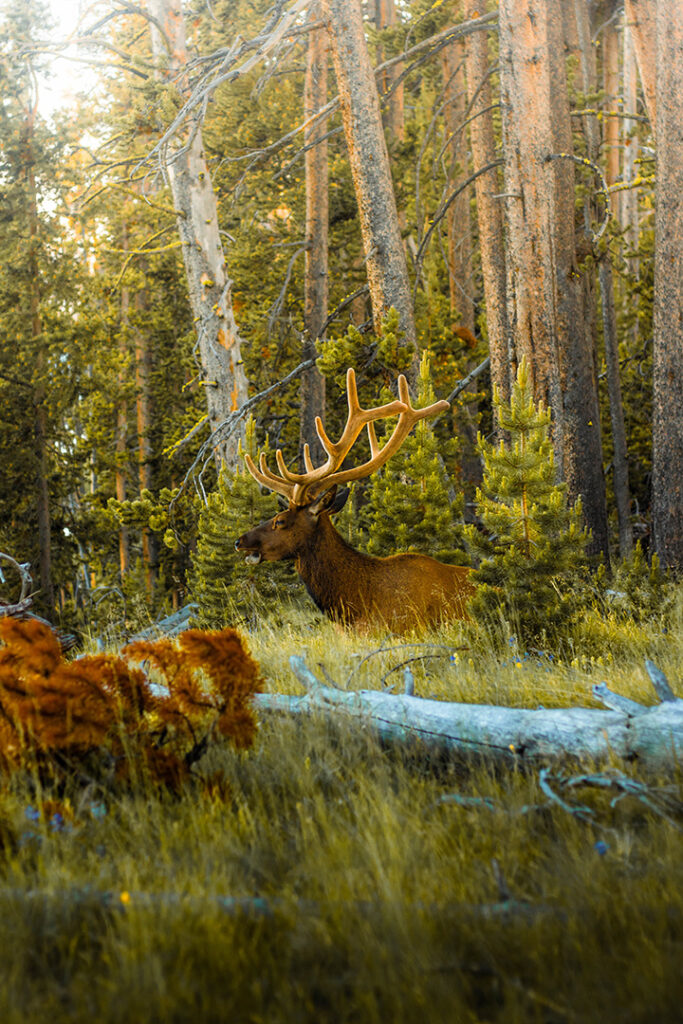
Grant Village is a short drive away from the scenic West Thumb Geyser Basin; a magnificent display of thermal features on the shore of Yellowstone Lake, with several features in the lake visible as well, like the famous Fishing Cone. Elk herds frequent this basin throughout the summer, and occasionally, otters can be seen swimming off the shore.
Grant Village is also home to a marina, but there are no boat rentals found here like in Bridge Bay Marina. Outside concessionaire companies often run kayaking tours from this marina. If you would like to launch your own boat (motorized or not), or float devices (like a paddleboard), it must be inspected first. If your boat was inspected in Grand Teton National Park, it must be inspected again before going into Yellowstone waters.

- Cost: Average site cost is $33 per night before taxes
- Accessibility: There are three accessible sites; the accessible restrooms are located near these sites, and there is an accessible shower in the camper services building.
- Facilities: Cell phone reception (can be extremely limited), trash and recycling collection, food storage lockers, camp store, ice for purchase, firewood for purchase, amphitheater (for ranger programs), laundry, and shower facilities (pay-to-use), dump station and potable water.
- Reservations Accepted?: Yes, made through Yellowstone National Park Lodges
- RVs?: Yes
- Showers?: Yes
- Season: Summer, early June to early September (these dates may change with bear activity common to the area in late spring)
- Sites: 430
Indian Creek Campground

About eight miles south of the busyness of park headquarters at Mammoth Hot Springs is the more relaxed Indian Creek Campground at 7,300 feet (2225 m). The campground is away from the main road, providing a quiet environment in a remote, wooded setting.
This campground lives at the base of the Gallatin Mountain Range, which is home to the famous Electric Peak. There are many hiking trails nearby, as well as great spots for fishing access (fishing requires a permit) in the Gardiner River.

In the Yellowstone winter months, this campground becomes a snowshoe/ski loop for winter recreation.
- Cost: Average cost is $20 before taxes (interagency pass holders can receive a 50% discount)
- Accessibility: Two accessible campsites
- Facilities: Trash and recycling collection, food storage lockers and potable water.
- Reservations Accepted?: No
- RVs?: Yes; there are 10 sites at 35 ft (10.7 m) and 35 sites are 30 ft (9.1 m). The sites may not be level
- Showers?: No
- Season: Summer, typically mid-June to mid-September
- Sites: 70
Lewis Lake Campground

The southernmost campground in the park, Lewis Lake Campground is a quiet lake retreat at an elevation of 7,800 ft (2377 m). This first-come, first-served campground offers a quiet retreat on a serene lake.

There is a boat launch for visitors seeking to boat on the peaceful waters of Lewis Lake. The Lewis River Channel connects Lewis Lake to the larger and more isolated Shoshone Lake. Motorboats are not permitted in the Lewis Channel, but paddleboats are allowed. Hiking to Shoshone Lake is also possible via the Lewis River Channel/Dogshead Loop Trail.

Any and all watercraft must be inspected before going into the water, regardless of having a Grand Teton National Park and/or other nearby inspection completed.
Amenities lacking in the campground can be found in Grant Village a short drive to the north. Mosquitos are notoriously bad here in the early summer months; be sure to be armed with insect repellent.
- Cost: Average cost is $20 before taxes (interagency pass holders can receive a 50% discount)
- Accessibility: There are no accessible sites
- Facilities: Trash and recycling collection, food storage lockers and potable water.
- Reservations Accepted?: No
- RVs?: Yes; length limit of 25 ft (7.6 m)
- Showers?: No
- Season: Summer, typically early June – early November
- Sites: 85
Madison Campground

Favored for its central location and easy access to West Yellowstone, Madison Campground lives in the shadow of National Park Mountain at 6,800 ft (2073 m) in elevation.
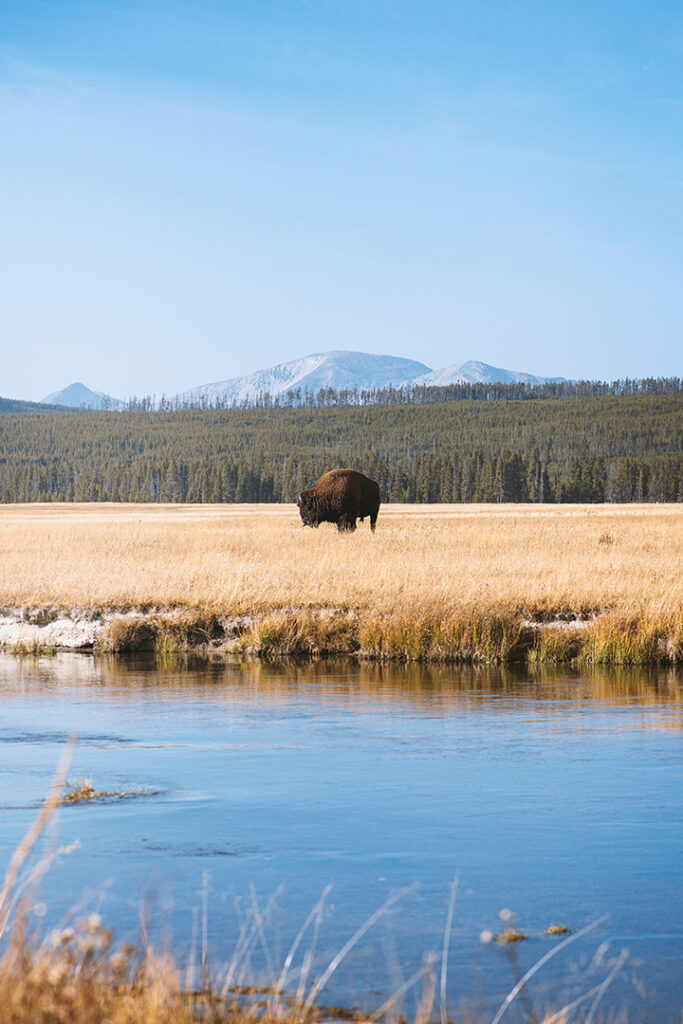
The campground sits on the edge of the Madison Valley. This idyllic location is great for those really wanting to watch for wildlife. The bison that migrate through the valley may pass through the campground, and in September, you may hear elk bugling through the night during their rut.
The Firehole and Gibbon Rivers meet near here to form the Madison River, which is accessible from the campground and offers fantastic fishing opportunities for those who obtain fishing permits.

With absolutely no cell phone reception and limited development, this area can feel remote, but it is close in proximity to the Old Faithful area and the West entrance of the park (and the town of West Yellowstone, Montana). This location, like Canyon Campground, offers quick access to Yellowstone’s north and south areas.
- Cost: Average site cost is $29 per night before taxes
- Accessibility: Three accessible sites
- Facilities: Trash and recycling collection, food storage lockers, ice for purchase, firewood for purchase, amphitheater (for ranger programs), dump station, and potable water.
- Reservations Accepted?: Yes, made through Yellowstone National Park Lodges
- RVs?: Yes; some RVs up to 40 ft long can be accommodated in pull-through and back-in sites
- Showers?: No
- Season: Summer, typically early May to mid-October
- Sites: 278 (62 are tent-only)
Mammoth Campground

At home in park headquarters and historic Fort Yellowstone, Mammoth Campground is the lowest campground at 6,200 ft (1890 m) in elevation (if you can call that low). It is Yellowstone’s only year-round campground and is managed by the National Park Service.
Staying here offers campers all the exciting opportunities of the Mammoth Hot Springs area. Strolling up the boardwalks through the unique terrace hot springs, exploring the park’s early days in Fort Yellowstone, shopping for souvenirs in the gift shops or general store; this part of the park was developed to accommodate every visitors’ needs. This area is also close to the North Entrance, which allows access to the gateway town of Gardiner, Montana.

Elk herds live in Mammoth Hot Springs and it’s not uncommon to run into them all over the area, campground included. Keep your distance; elk are extremely dangerous.
Despite its development, there are no laundry or shower facilities in Mammoth Hot Springs, but these are available in Gardiner, including accessible shower options. There is no dump station in this campground; plan accordingly.
- Cost: Average site cost is $25 per night before taxes (interagency pass holders can receive a 50% discount)
- Accessibility: There are five accessible campsites, accessible routes, and a ramp to the amphitheater.
- Facilities: Cell phone reception (can be limited), trash and recycling collection, food storage lockers, firewood for purchase, amphitheater (for ranger programs), shower facilities (pay-to-use), and potable water.
- Reservations Accepted?: Yes; only required from May to October, made through recreation.gov
- RVs?: Yes
- Showers?: No
- Season: Open year-round
- Sites: 85
Norris Campground

Neighbor to the oldest, hottest, and most acidic geyser basin in all of Yellowstone is the Norris Campground at an elevation of 7,500 feet (2,286 m). This campground has limited development but is centrally located in the park.

Across the street is one of the park’s most incredibly dynamic thermal areas, including Steamboat Geyser, the tallest active (but unpredictable) geyser in the world. Another attraction is the Museum of the National Park Ranger; a unique exhibit educating on the history of the profession of Park Rangers.
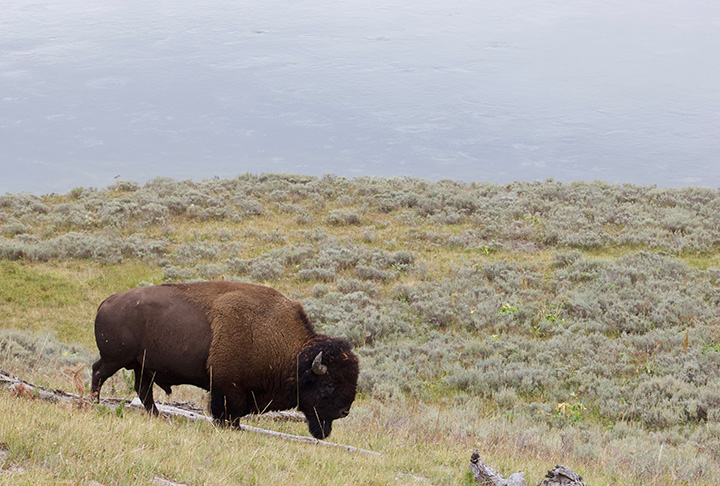
The meadow near the campground often attracts grazing bison; admire their presence, but give them space.
Though remote, this campground is perfect for those looking to disconnect, and to get up close and personal with the true essence of why Yellowstone became a national park: thermal features.
Canyon Village and its amenities are 12 miles away.
- Cost: Average site cost is $25 per night before taxes (interagency pass holders can receive a 50% discount)
- Accessibility: Two accessible sites, with accessible toilets at the campground entrance
- Facilities: Trash and recycling collection, food storage lockers, firewood for purchase, amphitheater (for ranger programs), and potable water.
- Reservations Accepted?: Typically first come, first serve, this campground was closed in 2021 with staffing issues. It may become reservable in the future.
- RVs?: Yes; two sites can accommodate 50 ft length
- Showers?: No
- Season: Summer, typically mid-May to late September
- Sites: 112
Pebble Creek Campground

Living along the banks of the creek it is named for, Pebble Creek Campground (elevation 6,900 ft, or 2103 m) offers campers a small, intimate camping experience. It is the closest campground to the Northeast Entrance of Yellowstone National Park.
Pebble Creek Campground is another remote campground and the second smallest behind Slough Creek. It’s surrounded by the dramatic peaks of the northeastern Absaroka Mountain Range.

The campground offers quick access to nearby hiking trails, great fishing potential, and wonderful wildlife watching as is expected throughout the Lamar Valley. Incredible night sky views are a big added bonus.
The nearest services are in Cooke City/Silvergate, a nine-mile drive from the campground.
- Cost: Average site cost is $20 before taxes (interagency pass holders can receive a 50% discount)
- Accessibility: One accessible site
- Facilities: Trash and recycling collection, food storage lockers, and potable water.
- Reservations Accepted?: Yes, for sites 1–16, made through recreation.gov; the rest are first-come, first-served
- RVs?: Yes
- Showers?: No
- Season: Summer, typically from mid-June to late September
- Sites: 27
Slough Creek Campground

Nestled near the heart of Lamar Valley and located at the end of a two-mile dirt road at 6,250 ft (1905 m) in elevation is Slough Creek Campground. A comparatively small and extremely intimate Yellowstone camping area, some consider this the best campground in Yellowstone National Park for getting away from the busier areas of the park.
Slough Creek is known as the place to go for wolf sightings. At nights, campers are treated to unimpeded night sky views, and an occasional chorus of wolves howling. This campground truly allows visitors to get a feel for Yellowstone’s backcountry while in the frontcountry.

This campground offers few amenities but is a relatively short drive from the Northeast Entrance and the small towns of Cooke City and Silver Gate.
- Cost: Average site cost is $20 per night before taxes (interagency pass holders can receive a 50% discount)
- Accessibility: One accessible site
- Facilities: Trash and recycling collection, food storage lockers, and potable water.
- Reservations Accepted?: Yes, made through recreation.gov
- RVs?: Yes; 14 sites at 30 ft
- Showers?: No
- Season: Summer, typically mid-June to mid-October
- Sites: 16
Tower Fall Campground

Close to the iconic Tower Fall, Tower Fall Campground towers at 6,600 ft (2012 m) in elevation. It’s a quiet campground settled on the northern end of the beautiful Dunraven Pass, one of the most scenic drives in Yellowstone National Park.
Tower Fall is a wonderful 132 ft (40 m) waterfall surrounded by rock pillars formed by volcanic activity. It has an accessible trail, and a general store sits at the trailhead. The area is a great place to try to spot bighorn sheep and other wildlife.

Though there is not much development in the immediate area aside from the Tower General Store, the campground is a short drive to the Roosevelt Area to the north, and not much farther from Canyon Village to the south. Horseback riding and stagecoach rides are popular activities in the Roosevelt area.
- Cost: Average cost is $20 before taxes (interagency pass holders can receive a 50% discount)
- Accessibility: There are no accessible sites
- Facilities: Trash and recycling collection, food storage lockers, camp store, amphitheater (for ranger programs), and potable water.
- Reservations Accepted?: No
- RVs?: Yes
- Showers?: No
- Season: Summer, typically late May – late September
- Sites: 31
Backcountry Camping in Yellowstone

Opportunities for camping in Yellowstone National Park don’t end in the 12 frontcountry campgrounds, but rather, they’re just the beginning. There are options for incredible backcountry sites and a plethora of places around the outside of the park.
If you’re looking for a way to experience Yellowstone camping at its best, look no further than Yellowstone’s backcountry.

Backcountry camping is not for the faint of heart but rewards those courageous enough for its adventure by showing off Yellowstone in its raw, most untouched, genuine form. Going into the backcountry allows visitors to experience and explore parts of Yellowstone National Park few people see and avoid the large crowds.
There are 293 campsites in the backcountry. Campers are able to reserve stays from one to three nights with groups sizes from four to twelve people allowed.
All but four backcountry campsites in Yellowstone only permit one group per night.
Backcountry Permits

Every backcountry site requires a permit. The process of obtaining these permits changes throughout the year.
- Winter backcountry camping in Yellowstone permits are free of charge but must be reserved through the Central Backcountry Office three to seven days in advance via phone or email.
- Phone: 307-344-2160
- Send an email
- Permits for backcountry camping from April through mid-May can be obtained via phone up to three days before your trip.
- Phone: 307-344-2860
- You can reserve backcountry permits for the summer season beginning May 15. Applications for permits will be accepted online beginning in March 2022. More information will be posted on the official Yellowstone website.

The National Park Service in Yellowstone also offers a free backcountry trip planner and other useful resources on their page. Campers with additional questions are encouraged to contact the backcountry office.
Camping Near Yellowstone National Park

Not able to secure a camping site inside the park, and/or not quite able to commit to a backpacking excursion? You’re not out of luck. There are numerous options for Yellowstone campgrounds outside of and close to the park.
- The National Forest Service lists campgrounds outside the park within the National Forests surrounding Yellowstone National Park.
- Each gateway town to Yellowstone offers camping options:
- North Entrance: Gardiner, Montana
- Northeast Entrance: Cook City/Silvergate, Montana
- West Entrance: West Yellowstone, Montana
- East Entrance: Cody, Wyoming
- South Entrance: Jackson, Wyoming
- Grand Teton National Park south of Yellowstone offers many camping options as well.
Pin Our Yellowstone Camping Guide
Camping in Yellowstone National Park is an experience like no other. It allows visitors to truly connect to the park in the way people come for: staying outdoors.
From brilliant night skies to seeing wildlife up close and personal, each campground in Yellowstone offers its own special experience, and whichever site you choose, enjoy your experience for all that it is, and know that you chose well.