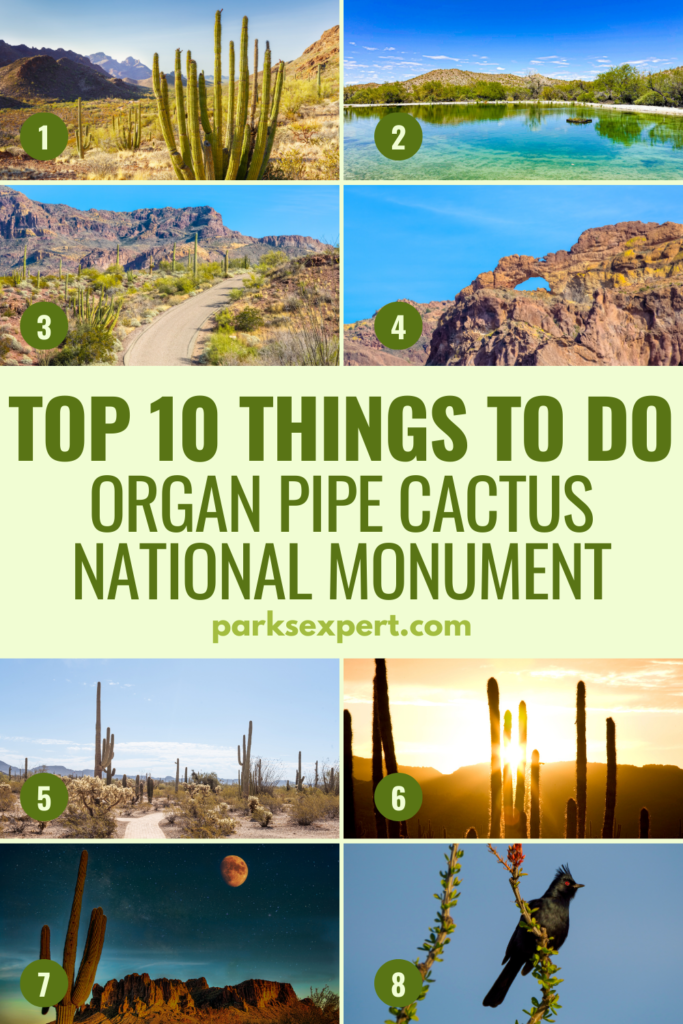
Article Summary: Things to do in Organ Pipe Cactus National Monument
Organ Pipe Cactus National Monument is likely not at the top of someone’s list of places to visit in Arizona, but it should be! It’s easily one of the most beautiful places in the country. The Sonoran desert is such a unique environment that begs to be explored and protected.
Despite being a remote park, there are plenty of things to do in Organ Pipe Cactus National Monument. If you like scenic drives, hikes with sweeping views, birdwatching, or stargazing, you will love this park as much as we do! Keep reading for some of our favorite attractions at Organ Pipe Cactus National Monument.
Table of Contents
Overview: Things to Know Before Visiting Organ Pipe Cactus National Monument

How to Get to Organ Pipe Cactus National Monument
Organ Pipe Cactus National Monument is on the border of Arizona and Mexico. There is only one highway, Highway 85, that will lead you there. It’s an easy 2-hour drive from Phoenix or from Tucson.
The closest major airports include Phoenix-Sky Harbor (PHX), Tucson International (TUS), and Phoenix-Mesa Gateway (AZA). Each is about 2 to 2.5 hours away from the park and offers rental car services. We highly recommend checking Expedia for the best pricing on hotels, flights, and car rentals.
How Much Does Organ Pipe Cactus National Monument Cost?
There is a small entrance fee for Organ Pipe Cactus National Monument. For vehicles and their occupants, entrance is $25. It’s $20 for motorcycles and $15 for pedestrians and cyclists.
Organ Pipe Cactus doesn’t have an entrance gate like other national parks. Instead, please visit the Kris Eggle Visitor Center and pay for your admission there.
To save money, we highly recommend purchasing an America the Beautiful Annual Pass. This will grant you access to all federal lands that charge entrance fees, including National Parks. It’s $80 for one year from purchase. Learn more about national park entry fees.

If you plan to visit other national parks in Arizona, this will save you a lot of money. Other Arizona national parks that charge an entrance fee are:
- Glen Canyon National Recreation Area
- Grand Canyon National Park
- Lake Mead National Recreation Area
- Montezuma Castle National Monument
- Petrified Forest National Park
- Pipe Spring National Monument
- Saguaro National Park
- Sunset Crater National Monument
- Tonto National Monument
- Tumacacori National Monument
- Tuzigoot National Monument
- Walnut Canyon National Monument
- Wupatki National Monument
The US/Mexico Border is Just South of the Park Boundary
You should be aware that Border Control and other law enforcement agencies are very active in the park. The park website says encounters with any illegal border activity are rare, but it’s important to remain vigilant.
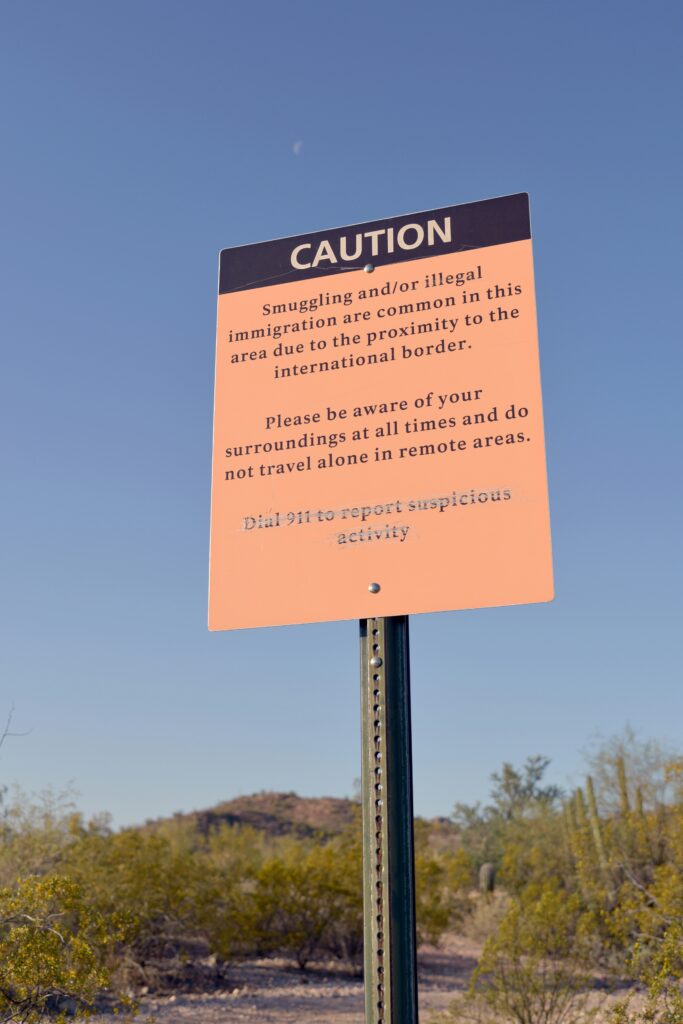
Visitors are advised to remain aware of their surroundings at all times. It’s not recommended to hike alone, especially in remote areas. If you do hike alone, make sure someone knows where you’re going and when you plan to return.
Visitors should not pick up hitchhikers. Make sure to lock your vehicle and hide any valuables, including food and water.
If you see something or someone suspicious, call 9-1-1 and alert park staff as soon as you can. The visitor center has WiFi available 24 hours/day in case you don’t have cell service.
For public safety, there are several road closures. Check the official website and ask park rangers for updates.

The Park is Very Remote
Cell reception is spotty. There is WiFi available at the visitor center.
Services in the park and the small gateway community of Ajo, Arizona are limited. There is a gas station, grocery store, some restaurants, and several hotels in Ajo (we recommend the Sonoran Desert Inn).
Be Prepared for the Desert
While the desert is a stunning place, it can also be dangerous. Here are some quick expert tips to make sure you’re prepared and safe.
Temperature: The desert can have extreme temperatures ranging from 30°F in the winter to over 100°F in the summer. Relax and cool off in the shade when it’s available. Reduce your activity during the hottest part of the day.
Hydration: Carry water and stay hydrated to avoid heat-related illness. Park staff recommend at least one gallon of water per person, per day. Salt snacks, juice, and protein drinks are also recommended to help rebuild electrolytes.
Sun Protection: It’s good to apply sunscreen all over, even in areas you don’t think are exposed to the sun. Even in high heat, you should wear long pants, long sleeves, and a hat for additional protection.
Driving: Most injuries in the park occur as a result of a vehicular collision. Make sure to obey posted speed limits and use caution on dirt or gravel roads. Remain alert in case of emergency vehicles, animal crossings, cyclists, and flooding. If you plan to drive remote roads, park staff recommend carrying planks in case you get stuck.
Cacti: One of the best things to see in the desert is prickly cactus. However, they are also a threat with their thorns and spines. Wear sturdy boots and long pants to help protect your skin from punctures. It’s also a good idea to carry a comb or pliers in case you need to remove any spines.
Wildlife: Another great thing about visiting national parks is seeing a variety of wildlife. While these encounters are exciting, they can also be dangerous. Some things to look out for include scorpions, venomous snakes, skunks, and mountain lions.
Give animals their space and remember, if they’re changing their behavior because of your presence then you are too close. Sturdy boots, long pants, and long-sleeve shirts can help protect you from unwanted stings or bites. Never feed wild animals. If you see a large predator, such as a mountain lion, do not run, make yourself big, and make lots of noise while you slowly back away. Our article on bear safety has more details on wildlife encounters.
Organ Pipe Cactus National Monument Map
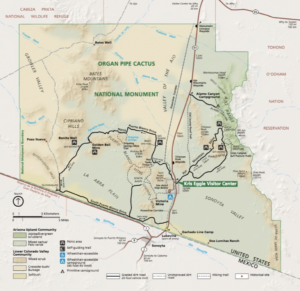
You can click on the map above to enlarge it and download it.
Top 10 Things to Do in Organ Pipe Cactus National Monument
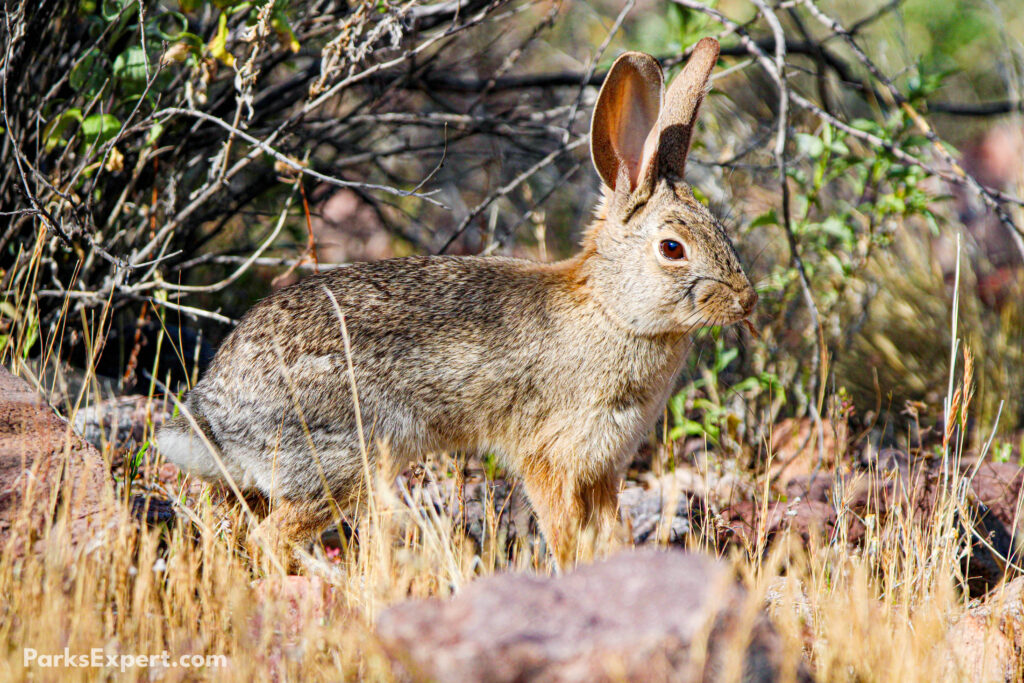
Here is a brief overview of our favorite things to do in Organ Pipe Cactus National Monument. We’ll go into detail about each of these activities below.
- Hike the Alamo Canyon Trail
- Go Birdwatching at Quitobaquito
- Tour the Park on Ajo Mountain and North Puerto Blanco Scenic Drives
- Hike the Arch Canyon Trail
- Stop By the Kris Eggle Visitor Center
- Camp Overnight in Twin Peaks Campground
- Admire the Night Sky
- Attend a Ranger Program
- Take a Backpacking Trip
- Go Horseback Riding
1. Hike the Alamo Canyon Trail
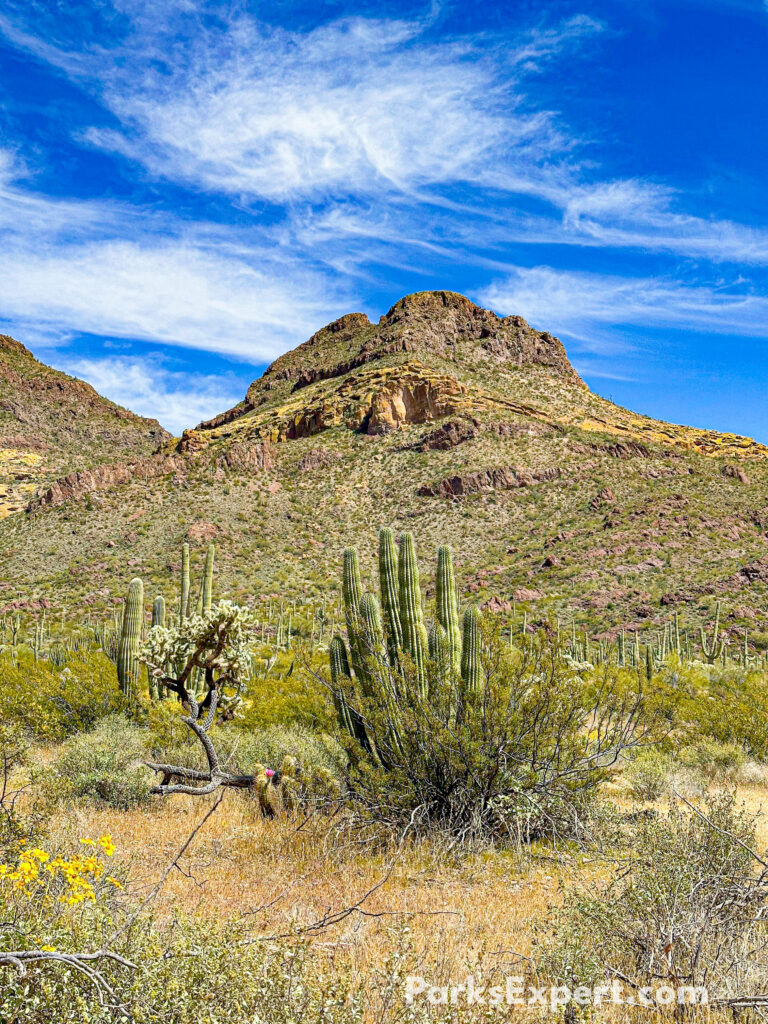
Of all the things to do in Organ Pipe Cactus National Monument, our favorite is hiking, and Alamo Canyon is our favorite trail. While walking along the Alamo Canyon Trail, you’ll be greeted by hummingbirds, cottontails, and very few people.
The easy-to-moderate 1.8-mile hike begins at the primitive Alamo Canyon Campground. You can access it via a dirt road that begins at Highway 85.
IMPORTANT: No signs point to the Alamo Canyon road, so have your map out or pre-load the destination in your GPS (you may not have reliable service in the park). The turn-off is at Milepost 65.5 of Highway 85.
The road is well-maintained and any vehicle should be able to traverse it. If it rained recently, check with park rangers on current conditions.
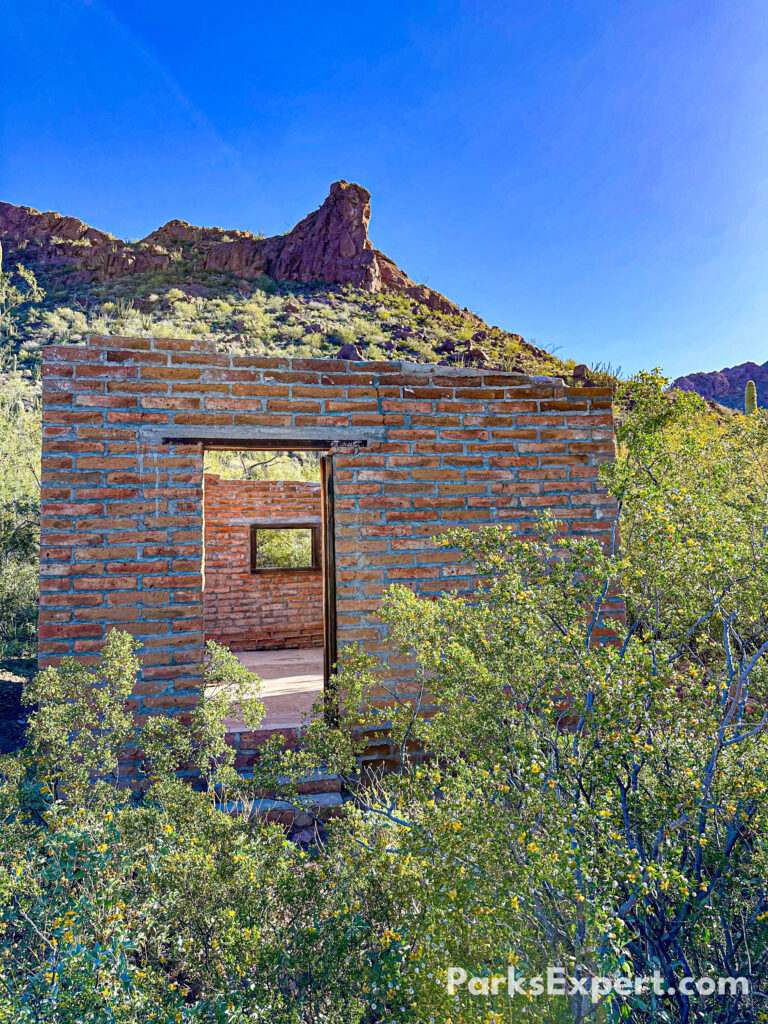
The trail follows a wash to an old ranch and corral. There’s historic fencing and an old brick building with some historic objects and tools that were left behind. There aren’t any signs to tell you about these sites or the people who lived there. The first owners were Birdie and Bill Miller followed by the Gray family.
The formal trail ends at the corrals, but there are informal social trails that lead deeper into the canyon. Hike these at your own risk.
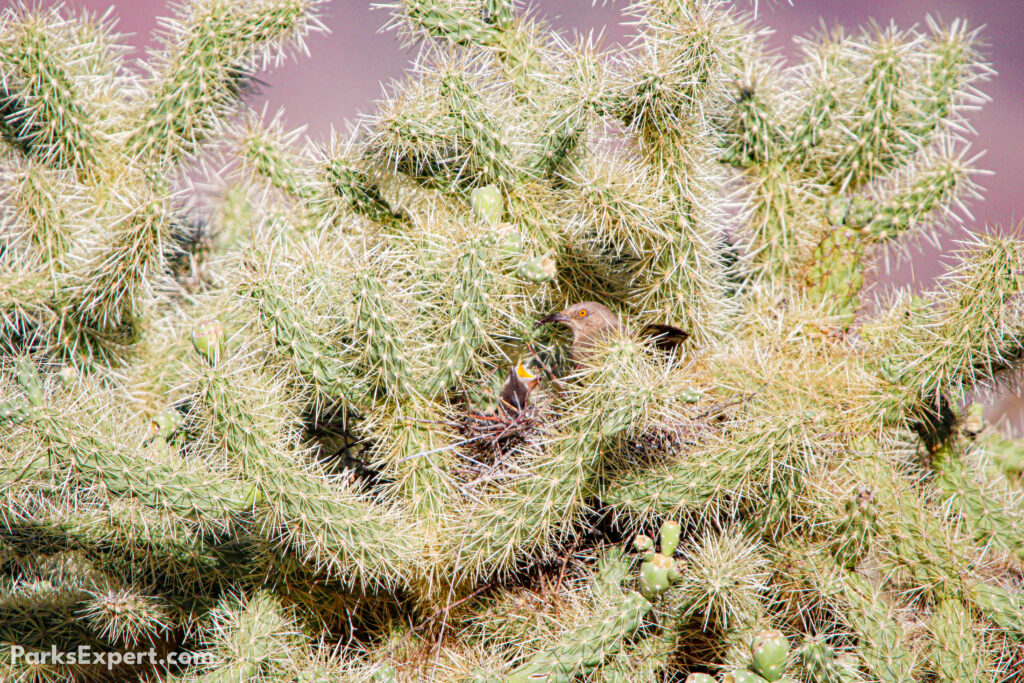
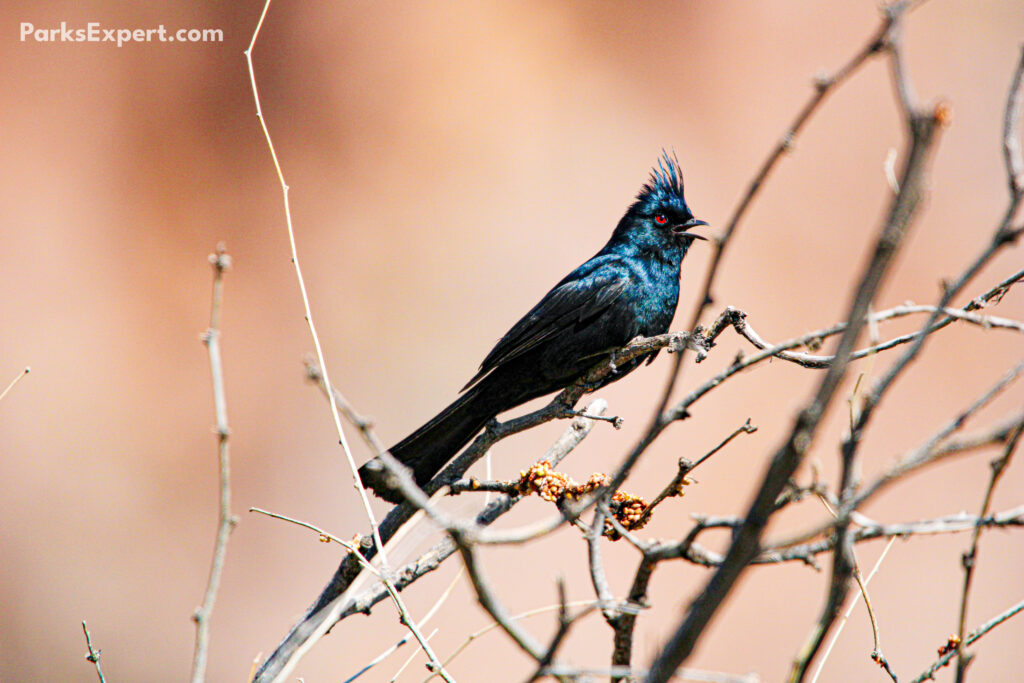
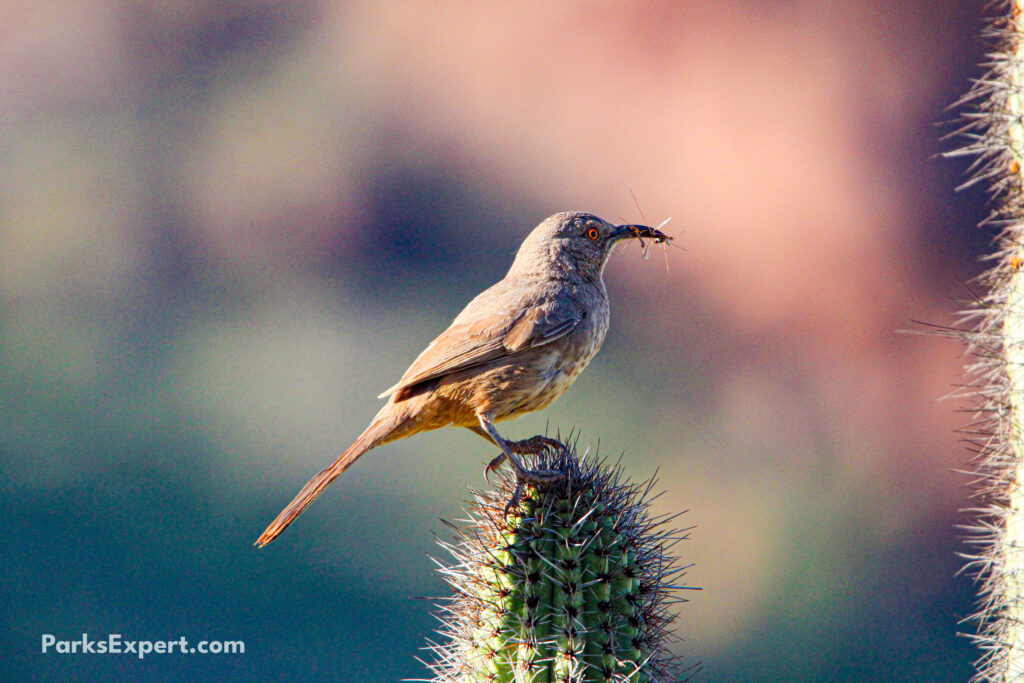
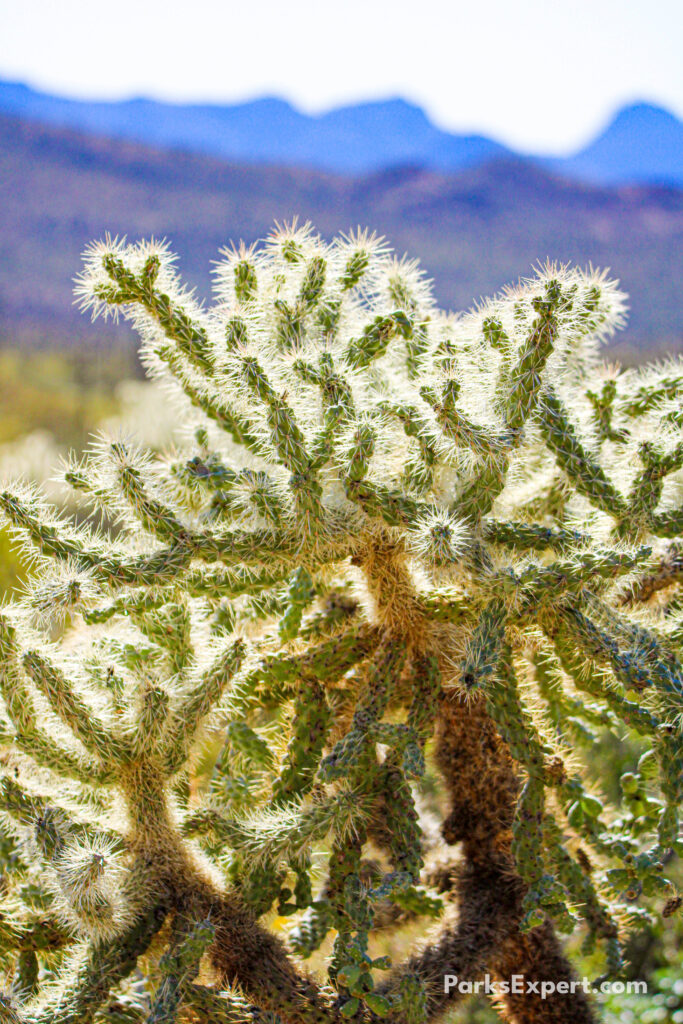
The trail is highly regarded as the best place for birdwatching in Organ Pipe Cactus National Monument. You have a good chance of seeing some of the area’s common species, like Gambel’s quail and Phainopepla, as well as some rarer sightings, like Costa’s hummingbirds. We even saw a Curve-billed thrasher feeding her young in a nest that she built in a cholla cactus (pictured above).
2. Go Birdwatching at Quitobaquito
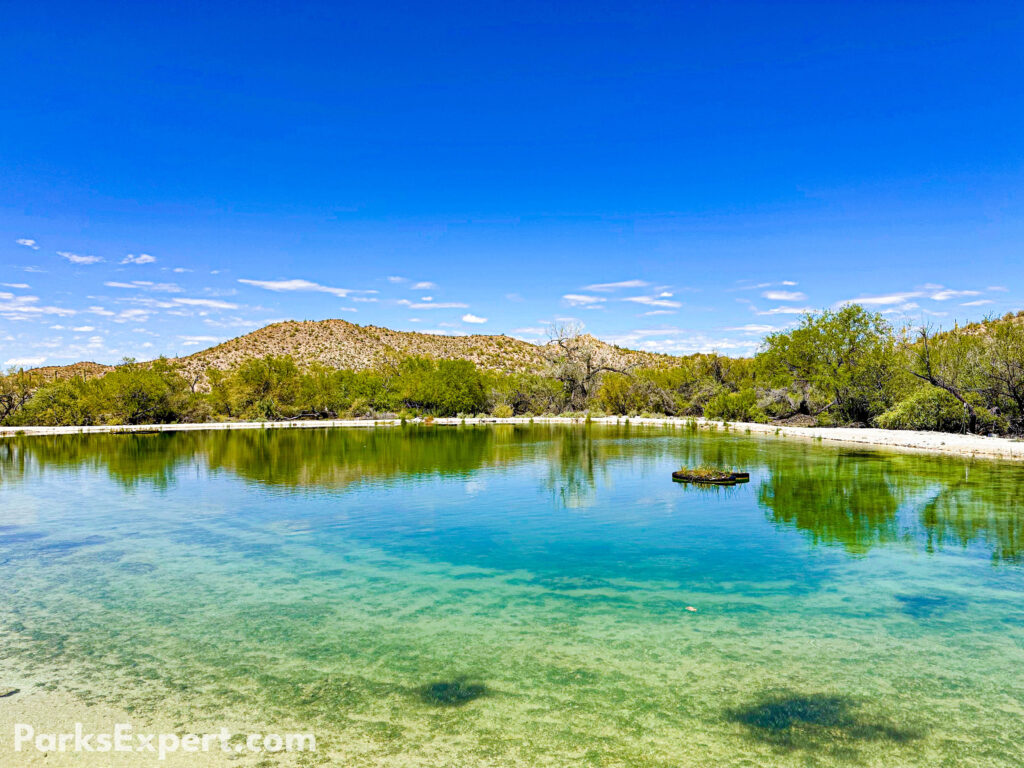
Speaking of birdwatching, we saw a great variety of species at Quitobaquito. This pond, canal, and spring are an oasis in the Sonoran desert.
Some of the bird species we saw include the Anna’s Hummingbird, Phainopepla, Killdeer, and Northern Cardinal.

In addition to birds, you’ll also find the endangered Sonoyta Mud Turtle and Quitobaquito Pupfish here. The Sonoyta Mud Turtle cannot be found anywhere else in the United States.
The special site is also sacred for many who have called the area home for generations (at least 12,000 years!).
PARKS EXPERT TIP: Travel to Quitobaquito requires driving the South Puerto Blanco Road. This route runs parallel to the border with Mexico and there has been illegal activity in the past. Therefore, the park advises against travel. If you choose to go, make sure you’re not alone and someone knows where you’ll be and when you’ll return.
3. Tour the Park on Ajo Mountain Drive and North Puerto Blanco Drive
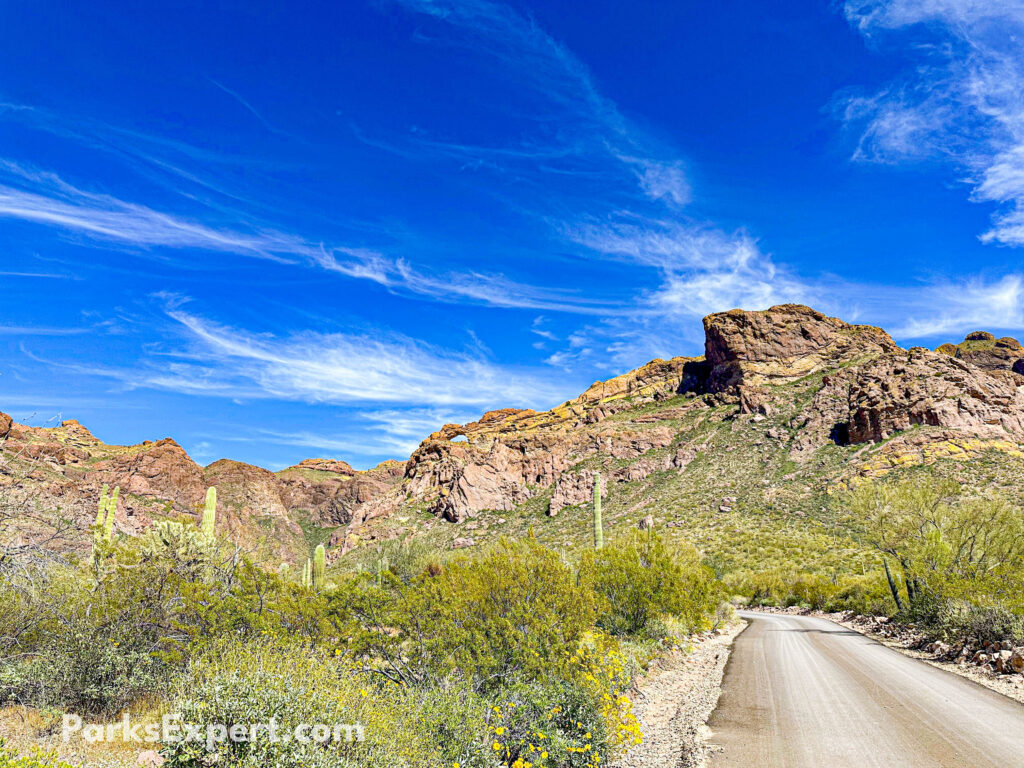
The scenic, unpaved roads of Organ Pipe Cactus National Monument are the best way to explore the park. These intimate routes through the heart of the Sonoran Desert magnificently showcase its beauty.
The Ajo Mountain Drive is a 21-mile loop that begins across Highway 85 from the Kris Eggle Visitor Center. It’s well-maintained so that any vehicle can traverse it, but it’s still best to check current conditions online or with park rangers at the visitor center. Vehicles under 25-feet are permitted, including RVs. Due to the winding turns, it’s not safe for longer vehicles.
IMPORTANT NOTE: This is a one-way loop, so make sure you have a few hours set aside for the trip. Once you start, you can’t turn back. The park recommends 1-2 hours for the drive, but it will be longer if you stop to hike.
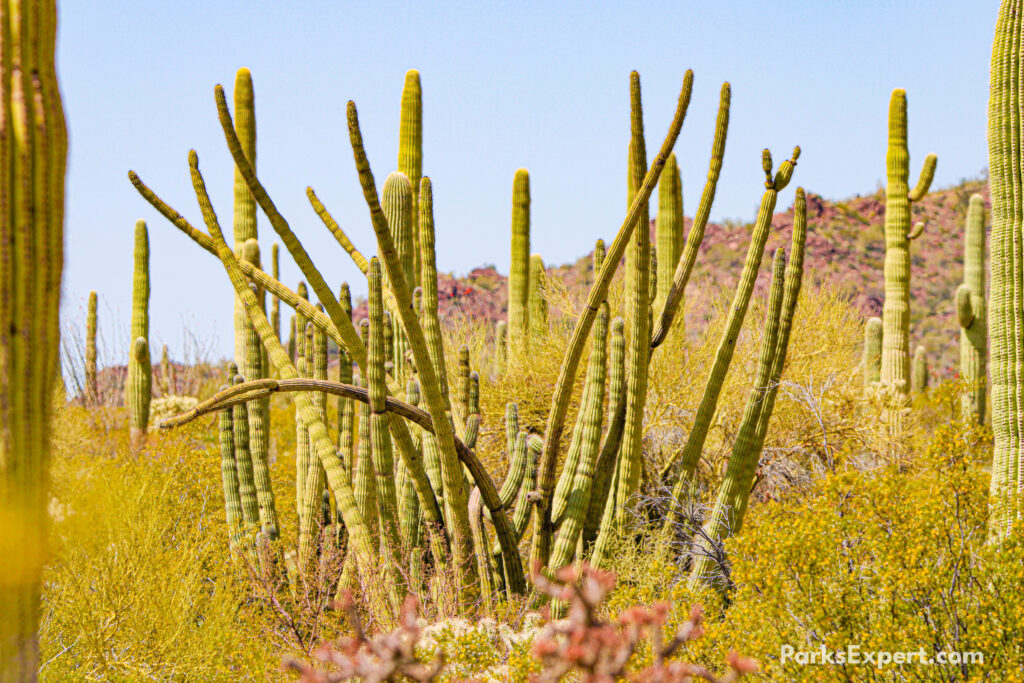
Along the route, you’ll see plenty of cool cacti: think saguaros, organ pipe, cholla, barrel, and ocotillo, to name a few. The mountain views are also exquisite.
If you’re interested in hiking, there are a few trails that begin along this road. These include Arch Canyon (one of our favorites, and #4 on our list of top things to do in Organ Pipe Cactus) and Estes Canyon.
To learn more about the park as you drive, consider picking up a free guide at the visitor center. Please return it when you’re finished so it can be reused. If you’d prefer, you can also download the free NPS app for an audio tour.
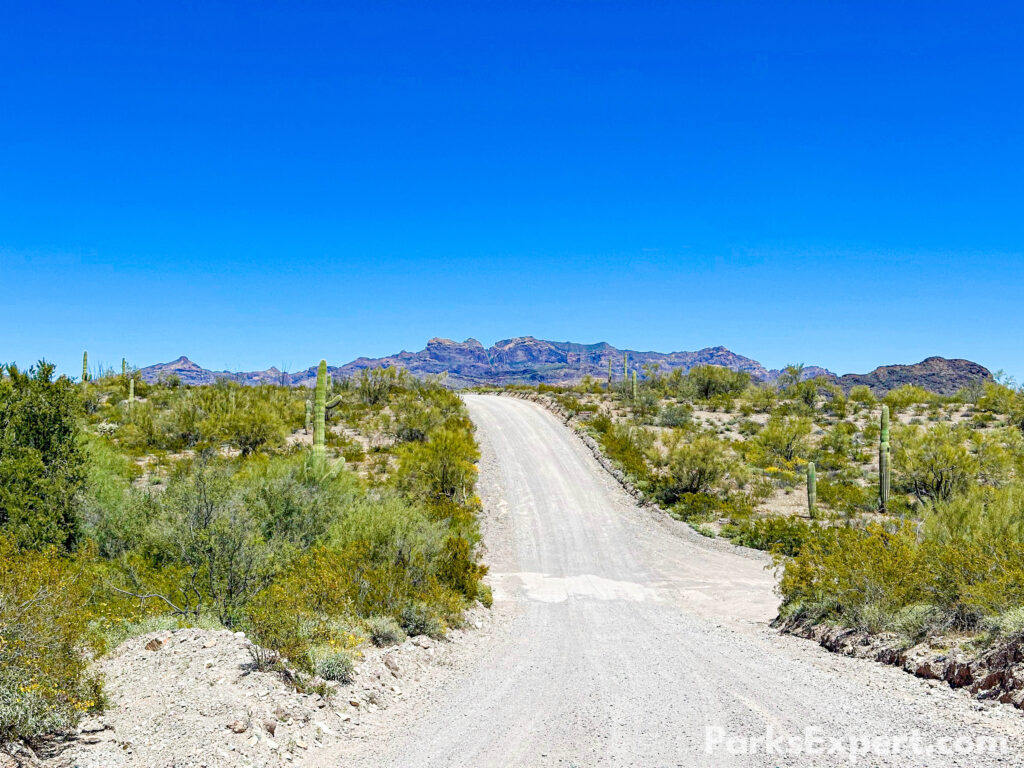
Another scenic route is the North Puerto Blanco Drive. The full loop is 41 miles, takes 4-5 hours, and requires a 4×4 vehicle with high clearance. However, you can drive the first 5 miles to Pinkley Peak Picnic Area in any vehicle. From here, the road becomes one-way and you have to commit to completing the entire thing. Pinkley Peak Picnic Area is hard to miss – there are a few parking spaces, vault toilets, and covered tables.
We recommend this drive around dusk. We saw so many birds, including Gambel’s quails, as well as antelope squirrels and jackrabbits.
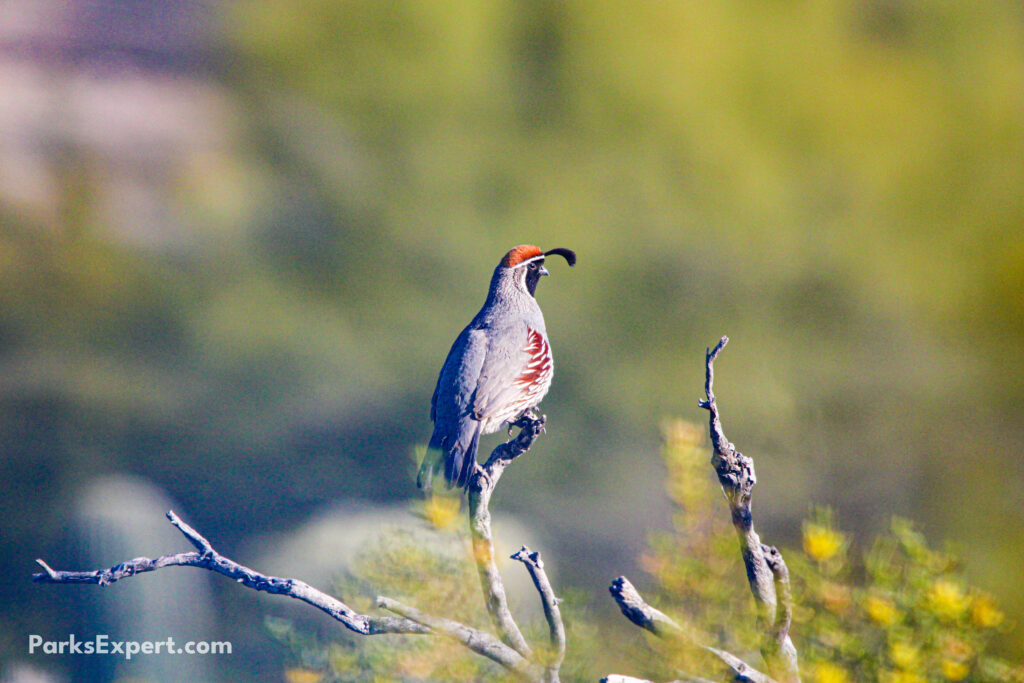
Travel along South Puerto Blanco Drive is currently not recommended due to border activity. If you choose to go, it’s best not to travel alone and to let someone know where you’re going and when you plan to return. The road is well maintained so any vehicle under 25 feet can make the trip.
4. Hike the Arch Canyon Trail
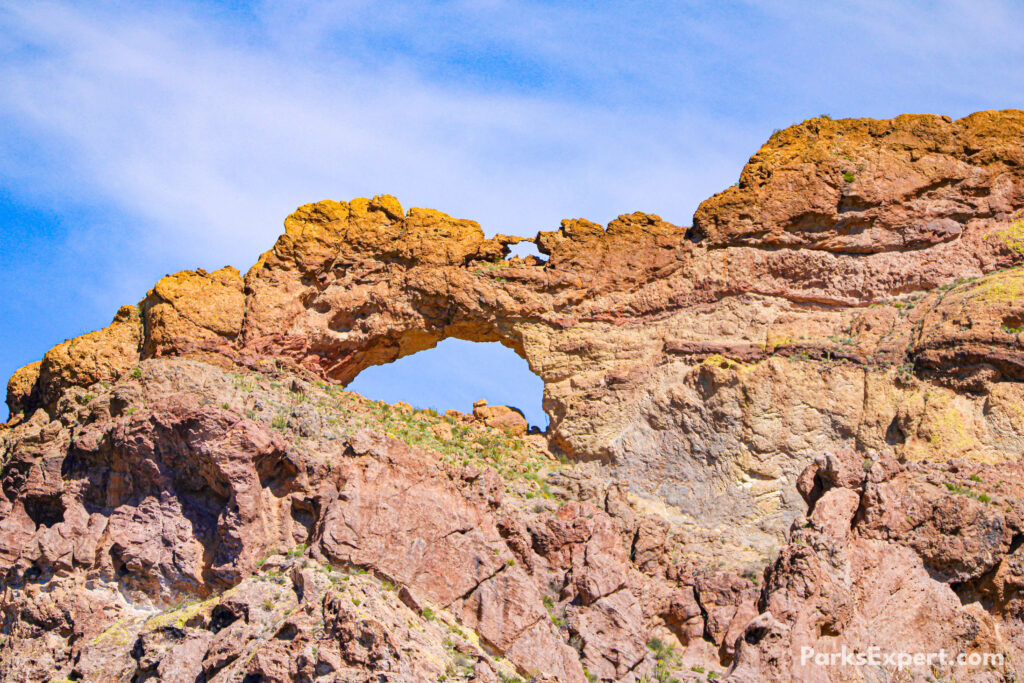
The Arch Canyon Trail is located about halfway down Ajo Mountain Drive. There’s a small parking area here, but the true sign you’ve arrived is the beautiful double arch formation in the rocks above.
The trail is a 1.2-mile out-and-back hike. It leads you deep into the canyon below the arch formations for spectacular scenery.
There’s a sign at the end of the maintained trail that points you toward a primitive trail marked by cairns. This portion is steep and requires scaling slickrock. Eventually, it leads you to the double arches.
We elected to only walk a small portion of this and we’re glad we did – the views were phenomenal. For less adventurous hikers, you should turn around at the Arch Canyon Trail and illegal border activity warning signs.
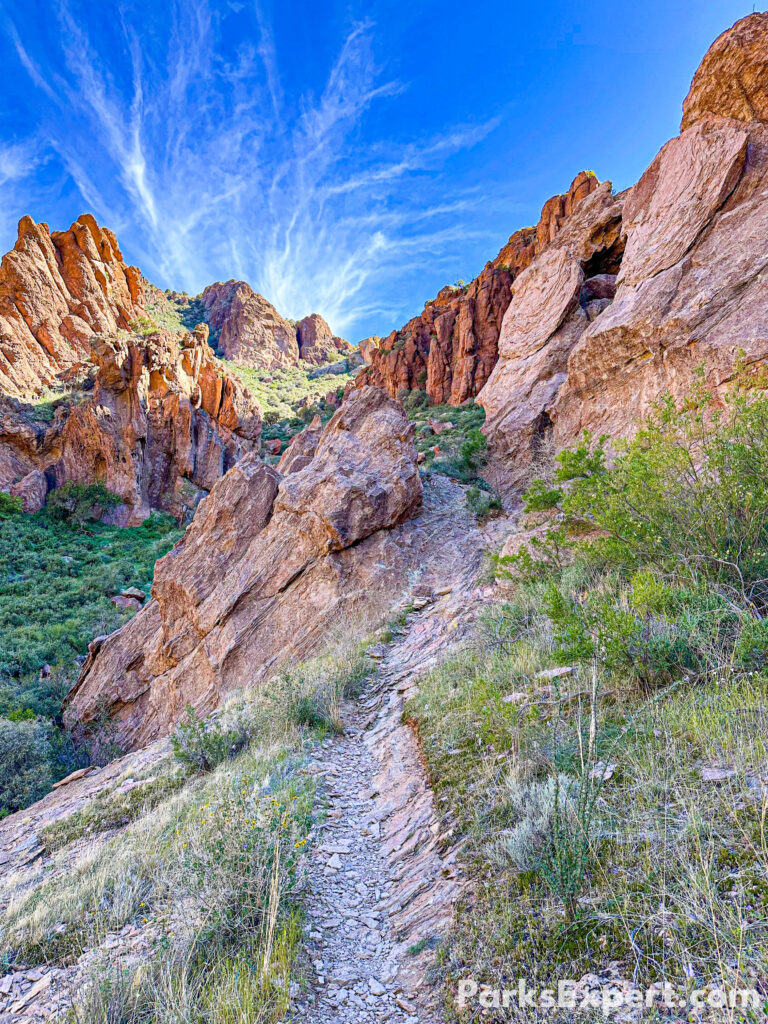
In addition to beautiful scenic views, we also saw quite a few birds on this trail. Hummingbirds were some of our favorite sightings, but we were also treated to house finches, lesser goldfinches, canyon towhees, and more.
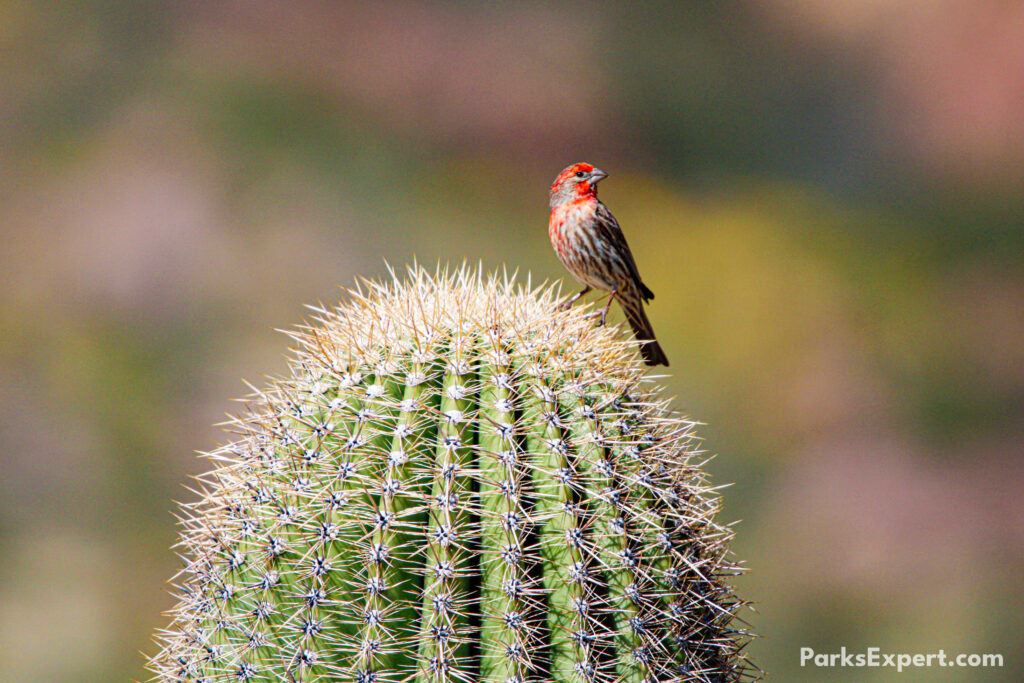
If you’re looking to stretch your legs, this trail is the perfect opportunity since it’s the halfway point. You don’t have to hike the entire trail to appreciate what it has to offer and can get closer to the arches for decent photos.
5. Stop by the Kris Eggle Visitor Center
The park’s visitor center is named for Kris Eggle, a park ranger who lost his life while on duty in the park. He was pursuing members of a drug cartel when he was shot and killed. He was only 28 years old. Shortly after his death in 2002, the visitor center was rededicated in his honor in 2003.
Inside, you can browse the park store, stamp your passport book, watch the 15-minute park film, earn your Junior Ranger badge, and explore the exhibits to learn more about the Sonoran Desert. Park rangers are available if you have any questions. You can pick up additional maps and guides as well. This is also where you will stop to pay the park entrance fee.
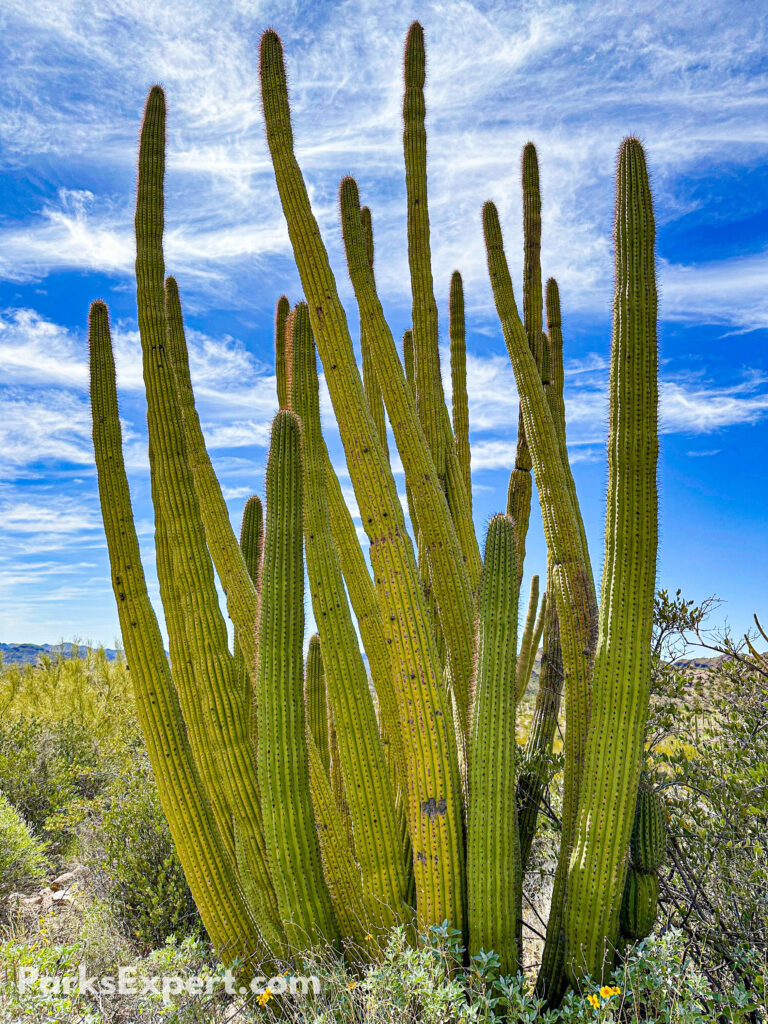
Behind the Kris Eggle Visitor Center, there’s a short (1/10-mile) nature trail that leads back to the parking area. It’s a great chance to stretch your legs after driving the scenic roads or making a trip into the park.
This easy walk takes you through a variety of cactus plants, including Organ Pipe and Saguaro. Just outside the visitor center are small ponds where you can find the rare Quitobaquito Pupfish. Since there’s always a water source, this is also an excellent spot for birdwatching.
Check the official website to verify visitor center hours.
6. Camp in Twin Peaks Campground
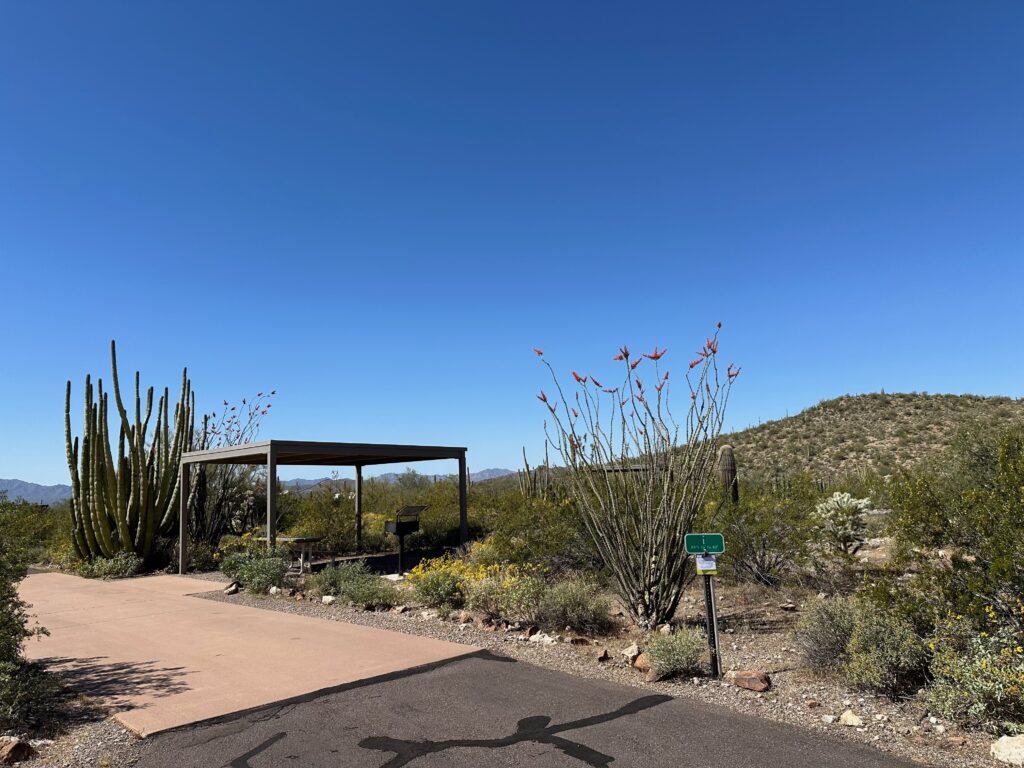
If you’re up for a camping trip, the Twin Peaks Campground is a great option. There are plenty of accommodations in Ajo, but camping in Organ Pipe Cactus National Monument is an opportunity to experience the park’s nocturnal life.
Bring a UV light with you to search for scorpions, either for fun or to make sure there aren’t any surprises in your tent, sleeping bag, or shoes.
Campsites are equipped with paved parking areas, all of which are pull-through sites. Each site has picnic tables and grills, and some of them have shade structures like the one pictured above. Of its 208 campsites, 34 are tent-only. There are no electric, water, or sewer hook-ups. Showers in the bathhouses are solar heated.
You’ll be surrounded by beautiful vegetation as birds chirp and sing all around you. There are several trails nearby, including Palo Verde Trail, Desert View Trail, Victoria Mine Trail, and the Campground Perimeter Trail. This is a great place to stay if you’re interested in hiking in the park.
Camping here costs $20/night and reservations can be made on Recreation.gov. Check each site individually for RV size limitations as they do vary significantly. Group sites are also available.

If you’re interested in a more primitive experience, head for the Alamo Canyon Primitive Campground. Services here are limited, but you will be next to the trailhead for our favorite hiking trail in Organ Pipe Cactus National Monument.
This campground has fewer amenities than Twin Peaks. There are vault toilets for your convenience in addition to picnic tables and grills at each site.
Instead of modern amenities, your greatest area attraction will be the nature that surrounds you. Staying here, you’ll be treated to glorious night sky views in the peace and quiet of the Sonoran Desert.
This campground is reserved for tents only. There are only 4 sites, so advance reservations on Recreation.gov are encouraged. The fee is $16/night.
IMPORTANT: There are no road signs for Alamo Canyon. It’s located at milepost 65.5 of Highway 85. We recommend pre-loading your destination into your GPS or maps app in case you lose cell service.
7. Admire the Night Sky
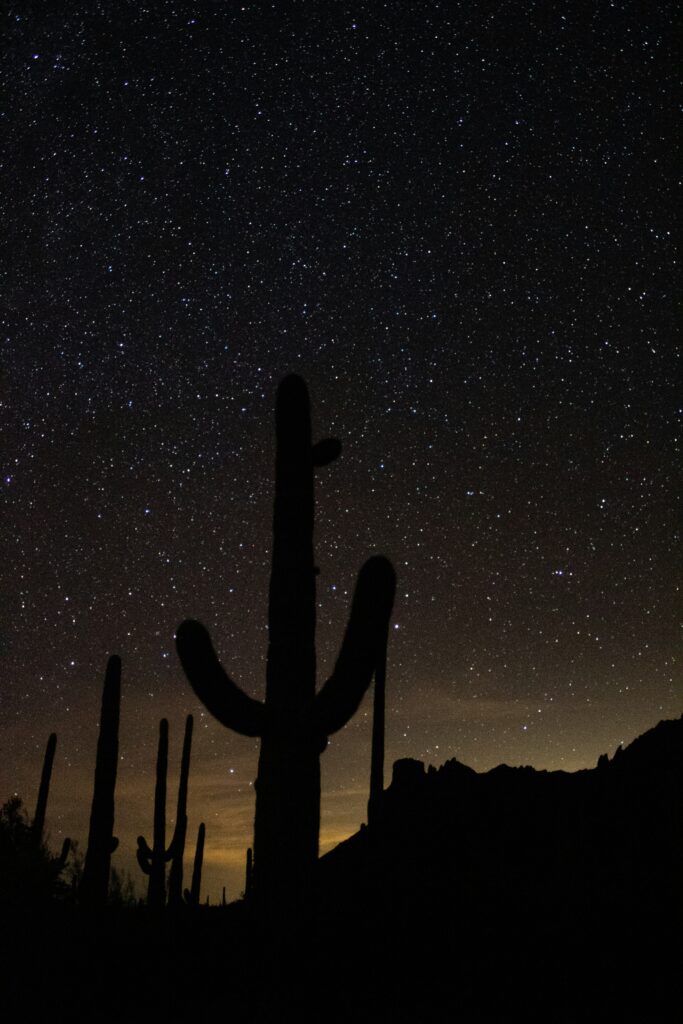
Clear skies abound in Organ Pipe Cactus National Monument outside of monsoon season. In fact, the park is one of the best places for stargazing in the entire nation. Thanks to its remote location, there is very little light pollution here.
Some of the best places for stargazing in the park include Twin Peaks Campground, Pinkley Peak Picnic Area, Alamo Canyon Campground, and Ajo Mountain Drive.
Check with park rangers at the visitor center for more suggestions on places to view the night sky. They may also be able to tell you about any ranger-led dark sky programming.
8. Attend a Ranger Program
One of the best ways to learn about our national parks is by attending ranger-led programs. Park rangers have so much knowledge to share and are eager to share it with park visitors.

Before you visit Organ Pipe Cactus, check the park calendar to see if there are any scheduled programs or special events.
9. Take a Backpacking Trip

Exploring the wilderness of Organ Pipe Cactus National Monument is one of the best ways to immerse yourself in this unique ecosystem.
First, stop by the Kris Eggle Visitor Center and speak to park rangers for camping advice and to purchase your permit. Permits are only $5.
There are certain zones where backpacking is permitted in the park. Each has designated parking areas for overnighters. Learn more and view maps here.
When visiting our national parks and public lands, please practice Leave No Trace principles. Plan ahead, choose durable surfaces for camping or hiking, dispose of all waste properly, leave everything you find, minimize campfire impacts, respect wildlife, and be considerate of other park visitors.
10. Go Horseback Riding
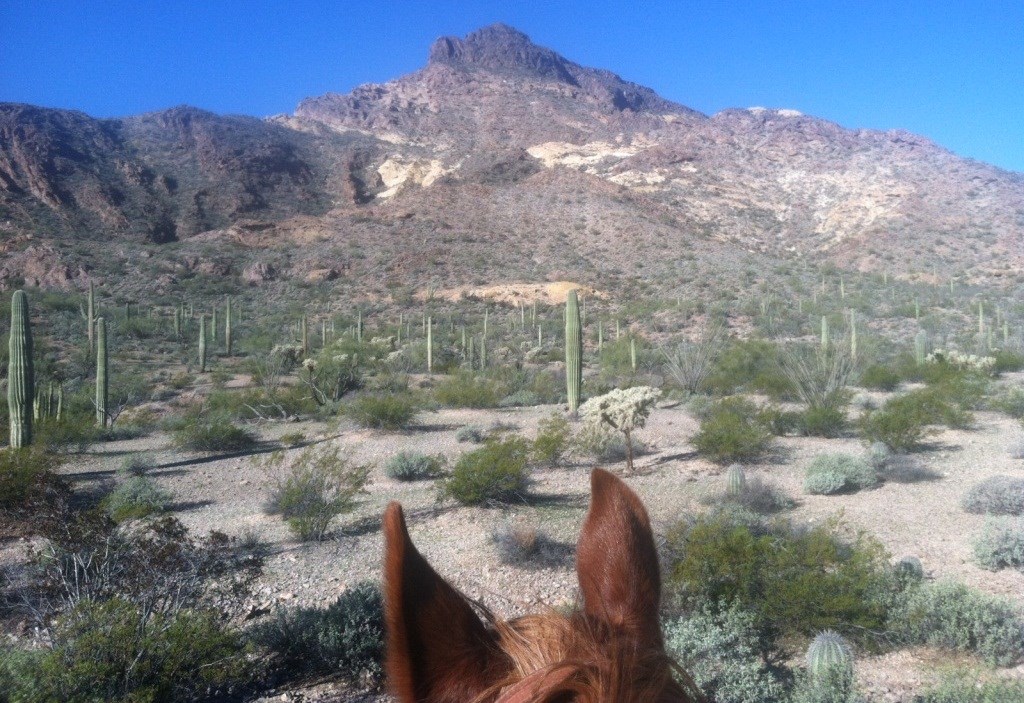
Horseback riding is a unique, fun, and rewarding way to experience Organ Pipe Cactus National Monument. Sometimes, when I picture the desert, I picture old Western movies with men and women traversing the difficult terrain on horseback. That could be you!
There are a few developed trails for traveling on horseback. These include the Victoria Mine Trail, Lost Cabin Mine Trail, the Campground Perimeter Trail, Old Country Road Trail, Senita Basin Loop, Milton Mine Trail, and Red Tanks Tinaja Trail. Horses are also permitted in federally designated Wilderness.
As a bonus, the Twin Peaks Campground has sites that can accommodate camping with horses! The campground is also great for its proximity to horse-friendly trails.
What to Bring to Organ Pipe Cactus National Monument
If you plan on camping or hiking, here are quick packing lists for your reference:
Camping in Organ Pipe Cactus: Packing List
- Tent: Shelter is the most important element of any camping trip.
- Sleeping Bag: Keep yourself warm and cozy while you sleep soundly in one of these bags.
- Sleeping Pad: Don’t bust your back on the hard ground; use a pad.
- Pillow: An alternative to stuffing a dry sack with jackets? An actual pillow.
- Stove: I love the lightweight, easy-to-transport pocket rocket.
- Fuel: That pocket rocket won’t work without fuel and matches.
- Cookware: I prefer to purchase collapsible, reusable cookware, dishware, and utensils.
- Games: Test your national park knowledge with some trivia or keep it old school with some playing cards.
- Light Souce: A headlamp or a flashlight will do.
- First Aid Kit: It’s always good to be prepared in case you can’t find a first aid station.
- Sunscreen and Bug Spray: Even if it’s chilly, both of these items are important to pack for your camping trip. For sunscreen, pick something with an SPF of at least 15 that offers broad-spectrum protection from both UVA and UVB rays. Insect repellent is also important to pack because there are many bugs in the park, especially at night when you’re trying to sleep!
- Food and Water: You’ll want snacks on hand to keep you fueled for adventures. Clif bars and trail mix are camping staples and necessities. For larger meals, dry some freeze-dried meals from Mountain House or Backpackers Pantry. You may want a cooler to store everything in. You can also purchase food at camp stores in and near the campgrounds if they are open when you visit. While most campgrounds offer potable water, it’s also smart to bring a few liters of your own.
- Hiking Shoes: Good hiking shoes are a must! I love my Hoka trail runners and my Keen hiking boots.
Hiking in Organ Pipe Cactus: Don’t Forget the 10 Essentials
- Navigation systems: map, compass, and/or GPS
- Sun protection: sunscreen and/or ballcap
- Insulating layers: synthetic or down jacket, rain jacket, hat, gloves, and leggings
- Illumination (flashlight or headlamp)
- First-aid kit
- Something to light a fire: lighter, waterproof matches, and/or fire starter
- Repair kits and tools: pocket knife, duct tape, screwdriver, and/or scissors
- Emergency shelter: tent, bivy, tarp, and/or space blanket
- Nutrition: food for both meals and snacks
- Hydration: water bottle, water treatment (LifeStraw or SteriPen), and water
Pin Our Favorite Things to Do in Organ Pipe Cactus National Monument
We appreciate you taking the time to read through our guide. If you found it helpful, pin it for later so you can refer back to it. If you have questions, please leave a comment. Enjoy your trip to the Sonoran Desert and this beautiful national park!