

Article Summary: Grand Teton Hikes, Grand Teton Backpacking, Hikes in Grand Teton National Park, Grand Teton Hiking, Long Day Hikes in Grand Teton, Multi-Day Hiking Grand Teton
Grand Teton National Park offers some of the most spectacular hiking trails in North America. The Teton Range rises sharply above the Jackson Hole Valley with elevations in the national park ranging from just over 6,000 feet to 13,776 feet at the top of the Grand Teton.
The Tetons have something for everyone as far as hiking goes. The best hikes in Grand Teton include plenty of relatively flat trails in the valley that visit many lakes with views of the rugged Tetons in the background.
The trails that climb into the heart of the Teton Range can be quite strenuous, but you get plenty of bang for your buck thanks to the stunning mountain scenery and alpine lakes that the Tetons are known for.
As a year-round resident of the town of Jackson, located just outside of the national park, I have gained years of experience hiking through these beautiful mountains and have compiled a list of 14 of the best hikes in Grand Teton, all long day hikes or multi-day hikes in the park.
Written by Alan Smith of Adventure Forecast.
This post may contain affiliate links. If you make a purchase, I may earn a small commission at no additional cost to you. For more information, view my privacy policy.
Table of Contents
Logistics of Visiting Grand Teton National Park
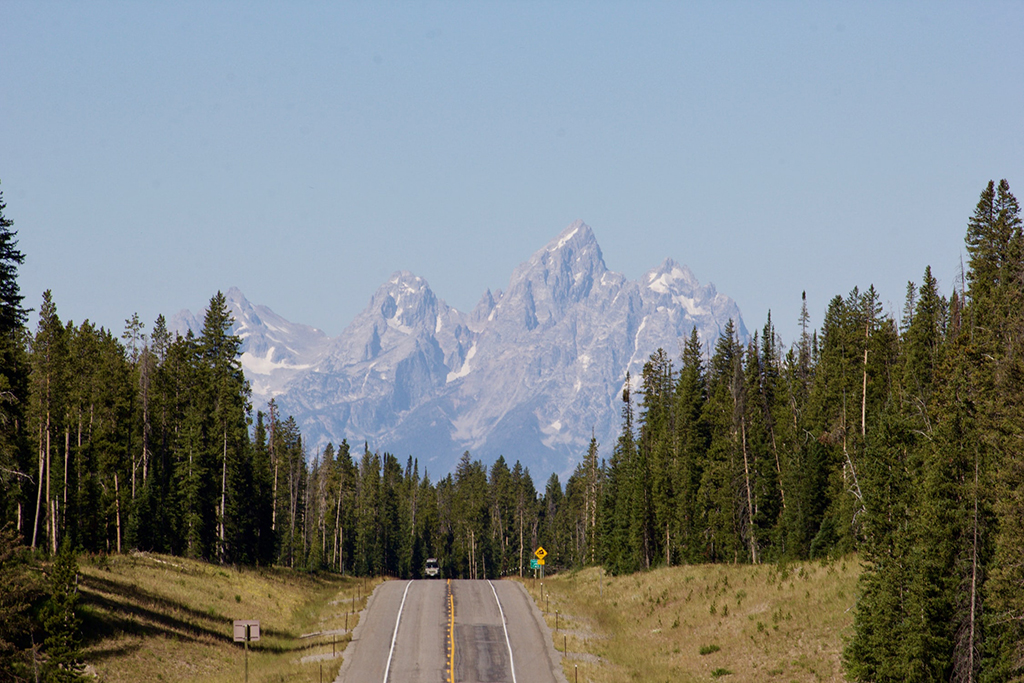
How to Get to Grand Teton National Park: Getting to the Tetons is relatively easy during the summer as the Jackson Hole Airport is located right next to the national park and offers direct flights from 10 different cities across the U.S.
The closest major airport is in Salt Lake City, which is about a 4.5-hour drive from Jackson Hole and Grand Teton National Park. If you are flying into the area, then renting a car is by far the best way to get around the park and to access the hiking trails.
Most of the trailheads in this article are easily accessible by two-wheel drive vehicles. The only exception is the Death Canyon Trailhead, which is a bit rough for the final 1-2 miles and is better suited to high clearance, all-wheel drive or four-wheel-drive vehicles.
Entrance Fees: It costs $35 per vehicle to enter Grand Teton National Park. This fee is valid for 7 days. Unfortunately, there is no longer a pass that grants access to both Grand Teton and Yellowstone National Parks, so if you plan to visit Yellowstone, then it’s worth investing the $80 for an annual parks pass that grants you access to all U.S. national parks for one year.
How to Arrange Shuttles: For a few of the hikes I am covering in this article, you will start and finish at different trailheads and will need to arrange transportation as a result. If your hiking group does not have multiple vehicles, then there are taxi services in Jackson that can transport you to or from a trailhead.
Teton Mountain Taxi advertises services to hiking locations in Grand Teton National Park for a one-way fee of $90 for 1-2 people and $10 for each additional person. Uber is also available in Jackson and would be worth looking into as well, though I imagine the fee would be fairly hefty.
When to Visit Grand Teton National Park

Hiking season in Grand Teton National Park runs from May through October, and this is partially dictated by when the Teton Park Road is open (May 1 through October 31 every year) as this road provides access to a large portion of the trails.
Also, heavy snow blankets the Tetons every winter, and the lower elevation trails do not start to become hikeable until mid-May in an average snow year, and possibly even later in a heavy snow year.
Late May through June is a nice time to hike the lower elevation trails as the snow line recedes and the valley “greens up”. The higher elevation trails above 9,500 feet remain snow-bound through the beginning of July most years, if not longer.
Hiking season across the higher elevations varies some from year to year but generally runs from early/mid-July through late September. To get an update on current snow or trail conditions, give the Jenny Lake Ranger Station a call.

July and August are the most popular months for hiking in Grand Teton National Park, and for good reason. In addition to dwindling snowpack, the wildflowers are at their best at this time of year and the temperatures are at their warmest.
However, afternoon thunderstorms are also common during these months, so you’ll want to plan your high elevation treks for early in the day unless you are very confident there will not be storms on the day you are hiking.
September is one of the best times of year to hike in Grand Teton National Park as the temperatures start to cool off, the crowds start to thin, and the fall colors begin to pop, especially during the second half of the month. However, days are shorter in September and nights can be very chilly. The higher elevations start to see their first snow of the season as well — typically by mid to late month, but occasionally earlier.
October is generally too late in the year to plan a high elevation hike far in advance, but for the lower elevations this is a sneaky good time of year to visit. While temperatures are colder and the weather can be unsettled, the crowds are significantly diminished and the lower elevation trails are drier and more pleasant compared to the spring months.
In some years, the higher elevations are accessible into early or mid-October with only minor snow and ice issues (we call this “Indian summer”), but in other years, winter comes early and heavy snow blankets the higher terrain by late September or early October.
What to Pack for Hiking in Grand Teton
Hiking in Grand Teton National Park means hiking in bear country. Read my post on bear safety in national parks to prepare yourself and carry bear spray where it is permitted.
In addition to the items below, check out the Jackson Hole Trail Map from Adventure Guides, Hiking Jackson Hole, and The Falcon Guide to Hiking in Grand Teton.
For more suggestions, read my posts on my favorite outdoor gear and the best daypacks for women.

Grand Teton National Park Phone Case

Grand Teton National Park Map

Grand Teton Eco-Friendly Phone Case

Grand Teton National Park Pennant

Fodor’s Guide to the 63 National Parks

Fodor’s Guide to Yellowstone and Grand Teton

Grand Teton National Park Puffy Blanket

Women’s National Parks Checklist T-Shirt

Women’s National Parks Checklist T-Shirt

Map of National Parks T-Shirt

Grand Teton National Park Hat

Grand Teton National Park Sticker

Grand Teton National Park Pin

Grand Teton National Park Patch

63 National Parks Water Bottle

Grand Teton Hiking Guidebook

Grand Teton Ornament

Grand Teton Sticker

Grand Teton Cross Stitch Kit

Yellowstone and Grand Teton National Parks Map
The 10 Hiking Essentials
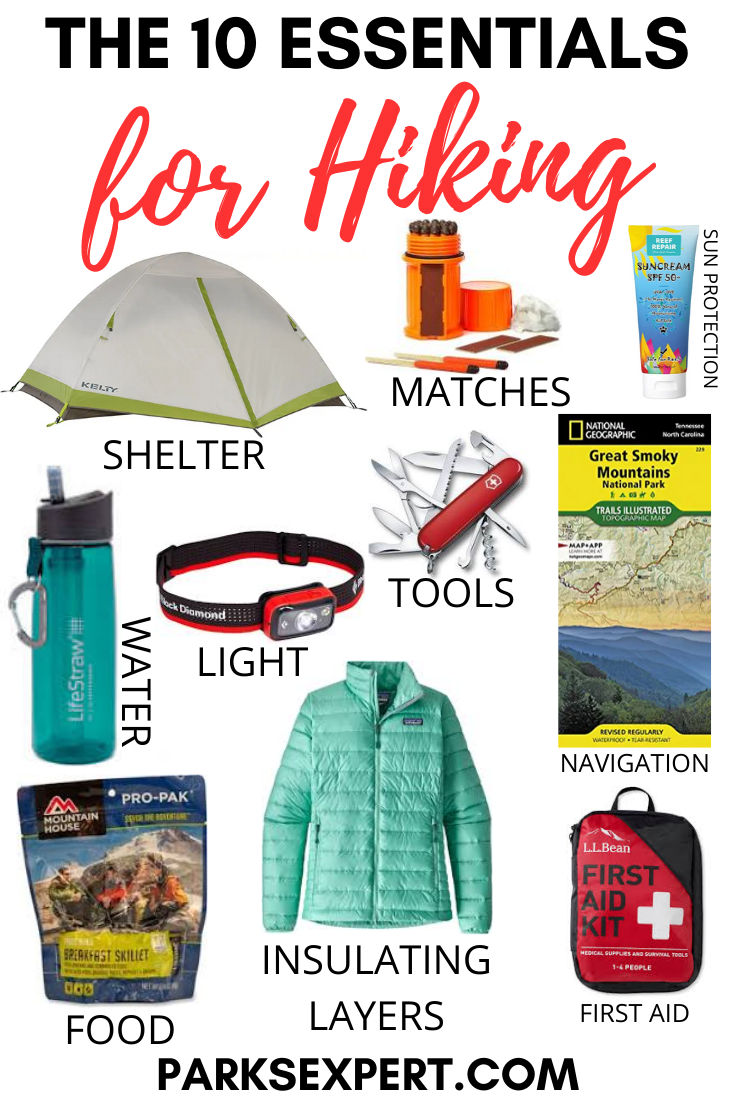
Every hiker should always carry the ten essentials with them. These include:
-
- Navigation systems: map, compass, and/or GPS
- Sun protection: sunscreen and/or ballcap
- Insulating layers: synthetic or down jacket, rain jacket, hat, gloves, and leggings
- Illumination (flashlight or headlamp)
- First-aid kit
- Something to light a fire: lighter, waterproof matches, and/or fire starter
- Repair kits and tools: pocket knife, duct tape, screwdriver, and/or scissors
- Emergency shelter: tent, bivy, tarp, and/or space blanket
- Nutrition: food for both meals and snacks
- Hydration: water bottle, water treatment (LifeStraw or SteriPen), and water
Backpacking in Grand Teton National Park

Some of the best hikes in Grand Teton featured in this article involve multi-day backpacking trips. While camping in the backcountry of Grand Teton National Park is a wonderful experience, permits are required and camping is allowed in designated sites only. Here are the things you need to know about planning a backpacking trip in Grand Teton National Park.
Securing a Permit: This is the trickiest part of planning a backpacking trip. Grand Teton National Park accepts advance reservations for backcountry campsites for a window of time every year, typically from early January through mid-May (for example, in 2020, the reservation window was from January 8 through May 15). Reserving a spot in advance costs $45 per group (not per person).
Two-thirds of all backcountry campsites are held for walk-in permits, which can be purchased in-person only no more than one day before the start of your trip.
Bear Canisters: Bear-resistant food canisters are required at all backcountry campsites in Grand Teton National Park. The National Park Service will provide you with a canister when you pick up your permit.
Other Things to Know: Campfires are only allowed at certain campsites, typically across the lower elevation areas near lakeshores. Campfires are generally prohibited across all of the higher elevation camping areas. Be sure to practice all Leave No Trace principles to keep this special place as pristine as possible. That means packing out all trash and not washing your dishes near lakes or streams.
For a more comprehensive guide to backpacking in the park, check out the Grand Teton National Park Backcountry Camping Brochure. If you’re more interested in staying in designated campgrounds, read our Grand Teton camping guide.
The Best Long Day Hikes and Multi-Day Hikes in Grand Teton National Park

I’ve listed 14 of my personal favorite treks in Grand Teton National Park, and I have organized them from shortest to longest in terms of distance. For difficulty level, I have rated the hikes not in terms of mileage but in terms of elevation gain, steepness, and condition of the trail, and based on someone who is a reasonably fit hiker.
In other words, a 10+ mile hike with significant elevation gain would be considered easy, while a 6-mile hike with significant elevation gain could be considered strenuous.
The estimated hiking times are very rough estimates and also assume you are a reasonably fit hiker who has acclimated to the altitude. If you are coming from a lower altitude, then you’ll probably want to add an hour or two to these estimates. The day hike time estimates also do not account for extended breaks.
I have hiked 13 of the 14 hikes in this article, and the only hike I have not completed is at the top of my bucket list (and also the most remote of the 14 hikes), so I thought it would be worth including.
Without further ado, here are some of the best hikes in Grand Teton National Park. If you’re looking for shorter or easier options, check out my post on short day hikes in Grand Teton.
1. Hanging Canyon
This is the shortest hike I’ve included, but don’t let the modest 6.4-mile roundtrip distance fool you, because this hike is extremely steep and the “trail” is an unofficial route that is not maintained by the National Park Service. I would wait until at least mid-July to do this hike since lingering snowpack and lots of overflowing streams early in the season could create dangerous conditions.
The hike begins on the popular and flat Jenny Lake Loop trail. Right before crossing a wooden bridge (about a half-mile BEFORE reaching the Jenny Lake boat dock), an unmarked but clear path will cut right up through the forest. Follow this trail, which will climb steeply through mostly open meadows and will gain over 1,000 feet per mile. Keep an eye out for black bears, which like to hang out and munch on huckleberries here.
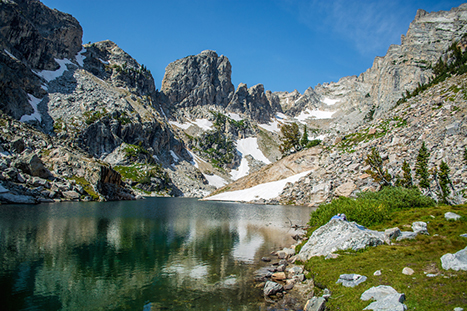
The trail is easy to follow for the most part, but occasionally there will be some minor route-finding involved. As you ascend, you’ll pass numerous waterfalls and wildflower-filled meadows. Higher up in the canyon, you’ll pass Arrowhead Pool and Ramshead Lake before the hike ends at the spectacular Lake of the Crags.
Difficulty: Strenuous
Distance: 6.4 mi / 10.3 km roundtrip
Elevation Gain: 2,690 ft / 820 m
Estimated Time: 4-6 hours
Type of Trail: Out and Back
Trailhead Location: String Lake
2. Hermitage Point
The hike to Hermitage Point starts at beautiful Colter Bay in the northern part of Grand Teton National Park and involves a mostly flat loop hike with good bird watching opportunities. The loop can be done in either direction, with one side taking you along the shores of Jackson Lake, while the other side takes you to a couple of other smaller lakes.
Hermitage Point is located at the end of a peninsula on the shore of Jackson Lake and features outstanding views of Mount Moran. On a hot day, this is a great spot to take a dip in the lake and dry off on the beach afterward.
Mosquitoes can get pretty bad here in June and July, so make sure you come prepared with bug spray. Also, this area has a healthy grizzly population and is not one I would recommend for a solo hike.

Difficulty: Easy
Distance: 9.6 mi / 15.4 km roundtrip
Elevation Gain: 738 ft / 225 m
Estimated Time: 3-4 hours
Type of Trail: Loop
Trailhead Location: Colter Bay
3. Trapper Lake
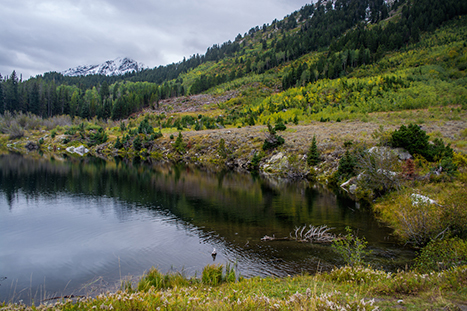
Hike along the shores of four different lakes at the base of the Tetons before concluding at the relatively remote Trapper Lake — a destination that sees comparatively less hiker traffic than other parts of the valley. The first two lakes that you pass on this hike, String Lake and Leigh Lake, are the most spectacular of the hike.
However, Trapper Lake feels quiet and secluded and is a great destination if you’re looking for a longer but relatively flat hike where the views are consistently good. Portions of this hike can get pretty buggy in June and July. September and October are wonderful times to hike to Trapper Lake as elk like to hang out in this area. The last time I visited Trapper Lake, there was a herd of bugling elk across the lake as they were in the middle of their fall rut.
Difficulty: Easy
Distance: 10.0 mi / 16.1 km roundtrip
Elevation Gain: 330 ft / 101 m
Estimated Time: 3-4 hours
Type of Trail: Out and Back
Trailhead Location: String Lake
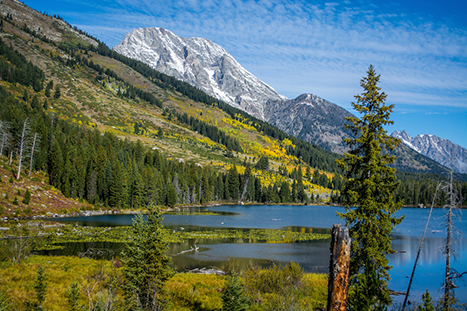
4. Jenny Lake – String Lake Loop
This is another relatively flat hike that is full of big views and gorgeous lakes at the base of the Tetons, making it one of the best hikes in Grand Teton National Park. Jenny Lake and String Lake are only about a half-mile apart from each other, and each lake has a trail that loops around all sides. This hike completes the loops around both lakes.
There are a number of different ways you can complete this hike, but if I had to choose a route, I would recommend starting at the South Jenny Lake Trailhead and hiking counterclockwise around Jenny and String Lakes, with a short side trip to Hidden Falls.
This hike is usually do-able by late May, though you may have some lingering snow on the east side of Jenny Lake early in the season. This is a great fall hike as well, especially when the aspen trees are turning in late September.
Difficulty: Easy
Distance: 11.0 mi / 17.7 km roundtrip
Elevation Gain: 950 ft. / 290 m
Estimated Time: 4-6 hours
Type of Trail: Loop
Trailhead Location: South Jenny Lake
5. Surprise, Amphitheater, and Delta Lakes
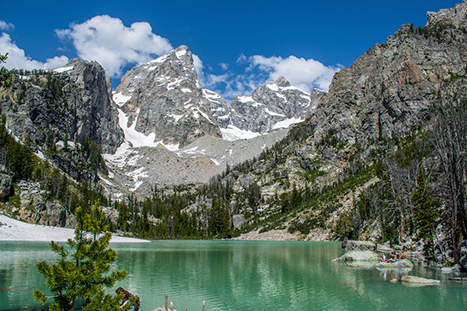
Another multi-lake hike, this trek features a steep climb up to three subalpine lakes higher up in the Tetons. The official trail takes you to Surprise and Amphitheater Lakes first, and this is a fine destination in and of itself, and one that is also very popular. In fact, this is probably the most heavily hiked higher elevation trail in the park.
In addition to Surprise and Amphitheater, I highly recommend the side trip to Delta Lake — the most beautiful of the three lakes, thanks to its turquoise color and a stunning view of the Grand Teton in the background. Delta Lake is accessed by an unofficial trail that branches off of a switchback approximately one mile before reaching Surprise Lake. The fewer crowds make it one of the best hikes in Grand Teton National Park.
The lower portion of this hike is exposed and gets hit with sun very early in the day, and so it can get quite hot. Due to the sun exposure and the crowds, I recommend starting this hike early, hiking to Surprise and Amphitheater Lakes first, and then taking the side trip to Delta Lake. Delta Lake receives fewer crowds than the other two since it is accessed by an unmarked trail, but even this lake is growing in popularity.
Difficulty: Strenuous
Distance: 11.5 mi / 18.5 km roundtrip
Elevation Gain: 3,667 ft / 1,118 m
Estimated Time: 6-8 hours
Type of Trail: Out and Back
Trailhead Location: Lupine Meadows
6. Two Ocean and Emma Matilda Lakes
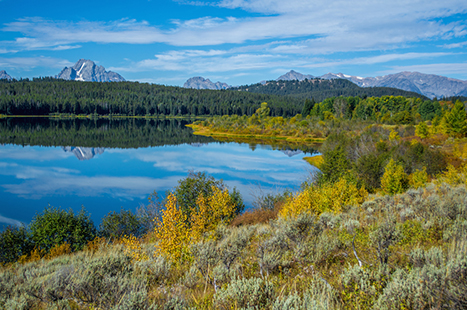
These two lakes are located in the northeast portion of Grand Teton National Park on the opposite side of the valley from most hiking trails in the park. This is good because it means when you have views open up to the west, you get expansive views of the Teton range.
There are multiple ways you can complete a loop around these two lakes. My recommendation for a long day hike is to take the outer loop around both lakes, starting at Two Ocean Lake and hiking counterclockwise around the north shore, up and over Grand View Point (where there is a “grand view” indeed), and around the south side of Emma Matilda Lake.
The mosquitoes are flat out brutal in this area during June, July, and early August, so I highly recommend this hike as a late summer or fall outing. Go here anytime from mid-September through early October and you’ll be treated to outstanding fall colors. This area is known for its grizzly population, so don’t do this hike solo and make sure you pack bear spray and make noise through dense areas.
Difficulty: Moderate
Distance: 13.2 mi / 21.2 km roundtrip
Elevation Gain: 1,100 ft / 335 m
Estimated Time: 4-6 hours
Type of Trail: Loop
Trailhead Location: Two Ocean Lake
7. Granite Canyon to Rendezvous Mountain
Granite Canyon is one of the best hikes in Grand Teton National Park because it is a completely unique hike in that you hike uphill for over 13 miles, complete with an ascent up the backside of Rendezvous Mountain. This is also the top of Jackson Hole Ski Area, which borders the national park boundary from the south. Upon reaching the summit, you can enjoy a waffle and a beer at Corbett’s Cabin located at the top, and then save your legs by riding the aerial tram down for free where your car will be waiting!
The hike will start at the bottom of the ski resort in Teton Village, where you will briefly hike along the lower ski runs before picking up the Valley Trail and entering the national park. The rest of the hike will take you up scenic Granite Canyon, and eventually you’ll work your way up the north side of Rendezvous Mountain through some very scenic terrain. Go in late July or early August for a wildflower show!
Note: The tram will not be operating in the summer of 2020 since it will be undergoing maintenance. If you still wish to do this hike in 2020, you can hike on good trails down the front side of the ski area, which will add another 5-6 miles. Alternatively, while hiking down, you will pass the Bridger Gondola after hiking downhill for approximately 2 miles, and you could ride it back down and cut off the last few miles.

Difficulty: Strenuous
Distance: 13.2 mi / 21.2 km one-way
Elevation Gain: 4,799 ft / 1,463 km
Estimated Time: 6-8 hours
Type of Trail: Loop (when including use of aerial tram)
Trailhead Location: Teton Village
8. Valley Trail
This is a point-to-point hike that starts at the southern boundary of the national park and heads north along the base of the Tetons before ending at the Lupine Meadows Trailhead. This is a fantastic way to get a longer hike in early or late in the season when the higher elevations are snowbound.
You can do this hike in either direction, but most people hike it from south to north. Although the mileage is rather long, this hike is typically completed in one long day. There are no big climbs, but enough ups and downs that the elevation gains add up over time, so don’t underestimate this hike! The trail itself features a nice mix of forest, mountain views, and lakes.

Difficulty: Moderate
Distance: 15.8 mi / 25.4 km one-way
Elevation Gain: 3,214 ft / 980 m
Estimated Time: 6-8 hours
Type of Trail: Shuttle
Trailhead Location: Teton Village (start) and Lupine Meadows (end)
9. Static Peak
This is one of my favorite hikes and is one of the only summits in Grand Teton National Park that is accessible as a walk-up, as most peaks in the Tetons require scrambling or climbing. Static Peak is one of the best hikes in Grand Teton and a stunning hike that features a steep climb, but jaw-dropping scenery and expansive wildflowers make this trek a non-stop highlight reel all the way to the top. The summit elevation of Static Peak is a sky-high 11,302 feet.
The actual trail will crest Static Peak Divide, then you will take a right and walk up grassy slopes the final half mile to the summit. This is a long full-day hike that requires an early start. This is especially true if thunderstorms are in the forecast. Static Peak is well above treeline and exposed, and true to its name, it’s not a place where you want to get caught in a thunderstorm!
This trail is typically accessible with only a couple of minor snow crossings by mid-July in an average snow year, though you may want to bring an ice ax to navigate these snow crossings just in case. By late July or early August, snow should no longer be an issue.

Difficulty: Strenuous
Distance: 16.8 mi / 27.0 km roundtrip
Elevation Gain: 5,423 ft / 1,653 m
Estimated Time: 7-10 hours
Type of Trail: Out and Back
Trailhead Location: Death Canyon
10. Paintbrush Canyon and Cascade Canyon
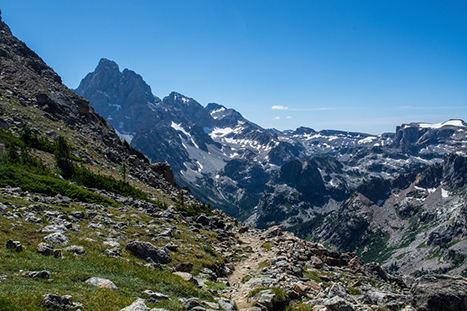
This is another highlight-reel hike that involves a hike up Paintbrush Canyon and back down Cascade Canyon to complete a 19-mile loop. This hike has it all, from alpine lakes to wildflowers to stunning mountain views. You’ll top out at an elevation of 10,700 feet at the summit of Paintbrush Divide.
Many people complete this hike in one long day, but only attempt this as a day hike if you are a fit and experienced hiker who is used to long-distance days. This hike makes for an excellent multi-day trek as well. If you’re backpacking, I would recommend camping at Holly Lake on the first night and in the North Fork of Cascade Canyon on the second night.
Regardless of whether or not you do this as a day hike or backpacking trip, make sure to spend some time at Lake Solitude and take a dip to cool off if it’s warm out. If thunderstorms are in the forecast, then your goal should be to cross Paintbrush Divide early in the day before descending to lower, less exposed areas.
Difficulty: Strenuous
Distance: 19.0 mi / 30.6 km roundtrip
Elevation Gain: 4,160 ft / 1,268 m
Estimated Time: 1-3 days
Type of Trail: Loop
Trailhead Location: String Lake
11. Death Canyon to Teton Canyon
This hike involves a lengthy shuttle, but if you can arrange it, then it’s totally worth the effort as it gives you the chance to hike up one side of the Teton Range and down the other side. In this case, you will start on the east side of the Tetons and hike up through Death Canyon, before hiking down the western side of the Tetons through Teton Canyon, which is located outside of the park boundary.
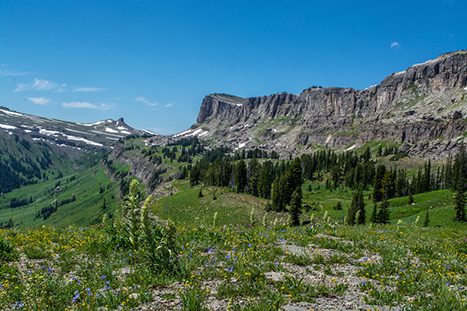
To arrange this shuttle, you’ll need to drop a car or find transportation to the Teton Canyon Trailhead near the small towns of Alta, Wyoming and Driggs, Idaho. Do this hike in July or early August for a wildflower show, and plan on completing the trek over two days. The best place to camp, by far, is on the Death Canyon Shelf, where you’ll have stunning views of the surrounding mountains, including the Grand Teton itself. Views like this make this one of the best hikes in Grand Teton National Park.
Difficulty: Strenuous
Distance: 21.5 mi / 34.6 km
Elevation Gain: 4,028 ft / 1,228 m
Estimated Time: 2 days
Type of Trail: Shuttle
Trailhead Location: Death Canyon (start) and Teton Canyon (end)
12. Hurricane Pass
This out-and-back takes you up through the gently ascending main fork of Cascade Canyon, before branching off onto the spectacular South Fork of Cascade Canyon where the trail will ascend at a steeper grade up toward Hurricane Pass.
This is a multi-day trek, so plan on camping in the spectacular South Fork of Cascade Canyon, before climbing up to Hurricane Pass the next morning. Hurricane Pass is one of my favorite photo spots in the Tetons as you will have incredible close-up views of the Grand Teton, Middle Teton, and South Teton with the shrinking Schoolroom Glacier located right below you.
You could complete this trip as a 2-3 day backpacking trip with multiple side trip options available as well.

Difficulty: Strenuous
Distance: 22.4 mi / 36.0 km
Elevation Gain: 4,094 ft / 1,248 m
Estimated Time: 2-3 days
Type of Trail: Out and Back
Trailhead Location: South Jenny Lake
13. Moose Basin Divide
This is admittedly the one trail in this guide that I have not hiked, though it is at the top of my bucket list. It is located in the remote northern section of the park, and I thought it would be too special not to include. You could hike back here for several days and you might not see another person the entire time, making this one of the best hikes in Grand Teton National Park!
This hike begins off of the Grassy Lake Road, which is located just north of the Grand Teton National Park border and just south of the Yellowstone National Park border. The trail will follow the northwest shore of Jackson Lake, then you will ascend Webb Canyon before making a loop back down Owl Canyon, and hiking back out the way you came in. Supposedly, the upper portions of the trek around Moose Basin Divide are spectacular.
This hike is more off of the beaten path than any other in this guide and is also in a heavily populated grizzly area, so I would recommend doing this hike with at least a party of three. Also, there is a lot of water (and bogginess) in this section along with mosquitoes, and also a few river fords. As a result, I would recommend doing this hike sometime from mid-August to mid-September.
One option to shorten the hike would be to take a canoe and paddle across Jackson Lake to Wilcox Point, which would cut off about 16 miles of hiking.

Difficulty: Strenuous
Distance: 36.6 mi / 58.9 km
Elevation Gain: 4,527 ft / 1,380 m
Estimated Time: 3-5 days
Type of Trail: Loop
Trailhead Location: Glade Creek
14. Teton Crest Trail
The Teton Crest Trail is the premier backpacking trip in Grand Teton National Park, and is fairly popular as a result, but for good reason! The route stays high through most of the trek and features endless miles of stunning alpine scenery. Mid-July through mid-September is generally the best time to do this hike, and late July and early August will feature the best wildflowers.
This hike begins at the Phillips Canyon Trailhead near Teton Pass, outside of the national park, and travels north before exiting through Paintbrush Canyon and ending at String Lake. Many of the same areas I’ve covered in previous hikes are also a part of the Teton Crest Trail, such as Death Canyon Shelf, Hurricane Pass, and Paintbrush Divide.
Most people take 3-5 days to complete this trail, and it really depends on how fast you want to go or how much time you want to linger and soak up the scenery. Another option to shorten this trip is to start in Teton Village and take the aerial tram to the top, then hike down from the tram to intersect the trail. This option would cut off about 3 miles of hiking and 1,200 feet of elevation gain, as opposed to starting at Philips Canyon. For distance and elevation gain, I have included the stats assuming a starting point at Phillips Canyon.
Note: The Jackson Hole aerial tram will not be operating in the summer of 2020 due to maintenance.

Difficulty: Strenuous
Distance: 38.6 mi / 58.9 km
Elevation Gain: 5,497 ft / 1,675 m
Estimated Time: 3-5 days
Type of Trail: Shuttle
Trailhead Location: Phillips Canyon (start) and String Lake (end)
About the Author: Alan Smith

Alan is an avid hiker and outdoor enthusiast based in Jackson, Wyoming who recently started an outdoor travel blog — Adventure Forecast — that primarily focuses on travel related to day hiking and multi-day backpacking.
Alan is based in the Tetons, where he lives with his fiance and two black labs (who also love to hike!), but enjoys getting out of his neck of the woods and traveling as much as possible. He has lived and hiked in many locations throughout the U.S. and recently visited New Zealand, the latter of which has really opened up his eyes to international travel.
As a professional meteorologist, Alan adds a unique perspective in helping people plan their travels and outdoor adventures around different types of weather conditions at various times of the year. At Adventure Forecast, you’ll find plenty of content related to weather and outdoor adventures in addition to hiking articles.
Pin the Best Hikes in Grand Teton National Park


I’ve been to Grand Teton but we didn’t have much time to hike. We hope to go back and do some of these though, great post!
This looks like heaven to me!! Seriously! I love that you included a range of levels for the hikes- but the views of the strenuous ones look worth every ounce of effort!
p.s. Thanks for including elevation gain in meters too. 🙂