Article Summary: Best Things to Do in Katmai National Park
Katmai National Park is famous for being a premier destination for safely viewing brown bears in the wild. But what else is there to do in Katmai National Park? More than you might think!
In this article, we’ll detail the best things to do in Katmai National Park. Including bear viewing, we’ll also cover the Valley of Ten Thousand Smokes, guided tours, and more.
This post may contain affiliate links. If you make a purchase, I may earn a small commission at no additional cost to you. For more information, view my privacy policy.
Table of Contents
Katmai National Park & Preserve Overview
Location: Alaska
Gateway Town: King Salmon
Best Airport: The closest major airport is Anchorage, but you’ll need to fly to King Salmon from there. Alaska Airlines is highly recommended for this region. Learn more about how to get to Katmai
Best Time to Visit: June to mid-September – Learn more about when to visit Katmai
How to Get Around: You’ll explore the park primarily on foot. Visiting Brooks Camp will require either a flight or a boat ride. There’s also a bus tour to the Valley of Ten Thousand Smokes. You can explore the lakes around Brooks Camp in rented kayaks.
Pets: While technically allowed in the park, pets and service animals aren’t permitted in Brooks Camp for their safety.
Fee: There is no entrance fee to Katmai. The only national park in Alaska with an entrance fee is Denali. Learn more about national park entry fees.
Reservations: It’s important to book well in advance. Make lodging or camping reservations as soon as possible. Secure transportation once lodging reservations are confirmed.
Where to Stay: Within park boundaries, your options are Brooks Lodge and Brooks Camp Campground. For options in King Salmon, browse Expedia. Learn more about where to stay in Katmai
Where is Katmai National Park?

Katmai National Park is in southwestern Alaska, about 290 miles southwest of Anchorage on the northern Alaska Peninsula. The park is not on the Alaska road system. Visiting Katmai requires flying or taking a boat.
While Katmai is the fourth largest national park in the country, most visitors only see a tiny fraction of the park at Brooks Camp. Since it’s so difficult to get to, it’s also one of the least visited national parks.
Katmai National Park Map

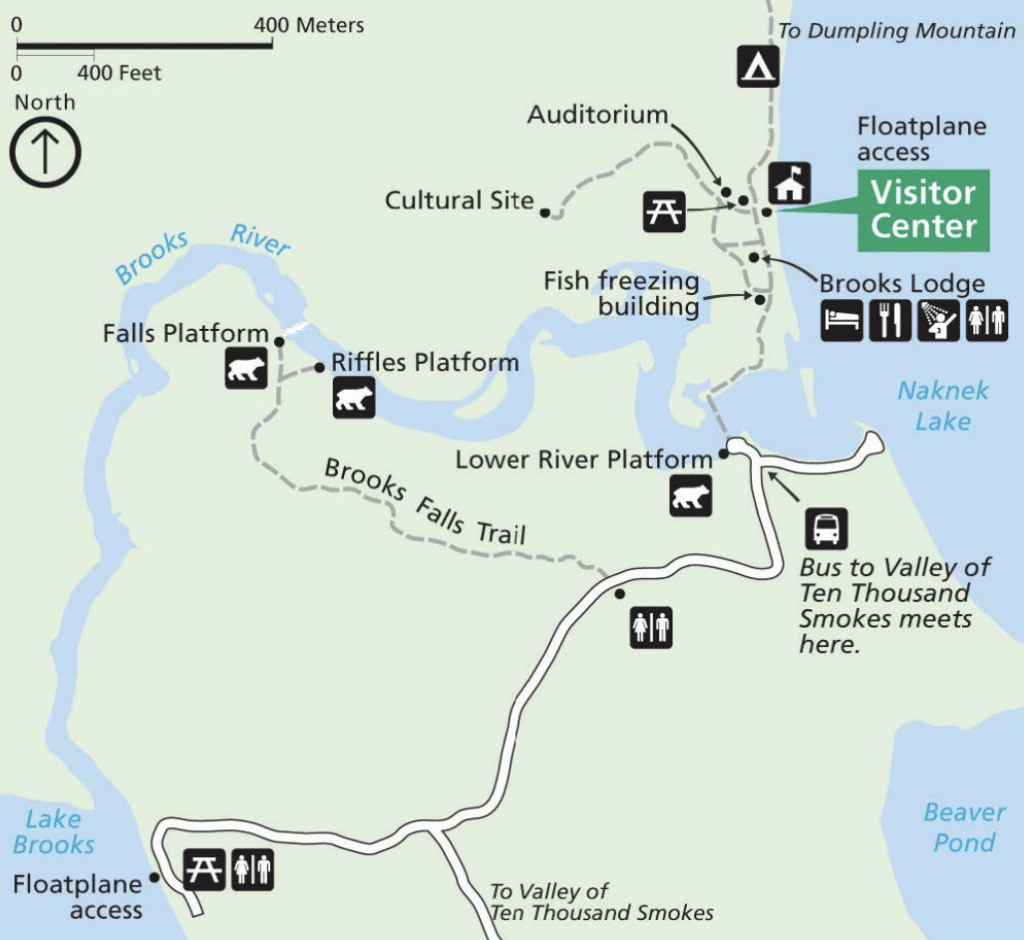
Click on the maps above to enlarge them and download them. It’s highly recommended to save these maps to your device before traveling to Katmai. You won’t have any cell service or WiFi in the park. The Visitor Centers in King Salmon and Brooks Camp will also have physical copies to hand out.
13 Best Things to Do in Katmai National Park
- Bear-viewing
- Valley of Ten Thousand Smokes
- Sugpiaq Cultural Site
- Hiking
- Fishing
- Paddling
- Rafting
- Attend a Ranger Program
- Photography Tours
- Bear-viewing Tours
- Visit the Visitor Centers
- Flightseeing Tour
- Visit Other Alaska National Parks from King Salmon
A quick note: this post mostly covers things to do in Brooks Camp, the most visited area in the park, but there are loads of other places to go in Katmai.
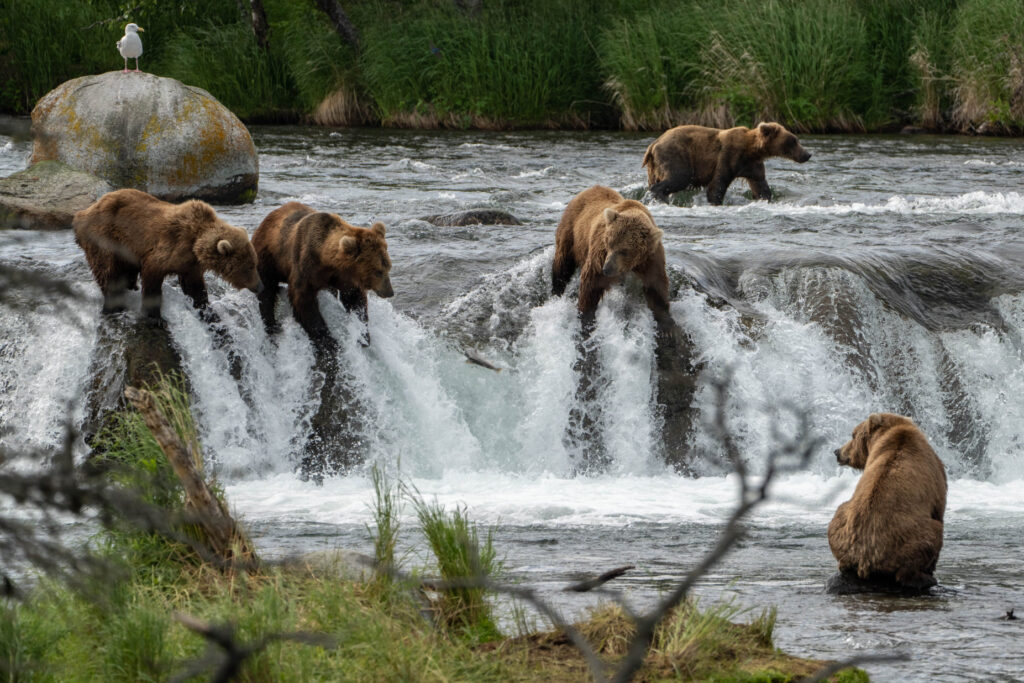
1. Bear Viewing: Live Out Your Wildlife Documentary Dreams
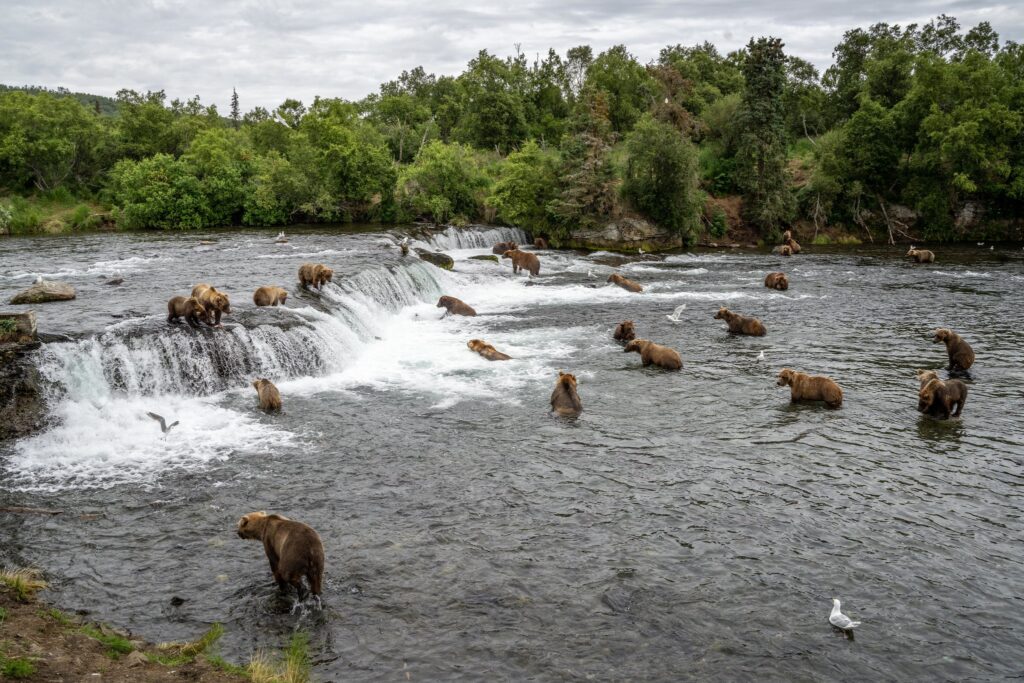
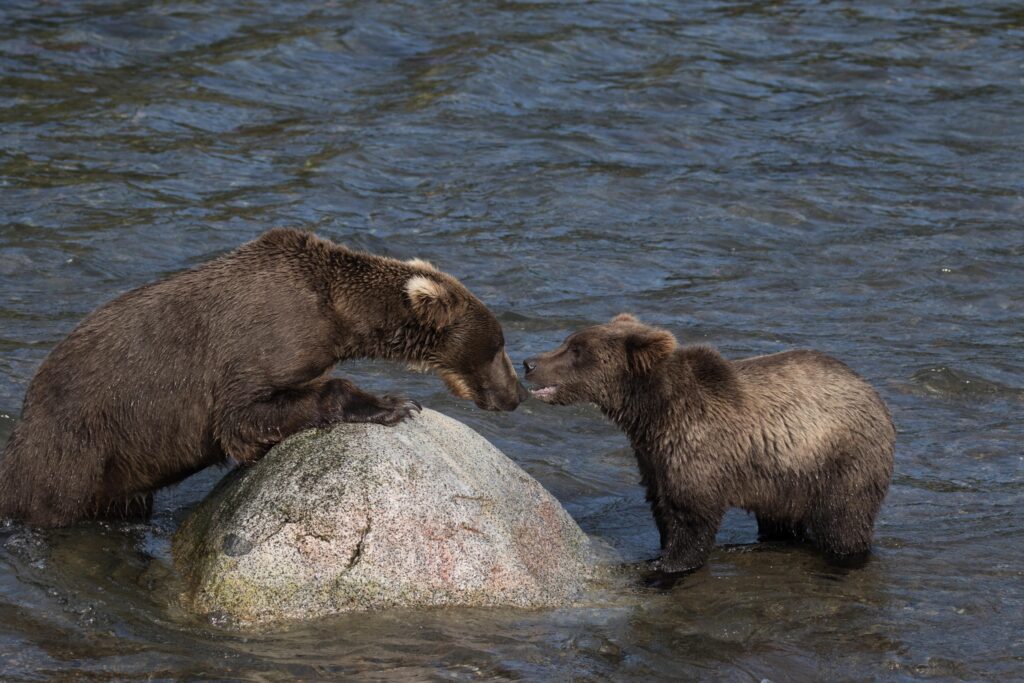
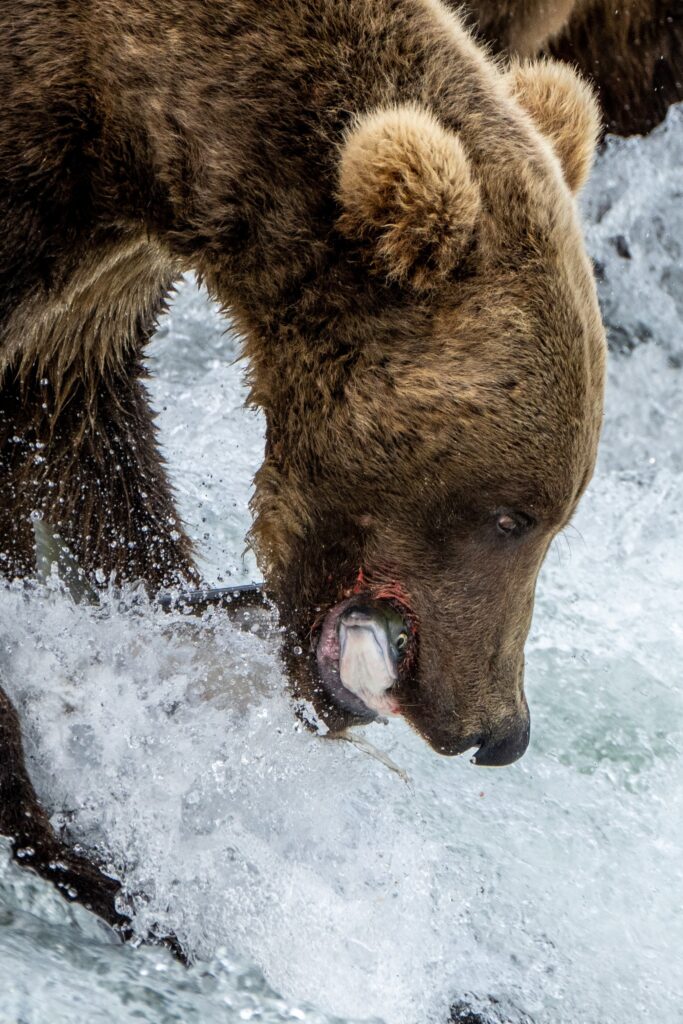
It’s estimated there are as many as 2,200 bears active in the Katmai area. As such, this is easily the biggest draw for visitors to the park.
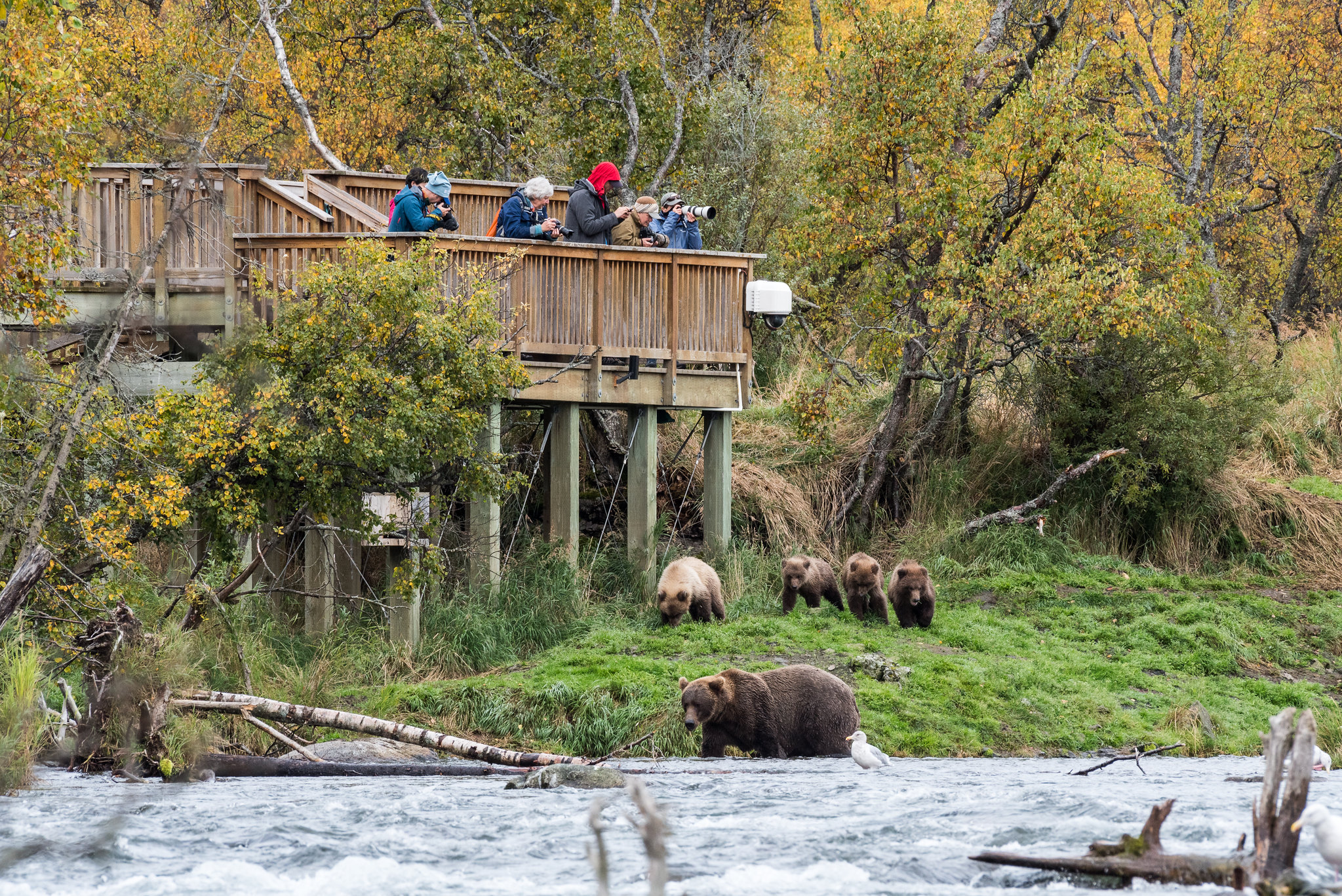
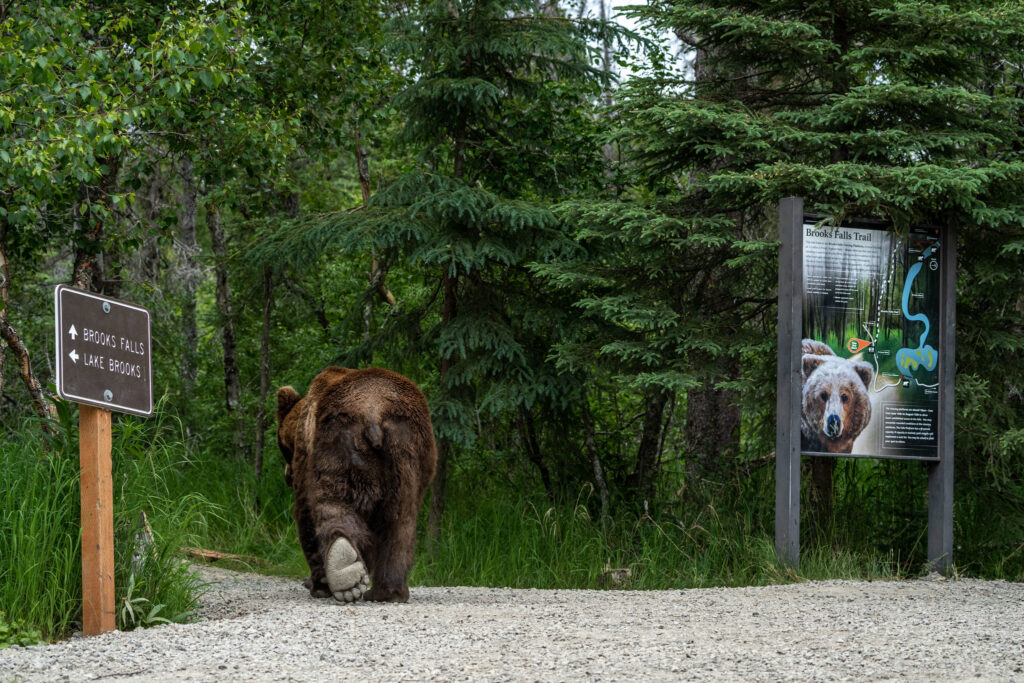
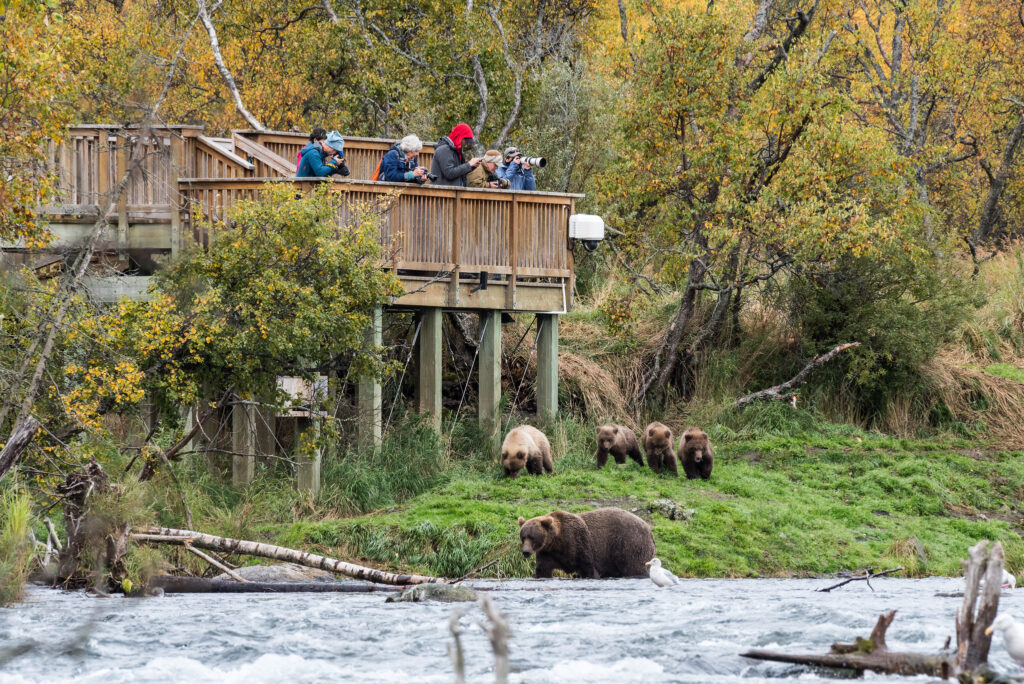
The viewing platform at Brooks Falls and the Brooks Falls Trail are both popular viewing areas. The Lower River Platform along the Brooks River is another excellent spot.
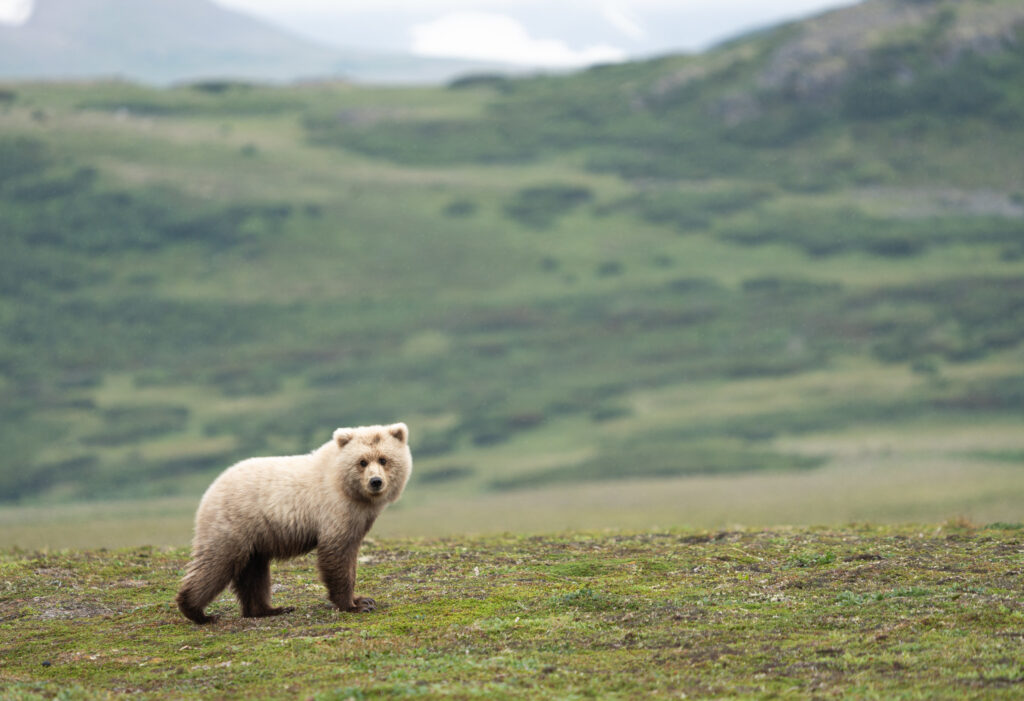
The Brooks Falls Trail is a one-mile gravel pathway. Bears love to utilize the path as well, so it could be closed if there are any present. Park rangers will reopen it once the bears move along. This is a good reminder to make noise as you walk so the bears clear the trail.
Another viewing spot, the Riffles Platform, is a bit downstream of Brooks Falls. You get an amazing view of the beauty that surrounds Brooks Falls. There are great opportunities for landscape and wide-angle photographs here.
Even the view from the boardwalk between Brooks Camp and the Brooks Falls Trail is phenomenal for bear viewing!
PARKS EXPERT TIP: The Brooks Falls webcam plays nonstop at the Visitor Center. Before you walk the mile down to the viewing platform, you can check here to see if any bears are around.
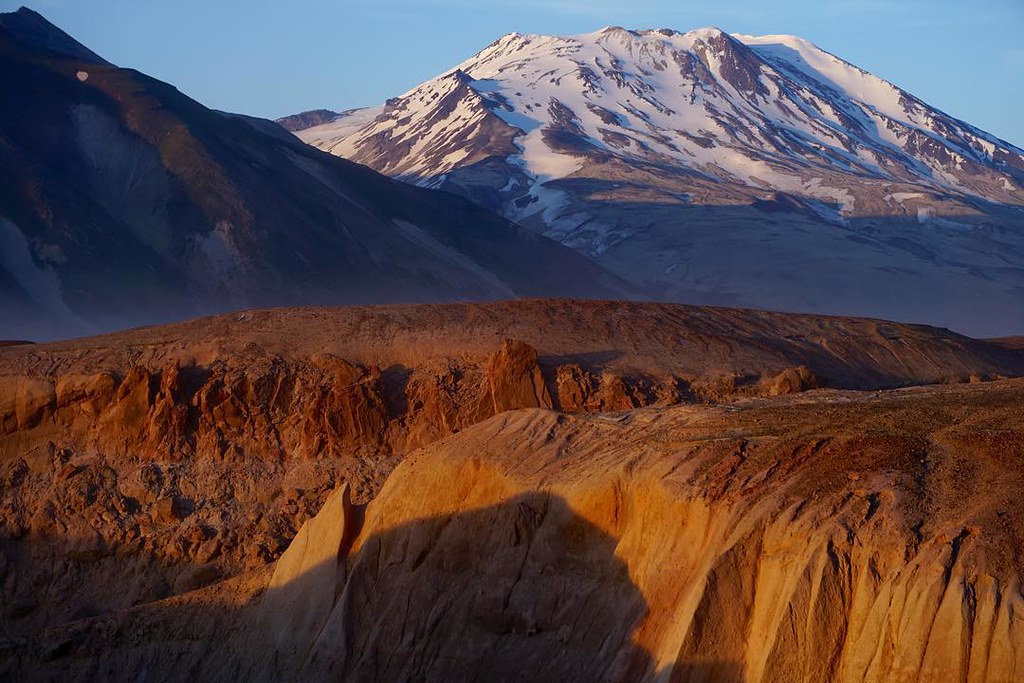
2. Take a Ride Through the Valley of Ten Thousand Smokes
On this bus tour, you’ll travel a 23-mile gravel road, the only road in the park. Along the way are excellent views of river valleys and, at the end of the trip, a sweeping view of the famed Valley of Ten Thousand Smokes. The bus will stop for breaks and wildlife viewing opportunities. You may see moose, foxes, porcupines, birds, and (of course!) brown bears. I was lucky enough to see a lynx on the road on my trip!
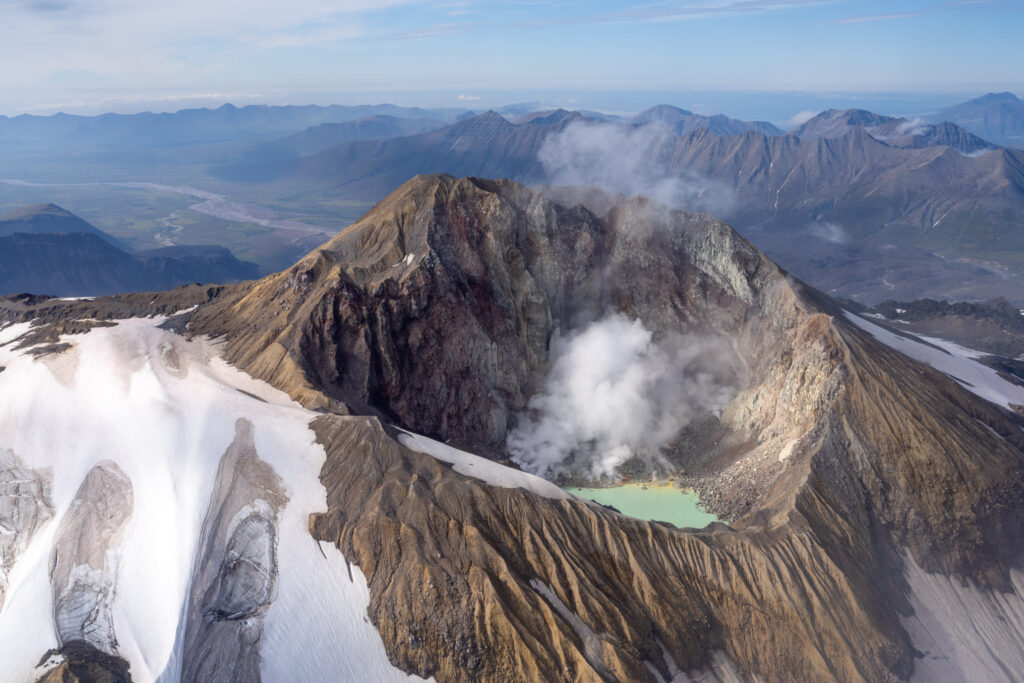
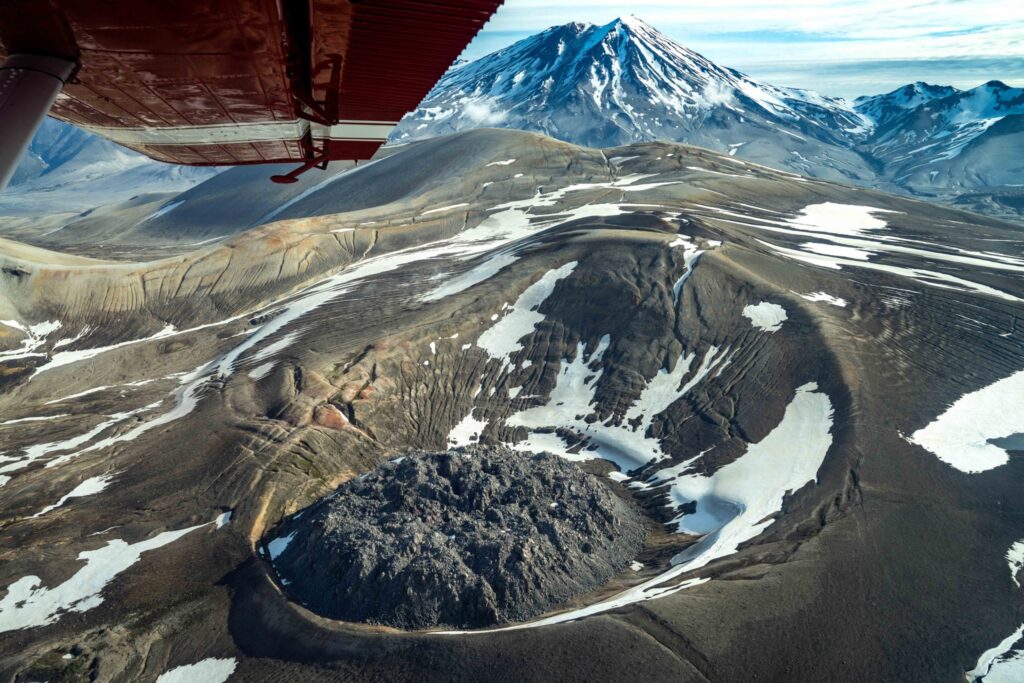
The Novarupta Volcano erupted on June 6, 1912, and was the largest eruption in the 20th century. This historic event is one of the main reasons Katmai was named a national monument in 1918. It’s said that ask and volcanic remnants spewed for as many as 60 hours! What was left were tens of thousands of fissures and fumaroles, giving the vast area its nickname.
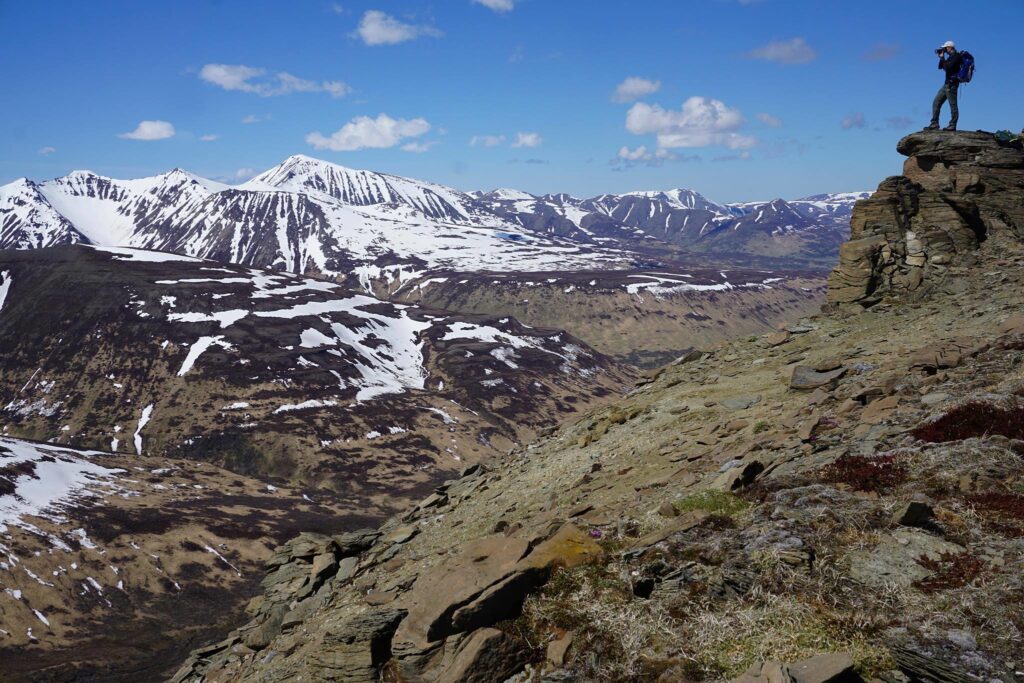
Visitors on the tour can also visit the Robert F. Griggs Visitor Center at the end of the Valley of Ten Thousand Smokes Road. It’s only open during ranger-guided trips to the Valley. Robert Griggs was part of the National Geographic Society. He explored this area in 1916, gave it its name, and fought for its establishment as a national monument.
During a lunch stop at Overlook Cabin, you can join the ranger for a strenuous guided walk into the Valley itself. Dress in layers and good hiking boots if you opt to participate.
The tour costs $110 with lunch or $96 without lunch, per person. Backpackers can also book a one-way ticket for $55. Click here to learn information and book your excursion.
3. Visit the Sugpiaq Cultural Site
The Sugpiaq people have called this area home for 9,000 years. Several villages were formed, including one at present-day Brooks Camp. The Cultural Site is a short walk from the Brooks Camp Visitor Center. There’s a model of a traditional home and interpretive displays so you can learn more about those who lived here. Many Sugpiaq were forced to relocate after the eruption of Novarupta.
4. Go for a Hike
There are only a few miles of maintained hiking trails in the park. On a multi-day visit, you’ll have plenty of time to hike every trail.
Brooks Falls Trail
Distance: 1.2 mi (2 km) Difficulty: Easy, wheelchair accessible
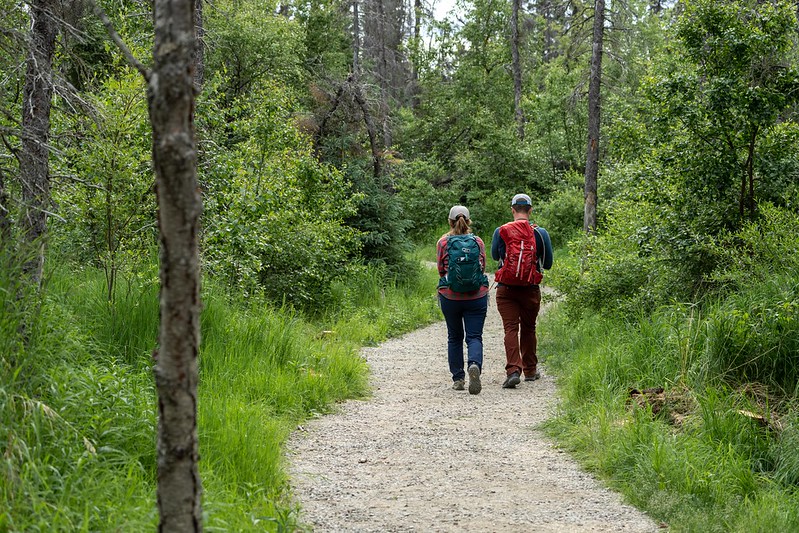
The most popular hike in Katmai National Park meanders through the boreal forest among the brown bears. Begin at the vault toilets across from the South Viewing Platform. Speak to other visitors so you don’t surprise any bears, especially in July.
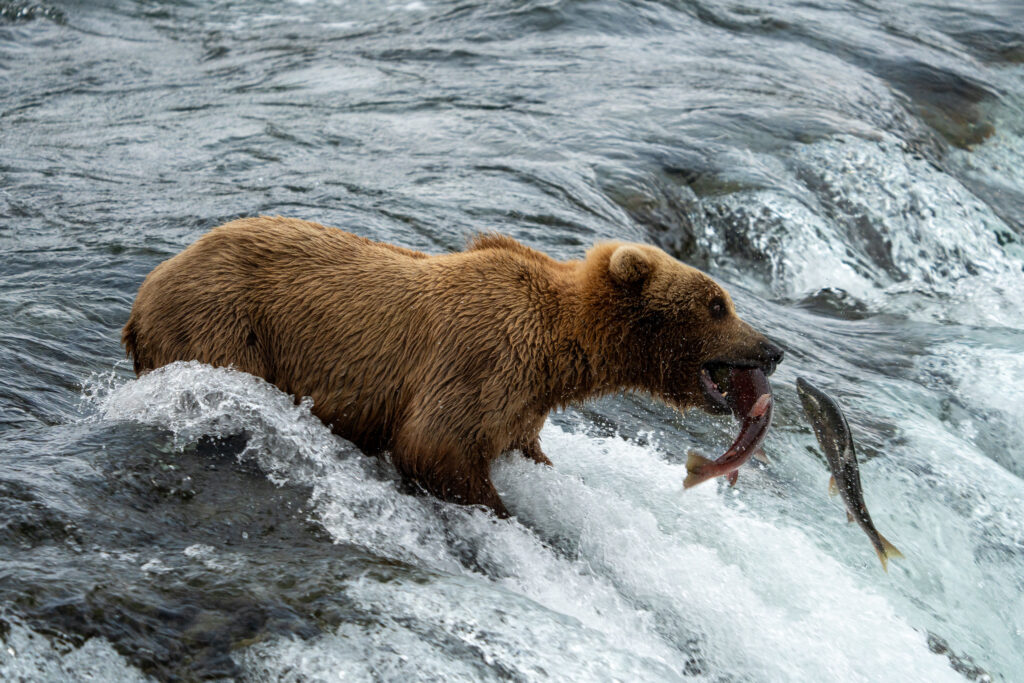
The highlight of the trail (other than bear sightings) is the two observation decks at the end. One is the famous Brooks Falls viewing platform where iconic photos of bears catching salmon as they try to jump over a waterfall are taken. Another is the Riffles viewing platform, a few yards downstream for a different angle.
Be prepared to step off the trail to let bears pass. Give them plenty of space.
Cultural Site Trail
Distance: .1 mi (.2 km) Difficulty: Easy
This easy trail leads visitors to the Sugpiaq Cultural Site mentioned above. Start at the Brooks Camp Visitor Center for a short walk through prehistoric camps. You’ll arrive at a reconstructed native dwelling, a semi-subterranean traditional home. This is part of the Brooks River National Historic Landmark, which has one of the highest concentrations of prehistoric human dwellings in North America.
Park rangers may lead guided hikes on this short trail in the summer. Check at the Visitor Center for availability and scheduling. The walk lasts about an hour as the ranger dives deep into the area’s significant history.
Lake Brooks Road
Distance: 1 mi (1.6 km) Difficulty: Easy
This road leads to a large lake at the head of the Brooks River. The road begins at the South Platform and passes the Brooks Falls Trail. Continue toward the Valley of Ten Thousand Smokes Road to visit Lake Brooks.
There is a covered picnic area, food cache, and vault toilet at Lake Brooks. There may be brown bears fishing here in late August and September.
Valley of Ten Thousand Smokes Road
Distance: 23 mi (37 km) Difficulty: Moderate
This is mostly for backpackers, but you can walk the Valley of Ten Thousand Smokes Road.
This road begins .7 mi (1.1 km) from the South Platform along the Lake Brooks Road. There are three stream crossings along the route. After walking about 7.5 miles (12 km), the boreal forest will open up to expose vast views.
You can walk as little or as much of this road as you’d like. There is also a one-way pick-up/drop-off ticket option for the bus trip if you want to hike closer to the end of the road.
Dumpling Mountain Trail
Distance: 1.5 mi (2.4 km) with longer options Difficulty: Moderate to Strenuous
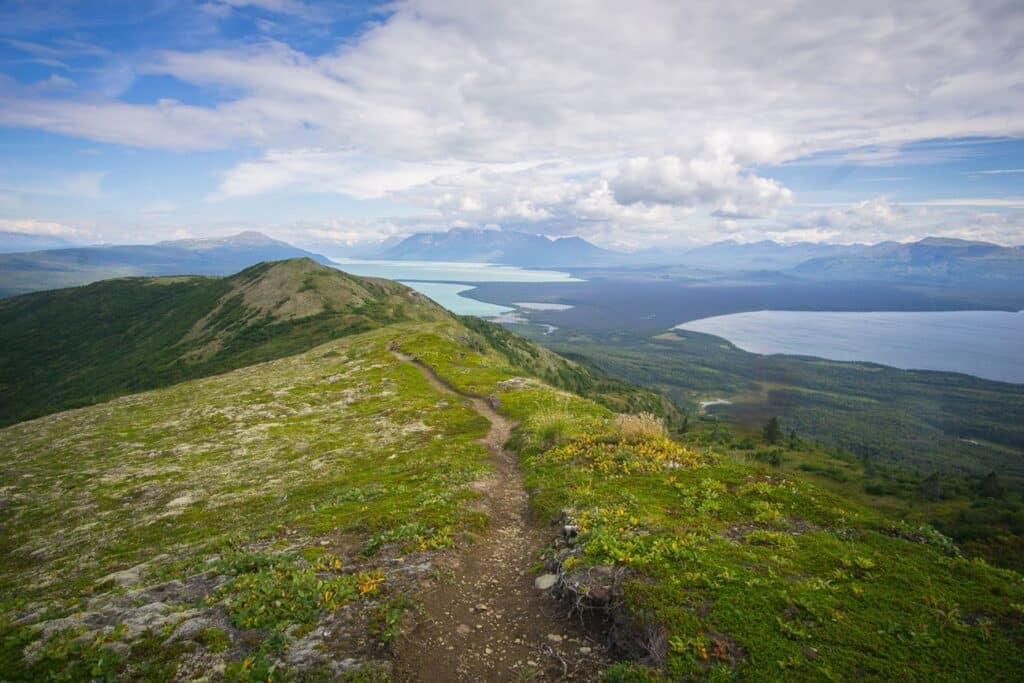
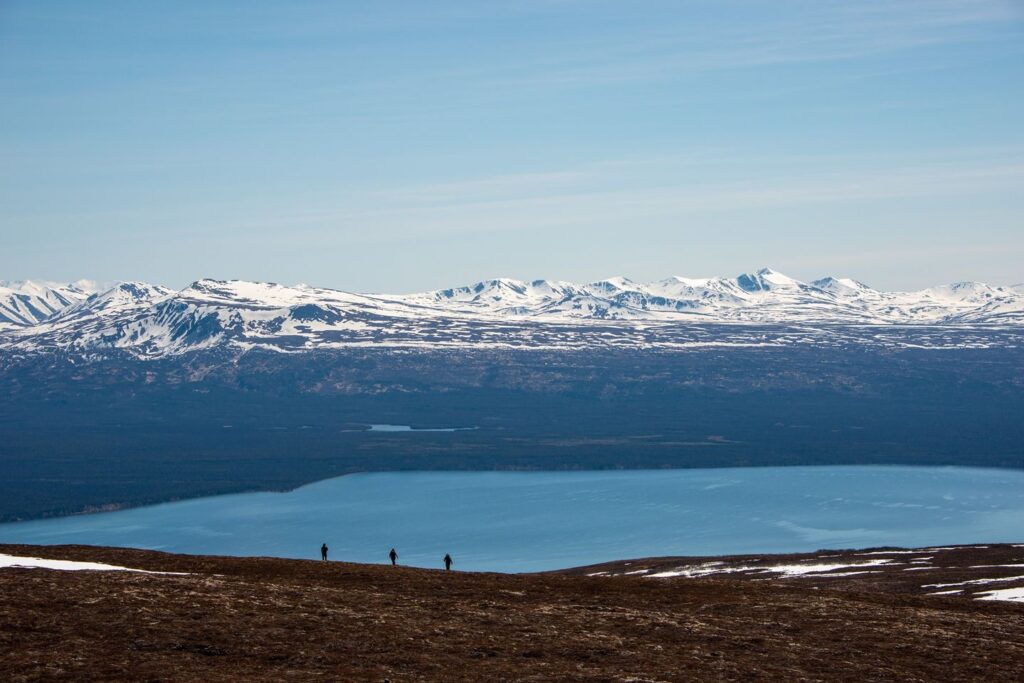
This moderately strenuous hike climbs 800 feet (244 m) over 1.5 miles (2.4 km) to an overlook above Brooks Camp. You’ll be treated to incredible views of Naknek Lake, Brooks River, and Lake Brooks.
The trailhead is located in the Brooks Camp Campground.
Hikers can continue beyond the overlook to reach the summit of Dumpling Mountain (2440 ft/744 m), another 2.5 mi (4 km) beyond the overlook.
FOR YOUR SAFETY: Before you hike this trail, familiarize yourself with cow parsnip and avoid it. Touching this plant could result in severe itching, blisters, and rashes.

5. Fish for Salmon Like the Brown Bears
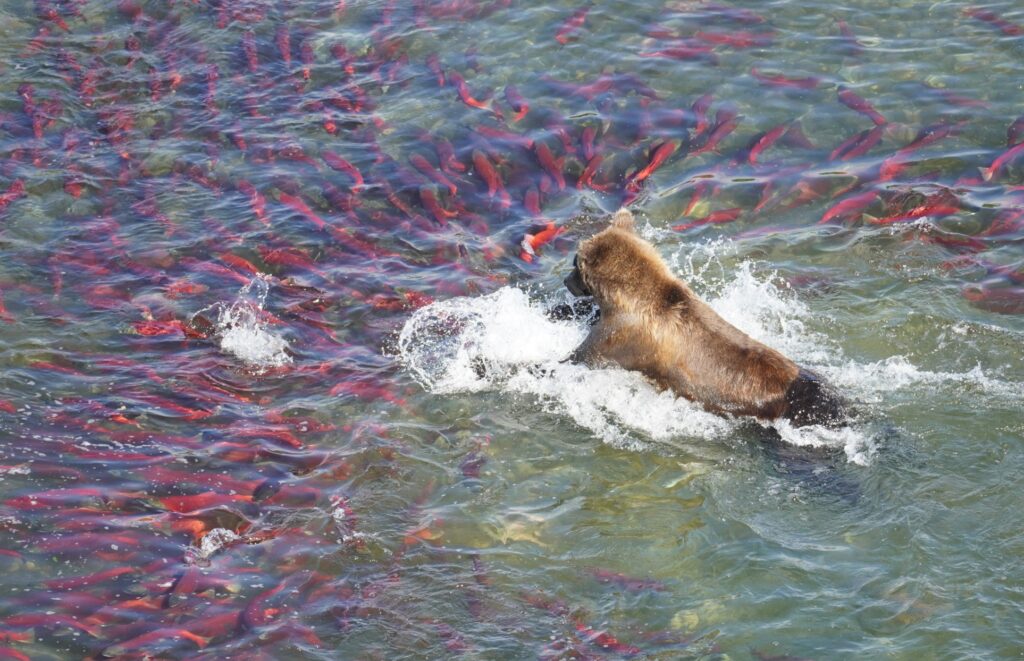
Did you know that about 70% of the world’s sockeye salmon comes from this area of Alaska? Katmai National Park is truly a world-class fishing destination.
Anglers can aim for rainbow trout, arctic char, lake trout, dolly varden, and arctic grayling in addition to five species of salmon. These are all found within the lakes and rivers of Katmai National Park.
You’ll need an Alaska Fishing License to fish here. If you don’t have one before you visit, you can buy one at the Katmai Trading Post. Check out the expeditions led by the Brooks Lodge if you want a guided experience.
6. Paddle on Naknek Lake
You can rent canoes and kayaks at the Katmai Trading Post in Brooks Camp.
There’s a string of lakes and rivers known as the Savoniski Loop that’s fairly popular. This is an 80-mile trip that takes several days, but you can do a short portion of it on a day trip.
For short trips around Naknek Lake from Brooks Camp, check out the National Park Service’s Naknek Lake Boating Guide.
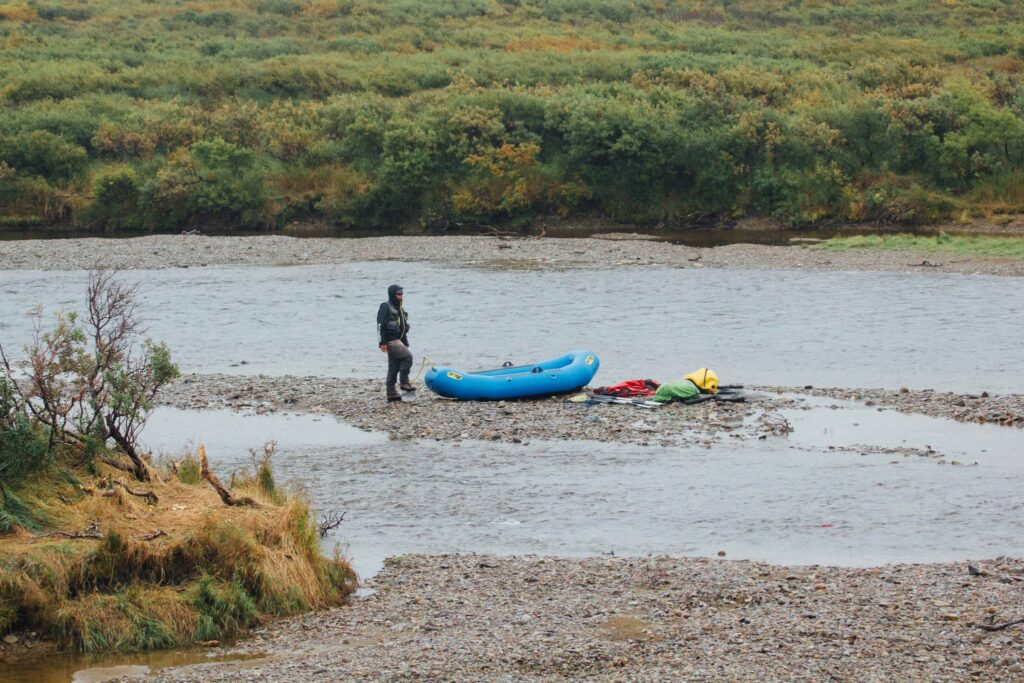
7. Raft the Raging Brooks River
Katmai has exciting whitewater adventures awaiting those who are prepared for the trip. American Creek, Moraine Creek, and Funnel Creek are popular for rafting trips.
8. Attend a Ranger Program
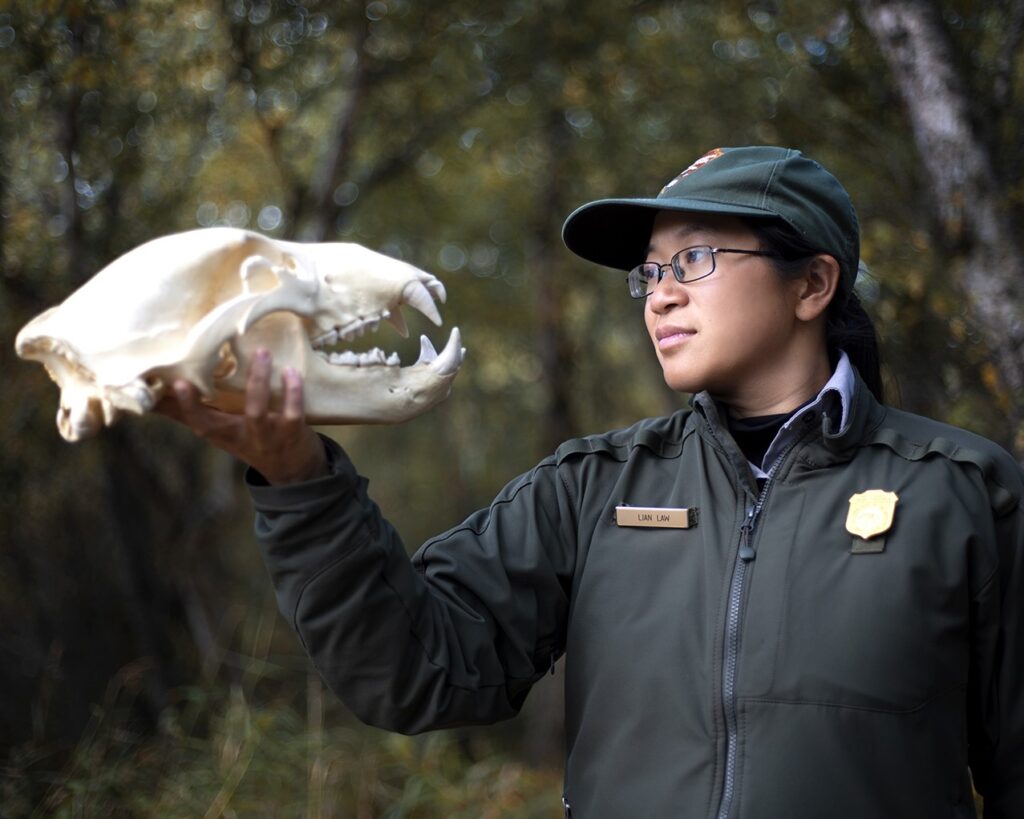
From early June to mid-September, park rangers offer daily programs in Brooks Camp. Programs include a cultural walk to the Sugpiaq Cultural Site, evening programs at the Brooks Camp Auditorium, and the Valley of Ten Thousand Smokes bus tour. Contact Brooks Lodge for bus tickets.
9. Participate in a Photography Tour
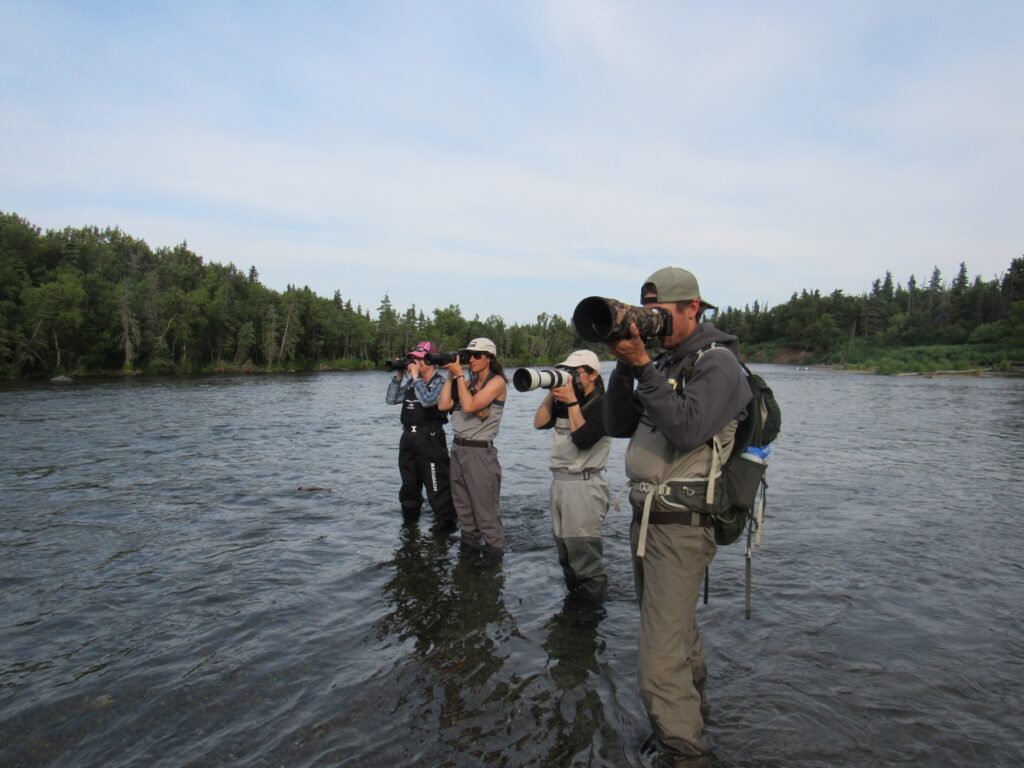
To ensure you get the best photos on this once-in-a-lifetime trip, why not take a photography tour? The Brooks Lodge offers these trips that take you through the Brooks River. Not by it, not around it – through it. You’ll wear waders and boots and follow your guide to some of the best viewing spots.
10. Bear Viewing Tours
If you don’t have reservations for an overnight in Brooks Camp or don’t have the time to spend multiple days in Katmai, several tour companies run day trips. These bear-viewing tours are costly but will save you a lot of time. Often, you’ll also visit more remote parts of the park that visitors seldom see.
A complete list of tour companies authorized to lead trips into Katmai National Park is available here.
11. Visit the Three Visitor Centers
Looking for that coveted passport stamp? Each of the three visitor centers has one. You can also earn your junior ranger badge at any visitor center.
- King Salmon Visitor Center (open year-round)
- Brooks Camp Visitor Center (open May to September)
- Robert F. Griggs Visitor Center (open when rangers lead tours to Valley of Ten Thousand Smokes)
Available stamps include Katmai National Park and Preserve text with three locations: Brooks Camp, King Salmon, and Valley of Ten Thousand Smokes.
12. Go on a Flightseeing Tour
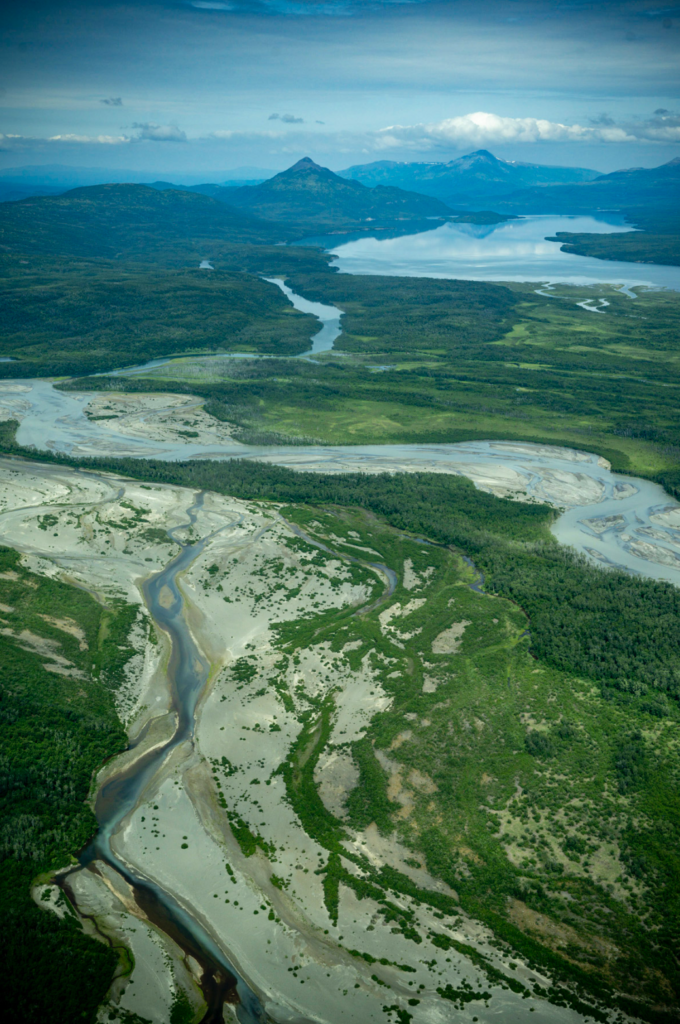
Since Katmai National Park is larger than the entire state of Connecticut, one of the best ways to see it is from the air. This is an excellent way to truly appreciate the park’s vastness. You’ll fly over the Aleutian Range that runs through the park, the Valley of Ten Thousand Smokes, and Brooks Camp.
Tours leave from the communities of King Salmon, Homer, Kodiak, and Anchorage. There are also one-hour flightseeing tours from Brooks Camp offered by Katmai Air.
13. Add on more Alaska National Parks
If you have the time and the means, King Salmon is a great hub for visiting other remote national parks in Alaska. Flights are available for charter to the following parks:
- Lake Clark National Park and Preserve
- Alagnak Wild River
- Aniakchak National Monument and Preserve
Bear Safety in Katmai National Park
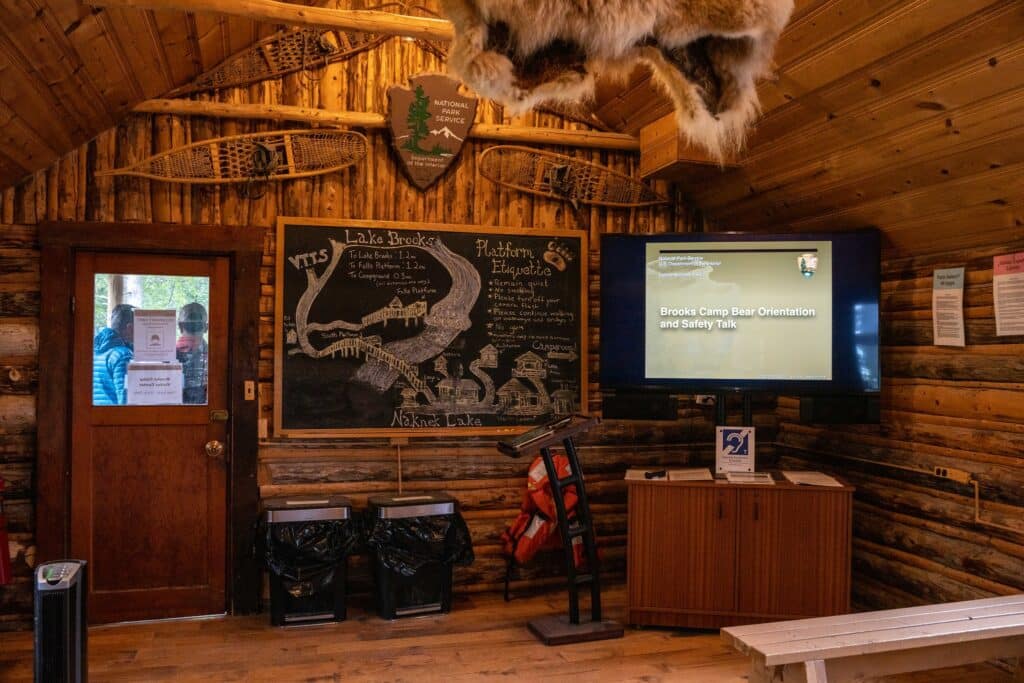
As soon as you arrive in the park, you’re required to attend “Bear School”. This 10-15 minute orientation is led by park rangers in the Brooks Camp Visitor Center. Upon completion, you’ll receive a pin that you should keep with you while you’re visiting Katmai National Park. Rangers could ask to see it at any time.
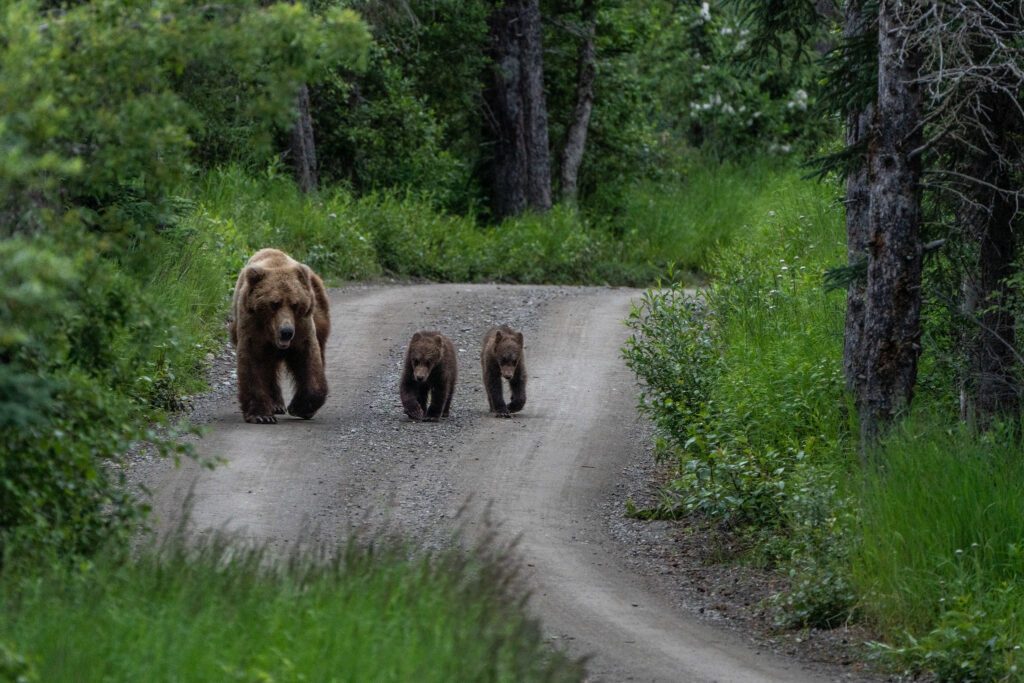
The most important bear safety tip: do not run when you see a bear. This triggers their predator instinct. Bears wander the trails around Brooks Camp alongside the visitors, so you’re likely to encounter them. They’re very used to people at Katmai.
You’re not allowed to carry anything around Brooks Camp with a strong scent that could attract bears. Therefore, you can only carry water. You can buy drinks and snacks at the Katmai Trading Post, but you have to eat at the Lodge or inside the Campground fencing. There are storage cabins across from the Brooks Camp Visitor Center.
When you’re hiking, make plenty of noise so wildlife knows you’re there.
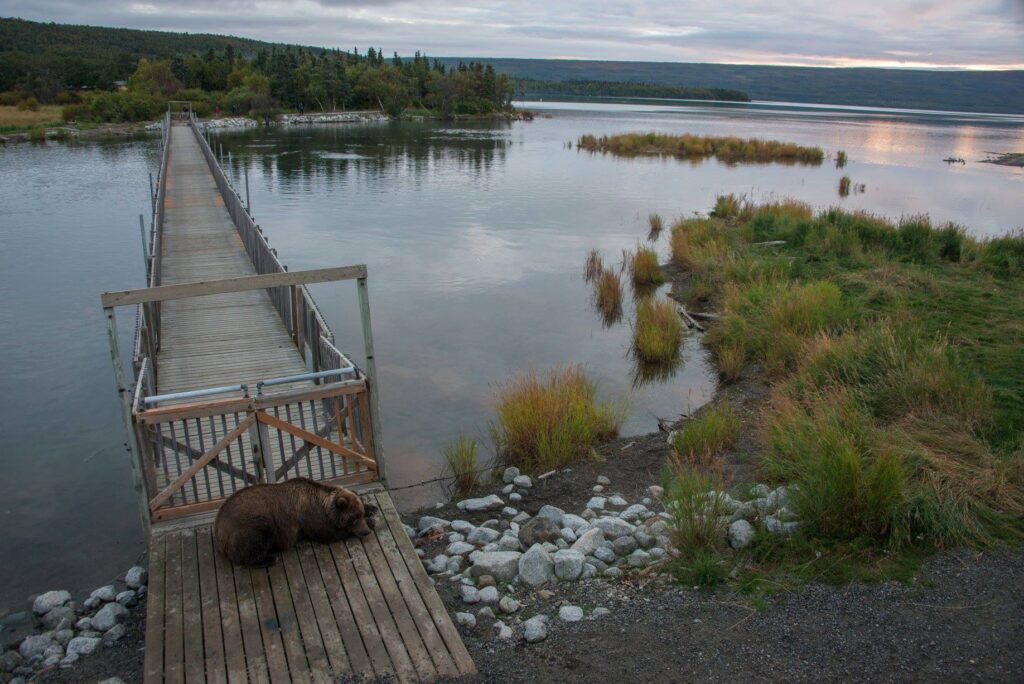
When bears are using the same paths as humans, park rangers will usually close the trail. Once the bears pass, it’ll reopen. For this reason, it’s also wise to plan plenty of time for your transportation back to King Salmon or Anchorage. You should arrive at least 30-45 minutes before your departure so you don’t miss your flight or the ferry.
To keep bears from being overwhelmed at Brooks Falls, the viewing platform is limited to 40 visitors. Rangers may be there from peak hours (about 10 a.m. to 4 p.m.) to start a waiting list. Visitors are limited to 30-minute or one-hour stays on the platform when it’s crowded. Sometimes, visitors can be on the waitlist for two hours before they can be on the platform. This is the fairest way to manage overcrowding and keep bears (and people!) safe. You’ll receive a buzzer so you know when it’s your turn.
How to Get to Katmai National Park
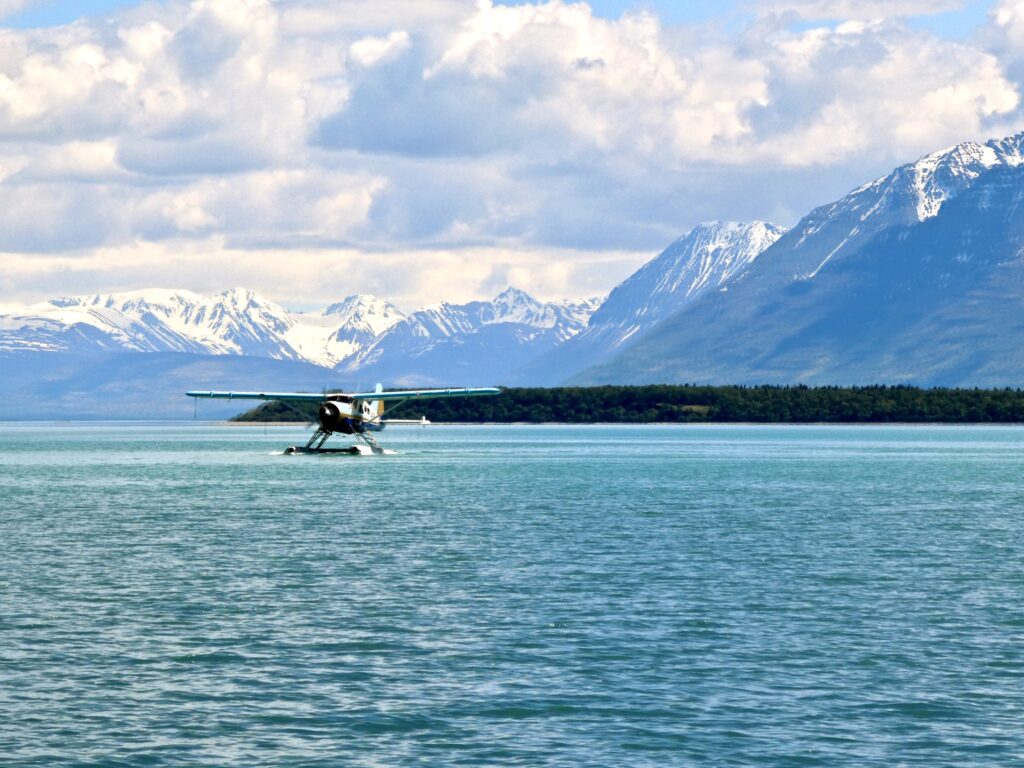
While it’s not easy to get to Katmai, it is an incredible trip unlike any other. The logistics are complicated. We’ll try to make it as simple as possible with this guide on how to get to Katmai.

Where to Stay in Katmai National Park
There are three options for lodging in Katmai National Park: Brooks Lodge, Brooks Camp Campground, and backcountry camping. We cover each of these in detail in our guide on where to stay in Katmai National Park.
When to Visit Katmai National Park
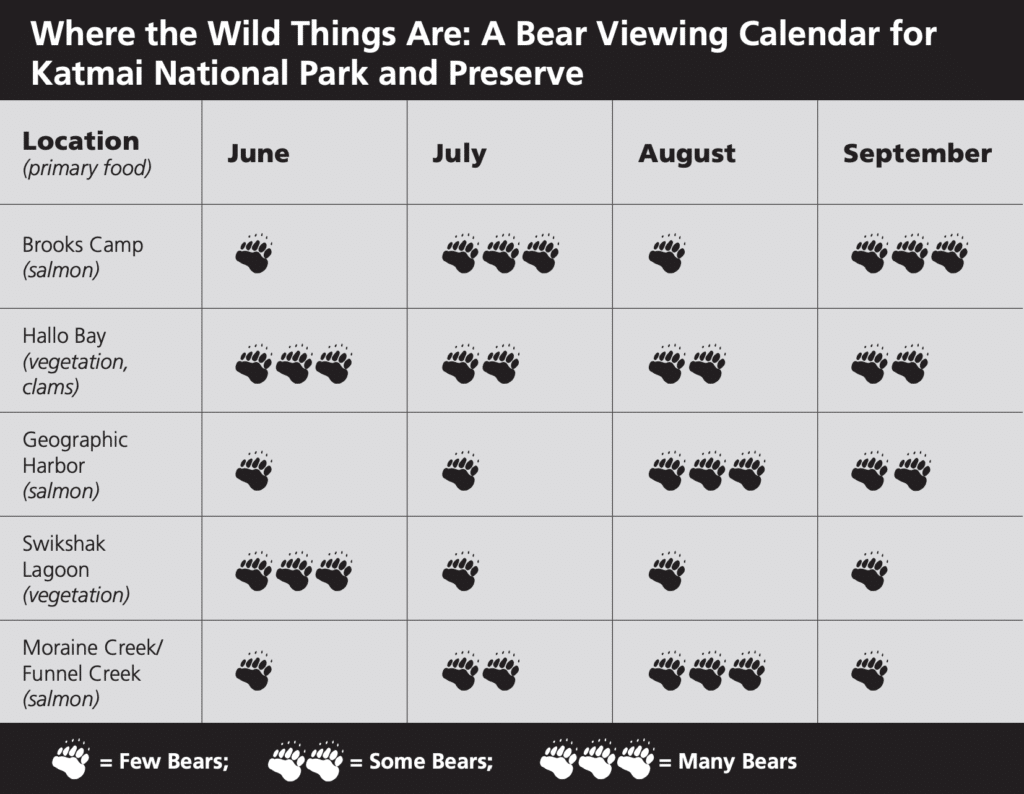
While the park is open year-round, most services and attractions are available from June to mid-September. Generally, the bears are most active at Brooks Falls during the salmon runs from late June to mid-July. Learn more in our article on the best time to visit Katmai National Park.
What to Bring to Katmai National Park
Clothing: Dress in Layers
The weather is unpredictable in Katmai, so you should be prepared with plenty of layers. Start with short and long-sleeved hiking tops and loose-fitting hiking pants to help protect from mosquitoes. Then, layer as needed with long underwear, leggings, a sweatshirt, a puffy jacket, or a rain jacket as needed. You might also want to bring rain pants, depending on the weather and how often you’ll be outdoors. Don’t forget wool socks!
Shoes: Hiking Boots or Sneakers and Camp Shoes
We recommend bringing two pairs of shoes, depending on what you want to do in Katmai. If you are planning to hike at all, particularly with a ranger in the Valley of Ten Thousand Smokes, we recommend good hiking boots. If you are only going on a day trip and hiking the Brooks Falls Trail, sneakers or tennis shoes are fine.
Then, if you’re camping or staying in the Brooks Lodge, you may want comfy shoes to slip into at the end of the day. Lightweight, packable camp shoes are ideal.
Beanie and Gloves
Be prepared for fluctuating temperatures with a nice beanie and a pair of gloves. You may also want a neck buff (bonus protection against mosquitoes).
Day Pack
While walking around Brooks Camp or taking a trip to the Valley of Ten Thousand Smokes, you’ll want a small day pack. Use this to carry your camera, water, wallet, bug spray, hat, and anything else you might need. Remember not to carry food around Brooks Camp.
Camping Equipment
If you’re camping at Brooks Camp Campground, you’ll also want to bring standard camping equipment: a small, lightweight tent; sleeping bag; sleeping pad; pillow; pack; sleeping bag liner; and camp stove with cookware. Check out this great backpacking bundle at REI (tent+sleeping bag+sleeping pad for under $400!).
Bug Spray and Mosquito Netting
The bugs are surprisingly unpleasant at Katmai National Park. The wet, boggy conditions are perfect for them, it turns out. You’ll want bug spray with close to 100% deet, but this probably won’t help. Mosquito netting and bug jackets are your best option.
Binoculars
For the best bear viewing, those without long lenses will benefit from having binoculars. If you don’t want to bring your own, you can also rent a pair from the Katmai Trading Post.
Battery Pack
Since there’s no electricity in the campground, campers will find a battery pack to be very handy. You won’t have service, but you will want to use your phone to take photos and it’s nice to be able to charge it.
Reusable Water Bottle
Plastic bottles aren’t sold in Brooks Camp, so bring a reusable bottle and use the water-filling stations to stay hydrated.
Katmai National Park Map
This Trails Illustrated map of Katmai National Park is tear and water-resistant. This quality is essential in Alaska where the weather is highly unpredictable. This is essential for backpackers. The maps handed out for free at the Visitor Centers are suitable for daytrippers.
Camera Equipment
In addition to your camera, you’ll want a long lens for distance shots as well as a wide-angle lens for bears that are closer. These are also helpful for photographing the beautiful scenery in the park, including the Valley of Ten Thousand Smokes. Lens rain covers are recommended due to the unpredictable weather.
With limited electricity, you’ll also want to bring multiple batteries and your charging cord. Don’t forget extra memory cards and a camera bag to carry it all in.
Some spots in Anchorage will rent camera equipment. If you’re worried about weight, you might consider renting mirrorless cameras and lenses. These will be much lighter. While you can’t use a tripod at the Brooks Falls viewing platform, monopods are allowed.
Cash
Cash is required for coffee at the Lodge and is always handy to have in case you need it.
What NOT to Bring
In Katmai, this is just as important.
Camp Fuel
You can’t fly with fuel, so you won’t be able to bring any with you. Campers usually leave their partially used canisters behind in the fuel cache inside the campground. Check here for spares (usually dated with the date the campers checked out). If there aren’t any, the Katmai Trading Post sells fuel.
Bear Spray
You also cannot fly with bear spray, so you won’t be bringing this with you on your trip. If you are going backpacking, speak to your taxi service about other options, such as storing it on the plane but outside of the passenger cabin.
While hiking, the best bear deterrent is your human voice. Be loud, especially if you’re turning blind corners or in a particularly brushy area with limited visibility.
Pets and Service Animals
Pets and service animals are not allowed in Brooks Camp. With so many brown bears in the area, this is for their safety as well as your own. They are allowed in other areas of the park. Here’s a quote from the National Park Service:
Pets are allowed in the backcountry but must be under physical control at all times. Pets and service animals are not allowed within the Brooks Camp Developed Area (BCDA), defined as a 1.5 mile radius from the Brooks Falls Platform, between May 1 and October 31.
KATMAI NATIONAL PARK
Firearms
Most air taxis will not allow you to fly with firearms. Furthermore, Katmai National Park doesn’t allow anyone to hunt with, discharge, or carry firearms. These activities are only permitted in Katmai National Preserve.
You may be wondering what the difference is, which is a fair question. Sometimes national park boundaries are confusing. Essentially, National Preserves allow for certain subsistence uses that many National Parks do not. This may include hunting or traveling on ATVs. Refer to the Katmai National Park map at the top of the page to see where the boundaries between the Park and Preserve land are.
Tripods and Drones
Tripods are not allowed on the Brooks Falls viewing platform during peak season. They are permitted after August 15. Monopods are fine.
Drones are not permitted in any national parks.
Final Tips for Visiting Katmai National Park
Connectivity
Prepare to have no cell reception within the park or in King Salmon. WiFi access is also limited. Prepare to enter a digital detox during your trip to Katmai.
Check Current Conditions
Before visiting any national park, check the official website for any alerts or updates regarding current conditions. This is crucial for staying informed about closures or any other significant events that could disrupt your plans.
Reserve As Soon As Possible
Make your reservations as early as possible to secure lodging, transportation, and activities. Early booking will ensure availability and save you money, especially for transportation.
Allow Time for Bear Jams
Bear jams are common, especially on the Brooks River bridge between the Visitor Center/Lodge/Campground area and the Brooks Falls Trail. Allow plenty of time to travel between this area and your departure point for flights or ferries. You may experience delays of up to 30 minutes while bears clear the bridge.
Try Multiple Viewing Platforms
Several viewing platforms, including the deck at Brooks Falls, offer excellent vantage points. If one platform is crowded, explore others along the path. The floating bridge near Brooks Camp is another recommended viewing location.
While there are capacity limits on the Brooks Falls platform, other platforms have no restrictions.
For optimal viewing opportunities with fewer crowds, consider arriving early in the day or after 4 p.m., particularly to avoid day-trippers to Brooks Camp.
Expect the Unexpected
Weather delays are common in Katmai, so maintain flexibility in your travel plans. Budget for unexpected expenses, such as an additional night’s stay in King Salmon if you’re flight to Anchorage is canceled.
View the Brooks Falls Webcam
If you can’t wait for your visit, take advantage of the Brooks Falls webcam, which streams bear activity throughout the summer. Additionally, you can check the webcam feed at the Brooks Camp Visitor Center for bear activity before heading to the Falls Platform.
Pin the Best Things to Do in Katmai National Park
Thanks for taking the time to read the article. Now it’s time to plan your trip to Katmai and Alaska! Before you go, consider pinning this post so you can refer to it later and read our other articles on Alaska National Parks.