Badlands National Park is a unique and rugged landscape, with many opportunities for exploring it on foot. Whether you are looking for a short hike or an all-day excursion, the park has something to offer every hiker.
This blog post includes 9 of our favorite hikes in Badlands National Park. Read through to find your next adventure!
If you are looking for an adventure in the great outdoors, this is the place to go! Here are 9 of the best hikes that Badlands has to offer.
This post may contain affiliate links. If you make a purchase, I may earn a small commission at no additional cost to you. For more information, view my privacy policy.
Table of Contents
About Badlands National Park

Badlands National Park is a unique national park. Its deep ravines and starkly eroded buttes give it the appearance of an arid landscape from another planet.
Geologically speaking, however, this was not always so. During the Paleocene epoch, about 60 million years ago, the area was lush with greenery and teeming with animal life. The fossils and footprints found here, as well as the remains of prehistoric mammals such as saber-tooth cats and wooly mammoths, are a reminder that this was once a very different place.
What are Badlands?

The Badlands was formed from 244,000 acres of an old Cretaceous sea bed. That is ancient sediment that has been eroded into fantastically shaped canyons and towering buttes by wind and water over millions of years.
The name itself originates from the fact that, with little vegetation to hold soil in place, rain washes away exposed sediment leaving behind a landscape of bare rock.
Is There Still Wildlife at Badlands National Park?

The park is home to many different types of wildlife, including bison, mule deer, and prairie dogs. I’ve included Badlands National Park on my list of the best national parks for wildlife viewing.
How to Get There

Badlands National Park is located in South Dakota, about 240 miles from Sioux Falls. The closest major cities are Rapid City and Sioux Falls, both of which have airports with daily flights from Denver, Minneapolis, and other cities.
The park itself is located on I-90 and is easy to access. If you are not bringing your own vehicle on a Black Hills road trip, you’ll want to rent a car when you fly in.
Entrance Fee

Badlands National Park is one of the national parks that charge an entrance fee. Each permit is valid for seven days.
The price to enter is $30/vehicle, $25/motorcycle, or $15/person for hikers or cyclists.
To save money as you visit other national parks in South Dakota, or nearby states like Nebraska or Montana, purchase a national parks pass. This $80 pass is valid for 12 months from the month of purchase and will save you hundreds as you travel through the national parks.
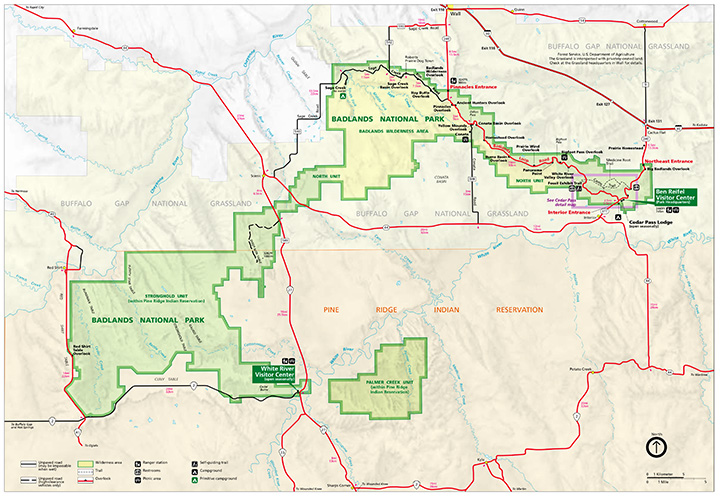
Map of Badlands National Park
Click below to view a full-size map of Badlands National Park.
Where to Stay
There are a number of places to stay in Badlands National Park, including hotels and campgrounds. Here are some affordable recommendations near the park’s main entrances.
In Wall (where you’ll find a famous drug store): Americas Best Value Inn, Best Western, Days Inn, Travelodge
In Interior: Badlands Budget Hostel
In addition to hotels, there are also two campgrounds and a lodge in Badlands National Park.
Tips for Hiking in Badlands National Park

Below are some tips for safely completing our favorite Badlands National Park hikes.
When to Go Hiking in Badlands National Park

The best time to visit is early spring or late fall; April through May and September through October are some of our favorite times for hiking at Badlands National Park.
For a hike that will take you most of the day, plan to start early in the morning. The heat can be extreme during the summer months and there is no shade on any trail or boardwalk. Take advantage of cooler temperatures and catch your favorite trails before they get too crowded!
Bring plenty of water with you if it’s going to be hot out. There are few drinking fountains with potable water inside the park, so make sure you bring enough to last.
Open Hiking

Badlands National Park is one of the few parks that allow visitors to explore by hiking off-trail. This is known as “open hiking” and should only be done by experienced hikers.
Open hiking means you are responsible for your own safety. Stay with your group and don’t separate. Know how to use the map and compass you’ve brought with you. Bring some form of communication, such as an In-Reach device, in case of emergencies.
Safety & Navigation

Bring plenty of water with you, especially if you’re visiting in the summer.
Bring a map and know how to read it. Navigation can be tricky on Badlands hikes since trails can blend into the harsh landscape. Look for cairns marking popular trails if you can’t find your way. When in doubt, turn back before you get lost.
Finally, be wary of wildlife and warn children never to go near or touch any animal they might spot in the park. Give bison and other large, territorial animals plenty of space while hiking in Badlands National Park.
Pets

The park asks that you do not bring pets onto any of its trails and boardwalks, as they can damage sensitive habitats.
Pets (including Emotional Support Animals) are therefore not allowed on any trails, inside any buildings, or in the backcountry. They are permitted in developed frontcountry areas such as roads, parking lots, and campgrounds.
Leave No Trace

Do not litter but instead recycle your water bottles when you’re done with them at one of the receptacles throughout the park.
Stay on trail in areas where maintained trails are present.
Leave everything you find, such as cool looking rocks or beautiful wildflowers, for the next visitors to enjoy.
What to Pack

Be sure to wear good closed-toe shoes or hiking boots. Some trails are fairly easy, but others can be steep or rocky and require more support for your feet.
Pack snacks and food for your hike so you don’t get too hungry while out exploring Badlands National Park. You can plan on a picnic lunch or enjoy a meal at the lodge. Don’t forget a water bottle full of water too!
Make sure you pack clothes that can handle a variety of weather conditions – this is South Dakota after all! Sunlight and wind can also make the Badlands feel cold in the winter. Down jackets are a must for chilly evenings. My favorite brands are Patagonia and North Face. I’d also recommend bringing a waterproof jacket.
Good-quality hiking shirts should be moisture-wicking and quick drying. I would also bring short and long sleeve options for layering. Like your tops, I would make sure your hiking bottoms are moisture-wicking and quick-drying as well. These can be pants or shorts.
The sun will reflect off of the sedimentary rock in this park making it difficult to avoid getting a sunburn. Wear sunscreen (at least SPF 30) and bring sunglasses or an umbrella if necessary. A wide-brimmed hat would also come in handy.
Also, for hikers, plan to bring a day pack. This will help you carry snacks, water, and other necessities. My favorite backpacks are from Deuter, Osprey, and Gregory.
Hikers will also want a map since there is no cell reception in the park. This guide will also help you plan out your hikes.
Don’t forget a camera so you can capture all the beautiful scenery!

Badlands National Park Phone Case
Badlands National Park Map

Badlands National Park Pennant

Fodor’s Guide to the 63 National Parks

Women’s National Parks Checklist T-Shirt

Women’s National Parks Checklist T-Shirt

Map of National Parks T-Shirt

Badlands National Park Sticker

Badlands National Park Pin

Badlands National Park Patch

63 National Parks Water Bottle

Badlands National Park Sticker

Badlands National Park Cross Stitch Kit
Best Hikes in Badlands National Park

By exploring these Badlands hikes, you’ll get to see the park’s highlights. From prairies to geologic wonders, this park has it all. On foot is the best way to see it.
The best thing about hiking in Badlands National Park is that most trails are relatively short and easy. Yet, they still provide exhilarating views and memorable experiences.
Here is the Parks Expert’s compilation of the best Badlands hikes in order from easiest to most strenuous.
- Fossil Exhibit Trail
- Cliff Shelf Nature Trail
- Window Trail
- Door Trail
- Notch Trail
- Castle Trail
- Medicine Root Trail
- Saddle Pass Trail
- Deer Haven Trailhead
Fossil Exhibit Trail

Difficulty: Easy
Distance: 0.25 miles (roundtrip)
Elevation Change: None
Estimated Duration: 15 minutes
The Fossil Exhibit Trail is a short hike that takes hikers to an area where they can see some of the park’s most interesting fossils. You’ll get to learn about this site and its history while walking alongside cliff walls and grassy valleys.
This is one of the easiest hikes in Badlands National Park. Boardwalks lead you to fossil replicas and exhibits. The trail is also fully accessible. In this short distance, you’ll cover 75 million years of the Earth’s history!
If you visit at the right time of day, there may be a ranger delivering a program! Check the calendar to see when programs are offered.
This trail is one of the best family-friendly hikes in Badlands National Park.
Cliff Shelf Nature Trail
Difficulty: Easy
Distance: 0.5 miles (roundtrip)
Elevation Change: 200 feet
Estimated Duration: 30 minutes
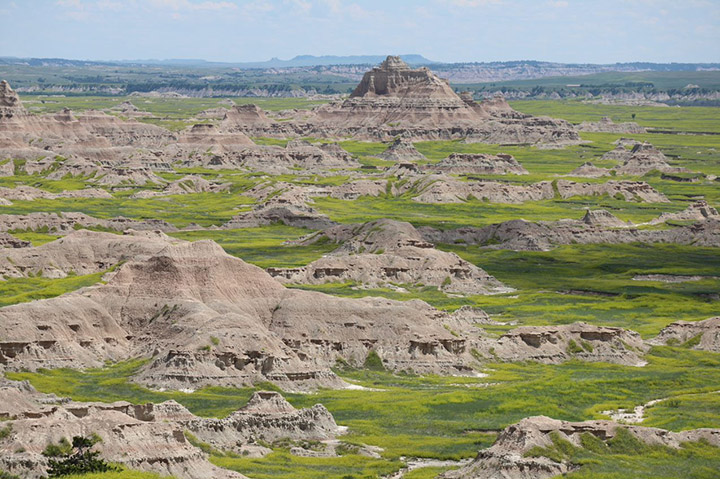
Cliff Shelf Nature Trail is one of the best family-friendly hikes in Badlands National Park. This easy 0.75-mile trail has a lot to offer and takes roughly an hour, making it great for families with kids who want to go on a hike together without too much effort or time commitment.
From the beginning, you will get to explore the park’s rock formations by following boardwalks that take you past different types of grassland habitats and a juniper forest. Occasionally, there’s a small pond along the path (depending on precipitation levels)
Unlike other trails in Badlands National Park, Cliff Shelf offers some shade thanks to the juniper trees.
This trail starts near the Ben Reifel Visitor Center. Other than about 200 feet of stairs, this trail traverses several level boardwalks.
Window Trail

Difficulty: Easy
Distance: 0.25 miles (roundtrip)
Elevation Change: None
Estimated Duration: 15 minutes
The Window Trail is a short hike with excellent views of the multiple layers of rocks in the Badlands. You’ll see how long the Badlands Wall extends from this vista point.
The Window, another opening in rock formations that looks out onto rolling grassland hillsides, is the trail’s main attraction. This is definitely one of the best hikes in Badlands National Park.
This is a great hike for visitors with mobility issues or families with strollers. It’s one of the easiest hikes with the best views of the Badlands.
If you’re hoping to view an epic sunset, the Window Trail is a great option.
Door Trail

Difficulty: Easy
Distance: 0.75 miles (roundtrip)
Elevation Change: None
Estimated Duration: 30 minutes
The Door Trail takes you to one of the Badlands’ most famous landmarks, a break in the Badlands Wall rock formation known as “The Door.” This area provides a panoramic view of the Badlands.
The accessible trail is only 0.25 miles and can be completed in under an hour. Since it’s short but jam-packed with views, it’s a great option for anyone with limited time in the park.
You’ll start by following the Calcite Springs boardwalk where you will see many examples of water-covered grasslands, a habitat unique to the Badlands.
From there you’ll head down into a valley and across another boardwalk that will take you right up to The Door. There is no need for climbing gear or special skills.
This is one of the most popular trails in Badlands National Park. Begin your hike early if you’d like to try and avoid the crowds.
If you’re up for Open Hiking, you can continue beyond the maintained Door Trail at your own risk. Yellow posts mark the primitive trail.
Notch Trail

Difficulty: Easy to moderate
Distance: 1.5 miles (roundtrip)
Elevation Change: 180 feet
Estimated Duration: 60 minutes
Easily the most popular Badlands hike, the Notch Trail leads you up a log ladder to a spectacular view of the White River Valley. You’ll ascend through three different rock layers, ending in an opening called “The Notch.”
This Badlands trail is only 1.5 miles long and can be completed in an hour. It’s a fantastic option if you’re looking for something with amazing views that’s not too strenuous.
This trail includes steep drop-offs and hiking along a ledge. It’s not the best option for hikers with a fear of heights. It can also be difficult for people with mobility issues due to its 50-foot long wooden ladder.
Do not attempt this trail after rain or snow. Wear sturdy boots as this trail has rough terrain.
Of all the Badlands hikes, the Notch Trail is my personal favorite!
Expert Tip: The Door, Notch, and Window trails all start from the same parking area if you want to tackle all three trails! This is also one of the trailheads for the Castle Trail.
Medicine Root Trail

Difficulty: Easy to moderate
Distance: 4 miles (roundtrip)
Elevation Change: 100 feet
Estimated Duration: 1-2 hours
Medicine Root Trail is one of the best Badlands hikes for seeing wildlife. It also connects with several other trails, including the Castle Trail and Saddle Pass Trail.
What makes Medicine Root unique is that it takes hikers through a lot of different habitats where they can see many different plants and animals. This trail is especially great if you’re hoping to see the mixed-grass prairie.
It’s a great trail for getting deep into the park and exploring some of its lesser-known areas while still seeing amazing views along the way.
Castle Trail

Difficulty: Moderate
Distance: 5 miles (one way)
Elevation Change: 340 feet
Estimated Duration: 2-3 hours
The Castle Trail is considered one of the more difficult hikes in Badlands National Park due to its length. After all, it’s the longest maintained trail in the park.
That said, it’s still not very difficult on a mild day. It’s a mostly level trail but is long with significant exposure on hot days.
Take some time to relax and enjoy views overlooking an ancient sea bed that once covered this area millions of years ago.
Keep your eyes peeled for bighorn sheep and pronghorn on this Badlands hike! You’ll also see prairies and rock pinnacles on this hike.
You could also combine this trail with the Medicine Root Trail to form a loop. The trail begins from the Door/Window/Notch parking area or the Fossil Exhibit Trail parking lot.
Saddle Pass Trail

Difficulty: Moderate to strenuous
Distance: 0.7 miles (roundtrip)
Elevation Change: 300 feet
Estimated Duration: 30 minutes
Saddle Pass Trail is one of the steepest hikes in Badlands National Park despite its short distance.
This trail climbs up the Badlands Wall and leads you to a beautiful view where there are some great opportunities for photography. After admiring the White River Valley view, you could continue your hike on the Castle or Medicine Root trails.
If you’re up for the challenging incline, the vantage point is definitely worth the effort.
Deer Haven Trailhead

Remember that Open Hiking Policy I mentioned before? This is one of the best places for avoiding crowds while hiking in Badlands National Park.
While there is a trailhead and you may see social trails, the trails are not maintained nor marked. Navigation skills and equipment are key to hiking in this area of the Badlands.
You have two options from Deer Haven: a short 6-mile loop or a longer, more extensive 23-mile loop. Both loops start near the Conata Picnic Area.
Before beginning your hike, make sure to complete the backcountry register form at the trailhead.
The trail is named for Deer Haven, a group of trees about 3 miles west of the trailhead. You’ll find several junipers as you walk, making this one of the most unique hikes in Badlands National Park.
Pin The Expert’s Favorite Badlands Hikes

Badlands National Park has a lot of lands to explore, but these are some of the best hikes in Badlands. They will lead you through different areas and environments within this park while still giving hikers plenty of opportunities for amazing views along the way.
What are some of your favorite hikes in Badlands National Park? Leave a note in the comments.