

Article Summary: Visiting Capitol Reef National Park, Best Time to Visit Capitol Reef National Park, Capitol Reef National Park Facts, Map of Capitol Reef National Park
For most traveling in Utah, Capitol Reef is usually the last national park on the list. Honestly, that’s what makes it one of the best.
You’ll find fewer crowds among the beautiful scenery that makes visiting Capitol Reef National Park so special.
This guide includes everything you need to know about visiting Capitol Reef National Park, including the best hikes, where to stay near Capitol Reef, the best time to visit, how to get there, what to pack, maps, and more.
Keep reading to prepare for your visit to Capitol Reef and make it one to remember.
This post may contain affiliate links. If you make a purchase, I may earn a small commission at no additional cost to you. For more information, view my privacy policy.
Table of Contents
Capitol Reef National Park Map

Click the image above to enlarge the Capitol Reef map. An interactive map of the park is available on Capitol Reef’s official website.
Fun Facts About Capitol Reef National Park
- Capitol Reef National Park preserves the Waterpocket Fold, the largest monocline in North America, a 65 million-year-old warp in the Earth’s crust.
- Due to this warp, weathering, and erosion over millions of years, the park is filled with sandstone cliffs, white domes, and layers upon layers of rocks and fossils.
- Additionally, the Fremont River has created canyons in the park by cutting through its beautiful ruby walls.
- Human history is also particularly interesting. Both Native Americans and Mormons have traveled through and lived here. American Indians grew crops here, including squash and corn, until a prolonged drought forced them to move on. Following the Civil War, Mormon settlers began missions in this remote country. Many buildings from this time period remain in the park thanks to restoration efforts by the National Park Service.

Why is Capitol Reef a National Park?
According to Capitol Reef’s foundation document, Capitol Reef National Park was established:
“to preserve striking geologic landscapes within the Colorado Plateau, including the Waterpocket Fold, Cathedral Valley, and their associated ecosystems, as well as magnificent scenery, scientific value, wilderness character, and rich human history.”
When to Visit Capitol Reef National Park

Capitol Reef National Park Weather
You can expect temperatures in Capitol Reef to range about 10 degrees Fahrenheit in either direction from those listed above. In the summer months of June-August, temperatures are closer to these averages.
Visiting Capitol Reef National Park in Winter

Winter is a special time in Capitol Reef. While many of the services are discontinued, this is also the time when you get the entire park to yourself.
Very few people are visiting Capitol Reef National Park in the winter due to the remote location and cooler temperatures. Still, the temperatures are warm compared to what other national parks, such as Zion National Park, see in winter.
Be aware of winter road conditions and speak to park rangers before driving on icy roads.
Visiting Capitol Reef National Park in Summer
One word sums up visiting Capitol Reef National Park in the busy summer season: heat.
Drink plenty of water and be prepared for the sweltering temperatures. Wear loose clothing made of polyester. Bring sunglasses and a hat to protect yourself from the desert UV rays. Lather up with sunscreen.
Visiting Capitol Reef National Park in Spring, or Fall
Fall colors can be beautiful in the orchards at Capitol Reef. Furthermore, temperatures are much milder compared to summer. Be sure to watch for snowmelt and rain, which can cause flash flooding.
The roads in Capitol Reef often cross washes and it’s very important not to park your vehicle at any crossings, particularly in spring.
How to Get to Capitol Reef National Park

The closest airports to Capitol Reef National Park are in Las Vegas and Salt Lake City. I recommend using Skyscanner for purchasing the least expensive tickets and getting the best deals. From there, you can rent a car or join a tour.
Unlike other national parks in Utah, notably Zion National Park and Bryce Canyon National Park, Capitol Reef does not have a shuttle system. In order to make your way around the park, you’ll need to rent a vehicle or hire a tour guide.
I highly suggest taking Utah’s Highway 12 to reach or depart from Capitol Reef. It’s without a doubt one of the most scenic roads in the United States, and all three times I’ve driven it (once in 2014 on a cross-country road trip, once in 2019, and once in 2021), I’ve been in absolute awe. It begins/ends near Capitol Reef and continues through the Dixie National Forest.
Use Highway 24 to get to Capitol Reef’s visitor center and Scenic Drive.
If you have a high-clearance vehicle, you’ll be able to access more of the park. There are many unpaved roads in Capitol Reef that may be washed out and require a higher vehicle. At times, these roads may be deemed impassable by the National Park Service. Be sure to ask a park ranger about conditions before traveling on them.
How Much Does Visiting Capitol Reef National Park Cost?

An individual ticket to Capitol Reef National Park costs $10. Furthermore, one vehicle and each of its occupants is $20. Visitors entering via motorcycle must pay $15 per bike. For more information on fees associated with Capitol Reef, visit the official website.

America the Beautiful Passes
If you’re visiting other national parks in the area, the smartest thing to do is purchase an America the Beautiful Pass. Annual passes cost $80 and will admit everyone in the vehicle at most national parks around the country.
If you’re currently serving in the United States military, have volunteered for a national park, are in fourth grade, or have a permanent disability, you may be eligible for one of the free passes issued by the National Park Service.
Lastly, there is an annual pass for seniors 62 and older for $20. Seniors are also able to purchase a lifetime pass for $80.
Read More About the National Parks in Utah
How Much Time Should I Spend Visiting Capitol Reef National Park?

One Day in Capitol Reef National Park
If you only have one day in Capitol Reef, I highly suggest doing some hiking. Again, make sure to drink water.
Some of the best trails are Sunset Point, Grand Wash, Hickman Bridge, and Cassidy Arch. I’d also recommend visiting the Orchard and old homestead if they’re open while you are visiting.
For more information about hiking trails in Capitol Reef, as well as other things to do in the park, we invite you to keep reading.
Multiple Days in Capitol Reef National Park
Backpacking is one of the best ways to see Capitol Reef. It’s also a great way to access and see parts of the park that most visitors never see.
There are a few backcountry hiking routes in Cathedral District and Waterpocket District.
Furthermore, a plethora of canyons await exploration, including a few slot canyons if you have the necessary equipment.
I’ll say it once more time, bring water with you if you plan to spend multiple days in Capitol Reef.
Places to Stay Near Capitol Reef National Park
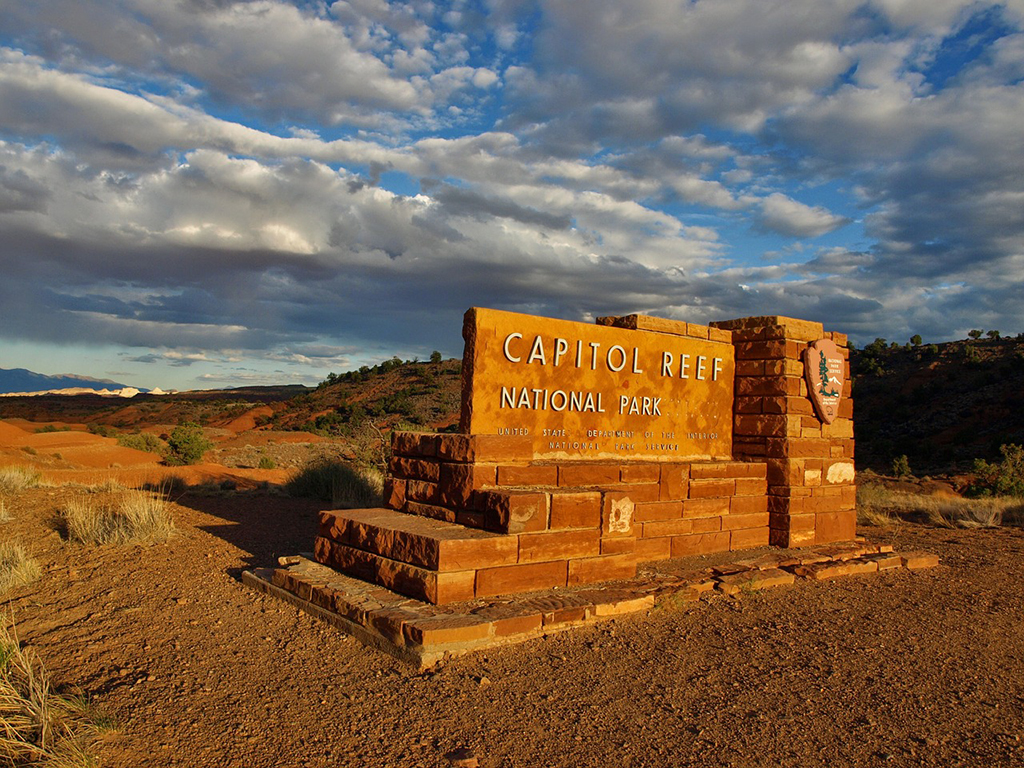
There are many lodges and hotels near Capitol Reef National Park in the nearest town, Torrey. Those highest recommended are the Red Sands Hotel, Capitol Reef Resort, Noor Hotel, Broken Spur, and Rim Rock Inn.
Capitol Reef National Park Camping
Between March 1 and October 31, it’s possible to reserve sites at the Fruita Campground. For the remainder of the year, sites are first-come, first-served. The nightly fee is $20 per site. This is the only developed campground inside of Capitol Reef.
There are other developed campgrounds in the Torrey, Utah area, but none of them are within park boundaries. Options include National Forest campgrounds (Singletree, Pleasant Creek, Oak Creek) and the Sunglow Campground near Bicknell.
For primitive camping, Capitol Reef offers the Cedar Mesa and Cathedral Valley Campgrounds. Both require traversing an unpaved road limited to high-clearance vehicles.
Capitol Reef National Park Hikes
A complete list of all the hiking trails in Capitol Reef National Park is located on the official website. Below are some of my favorites and what to expect to see on these trails while hiking in Capitol Reef. For more details, read our article on the 20 Best Hikes in Capitol Reef National Park.
Sunset Point
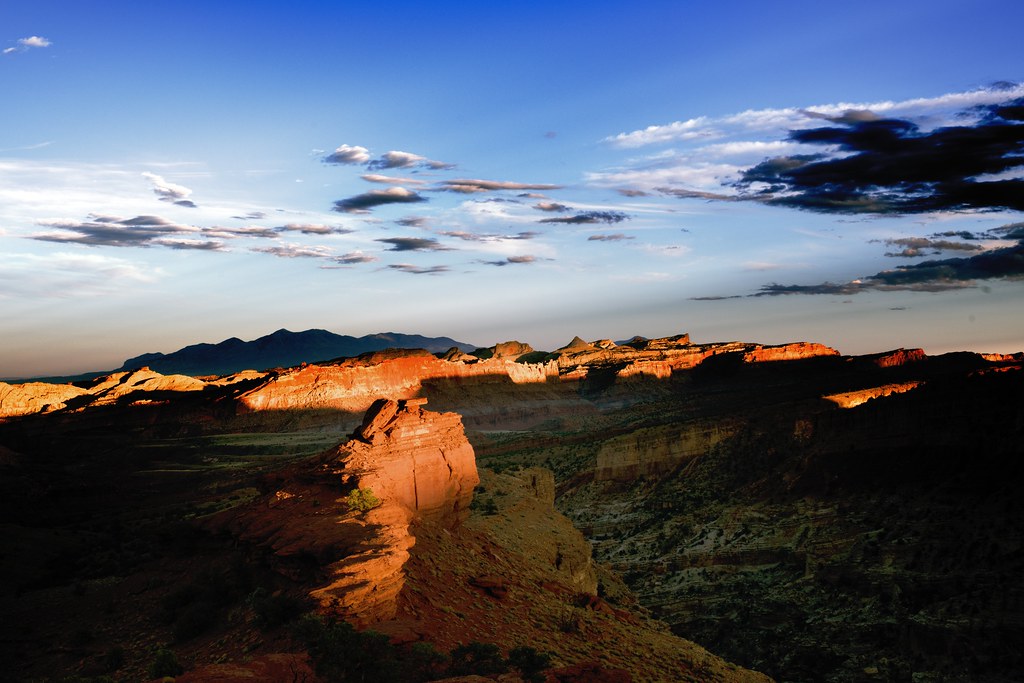
Sunset Point is an easy hike with spectacular views. Parking is available at the Goosenecks Overlook along Utah Highway 24 west of the visitor center. It’s the perfect location for a glorious sunset viewing or panoramic photograph.
Difficulty: Easy
Start: Goosenecks Overlook on Highway 24
Distance (roundtrip): .4 miles / .6 km
Elevation Change: < 50 feet / < 15 m
Grand Wash

The Grand Wash trail follows the Grand Wash of the Freemont River to Grand Wash Road, one of the park’s unpaved roadways. This is an out-and-back trail. You’ll see a deep canyon with some narrow places along the way.
Difficulty: Easy
Start: Parking area east of the visitor center on Highway 24
Distance (roundtrip): 2.2 miles / 3.6 km
Elevation Change: 200 feet / 61 m
Hickman Bridge

This is one of the most well-known hikes in Capitol Reef, so expect crowds. It leads to a natural bridge formation that is 133 feet tall. Along the way, you’ll also get spectacular canyon views.
Difficulty: Moderate
Start: Parking area with restrooms on Highway 24 east of the visitor center
Distance (roundtrip): .9 miles / 1.4 km
Elevation Change: 400 feet / 122 m
Cassidy Arch

For a more challenging hike to a natural arch, head for Cassidy Arch. You must either drive the Grand Wash Road or hike nearly the entire Grand Wash Trail in order to reach this trailhead. In addition to the arch and canyon views, you’ll also see some slickrock.
Difficulty: Strenuous
Start: From the Grand Wash Road/Grand Wash Trail
Distance (roundtrip): 1.7 miles / 2.8 km
Elevation Change: 670 feet / 204 m
Chimney Rock Loop

Chimney Rock is a prominent formation you’ll see from Highway 24 you can see when visiting Capitol Reef National Park. The loop trail takes you up and around the formation itself.
If you’re looking for a great spot for sunset viewing but want to avoid crowds or you’re up for a more difficult hike, this is the trail for you. You’ll also be rewarded with panoramic views of the famous Waterpocket Fold cliffs.