Article Summary: Great Sand Dunes Itinerary, How to Spend One Day in Great Sand Dunes National Park
If you’re looking for an outdoor adventure in Colorado, Great Sand Dunes National Park is the perfect place to go.
With towering sand dunes, pristine creeks, snow-capped peaks, and beautiful forests, there’s something for everyone in this stunning park. Its landscapes are unlike any other in North America.
I must admit that when I first visited this park, I was skeptical. As a Floridian, I kept asking myself, “what’s so special about sand?”
A lot, it turns out. Great Sand Dunes National Park & Preserve is a place you have to see to truly appreciate.
In this post, we’ll give you a detailed Great Sand Dunes itinerary for spending one day in Great Sand Dunes National Park.
This post may contain affiliate links. If you make a purchase, I may earn a small commission at no additional cost to you. For more information, view my privacy policy.
Table of Contents
Great Sand Dunes National Park Overview

First things first: Great Sand Dunes is one of the most unique places in Colorado, and possibly even the world.
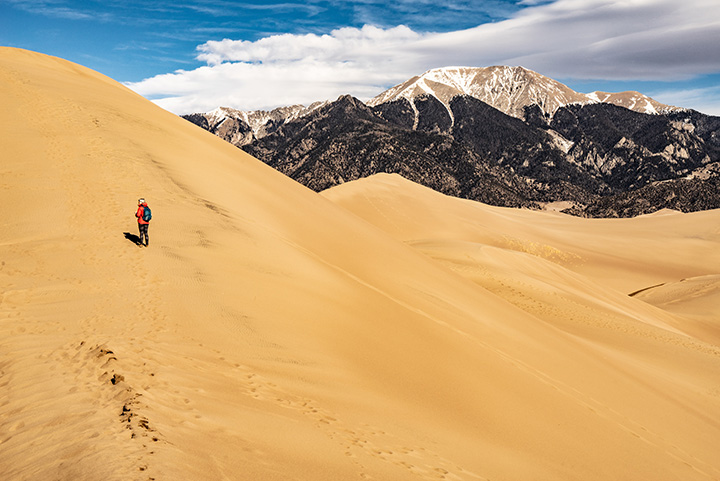
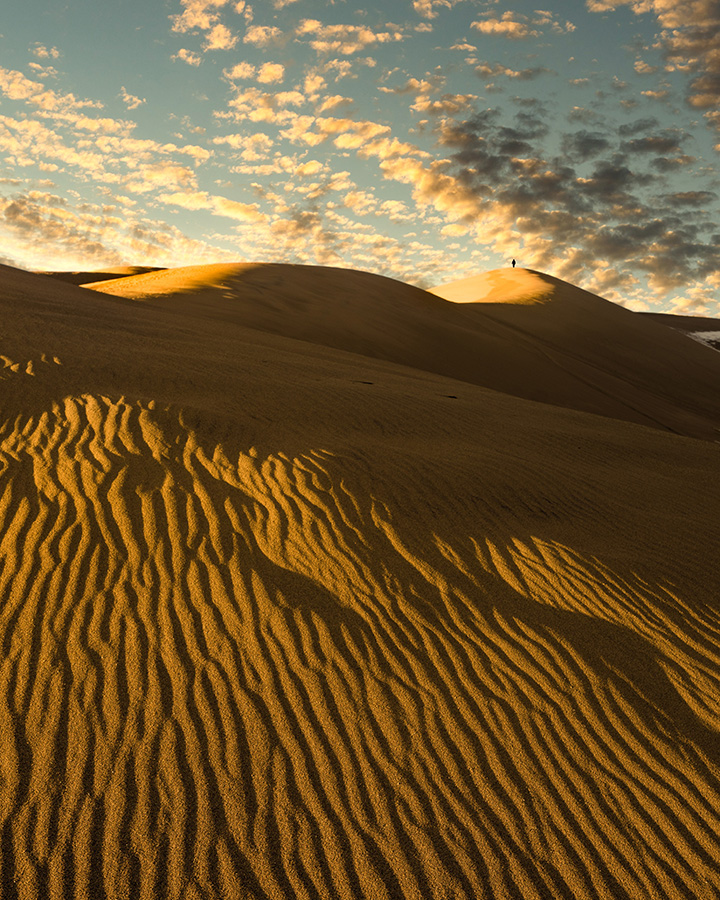
The park is home to the tallest sand dunes in North America, which rise up to 750 feet high.
These massive dunes were formed over thousands of years as the wind blew sand from the nearby San Juan Mountains into a natural hollow at the edge of the Sangre de Cristo Mountains.
Now, the dunes are a playground for hikers, climbers, and anyone who loves to play in the sand.
The diverse park is also home to no fewer than seven distinct life zones, one of the most incredible Great Sand Dunes facts we learned on our trip. These include wetlands, grasslands, salt plains, dunes, subalpine forests, and alpine tundra.
How Many Days Should I Spend in Great Sand Dunes National Park?
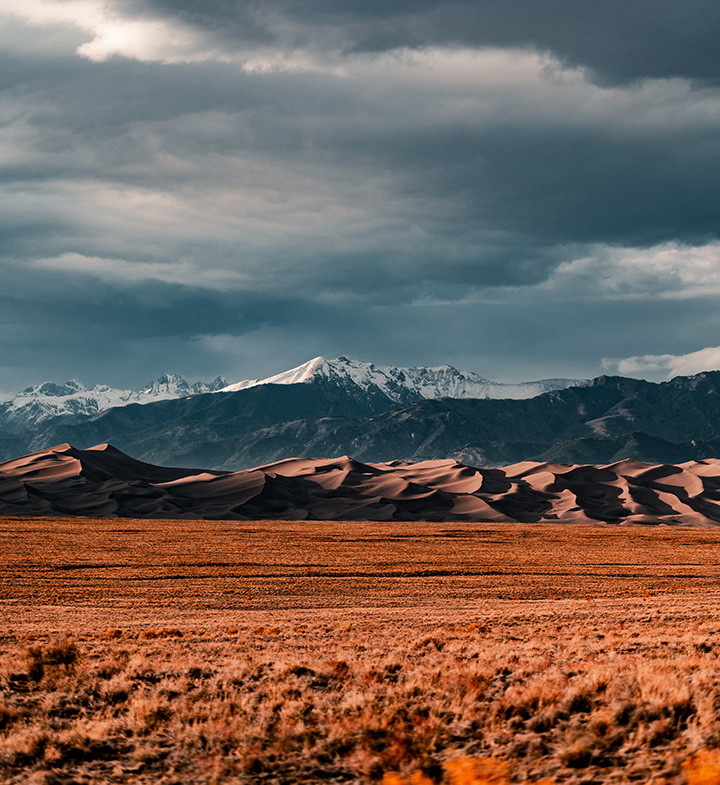
The park is immense, but its recreational opportunities are confined to a relatively small area. One day in Great Sand Dunes National Park is all you need to experience the highlights.
Even someone who only wants to spend a few hours here will be able to marvel at the dunes and scenery with minimal effort.
Hiking into the dunefield, sledding down the dunes, and splashing in the creek will be enough to truly enjoy the park.
If you have more time, you’ll get to explore less crowded areas of the park on mountainous trails and backcountry trips.
Best Time to Visit Great Sand Dunes National Park
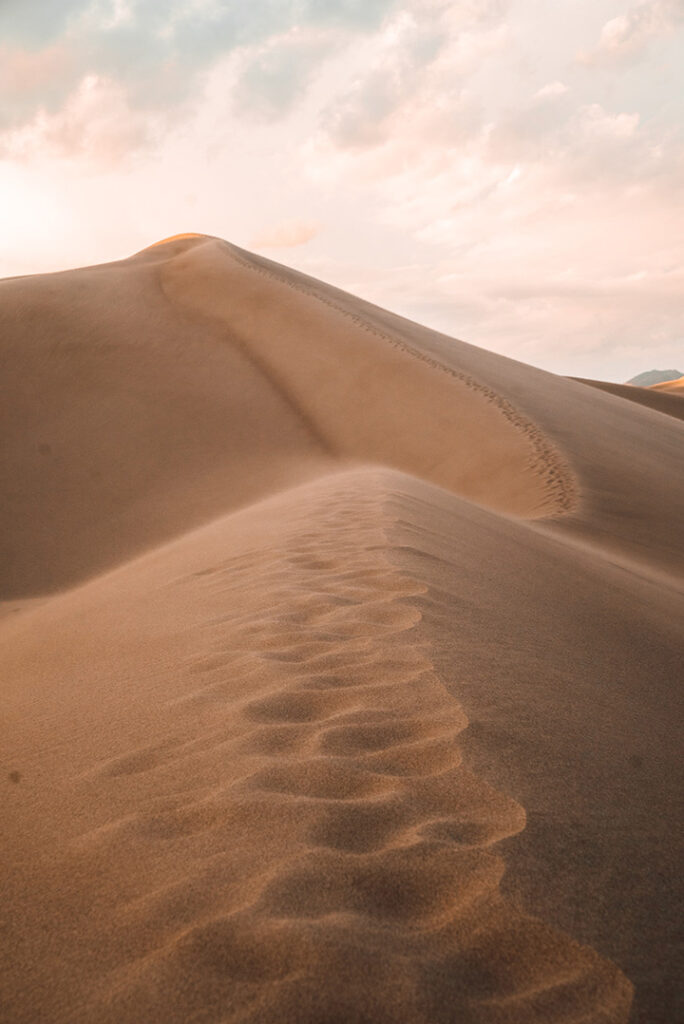
The best time to visit Great Sand Dunes National Park is in the spring and summer.
From late May to early September, the temperatures are warm and comfortable during the day, making it ideal for hiking and other outdoor activities.
May and June also see higher water levels in Medano Creek. Typically, the creek is dry by the end of June.
However, this is also the park’s busiest season. If you don’t like crowds, we recommend visiting in the shoulder seasons of spring and fall.
You’ll still be able to enjoy the beautiful weather, but the crowds will be thinner. Just keep in mind that some trails and facilities may be closed in the off-season.
We once visited the park in January and found hiking the dunes to be much easier when they’re frozen! Temperatures were frigid, however, so be prepared if you’re visiting that time of year.
Keep in mind that if you visit in winter, sandboarding and sand sledding may not be viable options.
How to Get to Great Sand Dunes National Park
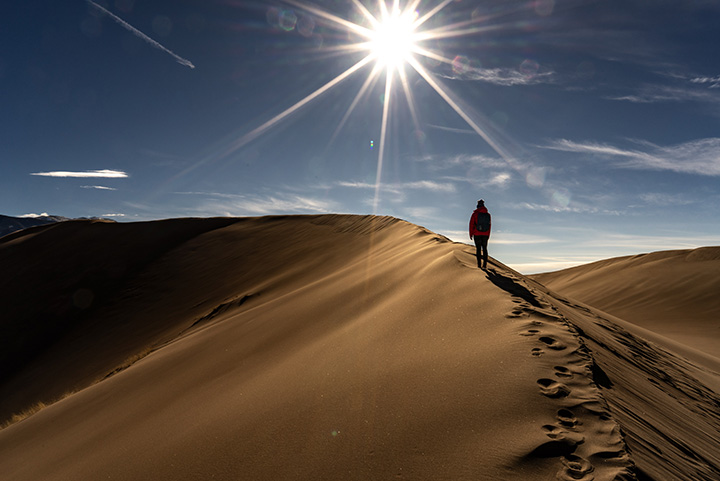
Great Sand Dunes National Park is located in southern Colorado, about halfway between Denver, Colorado and Santa Fe, New Mexico.
The largest nearby town is Alamosa, which is about a 40-minute drive from the park.
There are several ways to get to Great Sand Dunes National Park, depending on where you’re coming from.
If you’re driving from Denver, take I-25 south to Walsenburg. From there, take US-160 west all the way to the park. The drive takes about four hours.
If you’re coming from Santa Fe, take I-25 north toward Colorado Springs. From there, take US-24 west to US-285 south. The drive takes about three to three and a half hours.

There are also several flights into Alamosa Airport (ALS), which is the closest airport to Great Sand Dunes National Park. American Airlines, Boutique Air, and United Express all offer daily service to Alamosa from Denver and Dallas/Fort Worth.
No matter where you begin your trip, you’ll need to rent a car in order to reach the park. For this reason, flying into larger airports like Denver (DEN), Colorado Springs (COS), Santa Fe (SAF), or Albuquerque (ABQ) may be preferred.
To help you plan, here are driving distances and times from nearby towns/cities and national parks.
- Alamosa, CO: 34 miles, 40 minutes
- Colorado Springs, CO: 171 miles, 3 hours
- Santa Fe, NM: 174 miles, 3 hours
- Durango, CO: 184 miles, 3.5 hours
- Black Canyon of the Gunnison National Park: 218 miles, 4 hours
- Albuquerque, NM: 237 miles, 4 hours
- Denver, CO: 238 miles, 4 hours
- Mesa Verde National Park: 238 miles, 4.75 hours [review Mesa Verde tours!]
- Rocky Mountain National Park: 303 miles, 5.5 hours [plan your Rocky Mountain trip!]
Is Great Sand Dunes National Park Dog Friendly?

Yes, Great Sand Dunes National Park is one of the most dog-friendly national parks we’ve ever been to!
Dogs are allowed in just about all public areas of the park. They can accompany you to the first dune ridge, along Medano Pass Road, inside the Piñon Flats Campground, on the Dunes Overlook Trail, and in Medano Creek between the visitor center and the dunes.
If you’re planning to bring your dog, we recommend bringing plenty of water and stopping frequently to rest and cool off.
The sand can burn their paws, so use extra caution. It’s best to hike early in the morning or later in the evening when it’s cooler.
More Things to Know Before You Go

The elevation at the park is over 8,000 feet. Prepare yourself if you’re coming from areas significantly lower in elevation. Even if you’re acclimated, take your time and stay hydrated.
Keep in mind that the sands in this area can get extremely hot (in the neighborhood of 150°F/65°C) at the peak of summertime. Generally, it’s best to avoid the dunes between 12-4 p.m. if you’re here in the summer.
Close-toed shoes are a much better idea than flip-flops.
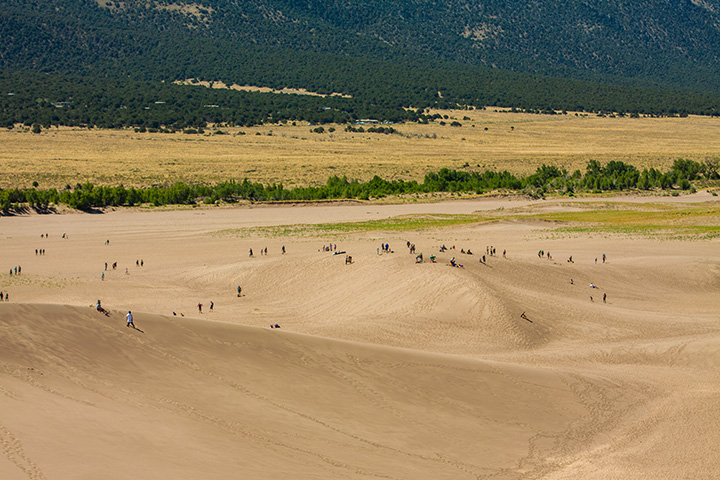
Sandboarding, sledding, and 4×4 driving are popular activities in the park. Therefore, visitors are strongly encouraged to make reservations for any rental equipment. Book at least one month in advance for a vehicle and at least one week in advance for boards or sleds.
No matter how you plan your Great Sand Dunes itinerary, expect to leave the park carrying some sand with you. There are showers in the parking area you can use to wash off, but don’t be surprised if you still find sand a few days later!
Medano Creek depends on snowmelt to run. In dry winters, don’t be surprised if there is no creek. On the other hand, in a particularly snowy year, the Creek will surge and you might even see waves!
Where to Stay Near Great Sand Dunes National Park
Camping in Great Sand Dunes National Park is an excellent option. There is one designated campground along with a variety of options for backcountry camping.
There is no lodging in the park, but there are plenty of options nearby.
We recommend staying in Alamosa for the most amenities, such as restaurants. Options there include chains like Holiday Inn Express, Hampton Inn, Super 8, and Comfort Inn. Additionally, there are some local establishments like Valley Motel, Sunset Inn, and Dunes Inn.
Of course, you can also stay closer to the park. Options include the Great Sand Dunes Lodge, only 4 miles from the entrance.
For something unique, check out the Best Western Movie Manor in Monte Vista. This hotel has an on-site drive-in movie theater! Note that Monte Vista is about an hour southwest of the park.
Hours of Operation
Great Sand Dunes National Park is open 24 hours a day, 365 days a year.
The visitor center is open daily with the exception of Thanksgiving, Christmas, and New Year’s Day.
Entrance Fees
There is a fee to enter Great Sand Dunes National Park. The fee is $25 per vehicle or $20 per motorcycle.
You do not need timed-entry tickers or reservations to visit Great Sand Dunes National Park.
In order to save money, I would recommend purchasing a national parks pass. These cost $80 and are valid for a full calendar year (from the date of purchase) at all public lands in the United States. After you visit 3 national parks, it’ll have paid for itself. It also makes a great gift for national park enthusiasts! Learn more about park entry fees.
There are also several passes available for seniors and disabled visitors.
Packing List

Finally, and we can’t stress this enough, pack wisely for this trip. By respecting this environment, you will in turn respect yourself. Keep yourself safe and comfortable to enjoy this national park to its fullest!
- Hiking boots: Shoes that are good for hiking and have ankle support.
- Sunscreen: The UV rays in national parks can be intense, even on cloudy days.
- Bug spray: There are a lot of bugs in the park, especially near water sources.
- Yaktrax: Helpful for snowy conditions.
- Rain gear: The weather can change quickly, no matter the time of year or location. Bring a raincoat and/or umbrella just in case!
- Layers: Temperatures can fluctuate a lot, so it’s best to dress in layers.
- Snacks: There are limited food options inside the park, so bring your own snacks!
- Camera: You’ll want to capture the beauty of your national park in photos!
- Water bottle: Stay hydrated while hiking around the park!
- Hat: You’ll need protection from the sun and bugs.
- Binoculars: Bring binoculars if you want to view wildlife in the park.
- First-aid kit: You never know if you might get a cut or scrape while hiking.
- Flashlight: This is helpful for late-night hikes and stargazing!
- Map: Bring a physical map for navigating the park.

Great Sand Dunes National Park Phone Case

Great Sand Dunes National Park Pennant

Fodor’s Guide to the 63 National Parks

Women’s National Parks Checklist T-Shirt

Women’s National Parks Checklist T-Shirt

Map of National Parks T-Shirt
Great Sand Dunes National Park Sticker

63 National Parks Water Bottle

Great Sand Dunes National Park Sticker
How to Spend One Day in Great Sand Dunes National Park

This Great Sand Dunes itinerary is made up of multiple suggestions. You can pick and choose the activities you’d like to do based on how you’d like to spend one day in Great Sand Dunes National Park.
If you pick shorter hikes, you may be able to pack in everything listed below.
Start at the Visitor Center

The first stop on your one-day Great Sand Dunes itinerary should be the Visitor Center.
Here, you can learn about the history of the dunes and pick up a map of the park. Park rangers are also available to answer any questions you have and might be delivering special ranger programs throughout the day.
The visitor center also has vending machines, restrooms, and drinking water in addition to a park store. The 20-minute park film is worth watching if you’d like to learn more about the unique circumstances that led to the creation of the continent’s tallest dunes.
This is also the place to stamp your passport book and pick up junior ranger booklets for the kids (or kids at heart).
Go For a Hike

Then, it’s time to hit the trails. There are several hiking trails in Great Sand Dunes National Park, ranging from easy to difficult.
We strongly recommend hiking as early in the day as you can. This will help you avoid crowds as well as the heat. Remember, dune temperatures often exceed 150 degrees Fahrenheit in the summer!
If you’re looking for a more challenging hike, try walking out on the dunefield. There are no trails, so maps are encouraged as you wander as you please. You can walk as far or as little as you like.

If you’re interested in a strenuous hike, head to the top of High Dune, the second-tallest dune in the park at 699 feet. Star Dune, the tallest dune in North America at 750 feet, is nearby if you want to tackle both.
The views from the top are absolutely incredible, and it’s definitely worth the effort to get there.
The NPS estimates you should allow 2-3 hours for High Dune and up to 5 hours for Star Dune (roundtrip). If you only have one day in Great Sand Dunes, you may want to save Star Dune for another trip since it will take up so much time.
Estimated GPS coordinates for High Dune: 37.74908, -105.532775
Estimated GPS coordinates for Star Dune: 37.7517639, -105.5580583
If you want to hike away from the dunefield, we recommend Mosca Pass Trail or Zapata Falls. Both are a bit of a challenge.

Mosca Pass Trail is 7 miles roundtrip with 1,400 feet of elevation gain. However, the views you’ll earn as you traverse meadows and alpine tundra are well worth it. It’s also a great way to escape the heat.
Zapata Falls is a popular option nearby, though it is technically not in the park. The hike is short, but we wouldn’t call it easy.
First, you’ll need to drive a 3-mile-long gravel road. Then, you’ll walk a steep 1-mile trail to a creek, which you’ll have to ford to reach the falls. It’s a nice way to cool off, but remember that the creek is fed by melted snow and temperatures can be freezing.
Dune Sledding or Sand Boarding

After a couple of hours of hiking, you’re going to need a break. And what better way to relax than by sledding or sandboarding down the dunes?
You can either bring your own sled or board or rent one from one of the companies near the park.
We recommend renting from one of the companies, as they will provide you with a sled or board that is specifically designed for sand. These specialty boards will help you gain additional speed despite the sand’s friction.

Great Sand Dunes Oasis is a popular option on the way to the park. However, unless you’re staying overnight there, you’ll need to return the equipment before they close.
With the exception of vegetated areas, sandboarding, sledding, and skiing are permitted anywhere on the dunefield.
Wade in Medano Creek

After a day of hiking, you’ll probably be ready for a dip in the creek to cool off.
Medano Creek is a popular spot for wading and playing in the water.
The creek flows from the nearby mountains and is usually waist-deep or less, making it perfect for cooling off on a hot day.
Current conditions for Medano Creek can be found here.
Bike or Drive Medano Pass Road

Medano Pass Primitive Road is a 22-mile dirt road that leads from the main park road to the Medano Creek Picnic Area.
The road is open to both cars and bikes, and it’s a great way to see more of the park.
Just be sure to take it slow, as the road can be pretty rough in spots. You’ll cross Medano Creek at least 9 times along the way.
High clearance 4×4 vehicles are required. You can rent 4×4 vehicles near the park if you don’t have your own. Even AWD vehicles or 4x4s with low clearance can get stuck in the soft sand along the road.
It takes about 2-3 hours for the full drive.
Thanks to the diverse life zones, you have the chance to see so much wildlife along the way. Keep your eyes out for beavers, black bears, pelicans, bobcats, deer, and more.
Stargazing
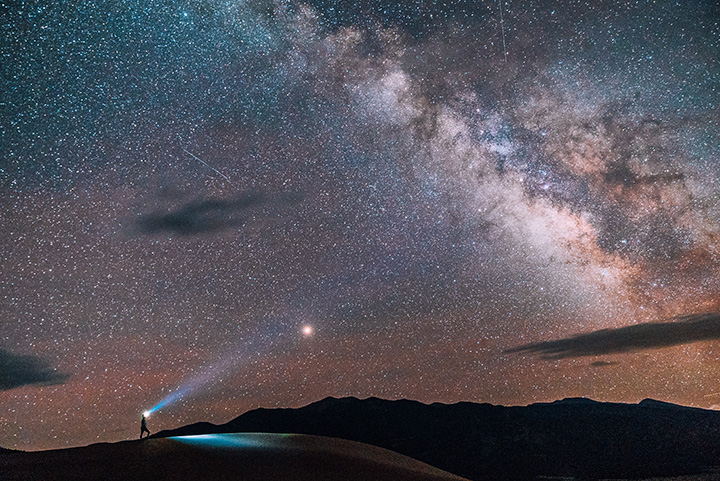
If you have time to camp in Great Sand Dunes, we highly recommend it. There is absolutely no light pollution here and the night skies are nothing short of incredible.
In fact, Great Sand Dunes was named an International Dark Sky Park in 2019!
The park only has one campground, but you can also backcountry camp along Medano Pass Road or in the dunefield.
If you’re not up for camping, you can still enjoy the stars by heading to one of the overlooks. Night sky views are even great from the main parking area.
The views are incredible and it’s a great way to end your day in Great Sand Dunes National Park.
Pin Our One Day in Great Sand Dunes National Park Itinerary
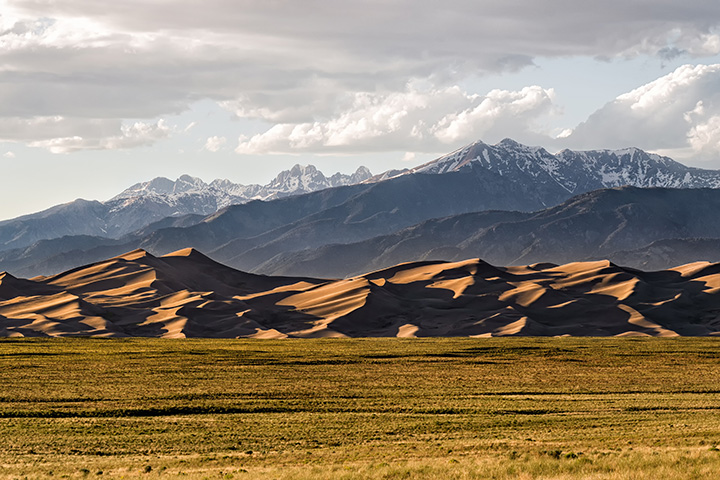
No matter how you choose to spend your day, Great Sand Dunes National Park is sure to impress.
Great Sand Dunes National Park is one of the most unique places on earth, and there’s so much to see and do here. We hope this itinerary has given you some ideas for how to spend your one day in the park.
One day is definitely not enough time to see everything that Great Sand Dunes National Park has to offer. But if you’re short on time, this one-day itinerary will help you make the most of your trip.
Have you been to the park? What was your favorite thing you did? Tell us in the comments!