

Article Summary: Grand Canyon National Park, Grand Canyon Weather, Grand Canyon Park Pass, Parking Grand Canyon, Visiting Grand Canyon National Park
Imagine wandering through a thick forest of pines when all of a sudden you come across a hole in the ground that’s one mile deep.
Whenever I visit the Grand Canyon, this is what I picture; Spanish explorers shocked at the seemingly random canyon they’ve stumbled upon.
Now, visiting Grand Canyon National Park in Arizona is at the top of almost every bucket list.
It’s one of the most visited national parks in America and one of the world’s seven natural wonders. I’ve heard many American friends say they’ve never traveled abroad because they feel they haven’t seen enough of the United States, specifically saying, “I haven’t even been to the Grand Canyon”.
This park and its chasm is a symbol of America as much as the Statue of Liberty or Mount Rushmore. This Grand Canyon visitors guide contains everything you need to know about visiting Grand Canyon National Park, including how much time to allow, where to stay, how much it costs, camping, hiking trails, things to do, and more.
This post may contain affiliate links. If you make a purchase, I may earn a small commission at no additional cost to you. For more information, view my privacy policy.
Table of Contents
Grand Canyon National Park Map


You can click the images above to enlarge and download these maps of the Grand Canyon (North Rim and South Rim). For more maps, check out the official website.
Fun Facts About Grand Canyon National Park
- In 2019, Grand Canyon National Park celebrated its 100th anniversary as a National Park Service site.
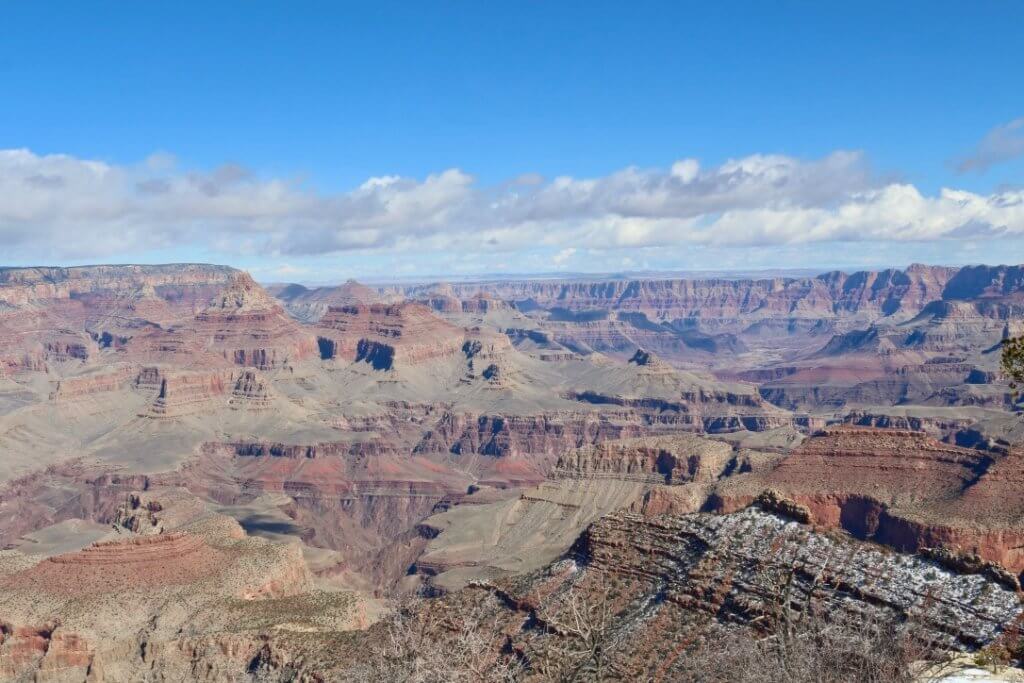
- The Grand Canyon is 277 miles long (446 km) and up to 18 miles wide (29 km) with a depth of nearly 7,000 feet (1857 m).
- The oldest rock layers found at the bottom of the Colorado River-carved Grand Canyon are estimated to be 2 billion years old.
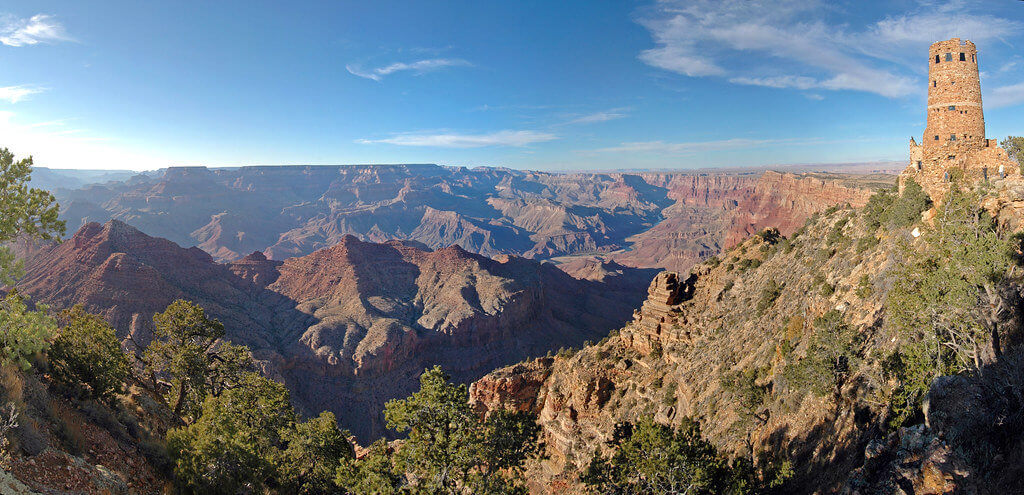
- The highest point on the South Rim is the Desert View Watchtower at 7,522 feet (2,293 m) above sea level.
- Even though the average width is 10 miles (16 km), it takes five hours to drive 215 miles (345 km) from the South Rim to the North Rim.
Why is Grand Canyon a National Park?
According to the foundation statement backing Grand Canyon National Park, the purpose of its preservation is to:
- Preserve and protect Grand Canyon’s unique geologic, paleontologic, and other natural and cultural features for the benefit and enjoyment of the visiting public
- Provide the public opportunity to experience Grand Canyon’s outstanding natural and cultural features, including natural quiet and exceptional scenic vistas
- Protect and interpret Grand Canyon’s extraordinary scientific and natural values
Best Time to Visit Grand Canyon National Park
Grand Canyon National Park Weather
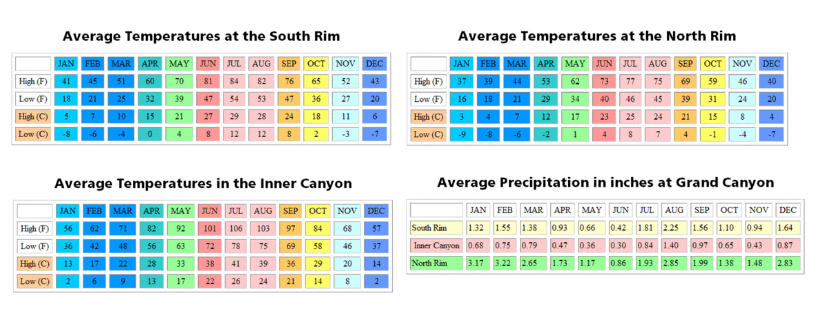
At the South Rim, summers typically see highs in the 80s with temperatures rising above 100 degrees at the bottom of the canyon (all temperatures in Fahrenheit). The North Rim is a bit cooler, typically with highs in the 70s.
Spring and Fall bring milder temperatures throughout the canyon. Lows can be below freezing during this time.
Late summer thunderstorms and early winter snowstorms are not uncommon. Winter can be extreme at the Grand Canyon as low temperatures arrive coupled with snow and ice.
If you’re curious about the current weather at the Grand Canyon, check out their webcams.
Visiting Grand Canyon National Park in Winter

While the crowds aren’t as large in winter, much of the Grand Canyon is also difficult to travel this time of year. With snow and ice, many trails close.
The entire North Rim is closed from mid-October to May 15 (dates depend on snowfall). Days are also much shorter in winter.
The park shuttle does not run to Hermit Road or Tusayan in winter, so it’s best to have your own transportation. The South Rim remains open year-round, but portions could close depending on weather and snow conditions.
Lodging inside the Grand Canyon boundaries and backcountry permit reservations are easier to obtain in this slower season.
It’s recommended to have the following items with you during a winter visit to the Grand Canyon in case of emergencies.
- Shovel
- Windshield scraper & fluid
- Cell phone
- Flashlight
- Battery-powered radio & extra batteries
- Food and water
- Matches
- Extra hats, socks, and mittens
- First-aid kit
- Pocket knife
- Necessary medications
- Blankets
- Tow chain or rope
- Road salt and sand
- Booster cables
Visiting Grand Canyon National Park in Summer
The two things you should be most aware of in summer are dehydration and monsoons.
It’s very important to drink lots of water in the desert heat, especially if you are outdoors for a prolonged period of time or hiking.
Summer thunderstorms can bring lightning; it’s important to move away from the rim when you hear thunder. These storms can also cause flash floods and falling rocks.
While it’s warm during the day, it’s important to have a jacket in the evenings. It can get chilly when the sun goes down.
Grand Canyon National Park is also more crowded in the summer. Plan to do activities as early in the day as possible in order to avoid sharing these special moments with hoards of people.
Visiting Grand Canyon National Park in Spring, or Fall
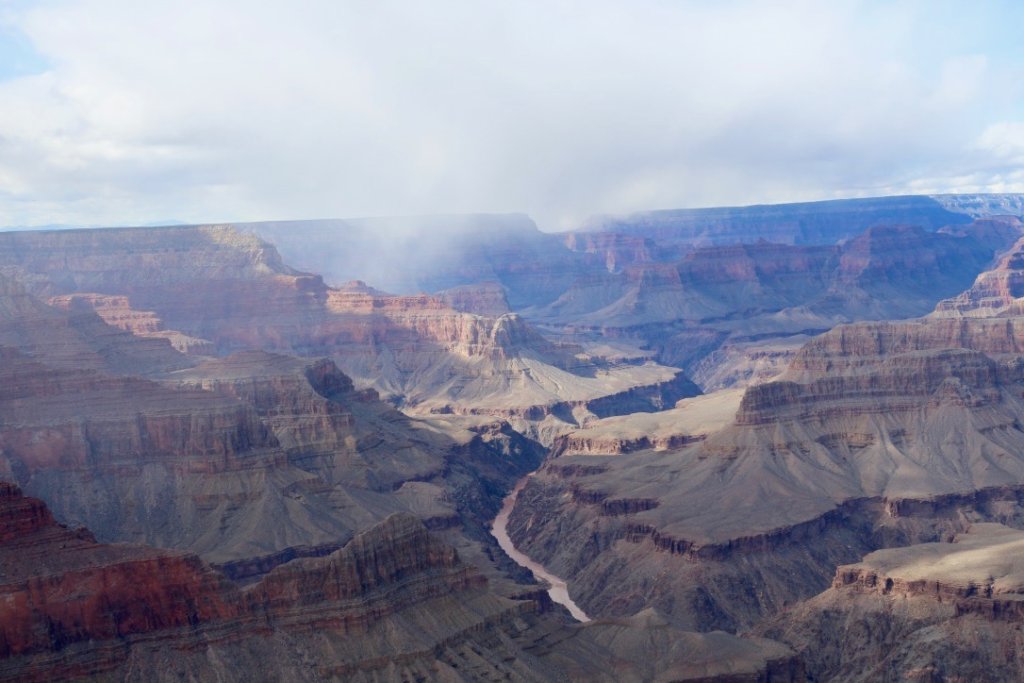
Spring and Fall are the most variable seasons at the Grand Canyon. You can expect any of the above conditions during the shoulder seasons. May and October are typically the driest months, but snow and rain can occur.
How to Get to Grand Canyon National Park
The closest airports to Grand Canyon National Park are in Las Vegas, Phoenix, and Flagstaff (limited flights). I recommend using Skyscanner for purchasing the least expensive tickets and getting the best deals. From these locations, you can rent a car or join a tour.
There are also shuttles that run from Arizona’s major cities to the Grand Canyon. There is also a Grand Canyon Airport in Tusayan which sees incoming flights from Boulder City.
Within Grand Canyon National Park, there is a shuttle system on the South Rim. There’s also a trans-canyon shuttle that runs between the North and South Rims.
Lastly, you can take a train to the Grand Canyon. It departs daily from Williams and arrives at the Grand Canyon at 11:45 a.m. with departures back to Williams at 3:30 p.m. During peak seasons there may be multiple departure times.
Grand Canyon National Park Directions
To reach the South Rim of the Grand Canyon, take US 180 north from Flagstaff or AZ 64 from Cameron to the east entrance.
To get to the North Rim, take AZ 67 to the north entrance from Jacob Lake.
Grand Canyon National Park Hours of Operation
Technically, Grand Canyon National Park never closes. Access to the park is open 24/7. Visitor services do close, however, and hours vary depending on the season. For the most updated hours of operation, visit the official website.
How Much Does Grand Canyon National Park Cost?
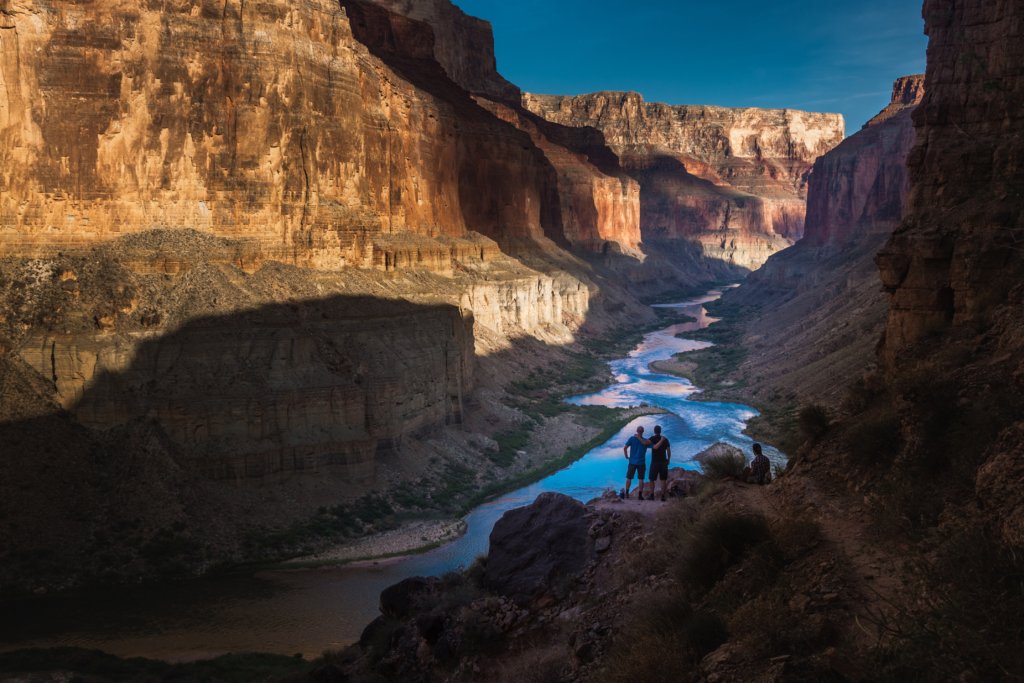
The Grand Canyon National Park entrance fee is valid for seven days. It costs $35 for one vehicle and all of its passengers to enter the park. Motorcycles are $30 and individuals (on foot or bicycle) are $20. For more information about entrance fees and passes, visit the official webpage.
America the Beautiful Passes
If you’re visiting other national parks in the area, the smartest thing to do is purchase an America the Beautiful Pass. Annual passes cost $80 and will admit everyone in the vehicle at most national parks around the country.
If you’re currently serving in the United States military, have volunteered for a national park, are in fourth grade, or have a permanent disability, you may be eligible for one of the free passes issued by the National Park Service.
Lastly, there is an annual pass for seniors 62 and older for $20. Seniors are also able to purchase a lifetime pass for $80.
Read More National Park Travel Guides from The Parks Expert
How Much Time to Allow at the Grand Canyon

One Day in Grand Canyon National Park Itinerary
Most visitors choose to spend just one day visiting Grand Canyon National Park. If you’re interested in doing nothing more than driving around and looking at a giant hole in the ground, one day is sufficient. With one day, I would recommend the following itinerary for the Grand Canyon:
- Watch the film at Grand Canyon Visitor Center (22 minutes)
- Go for a short hike (keep reading for trail recommendations)
- Drive Hermit Road (7 miles) and Desert View Drive (22 miles)
- Visit the Desert View Watchtower and take in the panoramic views from the top
- View the Colorado River from above
- Find the Mather Plaque at Mather Point
Multiple Days Visiting Grand Canyon National Park
If you have multiple days to spend in Grand Canyon National Park, I would recommend seeing portions of the Grand Canyon that many people miss. Millions of visitors limit their time to the South Rim, so why not spend a day exploring the North Rim?
Furthermore, there are some great backpacking trips you could take, including spending a night at the bottom of the Grand Canyon at Phantom Ranch. You could even accomplish one of my top bucket list items: a Rim-to-Rim hike of the Grand Canyon.
In addition to the items above, I would add some of the following activities to your Grand Canyon itinerary if you have multiple days:
- Participate in a ranger program
- Hike the Bright Angel Trail
- Go for a bike ride
- Spend a day at the North Rim
- Take a scenic flight
- Visit the Skywalk in the Hualapai Indian Reservation
- Complete a Rim-to-Rim hike of the Grand Canyon
- Visit the Yavapai Geology Museum and Kolb Studio
Places to Stay Near Grand Canyon National Park
Where to Stay Near the South Rim
Within Grand Canyon National Park, there are a few options for lodging. These are run by Xanterra and Delaware North, not the National Park Service. The lodges at the South Rim are Yavapai Lodge, El Tovar Hotel, Bright Angel Lodge, Kachina Lodge, Maswik Lodge, and Thunderbird Lodge.
Outside of the park, I would recommend staying at the Best Western Squire Inn, Grand Canyon Plaza Hotel, The Grand Hotel, or the Holiday Inn Express in Tusayan. These will be the closest accommodations to Grand Canyon National Park.
Where to Stay Near the North Rim
The only hotel inside Grand Canyon National Park’s North Rim is the Grand Canyon Lodge. Outside of the park, I would recommend staying at the Kaibab Lodge or Jacob Lake Inn. These are the closest available accommodations to the North Rim.
Grand Canyon National Park Camping
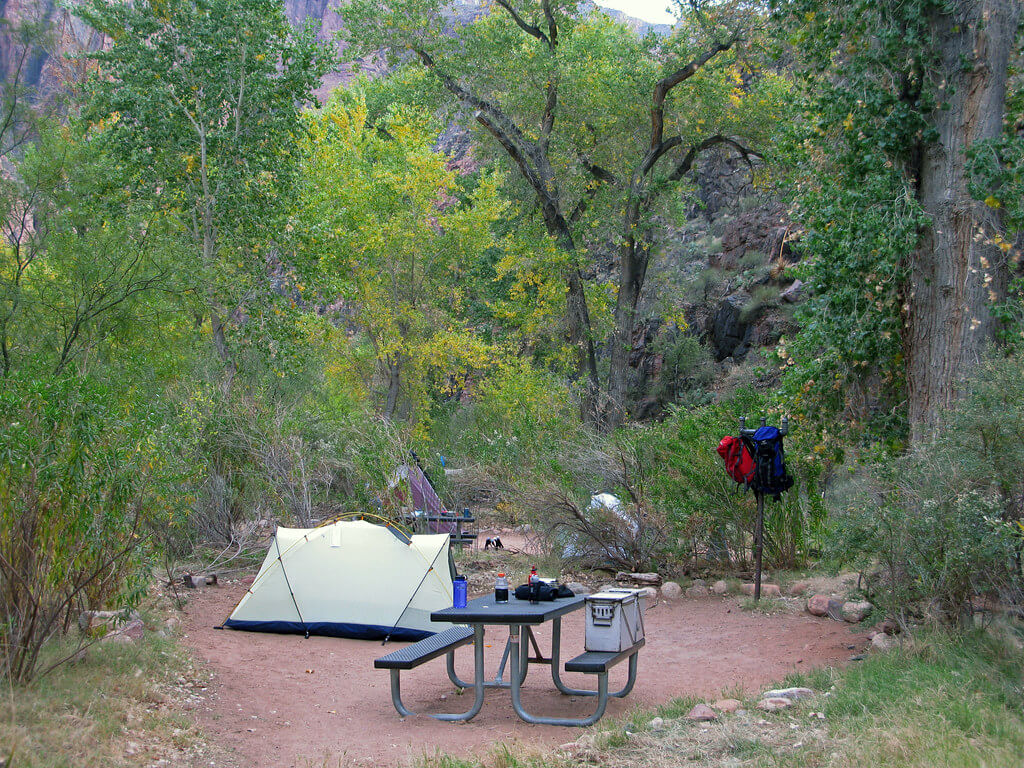
Within the Grand Canyon, you’ll find three campgrounds: Bright Angel on the bottom of the Grand Canyon (pictured above), Indian Garden along the Bright Angel Trail, and Cottonwood below the North Rim. Camping at any of these campgrounds requires a backcountry permit.
Camping on the South Rim
If you would like to camp in Grand Canyon National Park, there are a few campgrounds to choose from on the South Rim.
First is Desert View, which is open from April to October. It costs $12/night and there are no hookups. This is operated on a first-come, first-served basis and reservations are not accepted.
Next is Mather Campground. Mather costs $18/night and accepts reservations from April to October. From November to March, campsites are first-come, first-served. There are no hookups.
For RV camping at the Grand Canyon, you’ll need to stay at Trailer Village, the only campground with hookups within the park. There are pull-through sites to accommodate RVs. Reservations are recommended year-round.
Outside of the park, there are campgrounds at Camper Village (with hookups) and Ten-X (no hookups) in Kaibab National Forest.
Camping on the North Rim
The North Rim has quite a few campgrounds to choose from.
The North Rim Campground is the only one within the national park. There are no hookups and sites cost anywhere from $18 to $25 per night. Advance reservations are strongly recommended. The campground is only open from May 15 to October 31.
Outside of the park, there is the DeMotte Campground (no hookups or reservations), Jacob Lake Campground (no hookups), and Kaibab Camper Village (full hookups).
Grand Canyon National Park Hikes
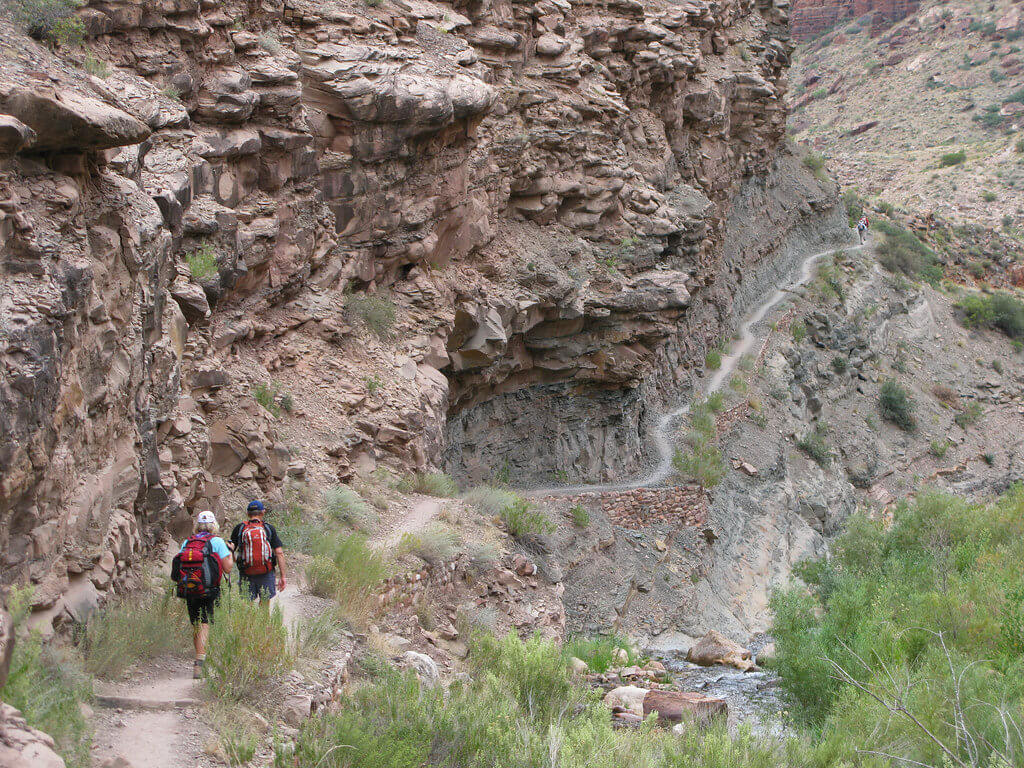
Some of the more popular hikes at Grand Canyon National Park are listed below. Each delivers some fantastic views of the world-famous canyon.
Bright Angel Point

Description: This short, paved trail provides a great view of the canyon. However, it’s not wheelchair accessible.
Which Rim?: North Rim
Difficulty: Easy
Start: Log shelter near the visitor center
Distance (roundtrip): .5 miles (.8 km)
Elevation Change: 200 feet / 60 m
Estimated Hiking Time: 30 minutes
The Rim Trail

Description: The Rim Trail is mostly paved with the exception of a dirt path from Monument Creek Vista to Powell Point. It is mostly flat with many sections suitable for wheelchairs. You can walk a portion of the trail before taking a shuttle back to your vehicle or make it a round-trip hike.
Which Rim?: South Rim
Difficulty: Easy
Start: This trail follows the rim from Hermit Road to South Kaibab Trail. You can start at any point.
Distance (roundtrip): The full trail is 13 miles (21 km), but you can choose how far you wish to go.
Elevation Change: 200 feet / 60 m
Estimated Hiking Time: You can spend anywhere from 15 minutes to a full day on this trail.
The Bright Angel Trail

Description: This may be the most famous trail at the Grand Canyon. While it’s considered the easiest of the trails that descend into the canyon, it’s still very steep. Water and restrooms are available at the 1.5-mile rest stop, the 3-mile rest stop, and Indian Garden. With covered areas for rest and water availability, it’s also considered the safest trail in Grand Canyon National Park.
Which Rim?: South Rim
Difficulty: Difficult
Start: The Bright Angel Trailhead can be found by the Bright Angel Lodge.
Distance (roundtrip): The full trail is 9.5 miles (15.3 km) long, but you can choose how far you wish to go.
Elevation Change: 4340 feet / 1320 m (from the tip-top to the very bottom)
Estimated Hiking Time: You can spend anywhere from 1 hour to 2 days on this trail.
South Kaibab Trail
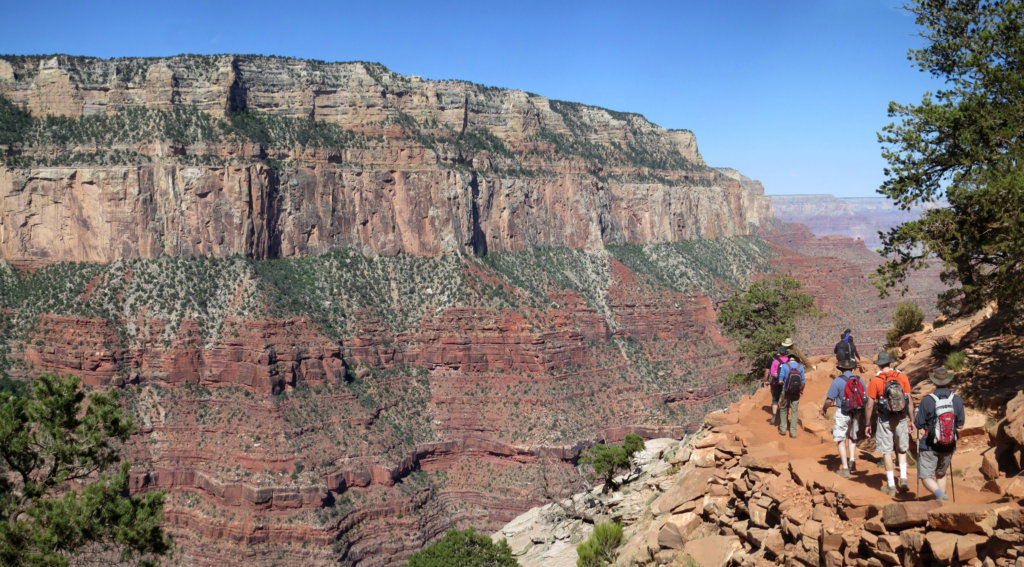
Description: You get some amazing views on this trail without too much walking. However, there is no water like on the Bright Angel Trail. There is little to no shade on the upper portion of this trail. You can connect this with the North Kaibab Trail to complete a Rim-to-Rim hike.
Which Rim?: South Rim
Difficulty: Difficult
Start: South of Yaki Point
Distance (roundtrip): The full trail is 7 miles (11.3 km) long, but you can choose how far you wish to go.
Elevation Change: 4700 feet / 1430 m (from the tip-top to the very bottom)
Estimated Hiking Time: You can spend anywhere from 1 hour to 2 days on this trail.
Grand Canyon National Park Scenic Drives
Hermit Road
From March 1 to November 30, free shuttle buses serve as transportation for visitors on this road. The road is closed to private vehicles during this time, but you can drive your own car on the road in winter. The road is 7 miles long.
Desert View Drive
Desert View Drive is a 22-mile-long road between Grand Canyon Village and Desert View, the eastern end of the South Rim. Along the way, stop at the Desert View Watchtower. Additionally, you can stop at the Moran, Lipan, and Desert View Points for a look at the Colorado River. Download a guide here.
More Things to Do in Grand Canyon National Park
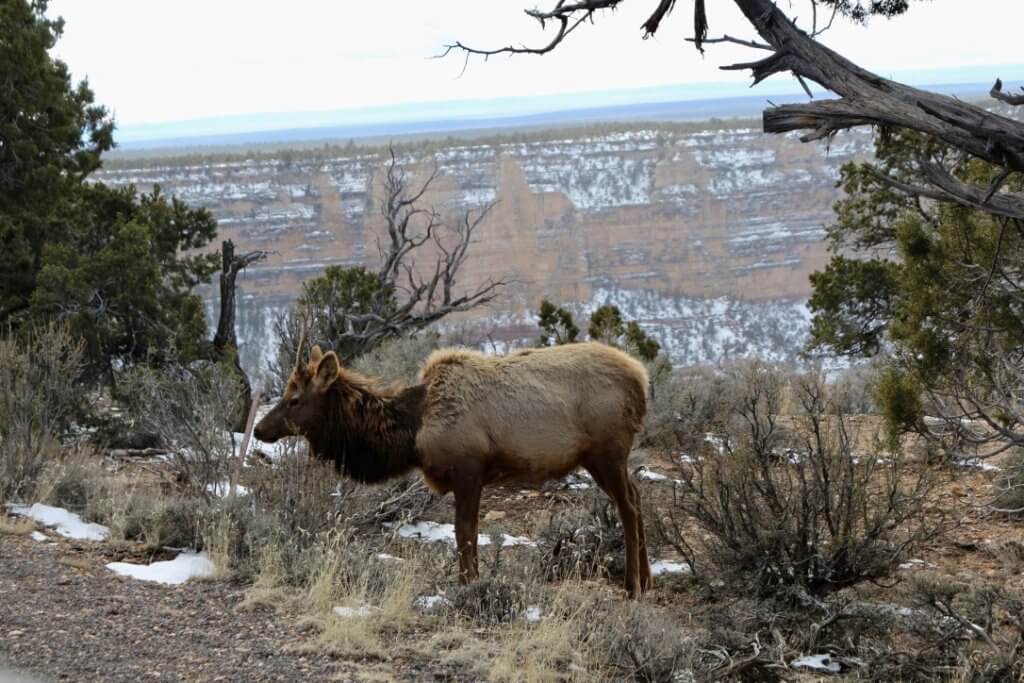
There are a ton of things to do at Grand Canyon National Park. Anyone who has ever said “it’s just a big hole in the ground” didn’t take advantage of everything this park has to offer (and probably didn’t read this Grand Canyon visitors guide). Here’s a brief list of things to do at the Grand Canyon. You can find more details on the Grand Canyon’s website.
- Watch the park film
- Visit the Yavapai Museum of Geology
- Hiking
- Go for a bike ride (rentals available at Bright Angel Bicycles near the visitor center)
- Climb the Desert View Watchtower and take in the panoramic view
- Take a mule trip
- Visit the Skywalk west of the park in the Hualapai Indian Reservation
- Visit Kolb Studio
- Go white-water rafting
- Attend a ranger program
- Watch for elk on the park’s roads (but keep a safe distance!)
- Go backpacking, or perhaps hike the Grand Canyon from Rim-to-Rim
- Practice your photography
- Go stargazing
- Watch the sunset from one of the viewpoints
- Check out the Tusayan Ruin
What to Pack for Grand Canyon National Park

Packing for a trip to the desert can be tricky. Depending on the time of year, temperatures can range from over 100 degrees Fahrenheit during the day to 50 degrees once the sun goes down. If you’re visiting in the winter, it may even snow.
Here’s a list of things you may need, with some items varying based on the season you decide to visit. For more ideas on what to pack for the Grand Canyon, check out my post on the best backpacking and hiking gear.
- Reusable Water Bottle: Literally the most important thing to have in the desert.
- Moisture-wicking Layers: You’ll want short- and long-sleeve shirts to wear underneath your jacket. In the summer, you may also want a tank top. Choose polyester over cotton.
- Jacket: I always have a packable down with me on trips. I also love this new jacket I got a few months ago, as it’s very light yet warm. Synthetic is a good alternative to down if you’re worried about rain or snow.
- Hiking Pants or Shorts: My favorite hiking pants can be found here. As a taller woman, I also love Columbia’s pants because they offer long sizes.
- Hat: Depending on the season, you’ll need a winter hat or summer hat.
- Gloves or Mittens: Gloves are critical if you’re visiting in the winter.
- Wool Socks: Smartwool is my favorite brand for wool socks. Make sure to get wool so your feet stay warm and dry.
- Grippers, Spikes, or Crampons: If you plan to hike in the winter, I strongly recommend grippers for Grand Canyon National Park’s potentially icy trails. In February, some of the Grand Canyon’s trails were closed due to ice. Come prepared and avoid the fall!
- Camera: I had my trusty Canon Rebel T5i, my Canon Powershot SX620, and a GoPro with me on my most recent trip to the Grand Canyon.
- Tripod: If you’re hoping to take decent photos of the slot canyons, sunsets, or wildlife, I’d strongly recommend carrying a tripod with you.
- Boots: I love my Keens, and will never choose another brand for my everyday boots. In winter, I choose a much warmer pair of Solomon boots.
- Backpack: I brought my North Face pack, but a friend of mine had a water-resistant Patagonia pack I was extremely jealous of.
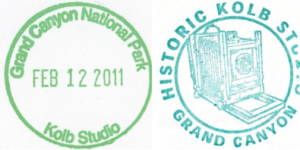
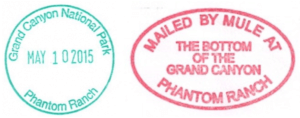
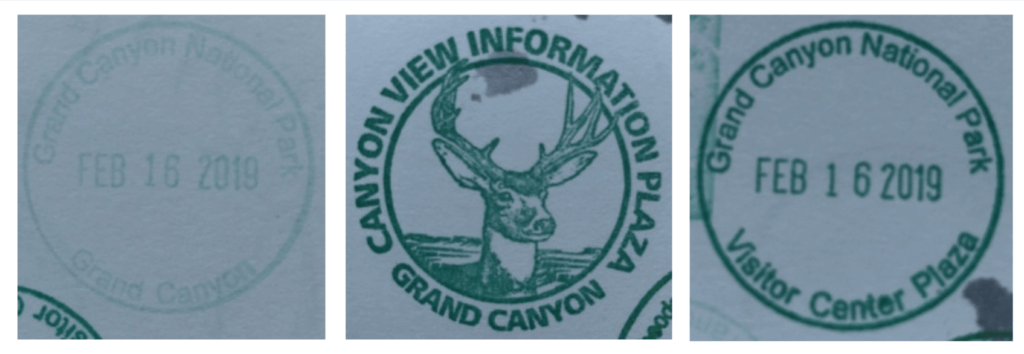
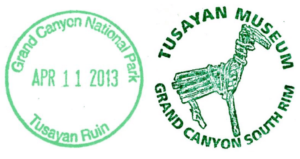
Where to Stamp Your National Parks Passport Book

Don’t have a national parks passport book? Purchase one here and start collecting your stamps! Or, buy your own notebook or stamp some postcards – the stamps are free for you to use on whatever you please.
NOTE: Do not stamp your country-issued passport with these! This could render them invalidated.
Desert View Watchtower

Hermits Rest
Kolb Studio
North Rim Visitor Center

Phantom Ranch
South Rim Visitor Center & Book Store
Tusayan Ruin Museum
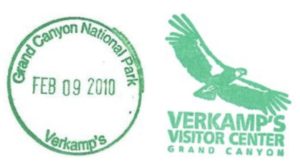
Verkamps Visitor Center
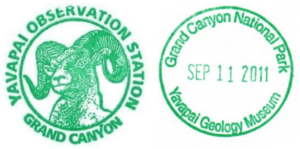
Yavapai Geology Museum
Pin The Park Expert’s Guide to Visiting Grand Canyon National Park



Grand Canyon National Park Phone Case

Grand Canyon National Park Pennant

Fodor’s Guide to the 63 National Parks

Grand Canyon National Park Puffy Blanket

Women’s National Parks Checklist T-Shirt

Women’s National Parks Checklist T-Shirt

Map of National Parks T-Shirt

Grand Canyon National Park Hat

Grand Canyon National Park Hat

Grand Canyon National Park Sticker

Grand Canyon National Park Pin

Grand Canyon National Park Patch

63 National Parks Water Bottle

Grand Canyon Ornament

Grand Canyon National Park Sticker

Grand Canyon National Park Candle

Grand Canyon Scrapbooking Kit

Grand Canyon Cross Stitch Kit

Grand Canyon National Park Poster Puzzle



Is it wrong that all your latest posts are making me think about a second trip to the States, before I’ve even started the first?
Happy to hear that!
This is really a great blog to read. I had heard a lot about Grand canyon national park but this is the first time I have something onto it. Thanks for sharing such amazing blog. Cheers!!!
This post is just love to read, Pictures are so beautiful that I am now feeling to go there asap. Keep sharing such beautiful content. Cheers!!!