Article Summary: Camping in Everglades National Park, Everglades National Park Camping
One of the best ways to experience Everglades National Park is camping overnight. There are many options for Everglades camping, including everything from backcountry campsites to glamping tents.
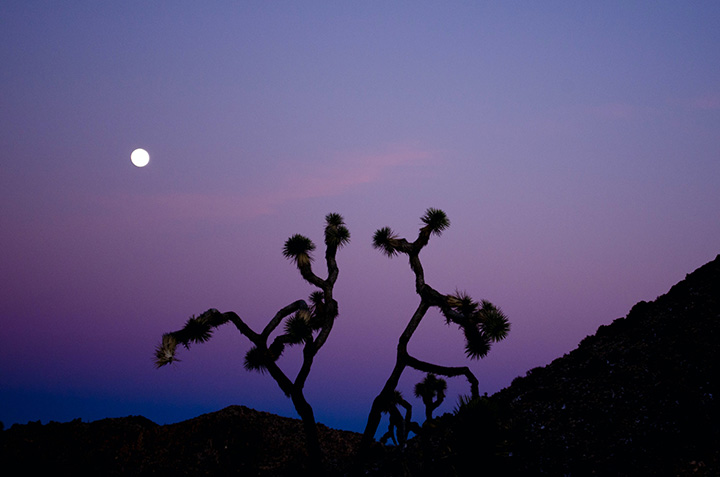
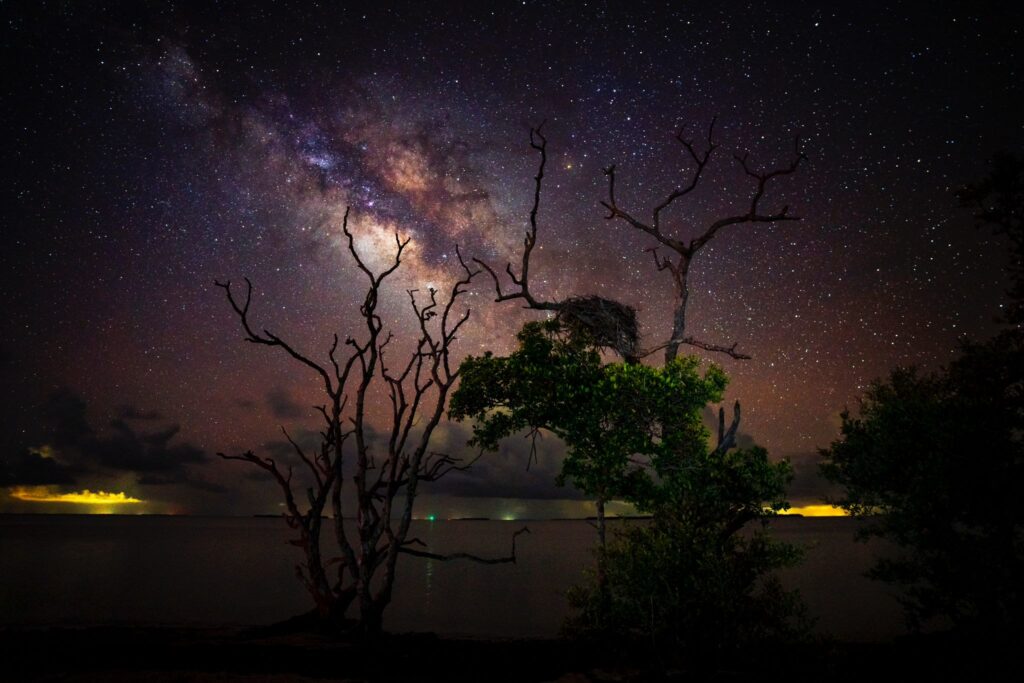
Camping in Everglades National Park is an excellent way to get away from the nearby hustle and bustle of Miami. Here, you can view the incredible night sky, admire nocturnal creatures in the park, and enjoy the peace and quiet. You’d never know one of the largest cities in the nation is so close by!
In this Everglades National Park Camping Guide, we’ll discuss everything you need to know about camping in Everglades National Park. Read on to prepare to overnight in the River of Grass.
This post may contain affiliate links. If you make a purchase, I may earn a small commission at no additional cost to you. For more information, view my privacy policy.
Table of Contents
Everglades National Park Overview
Location: Florida
Gateway Towns: Homestead and Everglades City
Best Airport: Miami International is the closest major airport, about one hour from the park’s Homestead entrance. Another option is Fort Lauderdale-Hollywood International.
Best Time to Visit: Fall, winter, and spring are the best seasons in the Everglades. Summer is the wettest time of year and coincides with hurricane season.
How to Get Around: You’ll need a vehicle to explore the park. There is no public transportation, and ride-share apps are not reliable.
Pets: While technically allowed in the park, pets are not allowed on any trails or tours.
Fee: It costs $35 per car, $25 per motorcycle, or $20 per pedestrian/cyclist to enter the park. Your entrance is valid for seven days.
Reservations: Reservations are not required to enter the park. They may be recommended for other activities, such as Shark Valley Tram Tours.
Where to Stay: Homestead has everything you need, such as restaurants and shops. There are also several options for camping in the Everglades.
Top 5 things to know before camping in Everglades National Park
Planning a trip to the Everglades requires a bit of planning. Here are some crucial things you should know before you camp in the park.
How to Get to Everglades National Park
The closest airports to Everglades National Park are located in Miami (MIA) and Ft. Lauderdale (FLL). These are about 1.5-2 hours from the main entrance in Homestead or the Shark Valley entrance in northern Miami. If you are traveling to Everglades City, you may consider flying in/out of the Tampa airport.
Once you arrive, it is best to rent a car. Rideshares like Uber and Lyft are not recommended since the park is outside of the city. You may find a ride to the park, but it’s unlikely any drivers will return to pick you up.
There is no public transportation to the campgrounds in Everglades National Park.
The Best Time to Camp in the Everglades
Florida can be very hot, humid, and rainy. The same is true for Everglades National Park.
Those camping in Everglades National Park will find the mildest weather in the dry season, considered November through April. This is also the most popular time to visit the park. Other benefits of the dry season include fewer rain storms and biting insects.
Visiting the Everglades in the wet season, May through October, is just that: wet. This is when Florida receives most of its rain. It also coincides with hurricane season, something you should definitely consider when planning your Everglades camping trip. This is also mosquito season, particularly in the Flamingo district.
There is a Small Entrance Fee
There is a fee to enter Everglades National Park. The fee varies based on how you enter the park: on foot, in a paddle craft, on a motorcycle, or in a vehicle.
Vehicle passes are $35 and include entry for all passengers. Motorcycles are $30, and if you enter on foot or in a human-powered watercraft, it’s $20 to enter. Click here to learn more about Everglades entrance fees.
These passes are valid for 7 days and only in Everglades National Park. These don’t include fees for other activities, such as tours.
We recommend purchasing an annual pass, especially if you’ll be visiting Dry Tortugas National Park on your trip. The $80 pass is valid for one year from the time of purchase and includes your entrance to all federal public lands, such as National Forests and Wildlife Refuges.
On a trip to Everglades and Dry Tortugas, park entrance fees alone would cost $50. If you’re visiting other national parks in Florida, the pass could cover the cost of your entrance fees for your entire trip!
There are Four Districts You Can Visit
Everglades National Park is the third-largest outside of Alaska. There is a lot to see and it is pretty spread out. One of the best ways to determine where to camp in the Everglades is to figure out what you’d like to see.
From the Homestead entrance, you’ll access the Main Park Road. The only two Everglades campgrounds are along this route, one closer to the entrance (Long Pine Key) and one at the end of the road (Flamingo). Popular Everglades hiking trails like the Anhinga Trail and the park’s only restaurant in Flamingo are some of the highlights in this part of the park. Boat tours and rentals are also available in Flamingo.
There are no campgrounds in the park’s popular Shark Valley district. Shark Valley is along U.S. Highway 41 and offers tram tours and bicycle rides with park rangers. Along the highway are also several airboat tour companies. If you plan to visit this area, you may consider camping at Long Pine Key Campground, which would be the closest within the park.
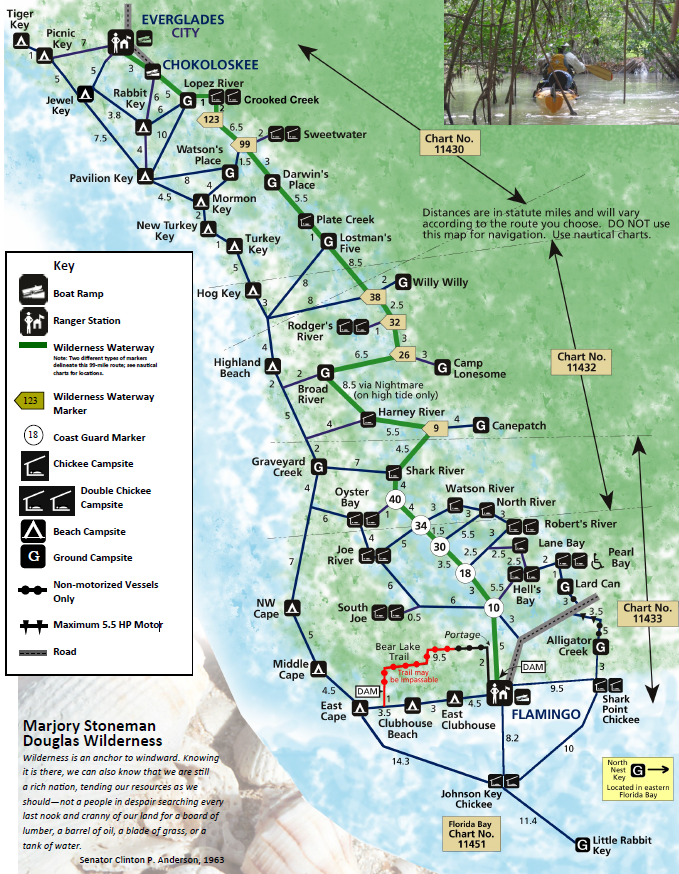
If you’re hoping to camp in the Everglades National Park wilderness, you may begin your visit in Everglades City. This is a great place to paddle out to chickees or other remote campsites in the Marjory Stoneman Douglas Wilderness. Paddling the 99-mile Wilderness Waterway will bring you from the Gulf Coast to Flamingo.
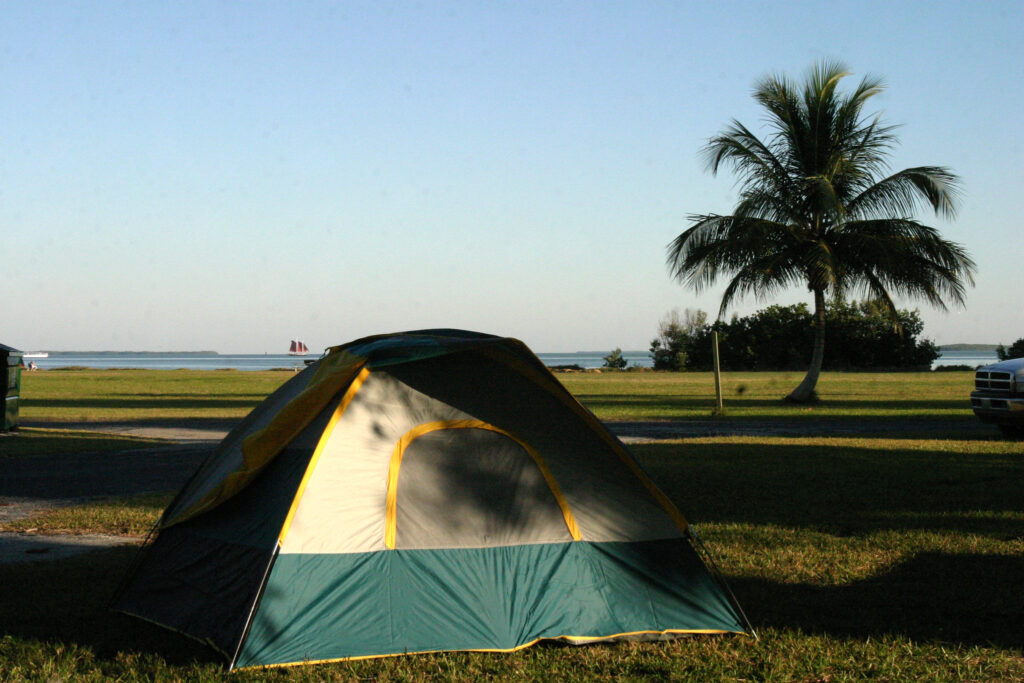
Things to Do in the Everglades
So you want to camp in the Everglades, but what is there to do?
Some of our favorite things to do in the Everglades include paddling, hiking, taking the Shark Valley tram tour, birdwatching, wildlife photography, stargazing, and boat tours.
Paddling is one of the best ways to see the park and access areas most visitors don’t get to see. You can rent paddle boats in the Flamingo Marina. Popular paddling trails include Nine Mile Pond and Hell’s Bay, both in Flamingo.
Tours are a great way to learn more about this fascinating ecosystem. Boat tours in Flamingo have naturalists on board and venture into the park’s wilderness, either Whitewater Bay or Florida Bay. Shark Valley’s tram tours also have naturalists to help you learn while pointing out various wildlife.
Campgrounds in Everglades National Park
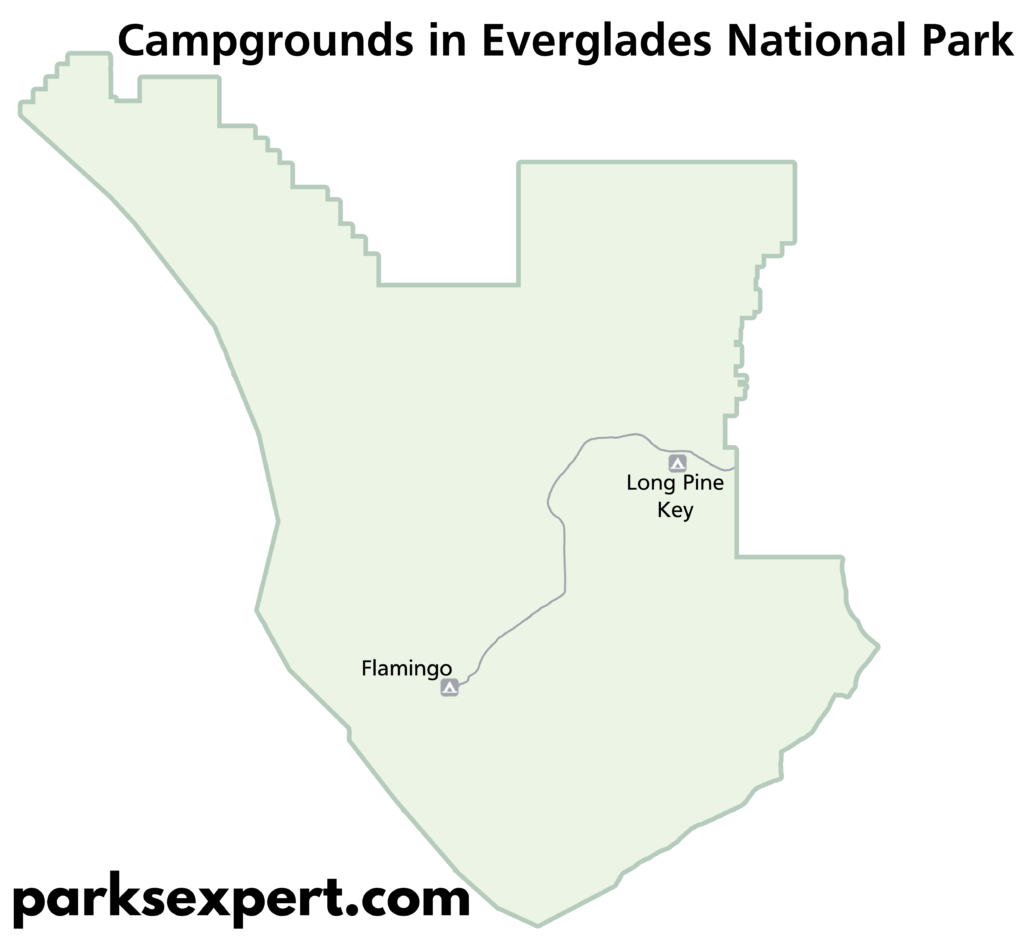
There are two frontcountry campgrounds in Everglades National Park: Long Pine Key and Flamingo. Other camping opportunities include backcountry camping, which we will go over later in this post.
The park does not allow car or RV camping in its parking lots or pullouts along the road.
Map of Everglades National Park Campgrounds
Rules and Regulations
- Quiet hours are from 10 pm to 6 am. Generators may only be operated from 8 am to 8 pm.
- Both campgrounds require you to check out by 12 pm.
- Campfires are permitted in grills only. They may not be left unattended.
- You may not attach or tie anything to trees, so hammocks are not permitted.
- Pets should be kept on a leash no longer than 6 feet at all times. They aren’t permitted on trails in the Everglades.
- Keep wildlife wild! Make sure you dispose of garbage in the trash cans provided. All your food should be in a vehicle or RV when not in use.
- Swimming in lakes or ponds is not permitted.
- You can camp for a maximum of 14 days.
- Each campsite can accommodate 6 people and 2 vehicles. Campsite sizes vary per campground, so check the official website for information on the number of RVs and tents available at each.
- Reservations are strongly encouraged in the busy dry season.
Long Pine Key Campground
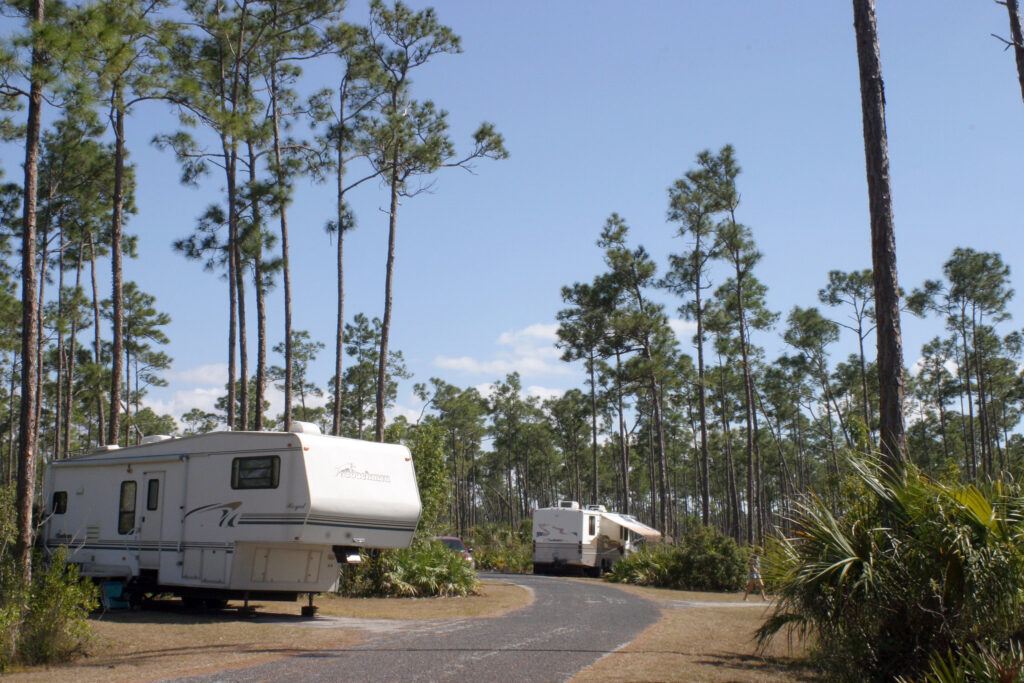
The Long Pine Key Campground is like a shady oasis in the Everglades. Surrounded by tall slash pine trees, it’ll feel like the marsh is worlds away.
Long Pine Key Campground is closest to Florida City and Homestead, the park’s southern-most gateway cities. This is the campground to stay in if you want to be close to conveniences such as restaurants and grocery stores.
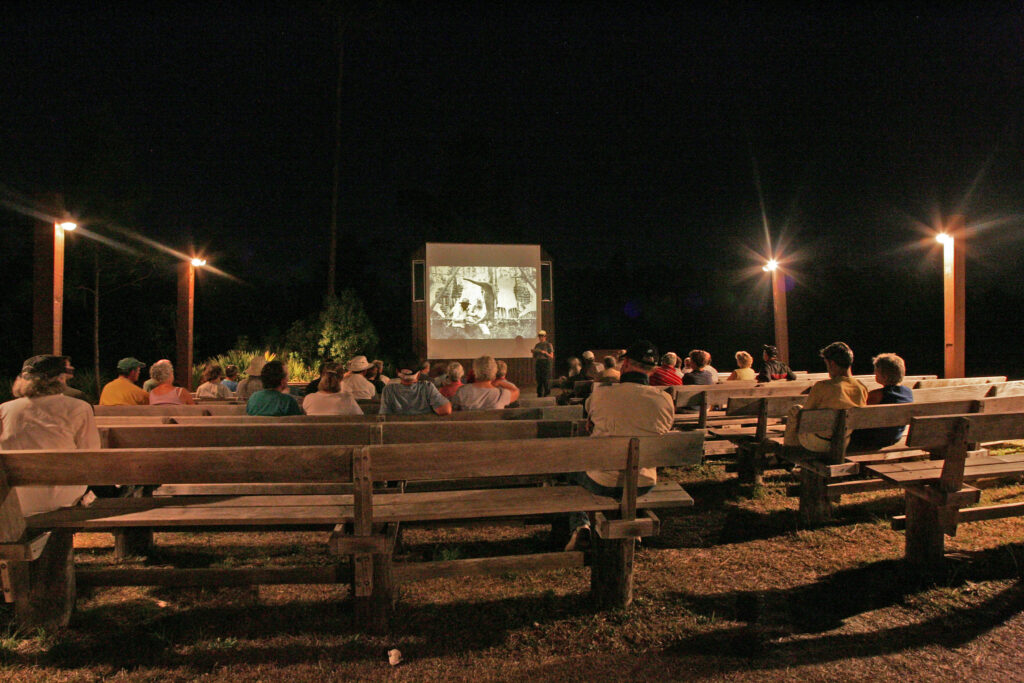
In the winter, park rangers give nightly programs. These alternate between programs in the campground amphitheater and night walks on the Anhinga Trail.
Other nearby attractions include the Nike Missile Site, the Ernest F. Coe Visitor Center, and the Pa-hay-okee Boardwalk. There’s a small fishing pond in the campground near a few more trails.
None of the sites in the Long Pine Key Campground offer electric hookups.
Campground Map: click here
Cost: Monday-Thursday, $33/night and Friday-Sunday, $38.50/night
Amenities: Bathhouses, dump station, water filling station, AT&T and Verizon cell reception, flush toilets, hot showers
Ranger Programs: Yes, located in the campground amphitheater.
Reservations: You can make reservations online or via phone at 855-708-2207.
RVs: Yes, this campground can accommodate RVs up to 35 feet. Trailers are not allowed. There are no electric, water, or sewer hookups.
Season: Long Pine Key is only open in the park’s dry season, November 1 through April 30.
Sites: 108; all sites can accommodate tents or RVs.
How to Get There: After you enter Everglades National Park via the Homestead Entrance, the campground is on the left side of the road about 6 miles into the park. You can use the park’s main address in your GPS: 40001 SR 9336 Homestead, FL 33034.
More Information: click here
Flamingo Campground
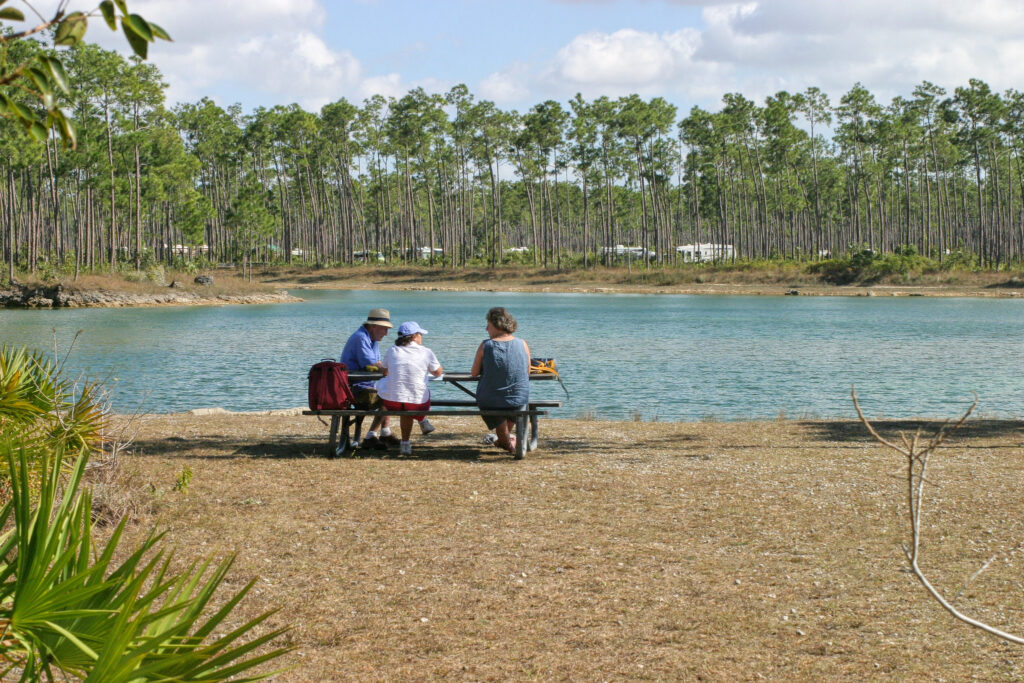
For campers who prefer to be further away from civilization, we highly recommend the Flamingo Campground. Situated on Florida Bay, you’ll sleep with the sounds of crashing waves and the smell of salt water around you.
There is one loop (A loop) for tents and another loop (T loop) for RVs. Some sites offer electricity (41, to be exact), but not all of them. Sites in these loops don’t have ocean views, but the ocean isn’t far. We recommend a short walk to the campground amphitheater for panoramic vistas, and maybe a ranger program!
The walk-in campground has the best views of Florida Bay, but has been closed due to flooding. There’s currently no estimate on when it will reopen.
Campground Map: click here
Cost: Monday-Thursday, $33/night. Friday-Sunday, $38.50/night. Electric sites are $50/night on Monday-Thursday and $60/night Friday-Sunday.
Amenities: Bathhouses, dump station, water filling station, AT&T cell reception, camp store, flush toilets, hot showers
Ranger Programs: Yes, located in the campground amphitheater.
Reservations: You can make reservations online or via phone at 855-708-2207.
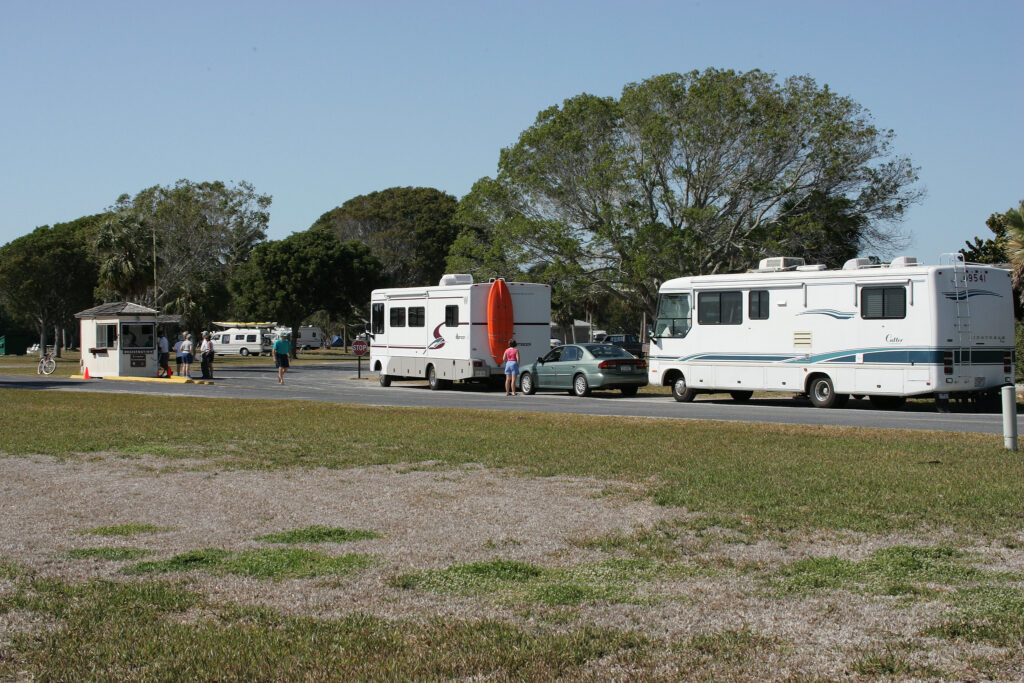
RVs: Yes, this campground can accommodate RVs up to 35 feet. Trailers are not allowed. There are no water or sewer hookups and only some sites have electric hookups.
Season: Flamingo Campground is open year-round.
Sites: 274 (65 for RVs only, 41 with electric hookups)
How to Get There: After you enter Everglades National Park via the Homestead Entrance, the campground is at the end of the road, about 37 miles. You can use the park’s Flamingo address in your GPS: 1 Flamingo Lodge Highway, Flamingo, FL 33034.
More Information: click here
Glamping in the Everglades: Flamingo Eco-Tents
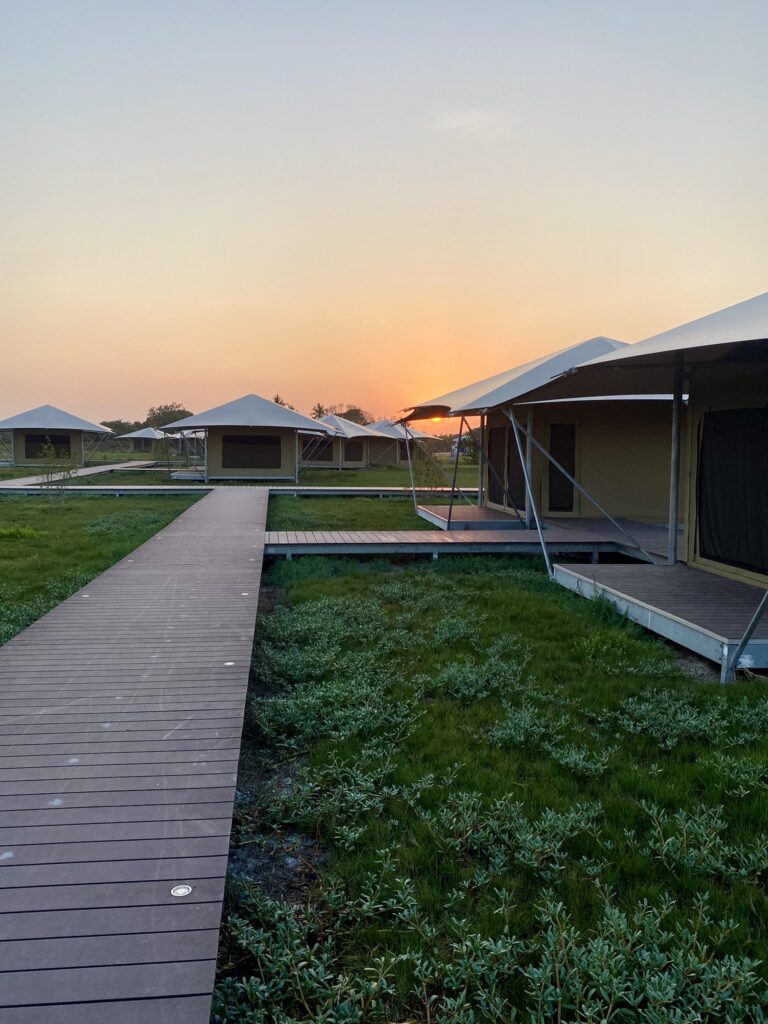
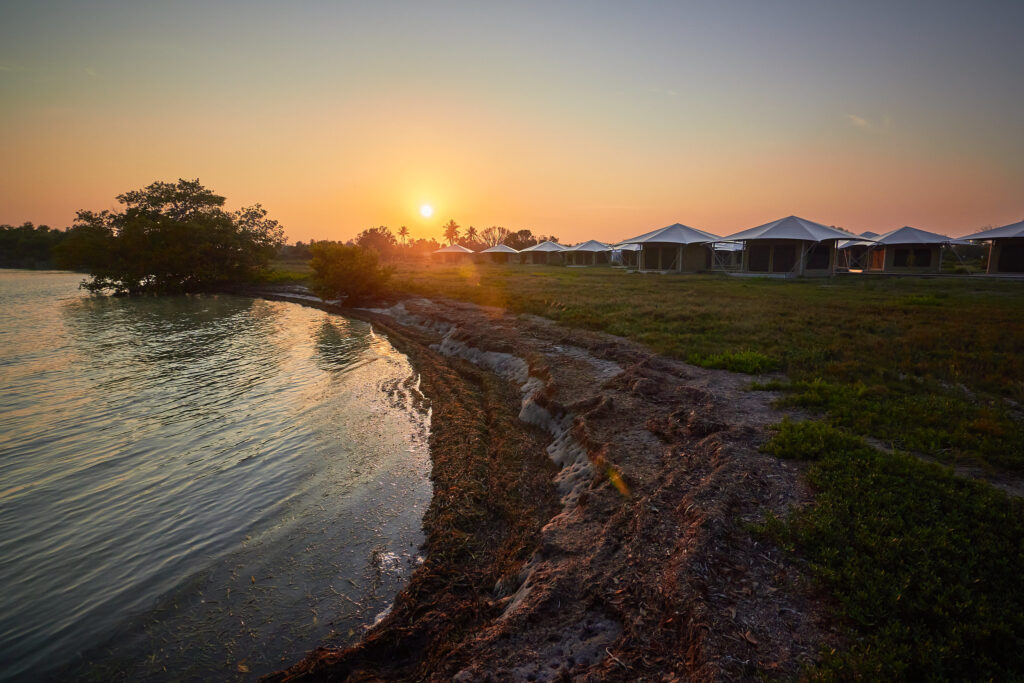
If true camping in the Everglades isn’t for you, consider the brand-new Eco-Tents! Located near the walk-in sites, each tent has a partial view of Florida Bay. This is a glamping experience you won’t want to miss if sleeping on the ground isn’t your thing.
Tents are wrapped in mosquito netting to protect from irritating and biting bugs. They also have electricity and lighting.
Summer and winter prices vary. Different seasons also include different amenities within the tents.
Summer Glamping in the Everglades
- Available May 1-October 31
- Prices start at $50/night
- Lamp with a USB connector
- Fan
- Passcode to the locked bathroom exclusive for Eco-Tent campers
- Make reservations at FlamingoEverglades.com
Winter Glamping in the Everglades
- Available November 1-April 30
- Prices start at $109/night
- Lamp with a USB connector
- Fan
- Passcode to the locked bathroom exclusive for Eco-Tent campers
- 1 queen-size or 2 double-size beds with linens and pillows
- Extra power outlets
- Make reservations at FlamingoEverglades.com
Wilderness Camping in Everglades National Park
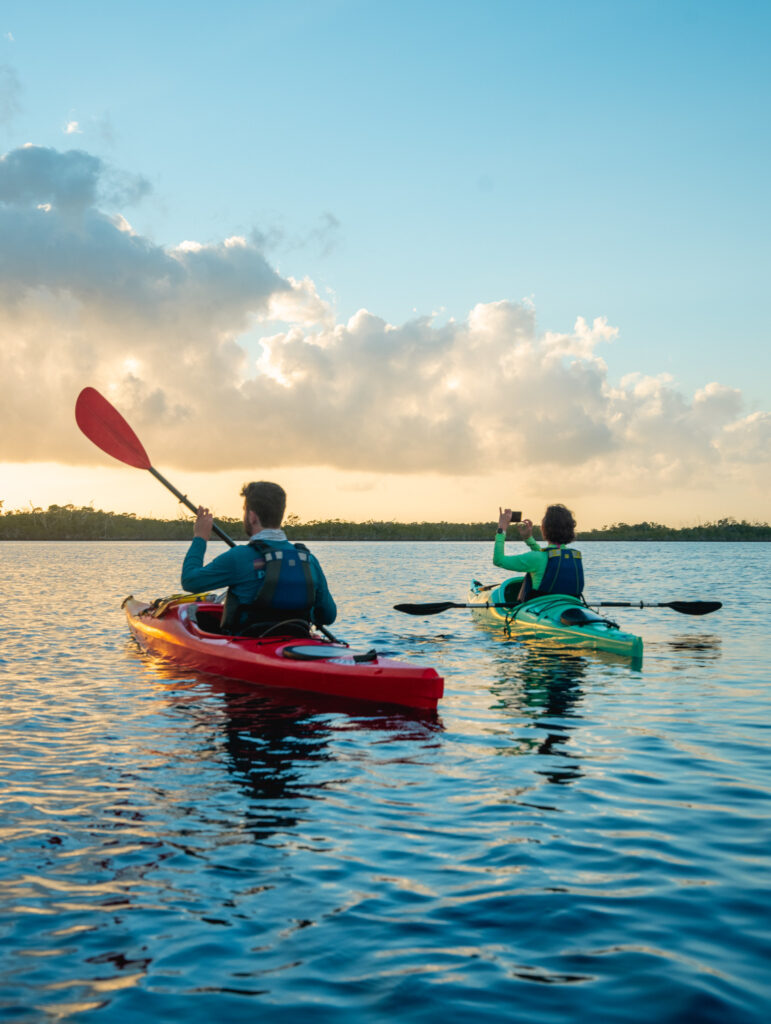
For a unique Everglades camping experience, grab a paddle and venture out into the Marjory Stoneman Douglas Wilderness.
Unlike other national parks, you can easily camp by boat in the Everglades. Most of the backcountry campsites in the Everglades as only accessible by water.
Everglades National Park wilderness map
How to Make Everglades Backcountry Camping Reservations
Like most national parks, reservations can be completed on Recreation.gov. To make a reservation, you’ll need to know where you want to stay and where you’ll begin your trip. Reservations are available on a rolling basis up to three months in advance.
Before you book, you also need to know your limits. Everglades National Park camping in the wilderness can be extremely challenging depending on conditions. You should also be able to use a compass and read nautical charts.
Rules, Regulations, and advisories
- Night Limits: From mid-November through late April, there are limits to the number of nights individuals can stay at a campsite.
- Group Size Limits: The number of people permitted at each site varies. Check the chart below for more information.
- Campfires are not permitted at ground sites or chickees. You can have fires at beach sites, but they must be below the highest tide line. Use only dead and downed wood.
- Cooking: All cooking should be done on gas-powered grills or stoves. Wood or charcoal-fueled devices are not allowed.
- Fishing: Fishing is permitted, but a state fishing license is required. Regulations are available at park visitor centers. Some areas are high in mercury and consumption of fish is not advised.
- Fees: There is a $21 administrative fee per night, as well as an additional fee of $2 per person per night. The fee is the same for advance reservations and walk-up permits. This is in addition to the park entrance fee.
- Permits: Your e-mail confirmation serves as your permit. You must carry it with you, either printed or as a screenshot on your device. Make sure your full itinerary is visible.
- Tents: You must have a free-standing tent. You are not permitted to drive stakes or nails into the platforms.
- Leave No Trace: Do not collect any park resources, including seashells. Do not leave food unattended and store it in a secure compartment when not in use. Carry out all of your trash.
- Pets: Pets are not permitted at backcountry campsites or ashore in the wilderness.
- Wildlife: Do not feed any wild animals. Do not approach wildlife; if they adjust their behavior due to your presence, you are too close.
- Water: There is no potable drinking water available in the wilderness. Campers should bring at least one gallon of water per person, per day. The park recommends using hard-sided containers so raccoons and rodents don’t puncture your water jugs.
- Float Plans: File a float plan with family or friends before leaving home. Call that person when you finish your trip. If you don’t call by a pre-determined time, your contact should notify park dispatch at (305) 242-7740.
- Cell Reception is unreliable. You should not plan to have any reception during your trip.
- Boater Education Program: If you will be operating a motorized vessel in Everglades National Park waters, a certificate of completion for the Boater Education Program is required.
- Checkout: Campsites must be vacated by noon.
Types of Backcountry Campsites
Chickees
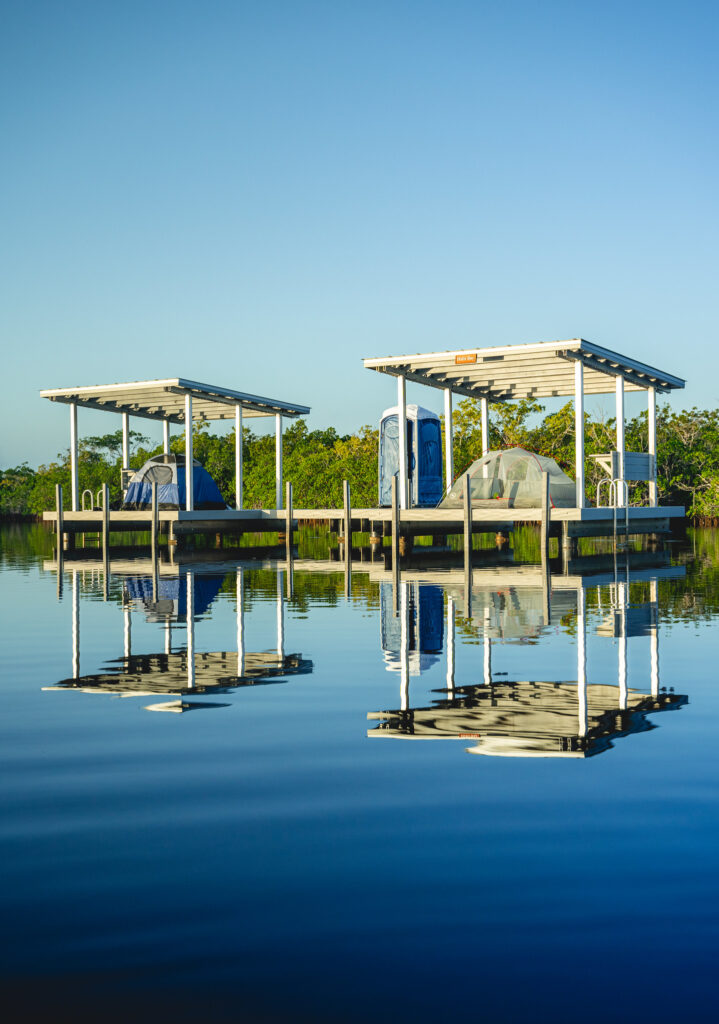
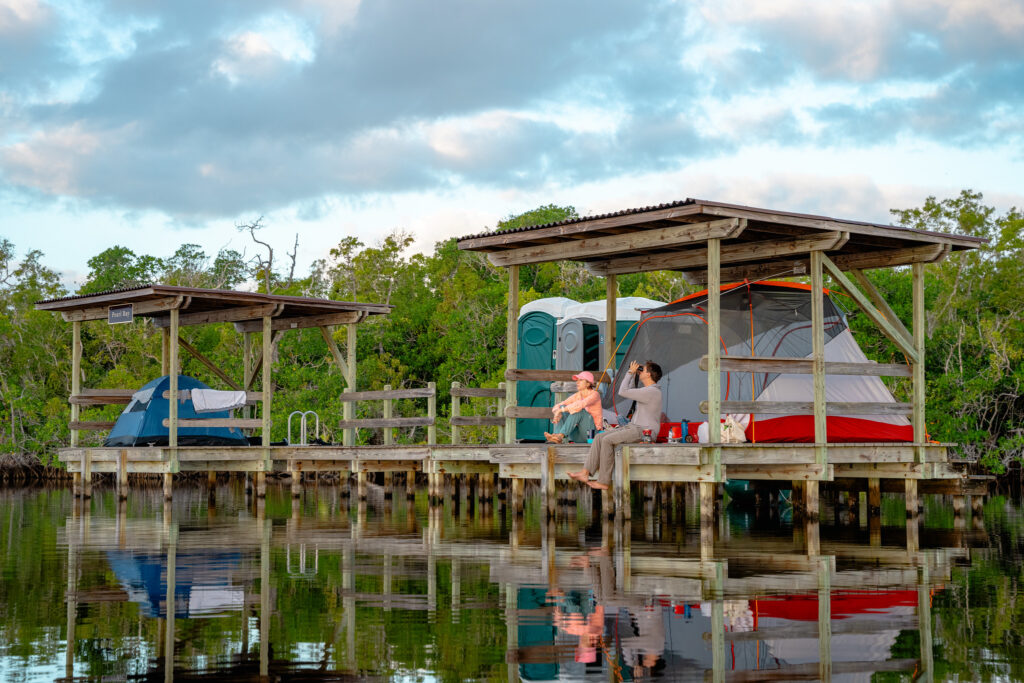
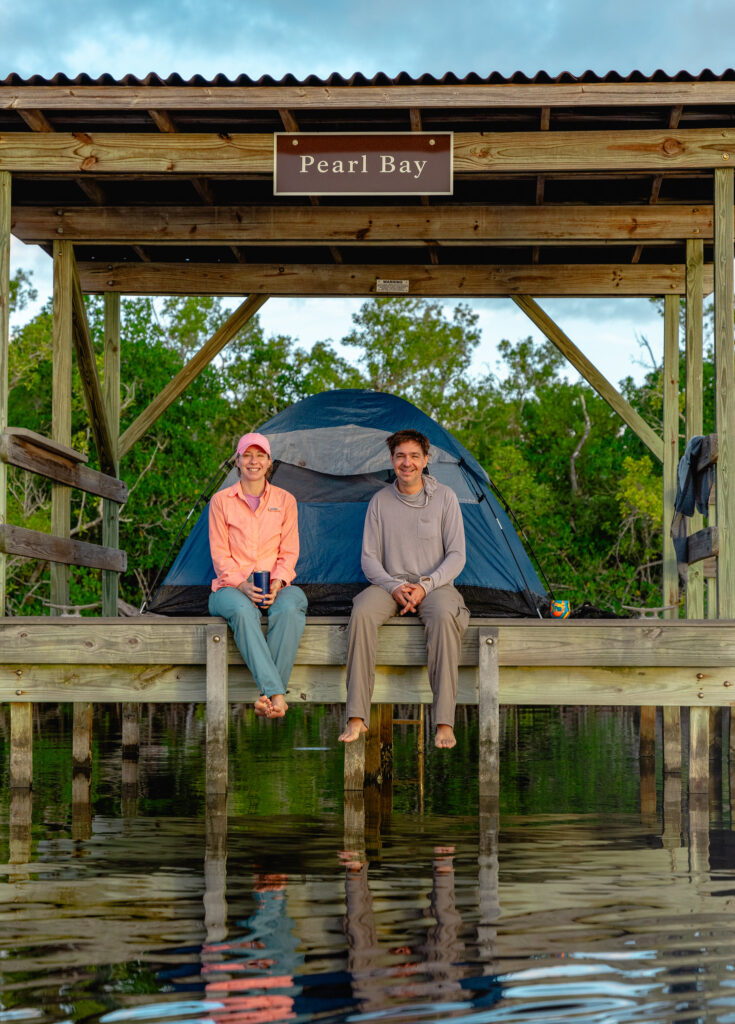
A chickee is an elevated platform above the waters of Everglades National Park. They are about 10 feet x 12 feet with platforms and roofs. Some of these are made of wood while others are made of metal. They are available in both freshwater and saltwater areas.
The word chickee comes from the Indigenous peoples of the area and roughly translates to “home”.
Chickees located in Florida Bay are Shark Point and Johnson Key. These metal platforms sit above the water, sort of like a floating island. All other chickees are over fresh or brackish water in the winding mangroves of the park’s backcountry.
Each chickee is equipped with a port-a-potty for your convenience. Some chickees are single and some are double, hosting two camping parties.
Ground Sites
If you’d rather sleep on solid ground, there are a few ground site options available as well. This is an option that’s similar to backcountry camping in other national parks.
Since they are nestled in trees, the ground sites can be some of the buggier camping options. They are also some of the shadiest spots for camping in the Everglades. If you have a bigger group, ground sites may accommodate better than a chickee.
Each site is equipped with a port-a-potty for your convenience. Some also have picnic tables.
Beach Sites
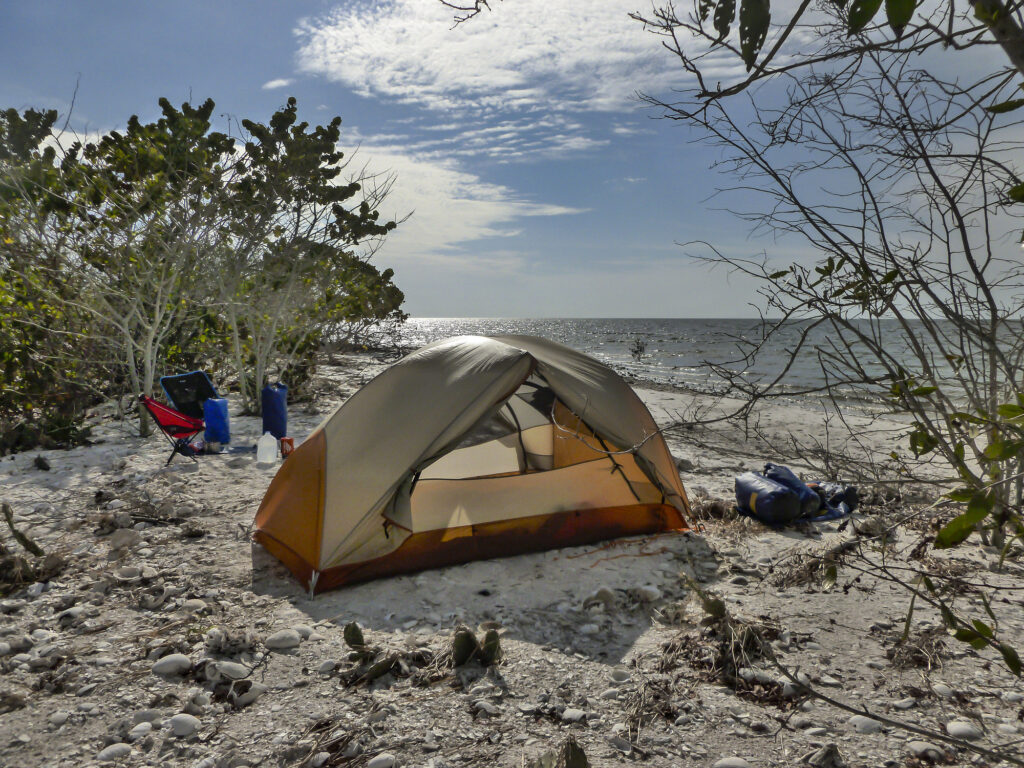
Did you know you can camp on the beach in the Everglades? Cape Sable is a magnificent area of the park that isn’t visited by many. It features the longest stretch of undeveloped beach in Florida, about 11 miles long.
Beach sites along Cape Sable include East Clubhouse Beach, Clubhouse Beach, East Cape, Middle Cape, and Northwest Cape.
There are also beach sites in the northern part of the park, closer to Everglades City. Some of these are located on islands for those looking for a more isolated camping experience. Gulf waters can be rough with seas exceeding 3 feet.
Beach sites do not have port-a-potties: you must bury your waste and urinate in the ocean. They are all located by shallow water and may be difficult to access by motorboat.
Clubhouse Beach is sometimes accessible by foot. Check with park rangers at the Guy Bradley Visitor Center in Flamingo for trail conditions.
Everglades Wilderness Campsite Details
| CAMPSITE NAME | TYPE OF SITE | # OF PEOPLE | # OF PARTIES | # OF NIGHTS |
|---|---|---|---|---|
| Alligator Creek | Ground Site | 8 | 3 | 2 |
| Broad River | Ground Site | 10 | 3 | 2 |
| Camp Lonesome | Ground Site | 10 | 3 | 3 |
| Canepatch | Ground Site | 12 | 4 | 3 |
| East Cape Sable | Beach Site | 60 | 15 | 7 |
| Middle Cape Sable | Beach Site | 60 | 15 | 7 |
| Northwest Cape Sable | Beach Site | 36 | 9 | 7 |
| Clubhouse Beach | Beach Site | 24 | 4 | 3 |
| Crooked Creek | Double Chickee | 6 per side | 1 per side | 1 |
| Darwin’s Place | Ground Site | 8 | 2 | 3 |
| East Clubhouse Beach | Beach Site | 24 | 4 | 3 |
| Graveyard Creek | Ground Site | 8 | 2 | 3 |
| Harney River | Double Chickee | 6 per side | 1 per side | 1 |
| Hell’s Bay | Double Chickee | 6 per side | 1 per side | 1 |
| Highland Beach | Beach Site | 24 | 4 | 3 |
| Hog Key | Beach Site | 8 | 2 | 1 |
| Jewell Key | Beach Site | 8 | 2 | 2 |
| Joe River | Double Chickee | 6 per side | 1 per side | 1 |
| Johnson Key | Double Chickee | 6 per side | 1 per side | 1 |
| Lane Bay | Single Chickee | 6 | 1 | 1 |
| Lard Can | Ground Site | 10 | 4 | 2 |
| Little Rabbit Key | Ground Site | 12 | 4 | 2 |
| Lopez River | Ground Site | 12 | 3 | 2 |
| Lostman’s Five | Ground Site | 10 | 2 | 3 |
| Mormon Key | Beach Site | 12 | 2 | 3 |
| New Turkey Key | Beach Site | 10 | 2 | 2 |
| Northwest Key | Ground Site | 25 | 7 | 7 |
| North River | Single Chickee | 6 | 1 | 1 |
| Oyster Bay | Double Chickee | 6 per side | 1 per side | 1 |
| Pavilion Key | Beach Site | 24 | 5 | 3 |
| Pearl Bay (Accessible) | Double Chickee | 6 per side | 1 per side | 1 |
| Picnic Key | Beach Site | 16 | 3 | 3 |
| Plate Creek | Single Chickee | 6 | 1 | 1 |
| Rabbit Key | Beach Site | 8 | 2 | 2 |
| Roberts River | Double Chickee | 6 per side | 1 per side | 1 |
| Shark Point | Double Chickee | 6 per side | 1 per side | 1 |
| Shark River | Single Chickee | 6 | 1 | 1 |
| South Joe River | Double Chickee | 6 per side | 1 per side | 1 |
| Sweetwater | Double Chickee | 6 per side | 1 per side | 1 |
| Tiger Key | Beach Site | 12 | 3 | 3 |
| Turkey Key | Beach Site | 12 | 3 | 3 |
| Watson’s Place | Ground Site | 20 | 5 | 2 |
| Watson River | Single Chickee | 6 | 1 | 1 |
| Willy Willy | Ground Site | 10 | 3 | 3 |
Everglades national park Camping: what to pack
With a wide variety of options for camping in the Everglades, it can be hard to decide what to pack. Here’s a list to help you plan!
- Tent: Shelter is the most important element of any camping trip.
- Paracord: If you’re camping on a chickee, you’ll also want strong ropes to tie your tent and boat down.
- Sandals: Sneakers and boots are great for walking trails, but you’ll want some sandals to wear around your campsite.
- Sleeping Bag: Keep yourself warm and cozy while you sleep soundly in one of these bags.
- Sleeping Pad: Don’t bust your back on the hard ground; use a pad.
- Pillow: An alternative to stuffing a dry sack with jackets? An actual pillow.
- Dry Bags: While out on the water, keep everything valuable in dry bags so your things don’t get wet.
- Anchor: If you’re camping in the Everglades National Park wilderness, you’ll want to anchor your boat down while you sleep.
- Life Jacket: All vessels must comply with Coast Guard regulations, which means you are required to have a PFD onboard. Inflatable life jackets are the best as they’re guaranteed to flip you over if you’re unconscious in the water.
- Sunglasses: The sun will blind you in Florida, as it’s almost always out! Polarized sunglasses will help significantly.
- Mosquito Netting: Bugs in the Everglades are relentless. We highly recommend purchasing a bug jacket for your trip.
- Sunscreen and Bug Spray: Even if it’s chilly, both of these items are important to pack for your Everglades camping trip. For sunscreen, pick something with an SPF of at least 15 that offers broad-spectrum protection from both UVA and UVB rays. It’s also best if you have reef-safe sunscreen while visiting Florida. Insect repellent is also important to pack because there are many bugs in the park, especially at night when you’re trying to sleep!
- Stove: I love the lightweight, easy-to-transport pocket rocket.
- Fuel: That pocket rocket won’t work without fuel and matches.
- Cookware: I prefer to purchase collapsible, reusable cookware, dishware, and utensils.
- Games: Test your national park knowledge with some trivia or keep it old school with some playing cards.
- Light Souce: A headlamp or a flashlight will do.
- First Aid Kit: It’s always good to be prepared in case you can’t find a first aid station.
- Food and Water: You’ll want snacks on hand to keep you fueled for adventures. Clif bars and trail mix are camping staples and necessities. For larger meals, dry some freeze-dried meals from Mountain House or Backpackers Pantry.
- Ice Chest: You may want a cooler to store everything in.
- Hiking Shoes: Good hiking shoes are a must! I love my Hoka trail runners and my Keen hiking boots.
- Rain gear: The weather can change quickly, no matter the time of year or location. Bring a raincoat and/or umbrella just in case!
- Layers: Temperatures can fluctuate a lot, so it’s best to dress in layers.
- Snacks: There are limited food options inside the park, so bring your own snacks!
- Camera: You’ll want to capture the beauty of your national park in photos!
- Water bottle: Stay hydrated while hiking around the park! Hard-sided bottles are best so rodents and raccoons can’t pierce them.
- Hat: You’ll need protection from the sun and bugs.
- Binoculars: Bring binoculars if you want to view wildlife in the park, especially birds!
- Map: Bring a physical map for navigating the park. Nautical maps are also strongly encouraged for backcountry camping.
Guidebooks and other resources to help you plan an epic Everglades camping trip
- Trails Illustrated Map of Everglades National Park: This map is waterproof and provides a great overview of the park
- Falcon Guide to the Everglades: Great for learning about hiking, biking, and paddling opportunities
- Paddler’s Guide to Everglades National Park: Perfect if you plan to explore the park’s waterways
- Discover Florida: Lonely Planet’s quick guide to the Sunshine State
- Florida: A more detailed Lonely Planet guide
- USA’s National Parks: Another Lonely Planet guide focusing on our nation’s treasures
- Nine Florida Stories: Another one written by Marjory Stoneman Douglas
- The Everglades River of Grass: A book all about Marjory’s infamous love for the Everglades
- Marjory Stoneman Douglas Voice of the River: Have no idea who this Marjory is? This book is a good place to start.
What if you don’t want to camp in the Everglades?
We understand that Everglades National Park camping isn’t for everyone. It can be an uncomfortable experience with the heat, humidity, rain, and bugs. Luckily, there are plenty of other places to stay in the Everglades.
Flamingo Lodge
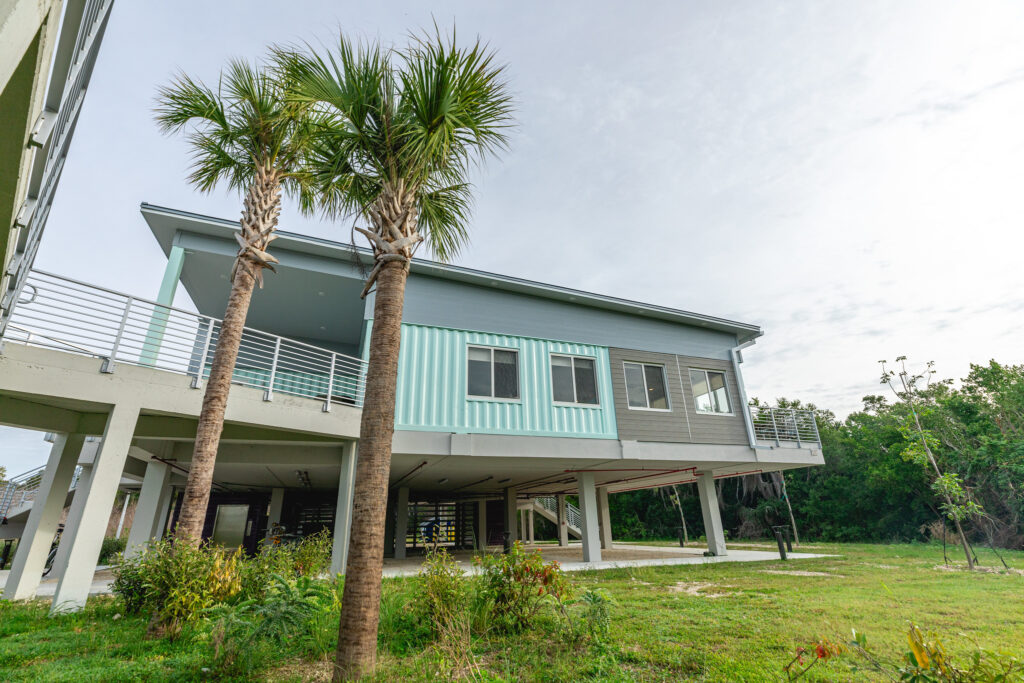
If the Flamingo area sounds appealing, you can stay there without camping! The brand-new Flamingo Lodge opened in late 2023. There are studios, one-bedroom, and two-bedroom suites available. Pricing varies by room type and season.
The newly constructed Lodge is made of shipping containers. These are more sustainable and more durable in case of strong storms and hurricanes.
The Lodge is conveniently located within walking distance of the Flamingo Restaurant, Guy Bradley Visitor Center, and Flamingo Marina. Each room has a balcony overlooking Florida Bay. Between each building are picnic tables and grills in addition to kitchens in each room!
Make your reservations at FlamingoEverglades.com!
Houseboats
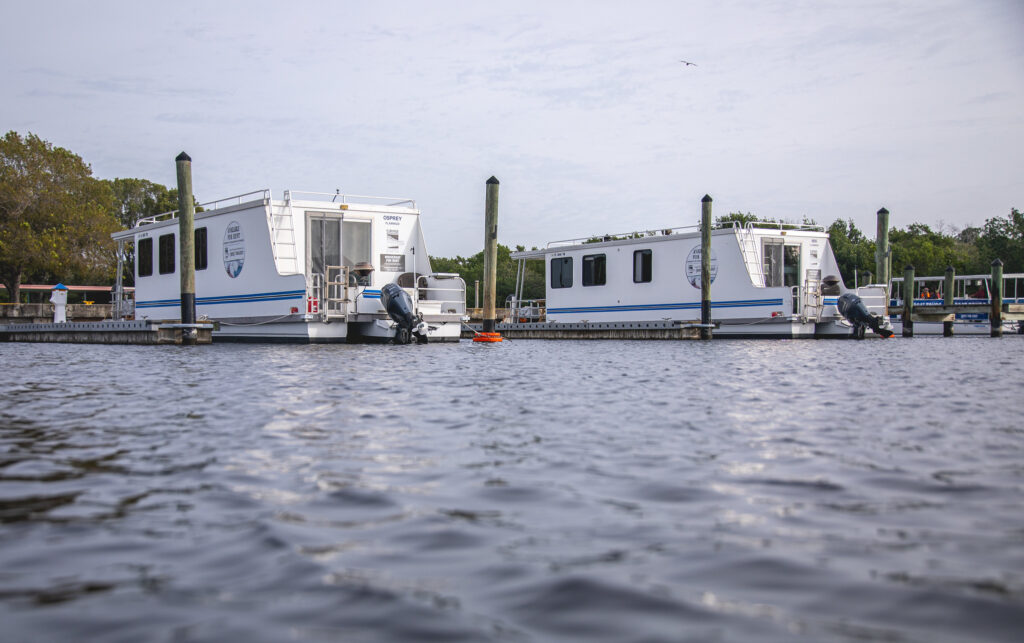
If you’re interested in camping in the Everglades National Park backcountry, but don’t want to sleep outside, there’s still a chance. The Flamingo Marina offers overnight houseboat rentals!
You can sleep on these houseboats while they are docked at the marina or take them out into the backcountry. To drive the boat, you must have a valid boating license and complete the Everglades Boater Education course. If you prefer, Marina staff can also take you to a spot to anchor. They’ll get another ride back to the Marina, then come back to get you on checkout day!
Make your reservations at FlamingoEverglades.com!
Nearby Hotels
If everything in the park is full, there are several hotels you can stay in near the Everglades as well. Here are some of our recommendations.
Flamingo: Flamingo Lodge, Flamingo Campground, Flamingo Eco Tents, Houseboats
Homestead: Hampton Inn, Floridian Hotel, A-1 Budget Motel
Gulf Coast: River Wilderness Waterfront Villas, Everglades City Motel, Ivey House
Shark Valley: Miccosukee Resort, Best Western Plus, Holiday Inn, Courtyard, DoubleTree
Learn more about visiting Everglades National Park in our Expert Guide.
Pin Our Everglades National Park Camping Guide
Thanks for reading! We hope this guide helped you plan an epic camping trip to the Everglades. To save it for later, pin it below.