Article Summary: National Parks in Utah, Utah National Parks List
Some of the national parks in Utah are the most popular in the country. Others are hidden gems that few know about. No matter which adventure you’re seeking, the national parks in Utah have something to offer you.
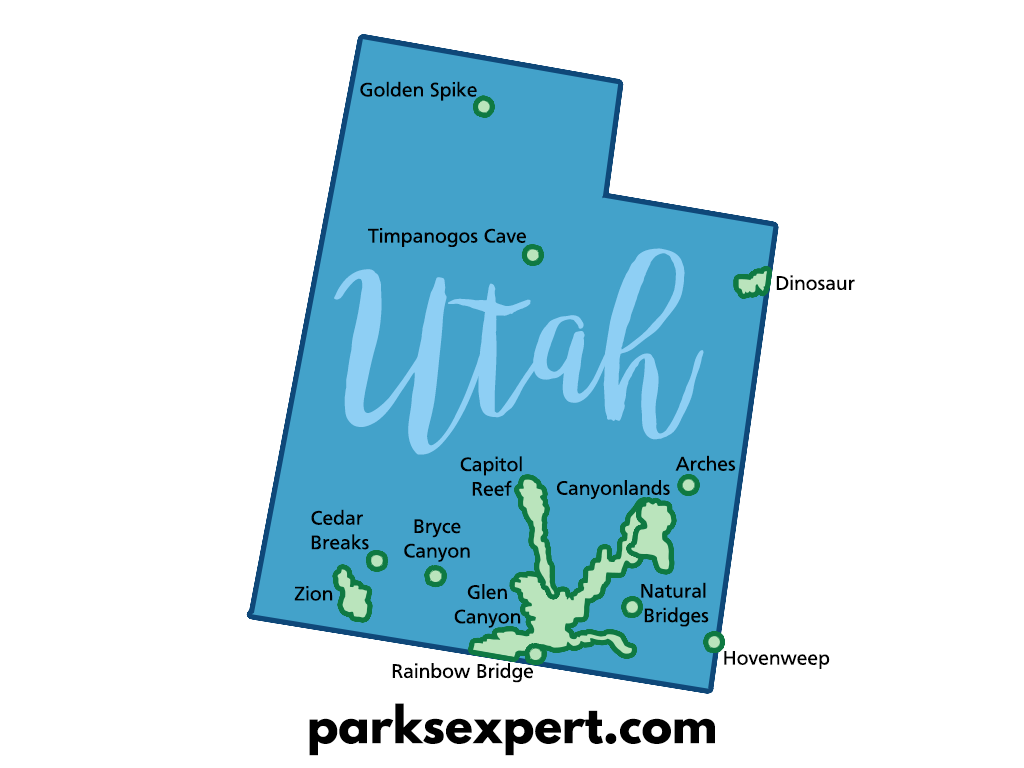
The list below includes all 13 of the Utah sites managed by the National Park Service. This includes national parks (Utah’s famous Mighty 5), national monuments, national recreation areas, and more.
This post may contain affiliate links. If you make a purchase, I may earn a small commission at no additional cost to you. For more information, view my privacy policy.
Table of Contents
Map of National Parks in Utah
National Parks in Utah Road Trip Itinerary
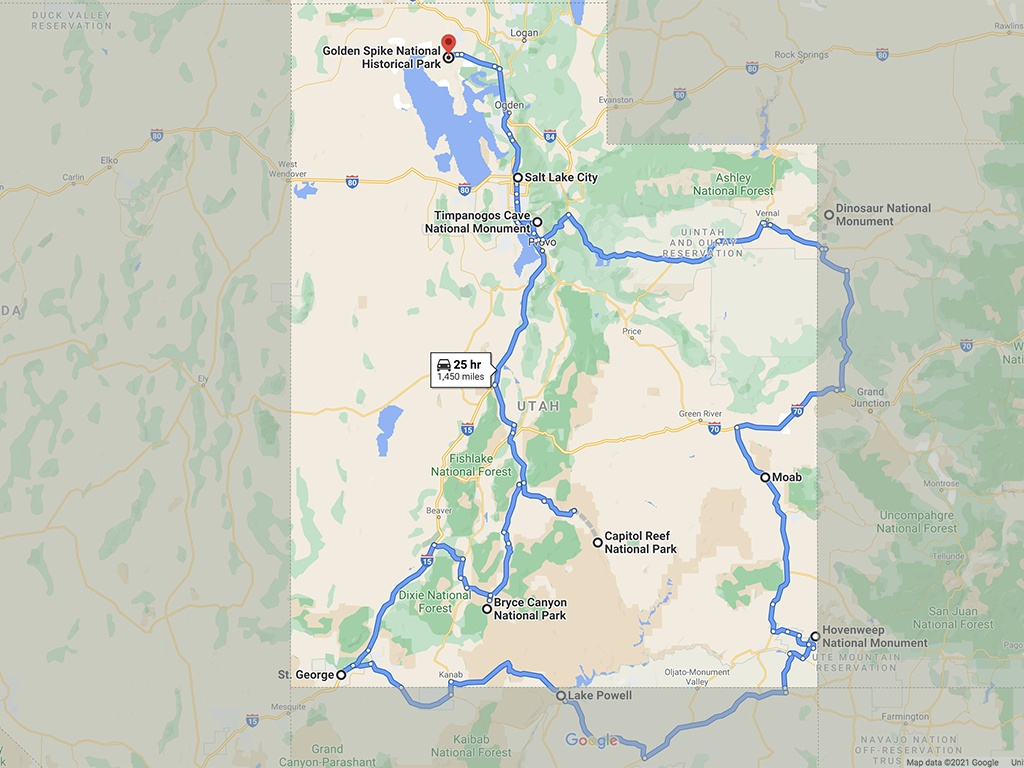
Fly in/out: Salt Lake City
Day 1: Head south to Timpanogos Cave to begin your adventure through Utah’s national parks (40-minute drive)
Day 2: Head to Dinosaur National Monument to discover incredible fossils (4-hour drive)
Day 3: Drive to Moab to see Arches and Canyonlands National Parks (3-hour drive)
Day 4: Spend the day in Moab/Arches/Canyonlands
Day 5: Drive to Natural Bridges (2 hours) and Hovenweep National Monuments (2 hours; 4 hours total drive time)
Day 6: Continue to Page, Arizona and Glen Canyon National Recreation Area’s Lake Powell (3.5-hour drive)
Day 7: Spend the day on Lake Powell and visit Rainbow Bridge
Day 8: Drive from Page to Zion National Park (2 hours)
Day 9: Spend the day in Zion
Day 10: Stop by Cedar Breaks National Monument (1 hour) on your way to Bryce Canyon National Park (1.5 hours; 2.5 hours total drive time)
Day 11: Spend the day in Bryce Canyon, then continue on to Capitol Reef National Park (take the scenic Route 12 for a 2.5-hour drive)
Day 12: Spend the day at Capitol Reef, then continue north to Salt Lake City (3.5-hour drive)
Day 13: Head up to Golden Spike National Historical Park to visit the last of the national parks in Utah (1.5-hour drive)
Explore National Parks in Nearby States
Arches National Park
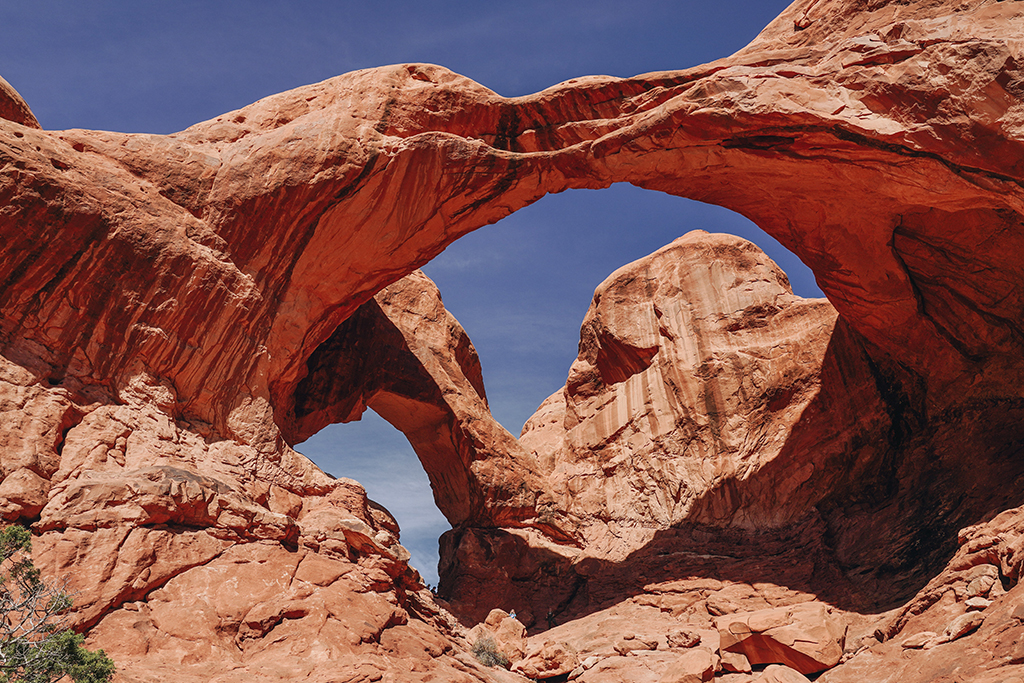
Ah, my favorite place in Utah and the ultimate land of geologic splendor.
Arches National Park houses more than 2,000 natural arches, more than anywhere else on the planet. Visits to Arches provide stunning views of rock formations that seem impossible. Not only do some of the arches seem ready to crumble any second, but balanced rock seems due to falling, and hoodoos are bound to collapse.
You aren’t witnessing a past geologic journey of 65 million years, you’re still witnessing it.
Parks Expert Tip: Get up early! Parking lots in Arches National Park can fill as early as 7:30 a.m.
How to Get There: Arches National Park is located on Highway 191. For more details, click here.
Map: download here
Things to Do: Scenic drives, backpacking, bicycling, canyoneering, hiking, horseback riding, photography, attend a ranger-guided program, rock climbing, stargazing
Park Entrance Fee: $30 per vehicle or $15 per individual, valid for 7 days
Where to Stay: Comfort Inn, Moab Springs Ranch, Airbnb
Official Website: click here
Speak to a Park Ranger: Call (435) 719-2299

Arches National Park Phone Case

Arches National Park Phone Case

Utah National Parks Map Pack: Arches, Bryce Canyon, Canyonlands, Capitol Reef, Zion

Fodor’s Guide to the 63 National Parks

Women’s National Parks Checklist T-Shirt

Women’s National Parks Checklist T-Shirt

Map of National Parks T-Shirt

Arches National Park Sticker

Arches National Park Pin

Arches National Park Patch

Utah National Parks Earrings

63 National Parks Water Bottle

Arches National Park Pin

Arches National Park Pennant

Arches National Park Ornament

Arches National Park Poster

Arches Ornament

Arches National Park Sticker

Arches National Park Sticker

Arches National Park Map

Arches National Park Scrapbooking Kit

Arches National Park Cross Stitch Kit
Bryce Canyon National Park
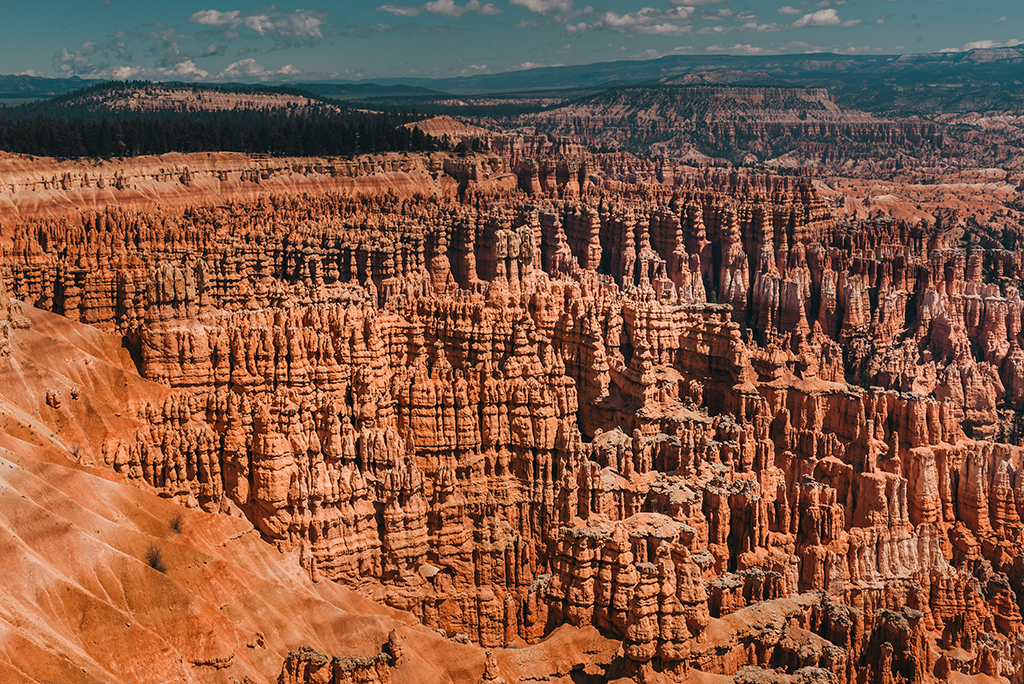
Bryce Canyon (which is actually an amphitheater) is one of a kind landscape.
The tall rock spires and hoodoos that rise from the ground are something I could stare at for hours in wonder. It wasn’t until my visit to this region of the world, and the incredible national parks in Utah, that I fell in love with geology and its mysteries.
Bryce Canyon National Park is no exception. Stroll through the amphitheater and you’ll immediately be astonished. Use our Expert’s Guide to Bryce Canyon to plan your trip and see the top attractions in the park, and don’t forget to read about our favorite Bryce Canyon hikes.
How to Get There: Bryce Canyon National Park is located on Highway 63. For more details, click here.
Map: Click here for National Park Service maps.
Things to Do: Attend a ranger-led program, hiking, backpacking, horseback riding, snowshoeing, bird-watching
Park Entrance Fee: $35 per vehicle or $20 per individual, valid for 7 days
Where to Stay: Ruby’s Inn, Best Western Plus
Official Website: click here
Speak to a Park Ranger: Call (435) 834-5322
Utah National Parks Map Pack: Arches, Bryce Canyon, Canyonlands, Capitol Reef, Zion

Bryce Canyon National Park Map

Bryce Canyon National Park Pennant
Fodor’s Guide to the 63 National Parks

Zion & Bryce Canyon Hiking Guidebook
Women’s National Parks Checklist T-Shirt
Women’s National Parks Checklist T-Shirt
Map of National Parks T-Shirt

Bryce Canyon National Park Hat

Bryce Canyon National Park Sticker

Bryce Canyon National Park Pin

Bryce Canyon National Park Patch
Utah National Parks Earrings
63 National Parks Water Bottle

Guide to Hiking in Zion and Bryce Canyon

Bryce Canyon Cross Stitch Kit
Canyonlands National Park
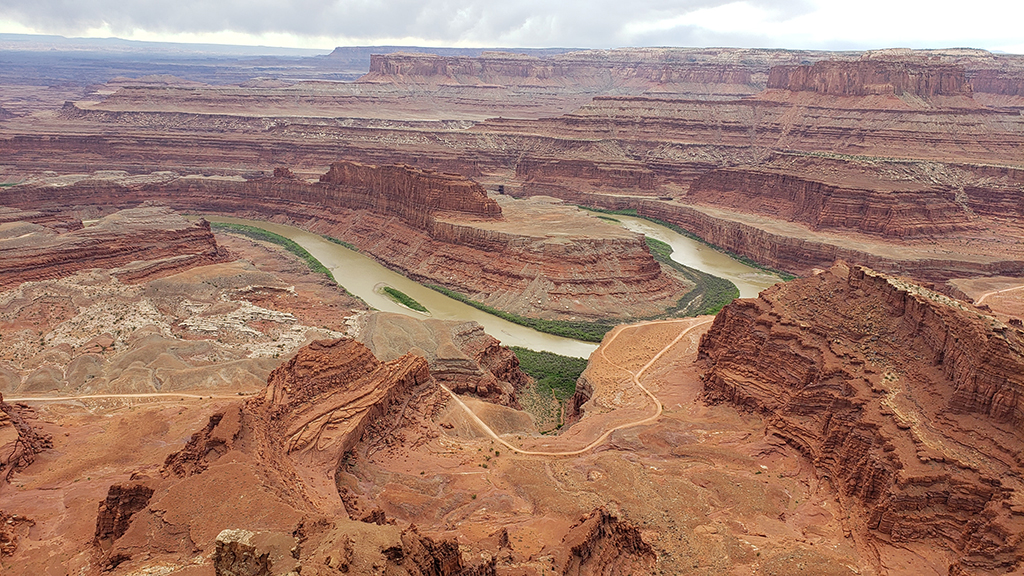
While it may not be as grand as the Grand Canyon, there is still something striking about Canyonlands National Park.
Of all the national parks in Utah, Canyonlands is the only one split into three districts: Island in the Sky, Needles, and The Maze. Each of these districts has its own experience to offer.
At Island in the Sky, you’re treated to dramatic canyon views and two scenic drives. From Needles, you’ll find large rock spires and other formations.
The Maze is king for backpackers, offering few trails in a remote desert wilderness. The Maze was popularized in books written by Edward Abbey, including Desert Solitaire and The Monkey Wrench Gang.
How to Get There: Do not rely on GPS directions in remote Utah! Click here for detailed directions and maps.
Map: download here
Things to Do: Scenic drives, backpacking, boating, climbing, hiking, horseback riding, stargazing, ranger-led programs, 4WD roads
Park Entrance Fee: $30 per vehicle or $15 per individual, valid for 7 days
Where to Stay: Comfort Inn, Moab Springs Ranch, Airbnb
Official Website: click here
Speak to a Park Ranger: Call (435) 719-2313
Utah National Parks Map Pack: Arches, Bryce Canyon, Canyonlands, Capitol Reef, Zion

Canyonlands National Park Map Pack: Island in the Sky, Needles, and The Maze

Canyonlands National Park Pennant
Fodor’s Guide to the 63 National Parks
Women’s National Parks Checklist T-Shirt
Women’s National Parks Checklist T-Shirt
Map of National Parks T-Shirt

Canyonlands National Park Sticker

Canyonlands National Park Pin

Canyonlands National Park Patch
63 National Parks Water Bottle

Canyonlands National Park Sticker

Canyonlands Scrapbooking Kit
Capitol Reef National Park

One of the Utah national parks’ greatest hidden gems is Capitol Reef National Park.
Of all 63 National Parks, it’s the only one with its own orchard that you can pick apples and other fruits from.
Not surprisingly, Capitol Reef is also a geologic wonder. Its most notable feature is the Waterpocket Fold, a nearly 100-mile long wrinkle in the earth’s crust. With that come some of Utah’s most exciting hikes.
Going back even further in time, it was recently discovered that Capitol Reef is part of one of America’s largest track sites with fossils from various reptiles and sharks. Some of them even existed before the dinosaurs!
Add in the fascinating Native American history, including various petroglyphs, and driving or hiking in Capitol Reef is like inventing your own time machine.
How to Get There: Do not rely on your GPS in remote Utah! Click here for detailed directions.
Map: download here
Things to Do: Ranger-led programs, hiking, backpacking, canyoneering, rock climbing, bouldering, cycling, horseback riding
Park Entrance Fee: $20 per vehicle or $10 per individual, valid for 7 days
Where to Stay: Capitol Reef Resort, Days Inn, The Noor Hotel
Official Website: click here
Speak to a Park Ranger: Call (435) 425-3791
Utah National Parks Map Pack: Arches, Bryce Canyon, Canyonlands, Capitol Reef, Zion
Fodor’s Guide to the 63 National Parks
Women’s National Parks Checklist T-Shirt
Women’s National Parks Checklist T-Shirt
Map of National Parks T-Shirt

Capitol Reef National Park Sticker

Capitol Reef National Park Patch
63 National Parks Water Bottle

Capitol Reef Scrapbooking Kit

Capitol Reef National Park Map
Cedar Breaks National Monument

Zion National Park’s neighbor is nowhere near as famous, but packs in plenty of similar attractions.
It’s much higher in elevation at a whopping 10,000 feet, offering incredible views (particularly of the night sky). You can also find mesmerizing geologic wonders and beautiful wildflowers in this Utah national park.
The road into the park is only accessible from May to November due to heavy snowfall in the winter (I did mention this one is up at 10,000 feet, right?).
How to Get There: Detailed directions are available here.
Map: Click here for National Park Service maps.
Things to Do: Camping, stargazing, hiking, ranger-led programs, skiing, snowshoeing
Park Entrance Fee: $7 per person, valid for 7 days
Where to Stay: Cedar Breaks Lodge, Best Western Premier, El Rey Inn, Iron Gate Inn
Official Website: click here
Speak to a Park Ranger: Call (435) 586-9451 x4420
Dinosaur National Monument

Roam in the ancient footsteps of dinosaurs at Dinosaur National Monument.
Straddling the border of Utah and Colorado, this incredible National Monument is a favorite for many. On the Utah side, in the visitor center’s Quarry Exhibit Hall, you can see 1,500 dinosaur fossils!
But Dinosaur National Monument isn’t all about dinosaurs. There are also stunning canyons popular for rafting, petroglyphs left by the indigenous groups, and beautiful hiking trails. All of this (and more!) make Dinosaur one of the most popular national parks in Utah.
How to Get There: Click here for directions.
Map: download here
Things to Do: Scenic drives, fossil-viewing, hiking, backpacking, cycling, fishing, horseback riding, rafting, stargazing, wildlife viewing
Park Entrance Fee: $25 per vehicle, $20 per motorcycle, or $15 per individual; valid for 7 days
Where to Stay: Dinosaur Inn & Suites, Holiday Inn Express, Antlers Inn, Comfort Inn, Horizon Hotel
Official Website: click here
Speak to a Park Ranger: Call (435) 781-7700
Glen Canyon National Recreation Area

It’s no secret that Page, Arizona is one of the new hot spots when it comes to road-tripping in the American Southwest. With Antelope Canyon and Horseshoe Bend, it’s easy to see why the destination is increasing in popularity.
Still, the entirety of Glen Canyon National Recreation Area and its centerpiece, Lake Powell, shouldn’t be overlooked on your trip to national parks in Utah.
How to Get There: Glen Canyon is huge, so click here to see which part of the park you want to visit.
Map: Click here for National Park Service maps.
Things to Do: boating, fishing, hiking, kayaking, swimming, cycling, off-roading, scenic drives, ranger-led programs, tours
Park Entrance Fee: $30 per vehicle or $15 per individual, valid for 7 days
Where to Stay: Bear’s Den B&B, Hampton Inn, Courtyard, Wingate
Official Website: click here
Speak to a Park Ranger: Call (928) 608-6200
Golden Spike National Historical Park
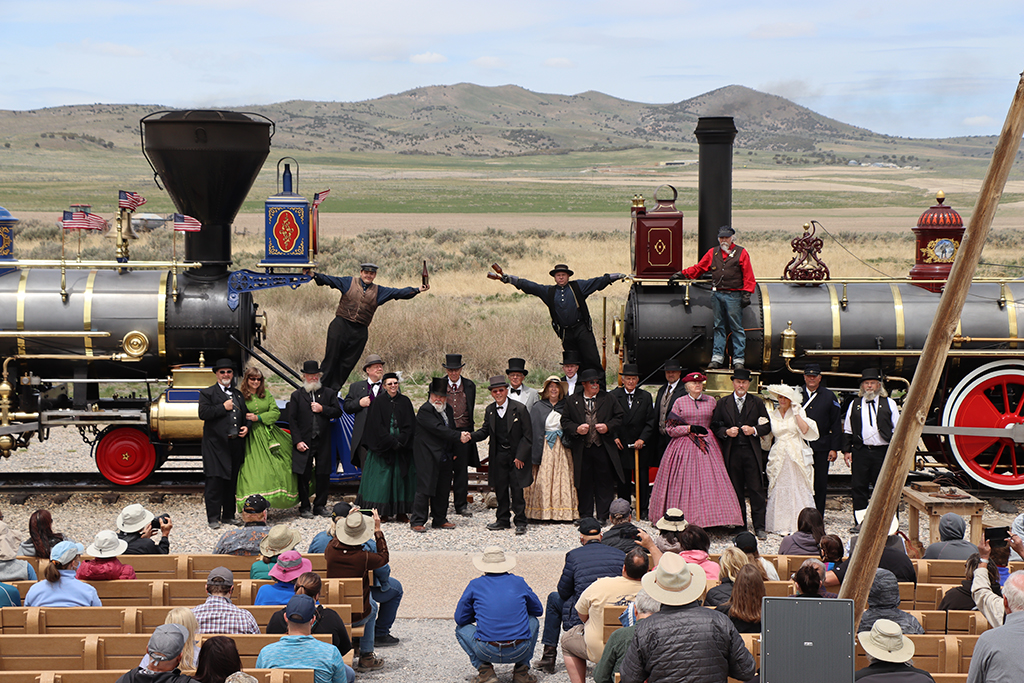
In remote northern Utah, the first transcontinental railroad was completed here in 1869.
At Golden Spike National Historical Park, see the Last Spike Site, engine replicas, and walk (or drive) the original railroad grate. Visit during a reenactment or special event for a truly unique and memorable experience.
There are also plenty of outdoor activities, such as the Big Fill Loop Trail or Chinese Arch, a rock formation honoring the unknown number of Chinese immigrants who lost their lives during the construction of the railroad.
To set your expectations (so you won’t be disappointed like me!), the Golden Spike is not located here but can be found in California.
How to Get There: click here
Map: download here
Things to Do: Museum, scenic drive, hiking, ranger-led programs
Park Entrance Fee: $20 per vehicle, $15 per motorcycle, or $10 per individual; valid for 7 days
Where to Stay: Howard Johnson, Best Western, Days Inn, Hampton Inn, Holiday Inn Express
Official Website: click here
Speak to a Park Ranger: Call (435) 471-2209 x429
Hovenweep National Monument
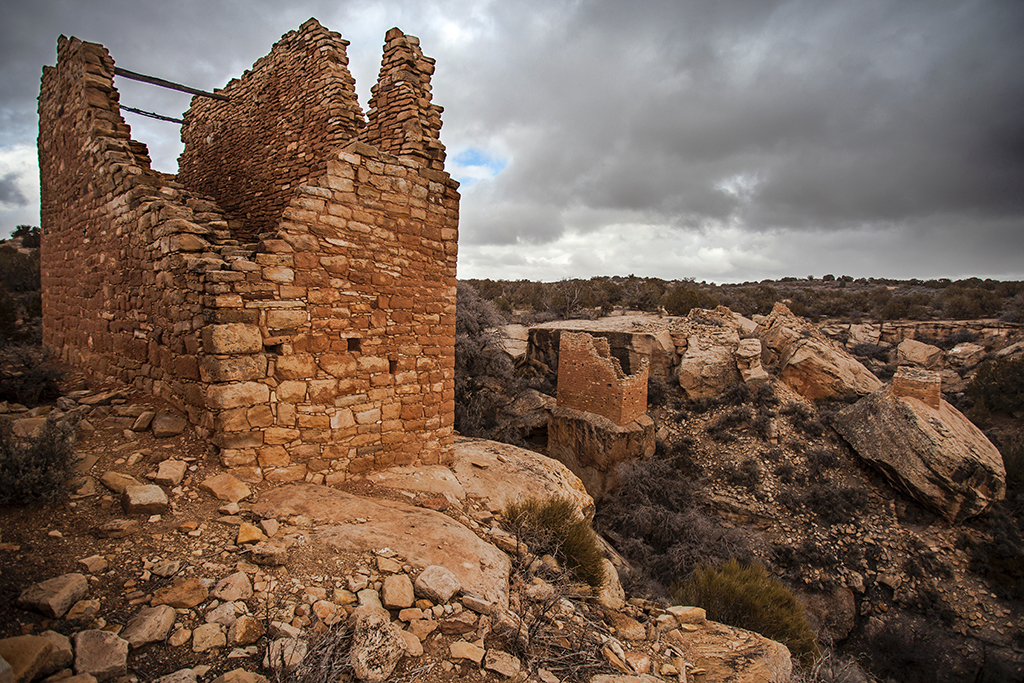
Like Dinosaur, Hovenweep National Monument is also located in both Utah and Colorado. The main visitor center and the famous Square Tower Group of structures are on the Utah side.
Between 1200 and 1300 AD, there were about 2,500 people living in six villages here. Many structures still remain.
These structures are impressive and were intricately built with amazing attention to detail. In this sweeping desert, the towers of Hovenweep provide a window into the history of Puebloan peoples and their dedicated masons.
How to Get There: Don’t rely on your GPS! Click here for directions.
Map: download here
Things to Do: Hiking, stargazing, birdwatching, historic structures
Park Entrance Fee: None!
Where to Stay: White Eagle Inn, Hampton Inn, Grizzly Roadhouse B&B, Desert Rose Resort, La Posada Pintada
Official Website: click here
Speak to a Park Ranger: Call (970) 562-4282 x5
Natural Bridges National Monument
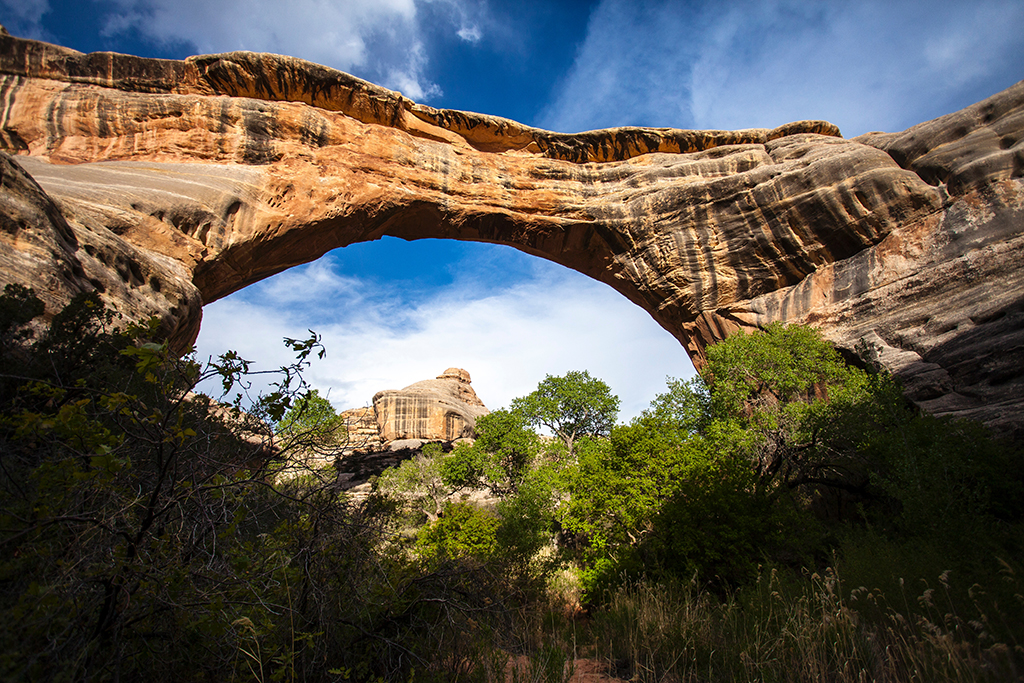
While you look into visiting Natural Bridges National Monument on your trip to all the national parks in Utah, you may wonder what makes this place different than Arches National Park.
First, Natural Bridges has one of the coolest distinctions as the world’s first International Dark Sky Park. The stargazing here is unbelievable!
Second, the natural bridges here all formed within a canyon. You can wander through natural bridges while viewing ancient Pueblo structures. What was life like for the indigenous peoples here?
How to Get There: Do not rely on GPS; no reception or Wi-Fi available in the park. Click here for directions.
Map: download here
Things to Do: Scenic drive, hiking, stargazing, birdwatching
Park Entrance Fee: $20 per vehicle, $15 per motorcycle, or $10 per individual; valid for 7 days
Where to Stay: Arch Canyon Inn, Cedars Country Cottage, Stone Lizard Lodge, Four Corners Inn, Blue Mountain RV Park
Official Website: click here
Speak to a Park Ranger: Call (435) 692-1234 x616
Rainbow Bridge National Monument
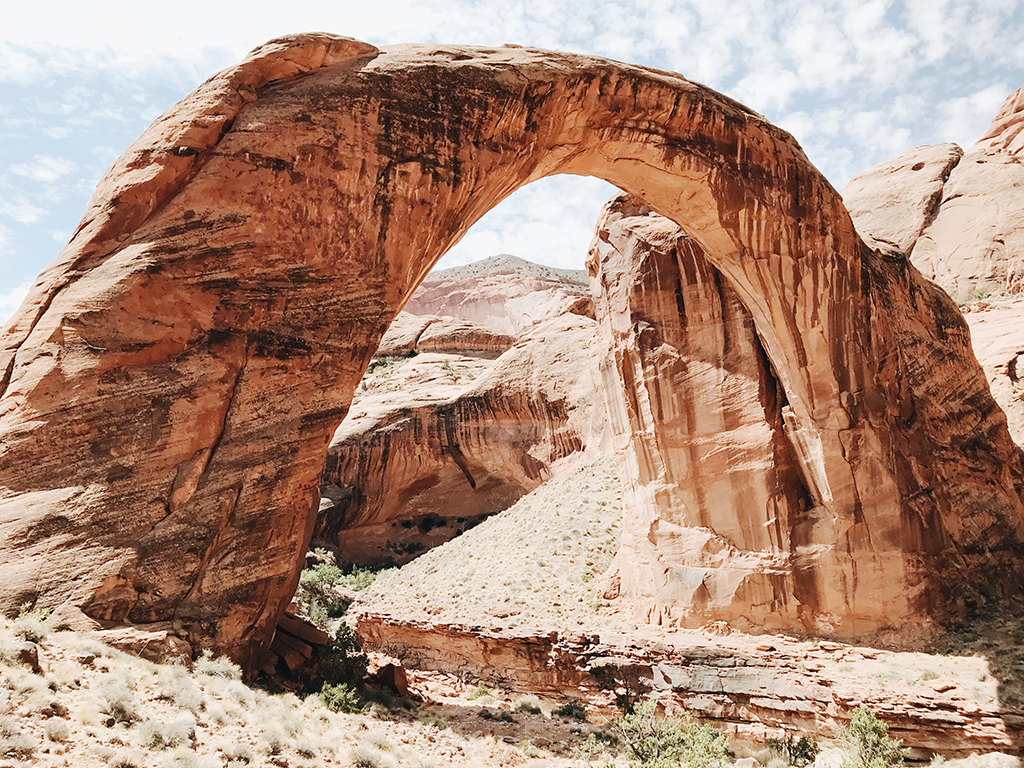
Rainbow Bridge is one of the largest known natural bridges in the world. It is considered sacred to the local Native American tribes and the thousands of visitors who make the effort to see it each year.
While many are dissuaded by the remote nature of the bridge, seeing this sight is surely worth the effort.
How to Get There: Rainbow Bridge is only accessible by boat or by foot. Learn more
Map: download here
Things to Do: Hiking, guided tours
Park Entrance Fee: None! However, if accessed by boat, you’ll need to pay the entrance fee for Glen Canyon.
Where to Stay: Bear’s Den B&B, Hampton Inn, Courtyard, Wingate
Official Website: click here
Speak to a Park Ranger: Call (928) 608-6200
Timpanogos Cave National Monument
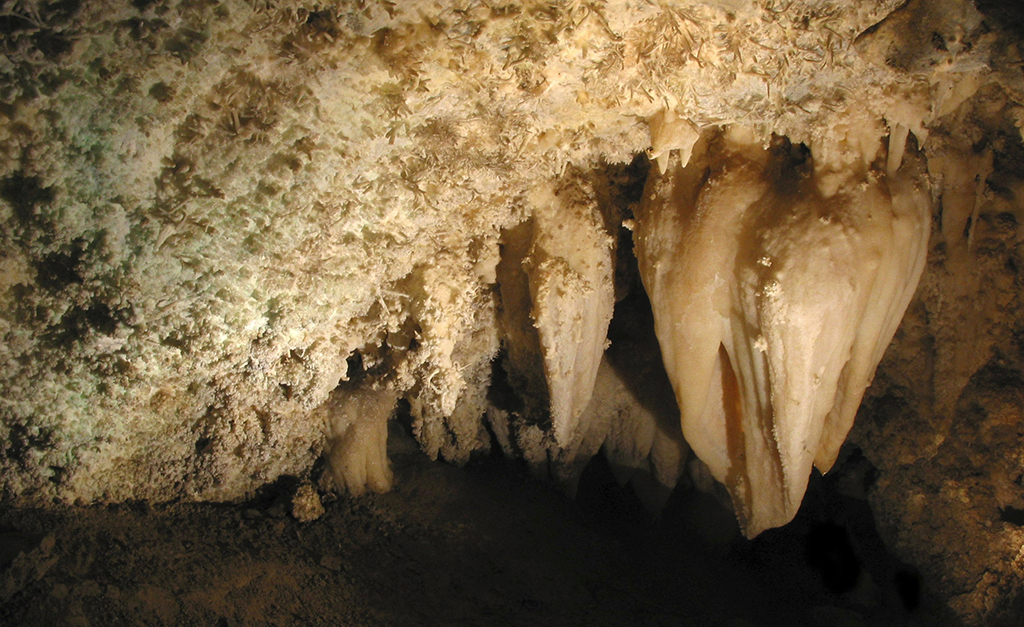
Of all the national parks in Utah, Timpanogos is the only one dedicated to the protection of an underground world.
It’s important to note that to reach the highly decorated limestone mazes of Timpanogos, you’ll need to hike a strenuous 1.5-mile trail uphill to the entrance. Strollers, wheelchairs, and other wheeled items are not allowed. Pets are also not allowed.
In summer, temperatures regularly exceed 100 degrees, so bring at least 1 liter of water per person. Only small backpacks are permitted inside the cave. It’s 45 degrees inside Timpanogos Cave year-round; jackets and closed-toe shoes are encouraged.
Due to the spread of White-nose syndrome, items (including clothing, shoes, gear, or cameras) that have been in other caves are prohibited.
How to Get There: Click here for directions.
Map: download here
Things to Do: Guided tours, hiking, caving
Park Entrance Fee: None! However, there are fees for cave tours.
Where to Stay: Holiday Inn Express, Townhome with Pool and Hot Tub, SpringHill Suites, Timpanogos Inn, Hyatt
Official Website: click here
Speak to a Park Ranger: Call (801) 756-5239
Zion National Park
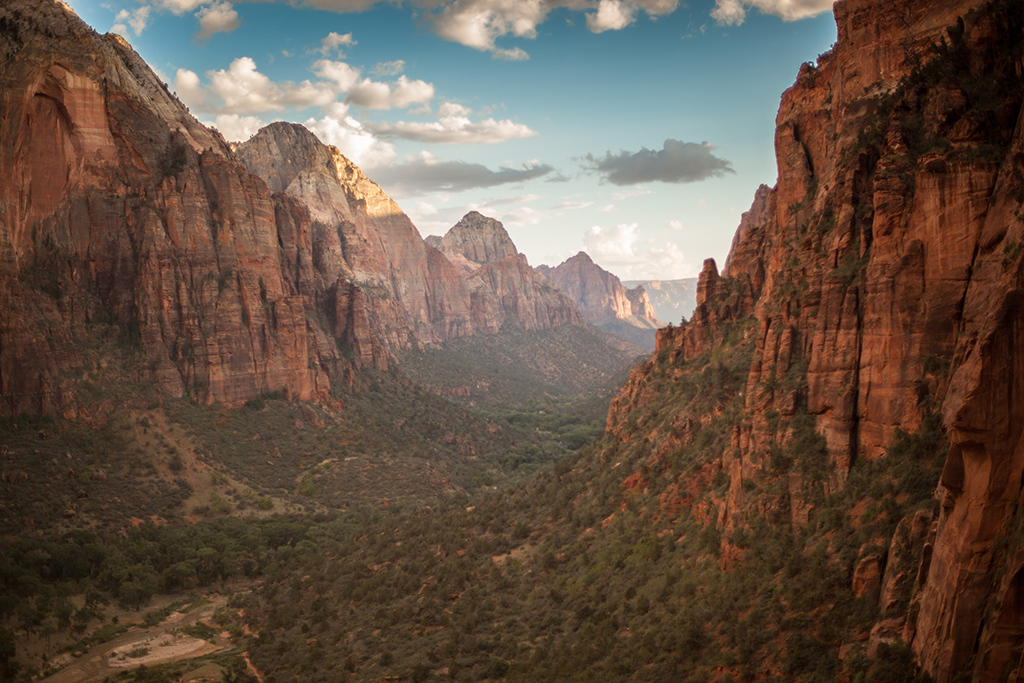
Zion is one of my favorite national parks in Utah. For a relatively small park, there is so much to offer in every nook and cranny (literally).
Here, you can explore canyons, hike to various summits, or climb the marvelous red rocks. The possibilities are quite endless, and there is something for everyone to experience. Don’t miss a sunset or you will regret not learning how many different shades of red and orange your eyes can see.
How to Get There:
Map: Click here for National Park Service maps.
Things to Do:
Park Entrance Fee: $35 per vehicle or $20 per individual, valid for 7 days
Where to Stay: Zion Lodge, Cable Mountain, Best Western Plus, Bumbleberry Inn, Cable Mountain Lodge, Cliffrose Lodge, Flanigan’s Inn, Harvest House B&B
Official Website: click here
Speak to a Park Ranger: Call (435) 772-3256

Zion National Park Phone Case
Utah National Parks Map Pack: Arches, Bryce Canyon, Canyonlands, Capitol Reef, Zion

Zion National Park Pennant
Fodor’s Guide to the 63 National Parks
Zion & Bryce Canyon Hiking Guidebook

Zion National Park Puffy Blanket
Women’s National Parks Checklist T-Shirt
Women’s National Parks Checklist T-Shirt
Map of National Parks T-Shirt

Zion National Park Sticker

Zion National Park Pin

Zion National Park Patch

Zion National Park Earrings
Utah National Parks Earrings
63 National Parks Water Bottle
Guide to Hiking in Zion and Bryce Canyon

Zion National Park Candle

Zion Scrapbooking Kit

Zion National Park Cross Stitch Kit

Zion National Park Map
What to Pack for a Utah National Parks Trip
Packing for a trip to the desert can be tricky. Depending on the time of year, temperatures can range from over 100 degrees Fahrenheit during the day to 50 degrees once the sun goes down. If you’re visiting in the winter, it may even snow. Here’s a list of things you may need, with some items varying based on the season you decide to visit.
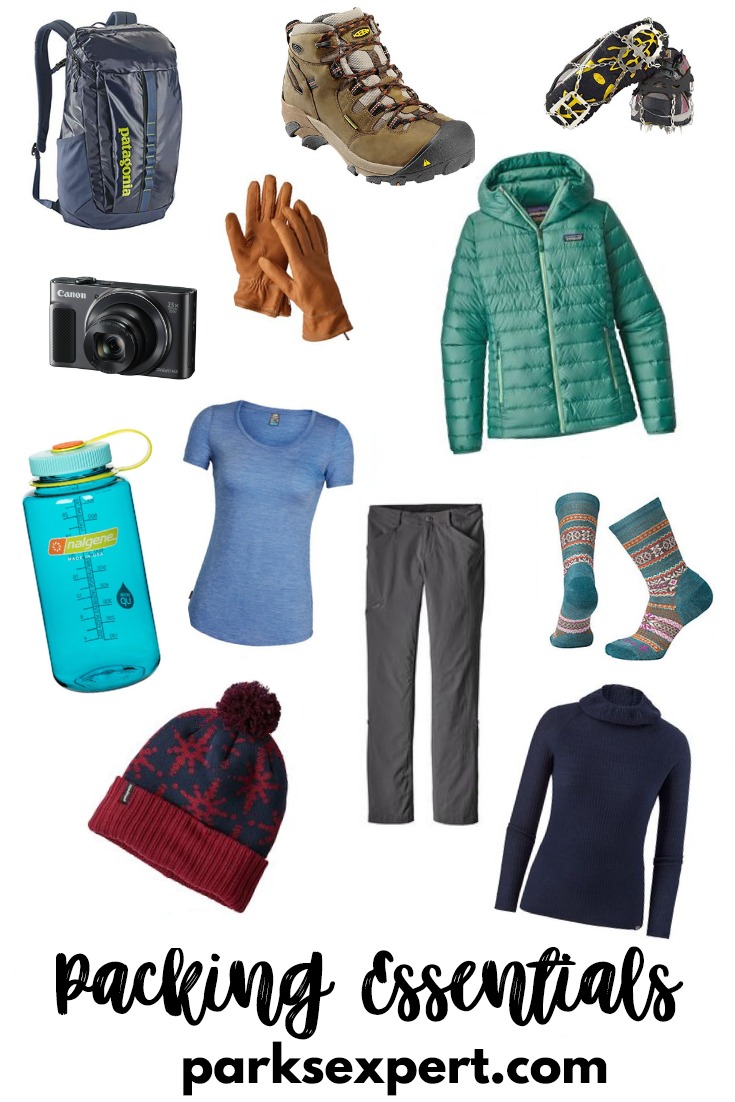
- Reusable Water Bottle: Literally the most important thing to have in the desert.
- Moisture-wicking Layers: You’ll want short- and long-sleeve shirts to wear underneath your jacket. In the summer, you may also want a tank top. Choose polyester over cotton.
- Jacket: I always have a packable down with me on trips. I also love this new jacket I got a few months ago, as it’s very light yet warm. Synthetic is a good alternative to down if you’re worried about rain or snow.
- Hiking Pants or Shorts: My favorite hiking pants can be found here. As a taller woman, I also love Columbia’s pants because they offer long sizes.
- Hat: Depending on the season, you’ll need a winter hat or summer hat.
- Gloves or Mittens: Gloves are critical if you’re visiting in the winter.
- Wool Socks: Smartwool is my favorite brand for wool socks. Make sure to get wool so your feet stay warm and dry.
- Grippers, Spikes, or Crampons: If you plan to hike in the winter, I strongly recommend grippers for potentially icy trails. Come prepared and avoid the fall!
- Camera: I had my trusty Canon Rebel T5i, my Canon Powershot SX620, and a GoPro with me on my most recent trip to Arches.
- Tripod: If you’re hoping to take decent photos of the slot canyons, sunsets, or wildlife, I’d strongly recommend carrying a tripod with you.
- Boots: I love my Keens, and will never choose another brand for my everyday boots. In winter, I choose a much warmer pair of Solomon boots.
- Backpack: I brought my North Face pack, but a friend of mine had a water-resistant Patagonia pack I was extremely jealous of.
- Packing Cubes: Never find yourself unorganized or frantically searching for missing items ever again with these. Plus, it’ll help you squeeze more into your bag!
- Travel Scarf: I love the ones with hidden pockets!
Pin National Parks in Utah